June 15, 2026
Ergonomic Seat Cushion Guide: Build a Workspace That Supports the Work

If you spend serious hours at a desk, the room around it matters more than you think. You build your space to facilitate focus, yet a poorly designed chair often becomes the loudest distraction in the room. Lower back fatigue and leg numbness aren't just physical inconveniences; they are signals that your setup isn't working as hard as you are. Choosing the right ergonomic seat cushion is about more than just adding padding. It is about intentionality and personal ownership of your environment.
You deserve a workspace that feels personal and functional, not one cluttered with objects that look like medical supplies. With home offices now accounting for 61% of the demand for ergonomic support, it's clear that the standard kitchen chair or basic swivel seat isn't enough for the long haul. This guide shows you how to choose a cushion that supports you through serious sessions and earns its place in your room. We will cover specific criteria for choosing firmness, evaluate materials like memory foam, and help you build a workspace that is truly made for the work.
Key Takeaways
- The workspace shapes the work. Learn why a considered seat cushion earns its place by removing physical distractions from your daily sessions.
- Navigate the framework of firmness and material to choose an ergonomic seat cushion that actually supports your specific chair and body.
- Contrast the functional benefits of memory foam versus gel to find the right balance of contoured support and temperature regulation.
- Build a functional environment by pairing your seat support with other intentional objects, such as foot rests and monitor arms, to create a space made for the work.
Why the Right Ergonomic Seat Cushion Earns Its Place
The workspace shapes the work. Equip it deliberately. If you spend serious hours at a desk, the room around you matters more than you think. Most office chairs are designed for general aesthetics or basic durability; they often lack the specific contouring required for long-term health. An ergonomic seat cushion isn't an accessory; it's a correction for these design flaws. By choosing to equip your space with intentional support, you ensure that your environment works as hard as you do.
Intentionality means choosing objects that solve specific problems. In a workspace, those problems are often tailbone pressure and poor spinal alignment. By adding a considered layer of support, you address these physical distractions before they break your focus. Understanding Seating ergonomics is the first step in building a setup that actually works for you. It turns your chair into a tool for maintaining deep focus during long sessions.
To better understand how these tools function in a real-world setup, watch this breakdown of current options:
The Reality of Serious Hours at a Desk
For many creators and freelancers, sitting is the work. It is the posture of production. When you sit for six, eight, or ten hours, gravity is your constant opponent. A high-quality cushion redistributes your weight across the seat; this prevents the localized pressure that leads to the "slump." This isn't about status or aesthetics. It is about maintaining a neutral spine so your brain can stay on the task at hand. For the people who do the work, physical comfort is a requirement for mental clarity.
Beyond the 'Comfortable' Label
We don't use words like "comfortable" or "charming" here. Those terms describe a living room sofa, not a workspace. Instead, look for support, alignment, and durability. A soft cushion might feel pleasant for ten minutes, but it will bottom out by noon. True ergonomic support is the functional foundation of a productive day. It ensures your body remains a silent partner in your work rather than a loud distraction that forces you to step away from your desk prematurely.
Choosing Your Support: A Framework for Firmness and Material
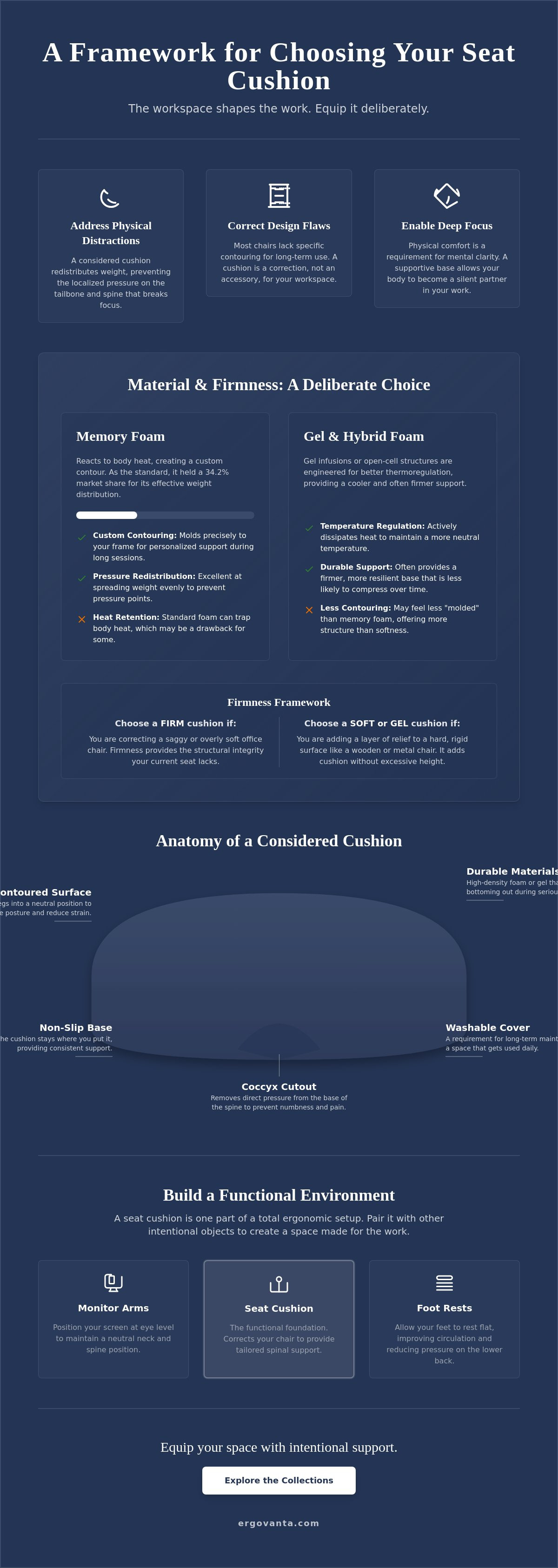
Material is the foundation of any tool made for the work. Memory foam is a standard choice for a reason. It reacts to your body heat to provide a custom contour that matches your frame. In 2025, this material held a 34.2% share of the market because it effectively redistributes weight during long sessions. If you prefer a cooler experience, look for gel infusions or open-cell formulations that offer better thermoregulation. Choosing the right ergonomic seat cushion means matching the material to your specific physical requirements.
The choice of firmness should be a deliberate decision based on your body weight and the current state of your chair. A tool that is too soft will bottom out; a tool that is too hard will create new pressure points. The goal is to equip your space with an object that remains invisible while you focus on the task at hand.
Firm vs. Soft: Which One Supports Your Work?
The choice depends on the chair you already own. If you are correcting a saggy office seat, a firm cushion provides the structural integrity you currently lack. Conversely, soft or gel-based cushions are better suited for adding a layer of relief to rigid wooden or metal seats. Effective workplace ergonomics requires you to look at your setup as a whole rather than viewing any single object in isolation.
The Anatomy of a Considered Cushion
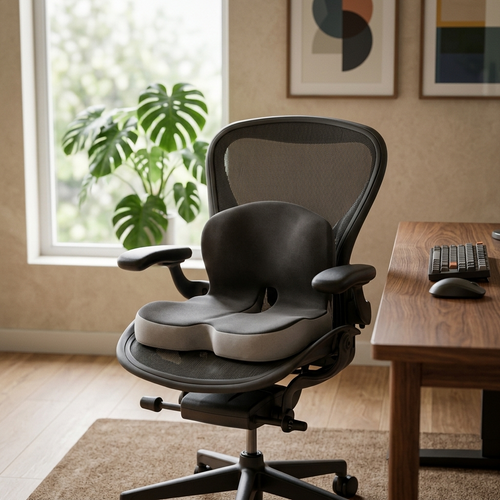
A considered design often includes a coccyx cutout to remove direct pressure from the base of the spine. This simple geometric choice prevents the numbness that often ends a work session early. The surface should be contoured to guide your legs into a neutral position, while a non-slip base ensures the object stays exactly where you put it. Because these are objects that get used daily, a washable cover is a requirement for long-term maintenance. You can explore these features in our ergonomics and comfort collections. If you are unsure which density fits your current chair, reach out for a second opinion on your setup.
Equipping Your Space: The Total Ergonomic Setup
An ergonomic seat cushion is a vital tool, but it doesn't exist in a vacuum. The workspace shapes the work; therefore, you must equip it as a complete system. If you spend serious hours at a desk, adding a cushion is only the first step in a larger process of intentionality. To build a setup that truly supports you, consider the biomechanics of your entire body. Following professional seat design criteria ensures that your support is part of a functional environment rather than a standalone fix that ignores the root of physical distraction.
Building the room around the work requires a checklist of adjustments. Once you place your cushion, adjust your armrests so your shoulders remain relaxed and neutral. Ensure your monitor is at eye level to prevent the neck strain that a seat cushion alone cannot fix. These small, considered changes turn a standard room into a personal environment made for the work.
The Role of the Under Desk Foot Rest
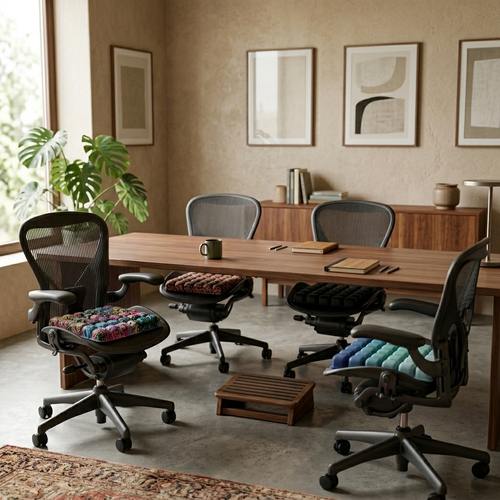
When you add height to your seat with a cushion, your feet might lose their solid connection to the floor. This often leads to "perching," a habit where you sit on the edge of your chair and create unnecessary lower back fatigue. Pairing your cushion with a foot rest ensures your hips stay at a 90-degree angle. This combination grounds your posture and provides the stability needed for deep focus. It is about equipping your space with objects that earn their place by solving real physical problems.
Maintaining an Intentional Workspace
Your setup should never be static. As your work evolves, your space might need to be re-equipped to meet new demands. Review your setup periodically to check your progress. A well-equipped room should feel like one you choose to come back to every morning. Explore our workspace essentials to find the small objects that facilitate a better day at the desk.
Build your space deliberately. The room around you influences the quality of the work you produce. For the people who do the work, an intentional environment is the ultimate advantage.
Build the Workspace You'd Choose to Come Back To
Your workspace is a direct reflection of the work you intend to do. Choosing an ergonomic seat cushion is the first step in correcting a setup that has been working against you. By matching your support to your specific chair and body, you remove the physical distractions that break your focus. Remember that intentionality is a system; a considered cushion performs best when paired with a foot rest and a monitor at eye level.
This approach reflects the etymology of our name: "Ergo," the Ancient Greek for purposeful function in action, meets "Vanta" for your modern advantage. We build considered designs that earn their place in the rooms that get used. If you spend serious hours at your desk, you deserve an environment that supports you through every session. It's time to stop settling for a setup that leaves you fatigued and start building one that facilitates your best work. Equip your space with intentional ergonomic tools and see the difference a deliberate environment makes. For the people who do the work, every small object matters.
Frequently Asked Questions
Can an ergonomic seat cushion fix a bad office chair?
An ergonomic seat cushion won't repair a chair with a broken frame or a failing gas lift, but it can rehabilitate a seat that lacks proper support. Most standard chairs use low-density foam that bottoms out within months of use. A high-density cushion adds the structural integrity needed to keep your spine aligned. It's a deliberate upgrade for a chair that is functional but physically unsupportive for long sessions.
How do I know if I need a firm or a soft cushion for my desk?
Base your choice on the current surface of your chair and your body weight. If you're sitting on a hard wooden or metal surface, a softer gel-based cushion provides necessary relief. If your current chair is already soft but lacks shape, a firm memory foam cushion offers the structural correction you need. Heavier individuals generally benefit from firmer materials that won't compress fully during the work day.
Will a seat cushion help with tailbone pain during long work days?
Yes, specifically if the cushion features a coccyx cutout. A ergonomic seat cushion with a "U-shaped" design is built to remove direct pressure from the base of your spine. This allows your tailbone to hover rather than compress against a hard seat pan. By redistributing your weight to your sit-bones, you prevent the localized inflammation that often ends a deep work session prematurely.
Does the height of the cushion affect my desk ergonomics?
Yes, any change in seat height requires a recalibration of your entire setup. Adding a cushion will likely raise your sitting position by one or two inches. You must adjust your monitor height and armrests to compensate for this shift. If your feet no longer rest flat on the floor after adding the cushion, equip your space with a foot rest to ensure your hips and knees remain at the correct angles.
From the catalog