June 9, 2026
Monitor Light Bar vs Desk Lamp: Choosing the Right Light for Your Work

The workspace shapes the work. Equip it deliberately. If you spend serious hours at a desk, the light around you matters more than you think. You have likely felt the frustration of a harsh overhead bulb or a bulky lamp that claims too much real estate. When weighing a monitor light bar vs desk lamp, the decision comes down to how you want your space to function. The right tools should solve problems like screen glare and eye strain while keeping your desk clear for the tasks that matter.
We believe your desk should be a place you choose to come back to, not just a station where you are forced to sit. It is about intentionality and selecting the small objects that earn their place through purposeful function. This comparison provides a practical breakdown to help you decide which lighting solution fits your specific workflow. We will explore how asymmetrical optics, desk footprint, and light quality impact your focus, helping you build a workspace that feels well-equipped and entirely yours.
Key Takeaways
- Learn how to choose the light that earns its place on your desk based on the specific work you do.
- Discover why monitor light bars are the practical choice for saving space and eliminating screen glare.
- Identify the specific tasks where a traditional desk lamp still outperforms modern alternatives.
- Use our decision framework to settle the monitor light bar vs desk lamp debate for your unique workspace.
Understanding the Tools: Monitor Light Bars and Desk Lamps
The workspace shapes the work. Equip it deliberately. If you spend serious hours at a desk, the tools you choose matter. Comparing a monitor light bar vs desk lamp isn't just about brightness; it is about how you choose to interact with your space. Both options serve as Task lighting. They balance the screen's glow with your surroundings. This reduces the eye fatigue that leads to headaches after a long session.
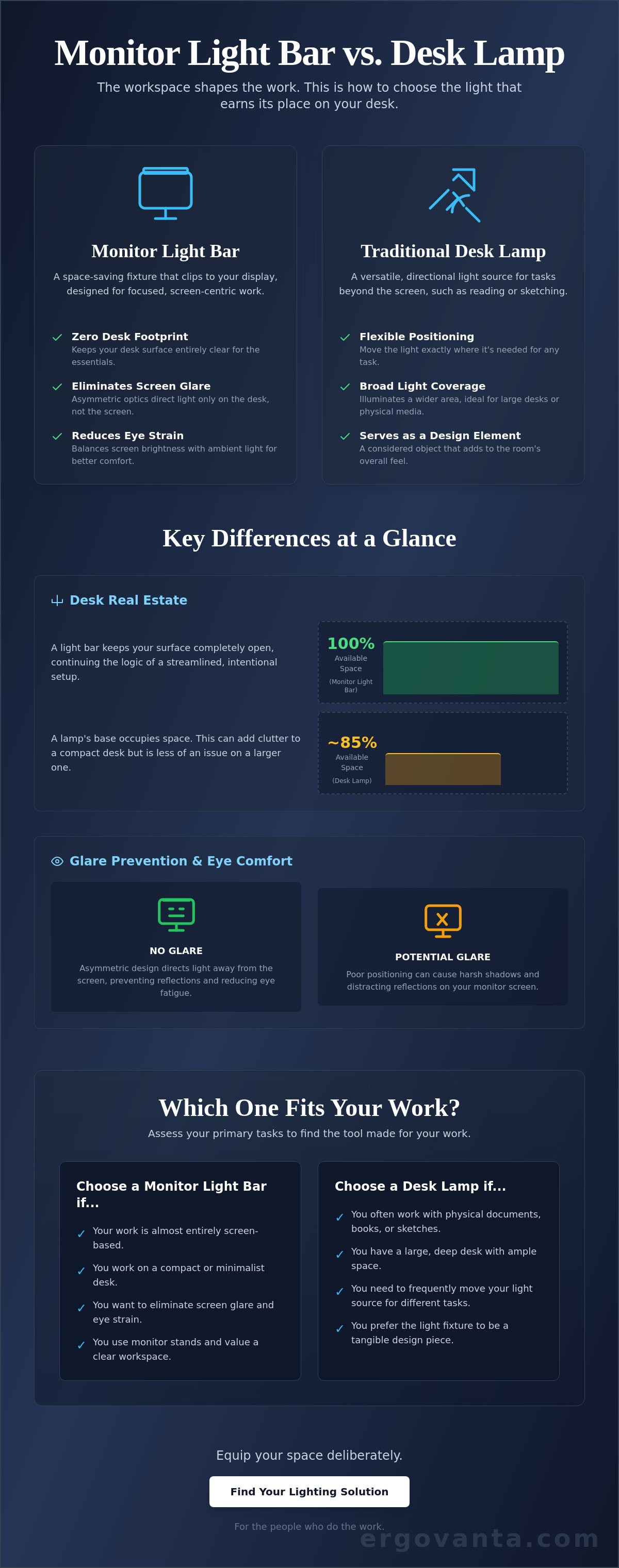
A monitor light bar is a space-saving fixture that clips directly to the top of your display. It keeps the desk surface clear for other essentials. In contrast, traditional desk lamps provide versatile, directional light from a fixed base. Your choice depends on the specific work you do and the objects you have already chosen to place on your desk.
To better understand this concept, watch this helpful video:
The Mechanics of Monitor Light Bars
Monitor light bars use asymmetric optics. This technology directs light downward at a sharp angle to illuminate the desk without hitting the monitor screen. This eliminates reflections and glare entirely. Most models allow you to adjust color temperature. Use cooler light for morning focus and warmer tones for evening winding down. Because they sit on top of the display, they are ideal for small setups where every square inch of desk space is considered and every object must earn its place.
The Versatility of the Traditional Desk Lamp
The strength of a traditional lamp is its flexibility. You can move the light exactly where it is needed, whether you are writing in a journal or checking a physical document. It is a design choice that helps equip your space for more than just screen work. With various styles available, a lamp can make a room feel less like a sterile office and more like a room that gets used. It provides a wider pool of light that can cover more than just the area directly in front of your screen.
Performance and Space: How They Change Your Setup
The layout of your desk dictates how you move and think throughout the day. Every object should earn its place. When you compare a monitor light bar vs desk lamp, the most immediate difference is the physical footprint. A light bar lives on your display, leaving the surface entirely open for your keyboard, mouse, and notebooks. A lamp requires a fixed base. Even a small base can clutter a compact setup where space is limited.
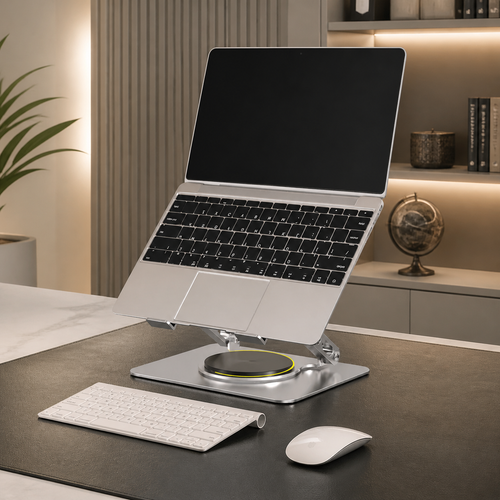
This decision also affects how you use other workspace essentials. If you have already invested in monitor and laptop stands to clear your desk, a light bar continues that logic. It keeps the workspace streamlined. However, if your work involves physical documents or sketching on a deep desk, a lamp provides the broad coverage those tasks require. It is about building a space made for the work you actually do.
Glare Prevention and Eye Comfort
Asymmetric optical design is the technical foundation of glare-free screen work. By directing light at a specific downward angle, a light bar illuminates your desk while keeping the screen surface dark. This prevents the distracting reflections often caused by traditional lamps. Desk lamps can create harsh shadows across your keyboard if positioned poorly. Consistent, flicker-free lighting helps you stay focused during serious hours at a desk. It stops your eyes from constantly adjusting between a bright monitor and a dim workspace.
Desk Real Estate and Layout
The room around the desk matters as much as the desk itself. A light bar frees up the real estate a lamp base would occupy, which is vital for narrow desks or minimalist setups. It allows your equipment to feel intentional rather than crowded. A desk lamp remains the better choice for large, deep desks where you need to move the light source frequently. If you are unsure which direction to take, you can always reach out for more advice on building your ideal environment.
Which One Fits Your Work? A Decision Framework
The choice between a monitor light bar vs desk lamp is not about which tool is better in a vacuum. It is about what earns its place in your space. Every object on your desk should serve a purposeful function. To decide, you must look at the specific rituals of your day. If your desk is a dedicated space for deep work, the lighting should be as intentional as the work itself.
Assess your primary tasks. If your day is entirely screen-based, your needs differ from someone who juggles notebooks and physical documents. Your room environment also plays a role. A setup in a bright, sunlit room requires different support than a desk tucked into a dark corner. Equip your desk with the tool that solves your specific frustrations rather than following a tech trend.
Choosing a Monitor Light Bar If...
A monitor light bar is for the person whose work is primarily digital. It is the right choice if you need to maximize every inch of desk space. By clipping directly to your display, it removes the clutter of a lamp base. This creates a minimalist, intentional look for your ergonomic lighting setup. Choose this if you struggle with headaches or eye strain caused by screen reflections. Before you buy, check your existing equipment; ensure the light bar won't interfere with your webcam or the arc of a curved monitor.
Choosing a Desk Lamp If...
A traditional lamp earns its place if your work extends beyond the screen. If you frequently sketch, read, or write on paper, you need the flexible coverage a lamp provides. It allows you to direct light exactly where the physical work happens. A lamp also doubles as ambient room lighting when you are not at the screen. This makes the room feel more like a living space and less like a sterile office. It offers a tactile experience that becomes part of your work ritual. If you rely on your desk setup for the entire room's atmosphere, the broader pool of light from a lamp is often more practical.
Build a Workspace Made for the Work
The workspace shapes the work. Equip it deliberately. Whether you choose a light bar for its space-saving optics or a desk lamp for its tactile versatility, the goal is intentionality. You are building a room that gets used; one where the small objects earn their place through daily utility. By choosing tools that address screen glare and limited real estate, you create an environment that supports focus rather than distracting from it.
In the practical comparison of a monitor light bar vs desk lamp, the right choice is the one that fits your specific workflow. We provide functional designs and ergonomic tools that earn their place on your desk. With national shipping on all workspace essentials, it's easier than ever to build a setup you'll choose to come back to. If you're ready to build your environment, equip your workspace with our considered lighting collection.
Your space is a personal environment for doing the work. Make it count.
Frequently Asked Questions
Do monitor light bars actually prevent eye strain?
Yes, monitor light bars reduce eye fatigue by balancing the contrast between your bright display and the surrounding room. They utilize asymmetric optics to direct light onto the desk surface without reflecting off the glass. This eliminates the glare and reflections that typically cause squinting and headaches. It is a considered solution for anyone spending serious hours at a desk, allowing your eyes to stay focused on the work without constant adjustment.
Can I use a monitor light bar with a curved screen?
Most modern light bars are compatible with curved screens, but the mounting mechanism is the deciding factor. Since curved displays vary in thickness and arc, you need a fixture with a flexible or weighted counterweight. Some models are specifically engineered for ultrawide displays to ensure the light path remains clear. When weighing a monitor light bar vs desk lamp for a curved setup, verify that the clip won't put pressure on the panel.
Will a monitor light bar block my webcam?
It is possible, but many designs account for this by sitting slightly forward or providing a mounting point on top of the fixture. If you use a built-in laptop camera or a monitor with extremely thin bezels, a standard clip might cover the lens. Check the dimensions of the mounting bracket before you equip your space. If your work involves frequent video calls, look for a low-profile model that leaves the top center of your monitor clear.
Are desk lamps better for reading physical books?
Traditional desk lamps are generally superior for reading physical books or sketching. They provide a broader pool of light and the directional flexibility to move the source exactly where it is needed. While a light bar is intentional for screen-based tasks, its fixed light path may not reach your lap or the far edges of your desk. A lamp is a tool made for the work that happens off the screen, offering better coverage for physical documents.
From the catalog