June 22, 2026
The Best Dimmable Floor Lamp for Reading: A Guide to Considered Lighting

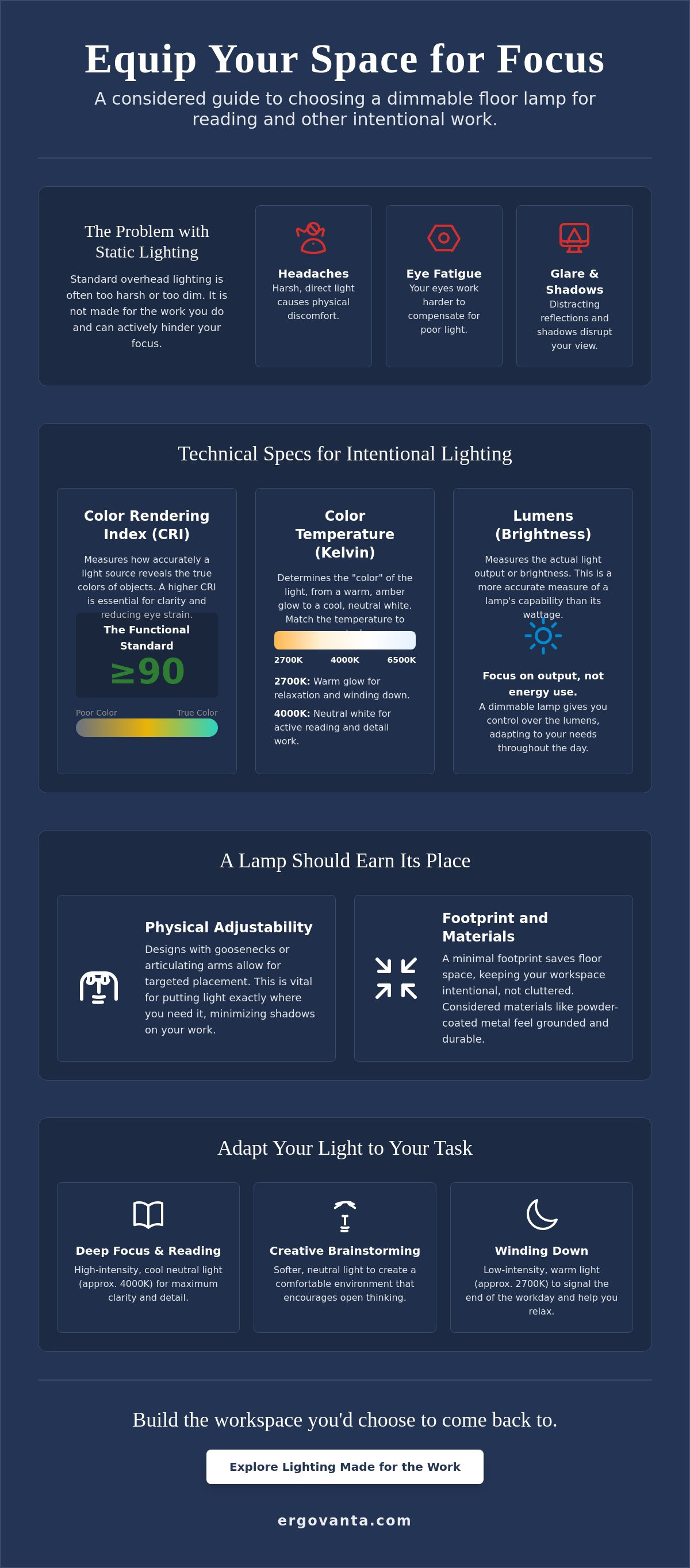
The workspace shapes the work. If you spend serious hours at a desk, the room around it matters more than you think. Every object in your space should earn its place through purposeful function. A dimmable floor lamp for reading is not just a fixture; it is a tool that adapts to your level of focus. Most people struggle with harsh, static lighting that causes headaches and eye fatigue by mid-afternoon. You shouldn't have to fight your environment to get things done.
Learn how to choose a floor lamp that supports your vision and helps you build a workspace you actually want to use. We will cover the technical details that matter, from why a Color Rendering Index of 90 or higher is essential for clarity to finding a minimalist aesthetic that saves floor space. We will also explore the concept of layered lighting to keep your room intentional and flexible throughout the day. It is time to equip your space with lighting made for the work.
Key Takeaways
- Understand why lighting is a functional requirement for your work rather than just a piece of decor.
- Learn how to select a dimmable floor lamp for reading that adapts to your focus needs and the time of day.
- Identify the technical specifications, such as CRI and color temperature, that help reduce eye fatigue during long sessions.
- Build a more intentional layout by integrating your lighting into a workspace you actually want to come back to.
Choosing a Dimmable Floor Lamp: Why Light Levels Shape the Work
The workspace shapes the work. Equip it deliberately. If you spend serious hours at a desk, the room around it matters more than you think. Lighting is not just a decor choice; it is a functional requirement for any considered workspace. A dimmable floor lamp for reading is a tool designed for variable intensity. It allows you to adjust the output based on the specific task at hand. At Ergovanta, we look to the etymology of our name for guidance. "Ergo" comes from the Ancient Greek for purposeful function in action. This philosophy applies directly to your lighting. Choosing a lamp should be an intentional act of building a space that works for you.
Standard overhead lighting often fails to support deep focus. It's designed to illuminate a room broadly, which usually results in glare on your pages or screens and distracting shadows. To do the work well, you need light that is directed and adjustable. It shouldn't be a struggle to see what's in front of you.
To better understand how specific fixtures support your focus, watch this helpful buying guide:
Reducing Eye Strain Through Intentional Lighting
Static, unchangeable light environments are a primary cause of eye fatigue. When the light is too bright or too dim for the time of day, your eyes work harder to compensate. Using a dedicated task lighting solution helps prevent the glare that leads to digital eye strain. This is especially important in rooms used for multiple purposes, where the light needed for a video call differs from what's required for reading a physical manuscript.
The Advantage of Dimmability for Variable Tasks
Your focus changes throughout the day. Technical reading requires high-intensity light to capture every detail. Conversely, creative brainstorming often benefits from a softer environment. Dimming capabilities allow you to transition from the intensity of work hours to the necessary rituals of winding down. By choosing a dimmable floor lamp for reading from a collection of intentional lamps, you build a room that adapts to your needs rather than forcing you to adapt to it. Small objects earn their place when they serve the work you do.
Technical Specs That Matter: Equipping Your Space for Focus
The workspace shapes the work. Equip it deliberately. Choosing a dimmable floor lamp for reading is about more than filling a dark corner; it's about gaining a functional advantage. At Ergovanta, we call this the "Vanta" advantage. It's the edge you get when your tools are chosen for performance rather than just appearance. To build a room that supports your focus, you need to look past the surface and evaluate the technical specs that actually impact your day. You can explore our floor lighting collection to see how these specifications translate into considered design.
Lumens and Color Temperature: Finding the Focus Point
Light quality is measured primarily through Kelvin (K) and Lumens. Kelvin ratings tell you the "color" of the light. A 2700K rating provides a warm, amber glow suitable for relaxation, while 4000K offers a cooler, neutral white that is better for active reading and detail work. Lumens measure the actual light output, which is far more relevant than the wattage or energy used. The Occupational Safety and Health Administration provides recommended lighting levels for task-based environments to ensure you aren't straining to see. Clarity also depends on a high Color Rendering Index (CRI). A CRI of 90 or higher is essential because it ensures that the contrast on the page is sharp and colors remain true to life.
Physical Adjustability and Footprint
A lamp only earns its place if it puts light exactly where you need it. Prioritize designs with goosenecks or articulating arms. These allow for targeted placement, which is vital for minimizing shadows on your book or tablet. Consider the footprint of the base as well. Your space should feel intentional, not cluttered. Look for lamps made from considered materials like powder-coated metal or solid wood. These materials are durable and possess a weight that feels grounded in your space. If you have questions about which specs fit your specific layout, feel free to reach out to our team for guidance. We build tools for the people who do the work.
Integrating the Floor Lamp Into Your Workspace
The workspace shapes the work. Equip it deliberately. If you spend serious hours at a desk, the room around it matters more than you think. Building a workspace you actually choose to come back to requires more than just a desk and a chair; it requires a layout that supports your focus. You should equip your workspace essentials with tools that work together rather than competing for space. A dimmable floor lamp for reading is a central part of this environment. It provides the flexibility to change the atmosphere as your tasks evolve. Explore our considered lighting solutions to find fixtures that serve every corner of your room with purpose.
Placement Strategies for Maximum Utility
A lamp only earns its place if it is positioned correctly. To avoid casting shadows across your book or workspace, follow the "over-the-shoulder" rule. Place the light source behind you and slightly to the side of your dominant hand. This ensures the light falls directly on your page without your body getting in the way. This placement also helps when you use monitor laptop stands. By directing the light away from the screen and onto your desk surface, you significantly reduce the glare that leads to eye fatigue. The goal is to create a clear, focused area where the light serves the task at hand.
The Rooms That Get Used: Creating a Ritual
Intentionality is the difference between a cluttered room and a workspace that works. We believe in the rooms that get used. Your dimmable floor lamp for reading acts as a catalyst for a refined reading ritual. It signals a shift in your day, moving you from the high-intensity light of technical work to a softer, more considered glow for deep reading or brainstorming. Choosing objects that serve a specific purpose helps you take ownership of your environment. A well-equipped space is one where every item has a reason for being there. When your tools are made for the work, the work becomes easier to do. Build your space with intention, and it will support you for years to come.
Build a Workspace That Supports Your Vision
The workspace shapes the work. Equip it deliberately. You now know that lighting is a functional requirement rather than a background detail. By prioritizing technical specifications like high CRI and adjustable Kelvin ratings, you protect your focus from eye fatigue. Proper placement ensures your tools work with your layout, not against it. Finding the right dimmable floor lamp for reading is about more than aesthetics; it is about creating a room that serves your specific needs.
We provide a curated selection of functional designs made for the people who do the work. These are the small objects that earn their place through performance and intentionality. If you are ready to build a space you actually want to come back to, reach out to our team for guidance on equipping your environment. Your space should be as dedicated to the task as you are.
Frequently Asked Questions
What is the best brightness level for reading in 2026?
For task-oriented work like reading, a range of 1600 to 2500 lumens is the recommended standard for 2026. This provides enough intensity to see fine print clearly without over-illuminating the entire room. While ambient lighting usually sits between 800 and 1600 lumens, your reading nook requires that extra boost. Using a dimmable floor lamp for reading allows you to hit these peaks during intense study and dial it back when the work is done.
Where should a floor lamp be placed for reading to avoid shadows?
Place your lamp behind your shoulder on the side opposite your writing or dominant hand to eliminate distracting shadows. If you are right-handed, the light source should come from over your left shoulder so your body doesn't block the light. This positioning ensures the output hits your book or tablet directly. Choose a fixture with an articulating arm so you can adjust the angle of the head, keeping the light focused on the page rather than bouncing off nearby surfaces.
Are LED floor lamps better for reading than traditional bulbs?
LED lamps are the superior choice because they provide consistent light quality and meet current energy efficiency standards of at least 45 lumens per watt. In 2026, LED is the default for a dimmable floor lamp for reading due to its long lifespan and minimal heat output. Unlike traditional bulbs, LEDs allow for precise control over color temperature and brightness. This flexibility is essential for building an intentional workspace that adapts to your focus throughout the day.
How does color temperature affect my ability to focus on reading?
Color temperature impacts your focus by mimicking natural daylight, with cooler temperatures between 4000K and 5000K being best for reducing eye strain during active reading. These cooler tones help you maintain alertness during long sessions at your desk. Clarity also depends on a Color Rendering Index (CRI) of 90 or higher. This ensures the contrast on the page is sharp and the white of the paper doesn't look yellowed or dull, helping the room feel made for the work.
From the catalog