Collection
Sculptural
Pieces that hold the room. Forms worth looking at when they are switched off, not only when they are working.
 Add to cart
Lighting
Origami
 Add to cart
Lighting
Driftwood
 Pick a color
Lighting
Ribbon
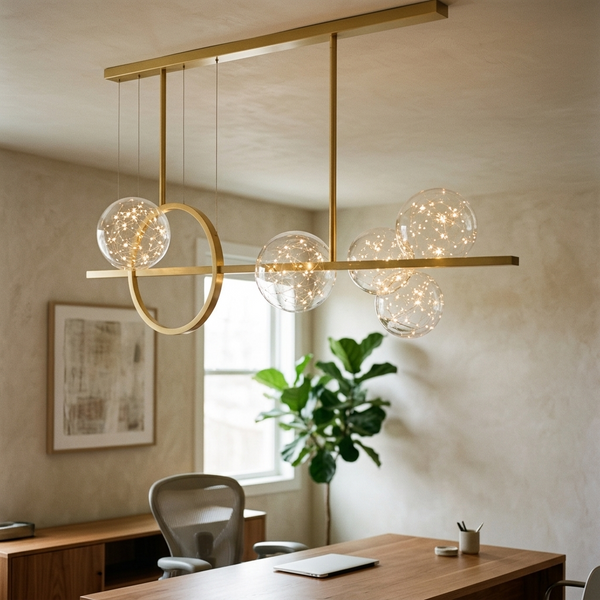 Add to cart
Lighting
Lyra
 Pick a color
Lighting
Polygon
Showing 53 of 53
About this collection
When the object is the point
Sculptural means the form is doing work beyond its function. These are the pieces you notice first in a room: a lamp read as a shape before it is read as a light, an object that earns its footprint on a shelf without needing a job. A workspace usually only wants one or two of them. Sculptural pieces are focal points, and focal points stop working when they compete. Pick the one surface that should draw the eye, put a sculptural piece there, and keep the rest reductive.
Common questions
What counts as sculptural here?
Pieces whose silhouette is the reason they exist, alongside the job they do. That includes statement pendants and chandeliers, formed floor and table lamps, and desk objects that are closer to small sculpture than to storage.
How many sculptural pieces should one room have?
One or two. They function as focal points, and focal points cancel each other out when there are several in a sight line. If you want more than one, separate them so they are not read at the same time.
Are these practical, or purely decorative?
Most are working lights and functional objects that happen to be formed rather than plain. Each product page carries its own dimensions and specification, so check the spec sheet if a piece has to do a specific job rather than just hold a corner.
What pairs well with a sculptural piece?
Reductive surroundings. Sculptural and Minimalist are complementary rather than opposed: the quiet pieces are what give the loud one room to be seen.