
The workspace shapes the work. Equip it deliberately. Most people view a missing ceiling fixture as a design flaw, but it is actually an opportunity to build a better environment from the ground up. If you are struggling with a dark office or a "cave-like" rental, you don't need an electrician to fix the problem. Learning how to light a room with no overhead lighting is about taking ownership of your space through considered choices.
You likely already know that a single lamp in the corner isn't enough to stop the eye strain or the harsh glare during your video calls. We are going to change that. This guide will show you how to build a functional lighting plan using layers and specific fixtures that earn their place. We will cover how to use desk lamps, monitor light bars, and floor lamps to eliminate dark corners and shadows. By the end, you will have a clear strategy to equip your room with even, intentional light that makes it feel ready for the work.
Key Takeaways
- Build a three-layer lighting strategy to replace a single ceiling fixture with balanced, intentional light.
- Master how to light a room with no overhead lighting by using floor lamps to bounce light off the ceiling and create a natural ambient glow.
- Equip your workspace with plug-in wall lights and monitor light bars to eliminate shadows and eye strain without needing an electrician.
- Select bulbs in the 2700K to 3000K range to ensure your room feels warm and functional rather than clinical.
- Position your fixtures to avoid screen glare and ensure every corner of your desk is illuminated for deep work.
The Strategy of Layered Lighting
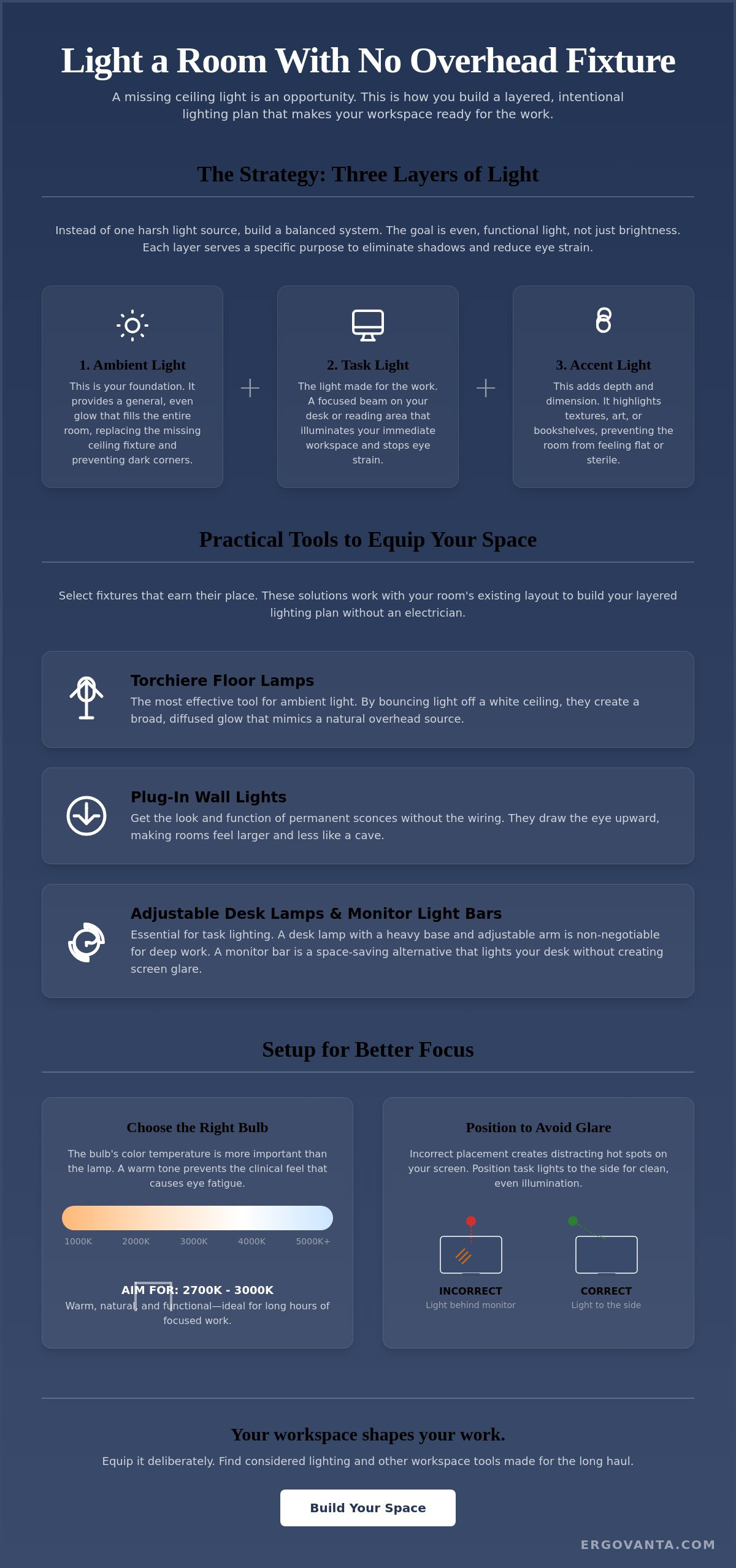
The workspace shapes the work. Equip it deliberately. When you are figuring out how to light a room with no overhead lighting, the goal isn't just to "make it bright." It's to build a system that supports your focus. The Strategy of Layered Lighting relies on three distinct types of light working together: ambient, task, and accent. This isn't about decoration; it's about purposeful function.
Ambient lighting acts as your foundation. It replaces the missing ceiling fixture by providing a steady, gentle glow across the entire space. Task lighting is the light made for the work. It belongs on your desk or near your reading chair, focusing specifically on where your eyes are fixed. Finally, accent lighting adds depth. It prevents your room from looking like a flat, sterile box by highlighting textures or corners that would otherwise be lost in the dark. Understanding how to light a room with no overhead lighting requires moving away from the "big light" mentality and toward a more balanced, intentional setup.
Why One Light Source Is Never Enough
Relying on a single high-intensity lamp is a common mistake. It creates deep, distracting shadows and forces your eyes to constantly adjust between the bright spot and the dark corners. This leads to physical strain and mental fatigue before your day is even half over. By distributing multiple lower-wattage sources, you create an even wash of light that feels natural. This approach helps define specific zones in your room: one area for deep focus, another for reading, and another for the ritual of finishing the day. It's about using considered lighting to make the room feel intentional and ready for use. When you equip your space with multiple sources, you gain control over the atmosphere and your own productivity.
5 Practical Solutions to Brighten Your Space
Solving the challenge of how to light a room with no overhead lighting doesn't require a renovation. It requires selecting equipment that works with the architecture of your space. While the previous section detailed the theory of layering, these five solutions provide the practical tools to execute that plan. You aren't just adding light; you are equipping your room for the work you do every day.
Floor lamps with upward-facing shades, often called torchieres, are the most effective way to mimic a ceiling light. By bouncing light off the white surface of the ceiling, they create a broad, diffused glow that fills the entire volume of the room. For walls, plug-in wall lights offer the look of permanent sconces without the need for an electrician or a lost security deposit. These fixtures draw the eye upward, making a small room feel significantly larger and less cramped.
If you spend serious hours at a desk, a dedicated desk lamp is non-negotiable. Look for models with heavy bases and adjustable arms that earn their place on your workstation through sheer utility. If desk real estate is limited, monitor light bars are an excellent alternative. They clip to the top of your screen and illuminate your immediate work area without causing glare or taking up a single inch of surface space.
Equipping Your Walls and Surfaces
Wall lights are more than just functional; they are architectural. By placing lamps on bookshelves or side consoles, you eliminate the "cave-like" feeling of dark corners. Choose fixtures with a considered design that feel like they belong in the room rather than just being temporary fixes. Proper Setup and Optimization ensures these pieces work together to build a workspace that feels intentional and ready for use.
The Role of Floor Lighting
Floor lighting provides the verticality needed to fill a room. Arc lamps are particularly useful because they can reach over a desk or seating area to provide centered light similar to a pendant. Explore the floor lighting collection to find sturdy, considered options made for the long haul. If you have questions about which fixture fits your specific layout, feel free to reach out to our team for advice on building your setup.
Setup and Optimization for Better Focus
If you spend serious hours at a desk, the room around it matters more than you think. Owning your environment means looking past the fixtures to the quality of the light itself. When figuring out how to light a room with no overhead lighting, your bulb choice is actually more important than the lamp. Aim for a color temperature between 2700K and 3000K. This range provides a warm, natural feel that mimics daylight, avoiding the clinical, blue-tinted glare that leads to eye fatigue.
Placement is the next step in building a space that works. Position your task lights to the side of your monitor rather than directly behind or in front of it. This prevents light from bouncing off the screen and creating distracting hot spots that obscure your work. To make the system effortless, use smart plugs. They allow you to control your entire layered setup with one switch or a voice command, turning a collection of lamps into a cohesive unit. Equip your area with workspace essentials that support this focus, ensuring every object on your desk earns its place.
Managing the Cords
A room lit by lamps inevitably involves more cables. Don't let a mess of wires ruin an intentional setup. Use a cable management tray to keep the floor clear and run cords along baseboards or behind furniture. A clean floor helps maintain an organized mind. It allows you to focus on the work instead of the clutter. The rooms that get used are the ones that stay organized.
Etymology of Ergovanta
Our name is built on two specific ideas. Ergo comes from the Ancient Greek for purposeful function in action. Vanta is a coined word for advantage. We believe that building a workspace you'd choose to come back to starts with how you light it. When you master how to light a room with no overhead lighting, you turn a dark corner into a personal environment made for the work. For the people who do the work, intentionality is the ultimate advantage.
Build Your Ideal Workspace
The workspace shapes the work. Equip it deliberately. By moving away from the need for a central ceiling fixture, you gain the freedom to build a lighting plan that actually suits your routine. Whether you are using floor lamps to bounce light off the ceiling or task lamps to focus on your desk, every choice should be intentional. Knowing how to light a room with no overhead lighting is about more than just visibility; it is about creating an environment where you can spend serious hours without strain.
Our collection includes considered wall, floor, and desk lighting designed specifically for the people who do the work. We ship nationally across the United States to help you build a room that feels like yours. Equip your space with considered lighting solutions from Ergovanta. Take ownership of your environment and build a workspace you will choose to come back to every single day.
Frequently Asked Questions
Can I really light a whole room with just lamps?
Yes, you can illuminate an entire space effectively by using a three-layer strategy. Floor lamps with upward-facing shades provide the necessary ambient light to replace a missing ceiling fixture. When you combine these with task lights for your desk and accent lights for depth, the room feels balanced and intentional. It's about distributing light sources rather than relying on one bright bulb to do all the work.
What is the best light bulb color for a room with no overhead light?
Aim for bulbs in the 2700K to 3000K range for a warm, natural feel. This temperature mimics daylight without the harsh, blue tones often found in clinical office environments. Since you are learning how to light a room with no overhead lighting, choosing the right color ensures the space feels functional for work while remaining a room you'd choose to come back to after hours.
How do I avoid cord clutter when adding multiple floor lamps?
Equip your space with cable management trays and clips to keep wires off the floor. Running cords along the baseboards or hiding them behind larger furniture pieces maintains a clean, intentional look. A workspace that gets used needs to stay organized, and managing your cables is a simple way to prevent your setup from feeling cluttered. It's about making sure your equipment earns its place without creating a mess.
Are plug-in wall sconces safe for long-term use in a rental?
Plug-in wall lights are perfectly safe and ideal for renters because they don't require permanent wiring. They function just like a standard lamp but offer the benefit of clearing up desk or floor space. These considered fixtures allow you to take ownership of your lighting plan without violating your lease or needing an electrician. They're a functional solution for anyone building a long-term workspace in a temporary home.