May 18, 2026
Desk Cable Management Ideas: Build a Workspace That Works for You

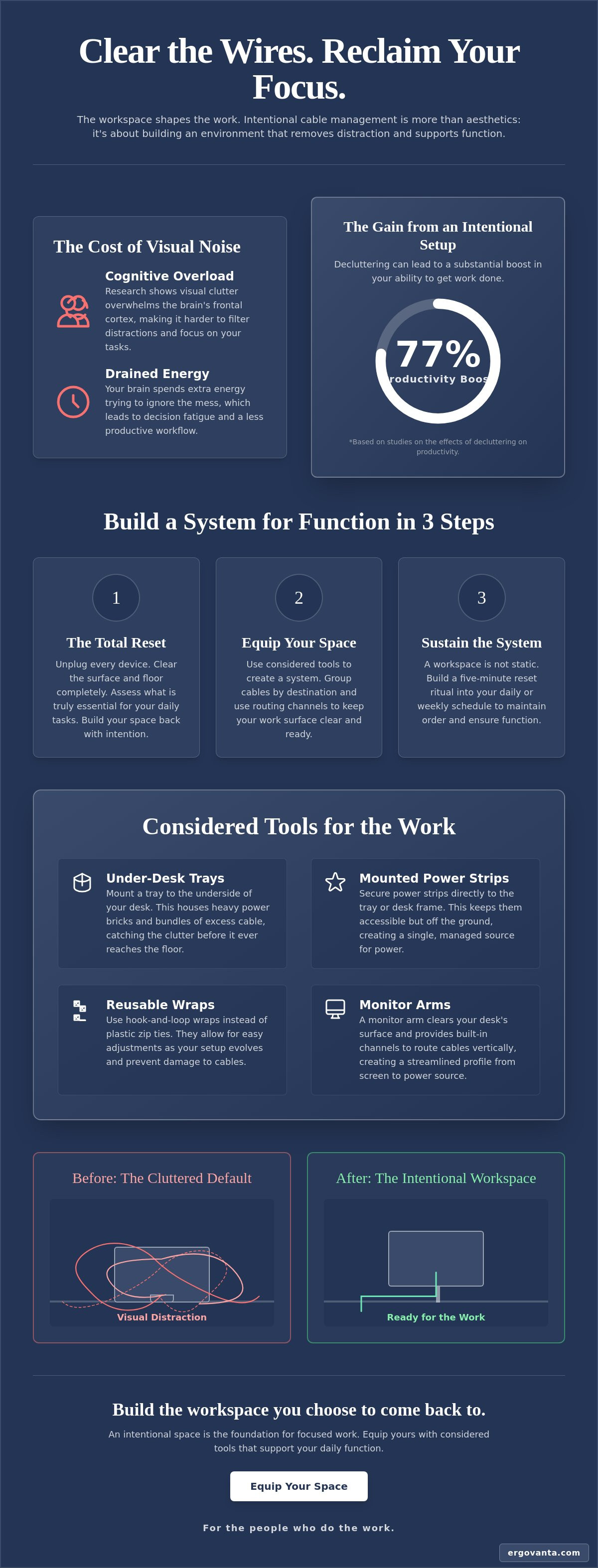
The workspace shapes the work. Equip it deliberately. Research from Princeton University shows that visual clutter overwhelms the brain's frontal cortex, making it harder to filter out distractions and finish your tasks. In fact, studies suggest that decluttering your environment can boost productivity by as much as 77%. If you spend serious hours at a desk, these desk cable management ideas are about more than just aesthetics; they are about reclaiming your mental bandwidth and clearing the path for your best work.
It's frustrating to sit down for a focused session only to be greeted by a tangled web of wires under your feet or a chaotic surface. You know that a messy environment often leads to a messy workflow. We will show you how to clear the visual noise and build an intentional setup that invites focus. This guide previews the most effective ways to route power, hide excess cords, and build a workspace that you'll actually want to come back to every morning.
Key Takeaways
- Understand why intentional cable management is about supporting your daily function rather than just hiding a mess.
- Equip your space with considered tools, like under-desk trays, to catch cords before they reach the floor and drain your focus.
- Explore practical desk cable management ideas that group wires by destination to keep your surface clear and ready for the work.
- Build a five-minute reset ritual into your schedule to ensure you always have a workspace you choose to come back to.
Clearing the Visual Noise: Why Intentional Cable Management Matters
The workspace shapes the work. Equip it deliberately by removing the visual distractions that drain your focus. When your desk is a web of tangled wires, your brain spends extra energy trying to ignore the mess. This is why we focus on intentionality. Cable management isn't just about hiding "cable spaghetti" for the sake of a photo. It's the process of organizing wires to support function rather than just hiding them. It ensures your tools are accessible while keeping the surface clear for the task at hand.
To better understand how a physical reset changes the atmosphere of a room, watch this quick transformation:
Intentionality means every cord has a purpose and a place. You aren't just stuffing cables into a box to get them out of sight. You are building a system that allows for easy access and cleaning. When you equip your space with only what you need, you build an environment that supports deep focus.
The Total Reset: Preparing Your Space
Start by clearing the desk completely. Unplug every device and move the cords out of the way. This isn't just about cleaning: it's about seeing the room and the surface for what they are without the clutter. Assess which devices are truly essential for your daily tasks. If a peripheral hasn't been used in a month, it shouldn't be taking up space. Clean the surface and the floor beneath it to create a fresh starting point for your build. You can't implement effective desk cable management ideas on a surface that's already crowded.
Cognitive Load and the Organized Desk
Reducing visual clutter directly lowers decision fatigue by removing unnecessary stimuli that compete for your attention during the workday. A considered desk feels like a room that gets used, not a cold showroom floor. It's a space made for the work. Identify the objects that earn their place. The cables for your primary tools, like your monitor and laptop, should be the first ones you organize. This creates a clear mental path for your most important projects.
Practical Tools to Equip Your Workspace for Focus
The room around the desk matters. Once you have cleared the surface, you must build it back with intention. Effective desk cable management ideas aren't about achieving a sterile, showroom look. They are about creating a system that works as hard as you do. Equip your desk with tools made for the work, such as trays that catch the clutter before it reaches the floor.
Group cables by their destination. Keep power lines separate from data lines to prevent tangles and interference. This makes troubleshooting easier. It also aligns with basic office electrical safety standards by preventing pinched or overheated cords. Choose materials that feel durable and considered, ensuring your management system lasts as long as your desk.
Under-Desk Solutions: Trays and Power Strips
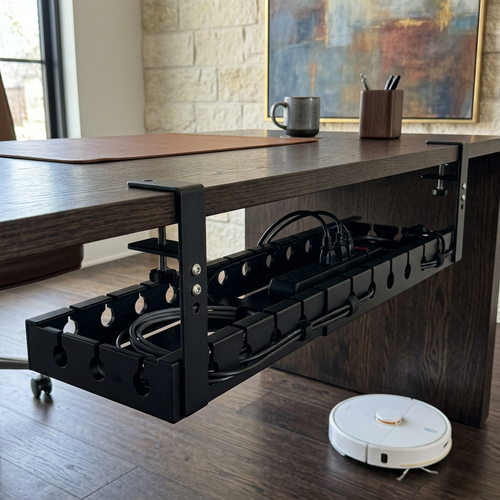
Mount a cable management tray to the underside of your desk to house heavy power bricks. Secure power strips directly to the tray or desk frame to keep them from sliding around. Use reusable hook-and-loop wraps instead of plastic zip ties. Wraps allow for easy adjustments as your setup evolves. If you need help selecting the right components for your build, you can contact our team for guidance.
The Vertical Advantage: Monitor Arms
A monitor arm clears the footprint of your screen, giving you more surface area for intentional work. Route cables through the built-in channels of the arm to maintain a streamlined profile. Position your screen at eye level to prevent the physical fatigue that disrupts your rhythm. Vertical space is often overlooked; lifting your monitor or laptop provides new routing paths for cords that would otherwise sit in your way. Implementing these desk cable management ideas ensures your primary tools are organized without sacrificing accessibility.
Sustaining the System: Daily Habits for an Intentional Desk
The room around the desk matters more than you think. If you spend serious hours at a desk, building a workspace you actually want to come back to is an investment in your own daily experience. Even the most effective desk cable management ideas require a commitment to maintenance. Ownership means respecting the system you built by keeping the surface clear of the daily drift that naturally accumulates. Establish a five-minute reset ritual at the end of every day. Clear the surface, tuck away loose objects, and ensure your cords remain in their designated routing paths. This simple act ensures that when you sit down tomorrow, the path is already clear for your best work.
Lighting and Personal Touches
Layer your lighting to create a warm, focused environment that defines your working hours. Use lamps to signal to your brain that it is time to focus on the task at hand. This physical cue helps you enter a state of deep work more quickly. Avoid adding "charming" filler that only serves as a distraction. Instead, choose small objects that earn their place, like a single vase or a faux plant. These grounding elements make the space feel like yours while remaining intentional and made for the work you do.
The Work-Life Boundary
Ownership also means knowing when to stop. Clear your workspace at 5 PM so you can transition out of work mode without the visual weight of your job following you. Incorporate a small bar accessory or a considered glass for a post-work ritual. This physical separation helps you reclaim your personal time. Reflect on how an intentional space supports your dedication to your craft, regardless of your job title. When you build a workspace that feels like yours, you aren't just organizing wires; you are building an environment that respects your time and your effort. These desk cable management ideas are only as strong as the habits that sustain them.
Build a Workspace You Choose to Come Back To
The workspace shapes the work. Equip it deliberately. By implementing these desk cable management ideas, you have moved beyond simply hiding a mess. You have built a system that reduces visual noise and lowers the cognitive load on your brain. Whether you are using vertical space with monitor arms or clearing power bricks into a dedicated tray, every choice you make should support your daily function. A considered desk isn't a static image: it is a room that gets used by someone who values their time and their output.
Consistency is what keeps your space functional. Maintain your five-minute reset ritual and use intentional lighting to signal your transition into focus. We believe in providing purposeful function in action through considered designs that earn their place on your surface. Our products are made for the people who do the work. If you are ready to finish your build, equip your workspace with intentional tools at Ergovanta. Your best work happens when the path is clear. Start building a space that truly works for you.
Frequently Asked Questions
How can I hide cables on a desk that is in the middle of a room?
Route your cables down a single desk leg using adhesive clips or hook-and-loop straps to keep them out of sight. For a desk in the middle of a room, a weighted cable sleeve or a floor cord cover that matches your flooring is essential. This prevents a "cable waterfall" and keeps the area around your desk safe to walk through. It is an intentional way to maintain a clean profile from every angle.
What is the easiest way to organize cables without drilling into my desk?
Clamp-on trays and high-strength adhesive clips are the most effective way to implement desk cable management ideas without drilling into your furniture. These tools provide a stable home for power strips and bricks while remaining completely removable. Silicone cable holders are also useful for keeping charging cords on the surface. They ensure your primary tools stay within reach without sliding off the back of a glass or metal desk.
How do I manage cables for a standing desk that moves up and down?
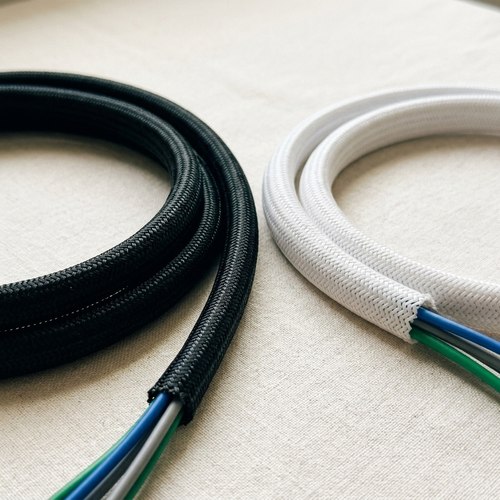
Use a flexible cable spine or a mesh sleeve to manage wires for a standing desk that moves throughout the day. These desk cable management ideas allow the cords to expand and contract safely as the desk height changes. Always leave enough slack in your cables at the highest setting to prevent tension on your ports. This considered approach protects your hardware and keeps your movement fluid while you work.
Is a minimalist desk setup actually better for productivity?
A minimalist workspace is better for productivity because it reduces the visual stimuli that compete for your attention. When you clear the clutter, you lower your cognitive load and make it easier to stay in a state of focus. It isn't about achieving a specific look; it's about building a space where every object has earned its place. An intentional desk is a tool that supports your dedication to the work.
From the catalog