May 15, 2026
The Definitive Guide to Wall Lights: Elevating Modern Professional Environments

What if the most important tool for your focus isn't sitting on your desk, but mounted to the wall beside it? If you spend serious hours at a desk, the room around it matters more than you think. Most workspaces suffer from flat, sterile overhead lighting that drains energy and leaves you with a cluttered surface of bulky lamps. By integrating wall lights, you reclaim your desk space and define the architectural boundaries of where the work happens. It's a deliberate choice to build an environment that feels focused and intentional. With integrated LED modules now commonly rated for 50,000 hours, these fixtures are built for the long haul.
You probably recognize the drain of eye strain or the flat, uninspiring look of a room lit by a single ceiling fixture. This guide will show you how to master architectural lighting to transform your room into a sanctuary of productivity and visual comfort. We'll explore the shift toward layered lighting, the practical benefits of high efficacy fixtures, and how to equip your space with objects that earn their place. Learn to build the workspace you'd choose to come back to every day.
Key Takeaways
- Define the boundaries of the room you work in by choosing light that adds depth; moving beyond the sterile flatness of standard overhead fixtures.
- Equip your workspace with swing-arm wall lights to reclaim desk surface area and keep your tools organized.
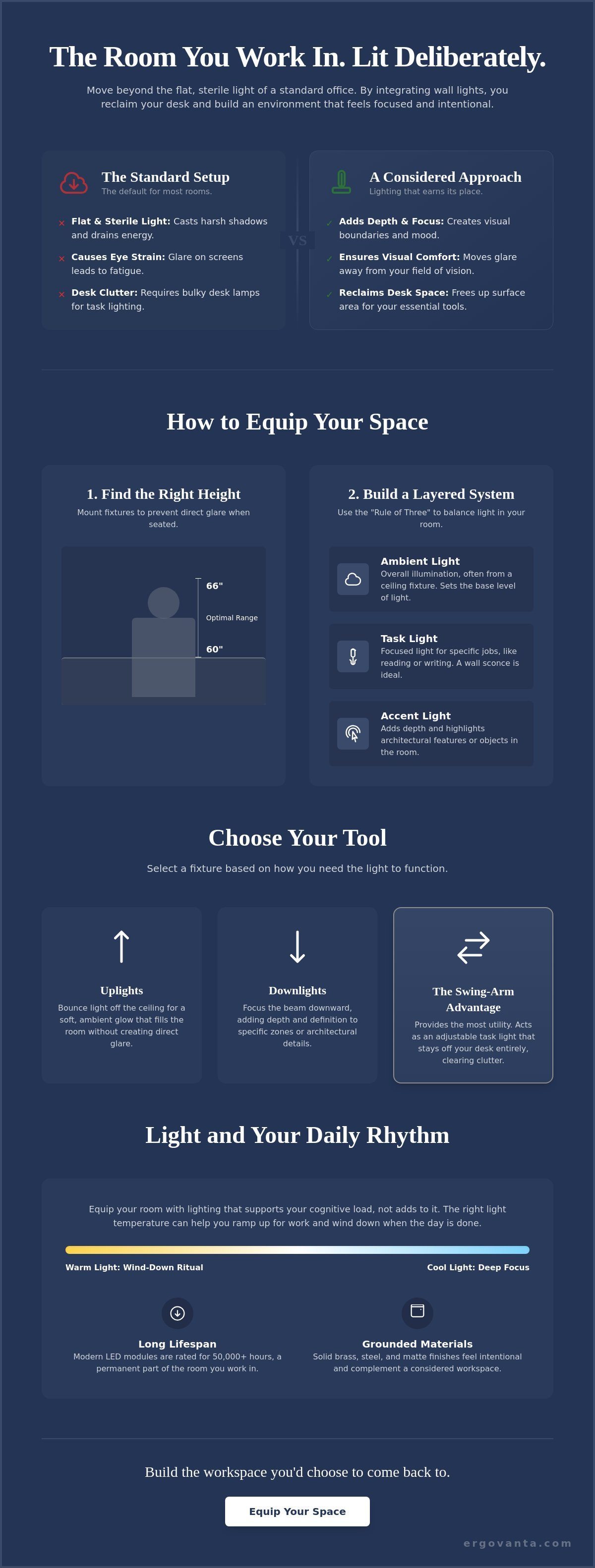
- Identify the specific mounting heights (60 to 66 inches) that prevent direct bulb glare and ensure visual comfort during long hours at your desk.
- Build a layered lighting system using the "Rule of Three" to balance your space with ceiling lights and task-specific lamps.
The Architectural Impact of Wall Lights in the Modern Workspace
If your room feels like a box, the lighting is likely to blame. Standard overhead fixtures are efficient at filling a space, but they're often terrible at making it a place you actually want to spend eight hours in. Using wall lights acts as a sculptural tool to break up that visual flatness. They cast light where it's needed most: on the vertical surfaces that define your field of vision. This creates a sense of depth that a single ceiling bulb simply cannot replicate.
To see how these fixtures function in a real-world setting, watch this demonstration:
Moving the light source to the walls is a fundamental part of ergonomics and comfort. It moves the glare away from your monitor and onto the perimeter of the room. This shift expands the perceived space, making a small spare bedroom feel like a dedicated studio. It's a simple way to equip your space for better focus and less eye strain. By lighting the walls rather than just the floor, you remove the cramped cubicle feel that drains energy during a long shift.
Beyond Illumination: Defining Professional Boundaries
Mounting a permanent fixture tells your brain the work is serious. It's the difference between a temporary desk and a room built for a specific job. You can use wall-mounted light to create specific zones in a multi-use apartment. When the wall light is on, the room is a workspace; when it's off, it's just a living room again. Architectural wall lighting is the intersection of form and psychological focus. If you're curious about the history of these tools, researching What is a Wall Sconce? reveals how they've evolved from simple torches to precision instruments for the people who do the work.
The Psychology of Light and Professional Focus
Shadows in the corner of your eye are a constant, subtle distraction. Consistent perimeter lighting eliminates that shadow anxiety and makes the room feel open and predictable. Light temperature also plays a role in your daily rhythm. Warm light helps with the wind-down ritual at the end of a project, while cooler light keeps you alert for difficult decision-making. Equip your room with lighting that supports your cognitive load rather than adding to it.
Selecting the Optimal Wall Sconce: Form, Function, and Influence
Selecting a fixture is about more than just picking a style; you are choosing a tool that dictates how you see your work. There are three primary categories to consider: uplights, downlights, and swing-arm sconces. Uplights bounce light off the ceiling to create a soft, ambient glow that fills the room without glare. Downlights focus the beam, adding depth and definition to specific zones. Swing-arm sconces provide the most utility, acting as adjustable task lights that stay off your desk entirely.
Choosing the right hardware helps you maintain Workplace Lighting Standards for visual comfort and performance. This balance is critical for long-term productivity. When your light is considered and intentional, you reduce the eye strain that often comes from poor overhead setups. Integrated LED modules in modern wall lights are now commonly rated for 50,000 hours, making them a permanent part of the room you work in.
Materials of Authority: Brass, Steel, and Matte Finishes
The weight of your tools matters. A metal fixture made from solid brass or steel feels permanent and grounded. It stands in contrast to the cheapness of plastic alternatives that often fail after a few months of use. Choose finishes that complement the textures already in your space. If you use a walnut desk or leather desk pads, matte black or aged bronze fixtures provide a functional look. These materials should coordinate with your other decor to create a cohesive environment where the work happens.
The Swing-Arm Advantage: Task Lighting Without the Bulk
Clutter is the enemy of focus. By mounting your task light to the wall, you clear valuable space for your monitor and laptop stands. This setup prevents the cramped feeling of a crowded desk and allows for better movement. Swing-arm wall lights are particularly useful for creative work or video calls; you can adjust the angle to eliminate harsh shadows on your face. This flexibility ensures your lighting is always as precise as your work. If you are ready to build a more intentional setup, you can shop the look to find pieces that fit your daily tasks.
Dimmability is a requirement for any serious workspace. It allows you to transition from the intense focus of a morning deadline to the wind-down ritual of the evening. As of 2026, many high-efficacy LED wall lights include multi-level dimming as a standard feature, supporting both your productivity and your circadian rhythm.
Implementing Professional Lighting: Placement and Ritual
The workspace shapes the work. Equip it deliberately. Placement of wall lights is a science of inches; not just a matter of aesthetics. To build a room that feels intentional and avoids direct bulb glare, mount your fixtures between 60 and 66 inches from the floor. This height ensures the light source remains above your seated eye level but low enough to wash the wall with texture. It's a functional choice that defines the boundaries of the room you work in.
Follow the "Rule of Three" to ensure your space is properly equipped. This involves layering ceiling lights for general fill, wall lights for depth, and desk lamps for the actual task at hand. This trio prevents any single light source from becoming too harsh or leaving the corners of the room in darkness. By spreading the light across different levels, you create a balanced environment that supports long hours of focus.
Eliminating Glare and Eye Strain
Position your fixtures slightly to the side or behind your primary monitor setup. This prevents the light from bouncing off the screen and into your eyes, which is a common cause of fatigue. The Golden Ratio of a functional room is reached when the light defines the boundaries of the space without ever drawing attention to the bulb itself. This considered placement keeps the focus on the work rather than the hardware.
The Evening Ritual: Transitioning from Work to Hospitality
Work doesn't just stop; it needs a transition. Dimming your wall lights creates a considered backdrop for bar and refreshments when the laptop finally closes. Using warm-spectrum lighting during this wind-down ritual helps maintain your circadian rhythm. It signals to your brain that the room is no longer a place of high cognitive load. For the people who do the work, this ritual is essential for separating the intensity of the day from the quiet of the evening.
A cohesive room is built one object at a time. Explore the full lighting collection to find fixtures that earn their place in your space. Consistency in materials and light temperature helps your workspace feel like a unified environment made for the work.
Build a Workspace That Supports the Work
The workspace shapes the work. Equip it deliberately. By integrating wall lights, you move beyond basic illumination to create a space with intentional depth and visual comfort. You've learned that mounting height is a science of inches; placing fixtures between 60 and 66 inches prevents the glare that leads to eye strain. Choosing metal over plastic isn't just about aesthetics. It's about equipping your space with tools that last as long as the work itself.
Every object in your room should earn its place. From the focus of the morning to the wind-down ritual of the evening, your lighting dictates the rhythm of where the work happens. We combine boutique ergonomic expertise with a curated selection of fixtures for people who value functional excellence. It's time to stop settling for a room that drains your energy. Start building an environment that reflects your dedication and supports your daily tasks. Equip your environment with Ergovanta’s curated wall lighting collection. Take ownership of your surroundings and create a room you'd choose to come back to every day.
Frequently Asked Questions
How high should wall lights be mounted in a professional home office?
Mount your wall lights between 60 and 66 inches from the floor to avoid direct glare. This height ensures the light source remains above your seated eye level; it provides a clean wash of light across the vertical surfaces of the room. It is a functional placement that helps define the room you work in. Consider your specific height to find the spot that prevents light from bouncing off your screen.
Can wall lights replace traditional desk lamps for task-heavy work?
Wall lights can replace traditional desk lamps if you choose a swing-arm model for your space. These fixtures provide focused task lighting without taking up valuable surface area on your desk. This is a practical way to equip your space if you use monitor stands or other tools that require a clear workspace. It allows you to move the light exactly where the work happens without the clutter of a bulky base.
What is the best color temperature for wall sconces in a workspace?
Aim for a color temperature between 3000K and 4000K during your most active work hours. This range provides a clean, neutral light that supports focus without feeling sterile or clinical. For your wind-down ritual at the end of the day, choose dimmable fixtures that can shift to a warmer 2700K. Using the right temperature helps you build an intentional environment that respects your natural rhythm and reduces eye fatigue.
Do wall lights require professional installation, or are there plug-in options?
You can choose between hardwired wall lights for a permanent look or plug-in models for a simpler setup. Hardwired fixtures offer a clean finish with no visible cords; they typically require an electrician for a safe installation. Plug-in sconces are a functional alternative if you want to equip your space quickly or if you rent the room you work in. Both options provide the same architectural depth and spatial definition.
From the catalog