May 25, 2026
Best Footrest for Under Desk Circulation: Build a Workspace That Works for You (2026)

Spending more than 10.6 hours a day at a desk significantly increases the risk of cardiovascular disease. If you spend serious hours at a desk, the room around it matters more than you think. You likely know the frustration of cold feet or that distracting "pins and needles" sensation in your lower legs. It's the physical cost of a workspace that wasn't built for the person using it. You shouldn't have to fight your environment to stay focused on the task at hand.
Finding the best footrest for under desk circulation is about more than just comfort; it's about intentionality. A considered workspace supports your natural blood flow and eliminates the pressure on your thighs that causes leg fatigue. Discover how to equip your space with a tool that earns its place by keeping you in the work longer. We'll look at the specific designs that reduce swelling and help you build a setup that feels intentional, functional, and entirely yours.
Key Takeaways
- Learn why closing the gap between your feet and the floor is essential for removing pressure from your thighs and staying focused on the work.
- Find the best footrest for under desk circulation by prioritizing models that encourage subtle, frequent movement throughout the day.
- Compare materials like high-density foam and wood to find the considered support that fits your specific daily habits.
- Discover how to equip your space with tools made for the work, including soft foundations for those who prefer working without shoes.
- Build a workspace you choose to come back to by focusing on small objects that earn their place through purposeful function.
The Void Under Your Desk: Why Circulation Matters for the Work
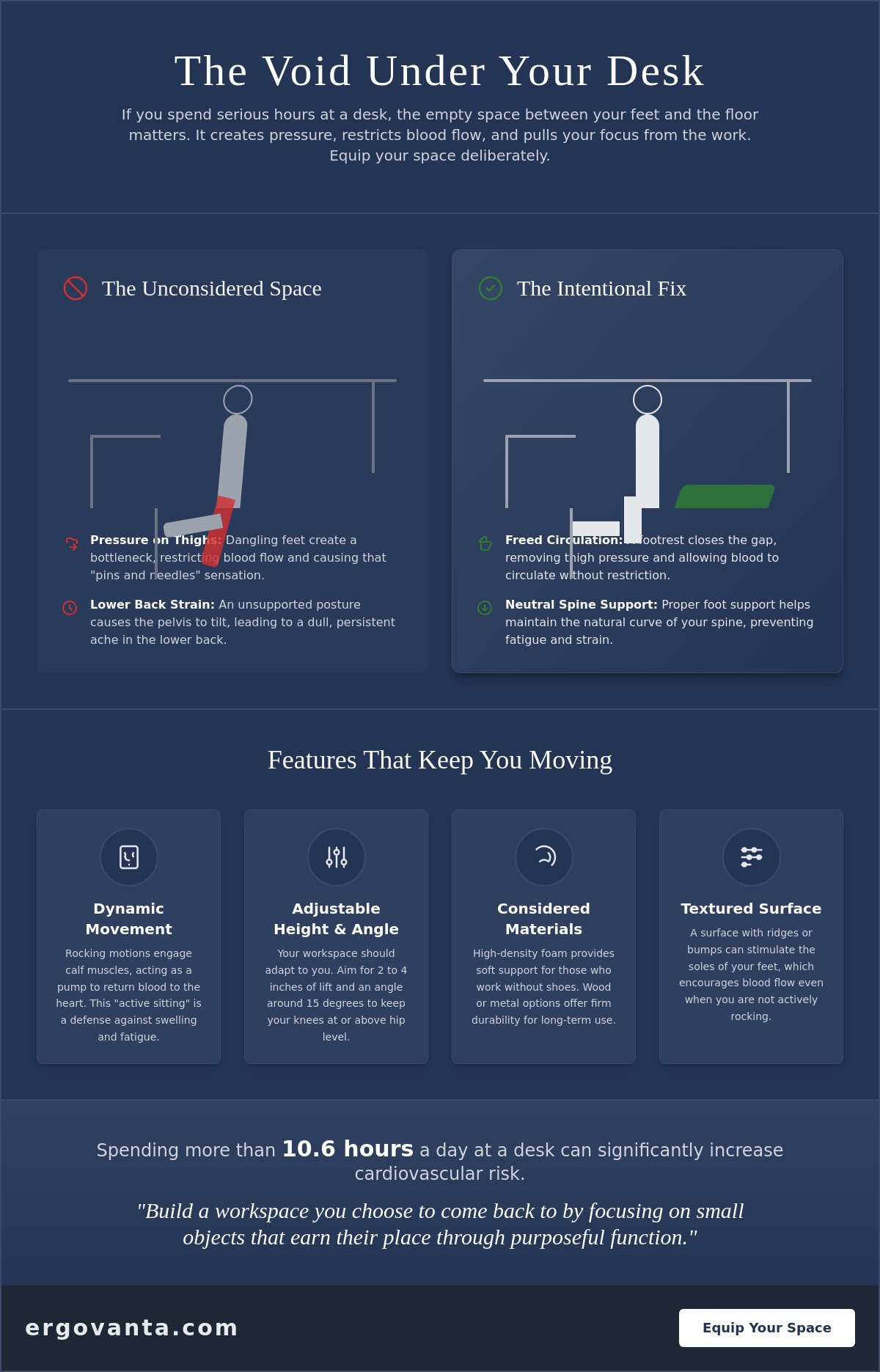
The workspace shapes the work. Equip it deliberately to avoid the distractions of physical discomfort. When you spend serious hours at a desk, the small inefficiencies in your setup become loud interruptions. The "void" is that empty space between your feet and the floor. If your chair is at the correct height for your desk but your feet don't reach the ground, you are fighting a losing battle with gravity. This gap creates pressure on the underside of your thighs, which acts like a physical bottleneck for your blood flow.
An ergonomic footrest is a tool that closes this gap. It's not a medical accessory; it's a piece of equipment made for the work. By supporting your feet, you remove the weight from your hamstrings and allow blood to circulate freely. Finding the What is Ergonomics? basics shows that a setup should adapt to your body, not the other way around. When feet dangle, gravity pulls blood down, leading to that heavy, "pins and needles" sensation that eventually breaks your focus. Choosing the best footrest for under desk circulation is an intentional move to protect your stamina.
To better understand how these tools fit into your setup, watch this helpful video:
The physical cost of an unconsidered space
An unconsidered space has a hidden physical cost. When your feet aren't supported, your pelvis tends to tilt backward. This shift pulls on your lower back, creating a dull ache that most people blame on their chair. Positioning your feet at a slight angle, ideally around 15 degrees, helps maintain a neutral spine. It prevents the sluggishness often called "office syndrome" by keeping your lower body active. It's a simple fix that ensures the best footrest for under desk circulation earns its place by keeping you in the chair longer without the typical leg fatigue.
How a footrest earns its place in your routine
A footrest is for the people who do the work. It shouldn't feel like an afterthought or a clinical add-on; it should feel like a natural extension of your desk. Intentionality in your setup means recognizing that every object must serve a purpose. When you equip your space with items that support your physical needs, you build an environment you choose to come back to. You can see how these considered supports fit into a wider, functional setup by exploring our ergonomics and comfort collections.
Choosing the Right Support: Features That Keep You Moving
The best footrest for under desk circulation isn't a static platform. It's a tool that invites your body to stay active. Static sitting is the enemy of blood flow. When you equip your space with a footrest that allows for subtle movement, you are building a defense against leg swelling and fatigue. Materials matter here. High-density foam provides considered support for those working in socks or barefoot. Wood or metal options offer a different kind of durability for the long haul. Your choice should reflect how you actually use the room.
Dynamic movement and rocking motions
Rocking footrests are designed for "active sitting." This motion keeps your calf muscles engaged, which helps pump blood back toward your heart. According to research on How Ergonomics Affects Your Health, regular movement is vital for avoiding musculoskeletal strain. Aim for a 20-minute movement cycle. It's better for your circulation to shift positions frequently than to maintain one "perfect" posture for hours on end. A textured surface can also stimulate the soles of your feet, keeping blood moving even when you aren't actively rocking.
Height and angle: finding your natural posture
Height adjustability is non-negotiable. Your workspace should adapt to you, not the other way around. Most people find that 2 to 4 inches of lift is the sweet spot to keep knees at or slightly above hip level. This position reduces the load on your lower back and opens up the hip flexors. Look for considered designs that offer multiple angles. You might want a steep angle for deep focus work and a flatter one for relaxed reading. These are the workspace essentials that work together to make your day feel less taxing. If you're looking for help choosing the right fit, you can always reach out to us for guidance on building your ideal setup.
Equipping Your Space: The Best Footrest Options for 2026
The workspace shapes the work. Equip it deliberately. Building a setup you choose to come back to requires selecting objects made for the work, not just the first thing you find in an office supply catalog. If you spend eight hours a day at your station, every item under your desk must earn its place. Finding the best footrest for under desk circulation is a matter of intentionality. It's about choosing tools that support your physical stamina without cluttering your environment with the cheap, industrial plastic look of traditional corporate gear.
Foam footrests for all-day focus
Foam footrests are a practical choice for those who work in socks or barefoot. They offer a foundation that is soft enough for comfort but firm enough to maintain your posture throughout a long session. Look for charcoal-infused foam. It's a considered material that holds its shape over time and stays fresh in the rooms that get used most. Your desk clearance will dictate the shape you need. A teardrop design provides a natural angle for lower desks, while a half-cylinder allows you to flip the rest over for a gentle rocking motion that keeps your legs active.
Massage boards and active textures
Active massage boards provide a tactile advantage that static supports can't match. They turn a passive sitting habit into a physical benefit by using physical stimulation to keep blood moving while you think. Wooden rollers and textured points help refresh tired feet during a deep work session. These boards are for the people who do the work and need to stay alert during a long afternoon. They are functional, visually understated, and earn their place by being useful without being a distraction.
Your workspace is a personal environment, not a cubicle. Avoid the plastic "industrial" look and instead select pieces that complement your desk decor and lighting. When your tools are intentional, they don't just solve the problem of poor circulation; they help you build a space that feels like yours. By choosing the best footrest for under desk circulation based on how you actually work, you ensure your environment supports your long-term focus.
Build a Workspace That Supports the Work
The workspace shapes the work. When you equip your space deliberately, you remove the physical friction that breaks your focus. We've explored how closing the gap between your feet and the floor prevents gravity from pulling blood down into your lower legs. We've also seen that the best footrest for under desk circulation is often the one that invites you to move, whether through rocking motions or tactile massage points. These aren't just accessories; they are purposeful tools that keep you in the chair longer without the distraction of leg fatigue.
These are the small objects that earn their place in your space. They are no-nonsense tools for intentional workspaces, designed for the people who do the work. You shouldn't have to settle for an environment that works against you. Take ownership of your setup and focus on the details that make a difference in how you feel at the end of the day. Equip your desk with considered ergonomic tools to build a room that gets used and a workspace you'll choose to come back to. Your setup should feel entirely yours; start building it with intention.
Common Questions About Workspace Circulation
Can a footrest help with leg swelling at my desk?
A footrest helps reduce leg swelling by removing the pressure your chair seat puts on the underside of your thighs. When you sit for long periods, this pressure acts as a physical barrier to blood returning from your lower legs. Elevating your feet slightly helps maintain open pathways for circulation. It's a simple way to equip your space to handle the reality of a long workday without the distraction of heavy, swollen ankles.
How high should an under-desk footrest be for the best circulation?
Most people find the best results with a lift between 2 and 4 inches. The goal is to keep your knees at or slightly above hip level to open up your hip flexors and reduce lower back tension. Finding the best footrest for under desk circulation often means choosing an adjustable model that lets you fine-tune this height. This ensures your setup is considered and fits your specific body proportions rather than a generic standard.
Do I need a footrest if my feet already touch the floor?
You may still need one if your chair height is dictated by your desk height rather than your own comfort. If you have to raise your chair to reach your keyboard, your feet might touch the floor but lack the firm support needed to prevent thigh pressure. A footrest also allows you to shift angles throughout the day. It's a tool for the people who do the work and recognize that staying in one static position is rarely the best approach.
What is the best material for a footrest that stays in place?
High-density foam with a non-slip beaded bottom is the best material for staying put on most floor surfaces. These footrests are made for the work and won't slide away every time you shift your weight. If you prefer a more rigid feel, heavy wood or metal designs with rubberized feet offer a solid, intentional foundation. The best footrest for under desk circulation should feel like a permanent part of your room, not an object you have to chase around the floor.
From the catalog