May 26, 2026
How Footrests Help With Back Pain: A Checklist for a Better Workspace

The workspace shapes the work. Equip it deliberately. If you spend serious hours at a desk, the floor beneath you matters just as much as the chair you sit in. Low back pain affected 619 million people globally in 2020; for many, the culprit is a lack of physical grounding. You might find yourself adjusting your chair height only to realize your feet no longer reach the floor, or you might notice a dull ache in your lumbar region before lunch even arrives.
It is frustrating to feel that your desk is slightly too high for your chair height, leading to leg fatigue or poor circulation. Your space should be a tool for productivity, not a source of physical distraction. Learning how footrests help with back pain allows you to resolve lower back strain and build a workspace that supports the way you actually work. This checklist will show you how to ground your feet, understand the mechanics of sitting without the jargon, and choose the small objects that earn their place in your room. We will help you build a workspace you would choose to come back to.
Key Takeaways
- Learn how dangling feet pull on the lower back and why grounding your posture is the first step toward a pain-free day.
- Discover how footrests help with back pain by stabilizing the pelvis and allowing your chair backrest to function as intended.
- Identify the specific features your space needs, from height adjustability to tilting surfaces that keep your ankles moving.
- Build a more intentional workspace by pairing foot support with correct monitor height to solve the root cause of slouching.
The Mechanics of Grounded Seating: Why Your Back Needs Your Feet
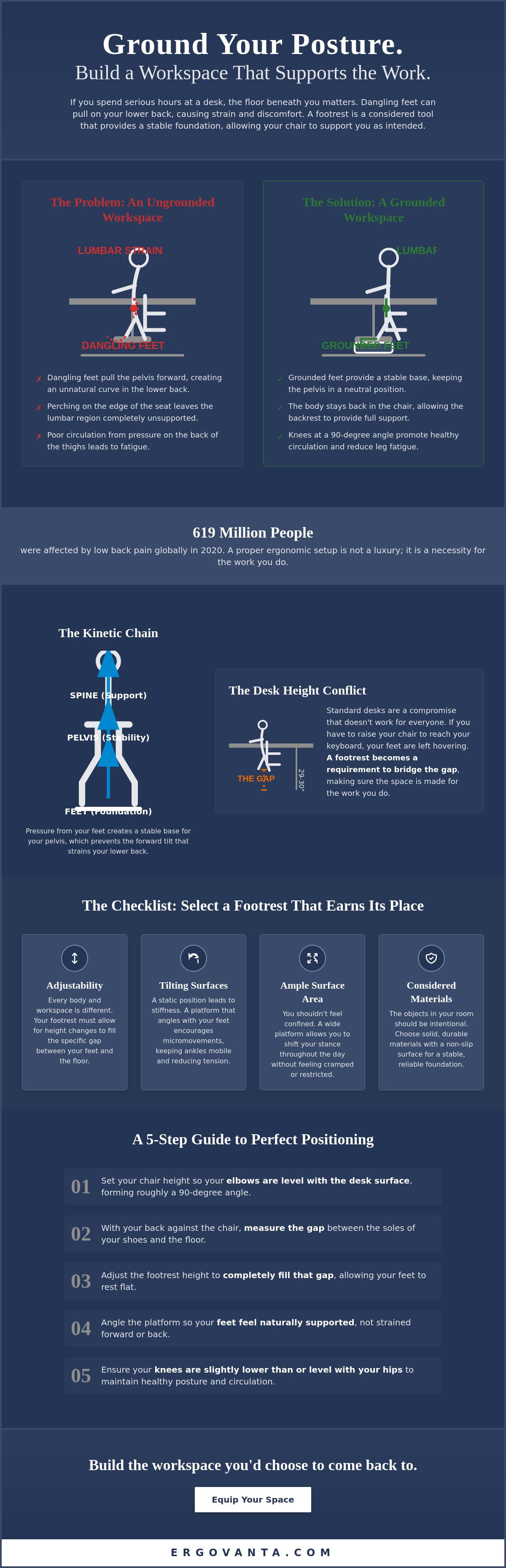
Your body doesn't end at your waist. When you sit for eight hours, your feet are the foundation for your spine. If they aren't reaching the floor, the weight of your legs pulls on your hip flexors and tilts your pelvis forward. This is a primary reason why you feel that familiar lumbar ache by the afternoon. Understanding how footrests help with back pain starts with realizing that your chair can't support you if you're constantly sliding forward to find the ground.
A chair's backrest only works if you're actually sitting against it. Without grounded feet, most people end up perching on the edge of their seat, which leaves the lower back completely unsupported. Equipping your space with considered tools like a footrest isn't about status; it's about spinal neutrality. By applying basic ergonomic principles, you can ensure your backrest actually does its job while reducing the pressure on the back of your thighs that often restricts blood flow.
To better understand this concept, watch this helpful video:
The Kinetic Chain: From Floor to Lumbar
Pressure from your feet creates a stable base for your pelvis, which prevents the forward tilt that strains your lower back. When feet dangle, you're likely to take a "perched" position, sitting on the front half of your chair to reach the floor. This breaks the kinetic chain and forces your back muscles to do the work your chair should be doing. True neutral posture means your feet are flat, your knees are at a comfortable 90-degree angle, and your spine follows its natural curve without tension.
The Desk Height Conflict
Standard desks are usually 29 to 30 inches high. This height is a compromise that doesn't work for everyone. If you're not six feet tall, you'll likely have to raise your chair to reach your keyboard comfortably. This creates a conflict: your hands are happy, but your feet are now hovering. When you raise your chair to reach a fixed-height desk, a footrest becomes a requirement for the room. It bridges the gap between your ideal sitting height and the reality of your furniture, making sure the space is made for the work you do.
The Workspace Checklist: Selecting and Positioning Your Footrest
The workspace shapes the work. Equip it deliberately. While most people spend weeks researching a chair, the floor is often an afterthought. If you find yourself sitting higher than usual to reach a standard 29 inch desk, your feet are likely losing contact with the ground. This misalignment is a silent contributor to lumbar strain. A checklist ensures that the objects you bring into your room earn their place by solving the specific conflict between your chair height and your floor.
A checklist helps clarify how footrests help with back pain by addressing the specific mechanical needs of your lower back. It isn't just a box under your desk; it is a piece of equipment designed to maintain your foundation. Look for these four specific criteria when choosing your equipment:
- Adjustability: Every chair to floor gap is unique. Your footrest must allow for height changes to match your specific needs.
- Tilting Surfaces: A static foot position leads to stiffness. A platform that angles with your feet keeps your ankles mobile and reduces tension.
- Surface Area: You shouldn't feel cramped. A wide platform allows you to shift your stance and change your center of gravity throughout the day.
- Considered Materials: The objects in your room should feel intentional. Choose solid, durable materials that provide a stable foundation without sliding.
A 5-Step Guide to Perfect Positioning
Building a workspace that feels like yours requires an intentional setup. Follow these steps to ground your posture:
- Set your chair height so your elbows are level with the desk surface.
- Measure the gap between your feet and the floor.
- Adjust the footrest height to fill that exact gap.
- Angle the platform so your feet feel naturally supported, not strained.
- Ensure your knees are slightly lower than or level with your hips.
Beyond the Basics: Texture and Movement
Movement is the primary defense against the dull ache of a long workday. Using a foot massage board encourages active sitting, which keeps blood flowing and muscles engaged even while you focus. A non-slip surface is also essential; it ensures you don't have to constantly hunt for your footing. If you're unsure which tools will best support your specific desk setup, you can reach out to us for guidance. A considered space is one where every object is made for the work.
Building a Workspace That Supports the Work
A footrest is one piece of a considered room. It works best when paired with intentional lighting and monitor placement. If your feet are grounded but you are slouching to see the screen, the back pain will persist. The goal is to build a space you choose to come back to because it does not leave you drained at the end of the day. Every object should serve a specific purpose in your workflow.
Understanding how footrests help with back pain requires looking at your desk as a complete system. When your foundation is stable, you can focus on the rest of your posture. Proper desk lamps reduce eye strain, which prevents the "forward lean" that often ruins your posture regardless of how your feet are positioned. When you stop squinting, you stop slouching.
The Holistic Ergonomic System
Physical grounding is the start, but head position is the finish. Pairing foot support with monitor stands keeps your head upright and your spine aligned. These workspace essentials work together to create an environment designed for deep work. When your body isn't fighting for a comfortable position, your mind can stay on the task at hand. It's about building a room that gets used.
Ergovanta: Purposeful Function in Action
Our name comes from the Ancient Greek "Ergo," meaning purposeful function in action. We build tools for the people who do the work. We believe your space should be a personal environment, not a status symbol or a corporate requirement. Equip your room deliberately with objects that earn their place. By choosing tools that support your body, you take ownership of your day and build a workspace that truly feels like yours.
Equip Your Space for the Long Term
The workspace shapes the work. Equip it deliberately. By now, you understand how footrests help with back pain by providing the physical foundation your spine requires. It isn't just about filling a gap between your chair and the floor; it is about creating a system where your backrest can finally do its job. A considered room is built from small objects that earn their place through purposeful function. When you ground your feet, you stop the mechanical pull on your lower back and allow your body to remain neutral throughout the day.
When you pair foot support with intentional lighting and correct monitor placement, you stop fighting your environment and start focusing on the task. We provide no-nonsense ergonomic solutions made from considered materials for intentional spaces. Everything we offer is designed for the people who do the work. Don't settle for a room that leaves you drained. Take ownership of your posture and build a desk setup that supports you for the long term. Equip your workspace with considered ergonomic tools. Your space is yours to build. Make it a place you choose to come back to.
Frequently Asked Questions
Does a footrest really help with lower back pain?
Yes, a footrest helps with lower back pain by stabilizing your pelvis and allowing you to sit fully against your chair backrest. When your feet dangle, your body naturally slides forward to find the floor, which leaves your lumbar region unsupported and under constant strain. Grounding your feet removes this tension and maintains the natural curve of your spine. It is a fundamental tool for anyone whose chair height doesn't allow for flat feet on the floor.
Should a footrest be flat or angled?
An angled footrest is generally more effective because it supports the natural position of your ankles and encourages micro-movements. While a flat surface provides a stable base, an adjustable tilt allows you to shift your position throughout the day, which prevents stiffness in your lower legs. This constant movement is essential for maintaining circulation during long sessions. Choose a model that lets you experiment with the angle to find what feels most intentional for your body.
How high should my footrest be?
Your footrest should be high enough to fill the exact gap between your feet and the floor when your chair is at its ideal working height. When positioned correctly, your knees should be level with or slightly lower than your hips. This alignment reduces the pressure on the back of your thighs. If you find yourself perching on the edge of your seat, your footrest is likely too low and needs adjustment to provide the support your back requires.
Can I use a footrest with a standing desk?
You can and should use a footrest with a standing desk to help manage fatigue by shifting your weight between feet. Resting one foot on a raised surface, like a foot massage board, changes your pelvic tilt and relieves pressure on your lower back while standing. This practice helps you stay mobile rather than locking your joints in one position for hours. It is a simple way to build a workspace that supports active movement throughout your entire shift.
From the catalog