June 4, 2026
Office Wall Lighting Ideas: Building a Workspace Made for the Work

Your desk is not a storage unit for hardware. It is the surface where the work happens. If you spend serious hours at a desk, the room around it matters more than you think. Most of us accept a cluttered surface and eye strain as part of the job, but a lamp shouldn't compete with your keyboard for space. Exploring intentional office wall lighting ideas allows you to move the light off the desk and onto the walls, where it can do more than just illuminate; it can define the environment. It's about reclaiming your surface and making sure the objects in your room earn their place.
We agree that a workspace should be built for the work, not just for the aesthetic. You've likely dealt with harsh shadows during video calls or the persistent fatigue of a poorly lit monitor. You can reclaim that lost square footage and equip your room with lighting that supports long hours of focus. We will look at how to use layered lighting to reduce glare and create a workspace you actually choose to come back to. From human-centric designs to the latest 2026 energy-efficient standards, it's time to build a space that is made for the work.
Key Takeaways
- Reclaim your desk surface by moving light sources to the wall: ensuring your primary workspace stays clear for the work that matters.
- Explore intentional office wall lighting ideas like swing arm sconces and linear bars that provide adjustable, shadow-free illumination.
- Apply the 15-degree rule to position fixtures at a considered angle: a simple ergonomic shift that reduces eye fatigue during long hours of focus.
- Learn to place wall-mounted lights strategically to prevent distracting glare or reflections on your monitor and laptop screens.
- Build a layered lighting setup to equip a room that feels intentional and helps you stay focused for the long haul.
Reclaiming the Desk: Why Wall Lighting Earns Its Place
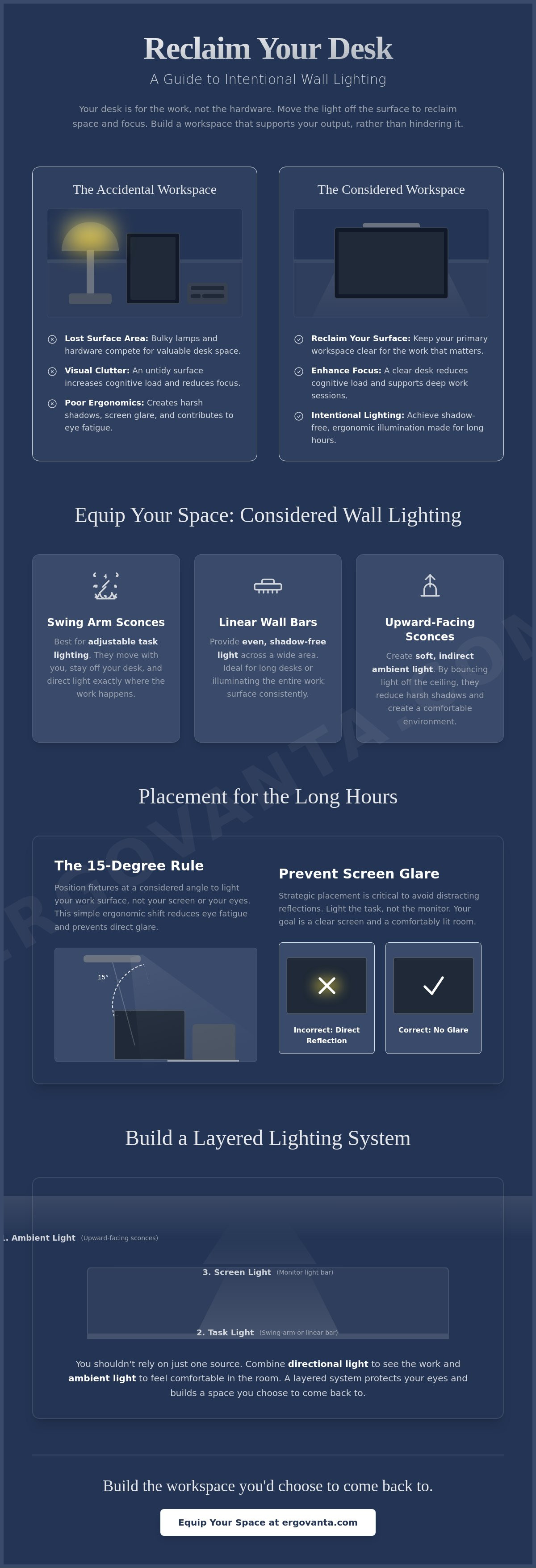
The workspace shapes the work. Equip it deliberately. If you spend eight hours a day at a desk, every square inch of that surface is valuable real estate. Too often, we surrender that space to oversized lamps and tangled cords. Moving your light source to the wall isn't just a design choice; it's a strategic move to reclaim your primary work surface. When considering office wall lighting ideas, remember that wall lighting includes any fixture mounted to a vertical surface, designed to provide either ambient glow or focused task lighting.
To see how these fixtures change the feel of a room, watch this installation of integrated wall lighting:
A desk is for doing the work. It shouldn't be a storage unit for bulky hardware. When you implement intentional office wall lighting ideas, you clear the physical clutter that leads to mental fatigue. By mounting your lights, you ensure that the small objects on your desk are only those that earn their place through daily utility. This approach shifts the room from an accidental collection of furniture into a considered environment made for the work. It's about building a space that supports your output rather than hindering it.
The intentionality of a clear workspace
A minimalist desk setup does more than look clean. It reduces cognitive load during deep work sessions. When your eyes aren't jumping between lamp bases and power blocks, your brain can stay locked on the task at hand. Transitioning from accidental decor to a truly considered environment means choosing tools that serve a specific purpose. If you're ready for a complete desk overhaul, start by looking at your workspace essentials to see what actually belongs in your line of sight. Build a room that gets used by keeping the surfaces clear and the lighting intentional.
Considered Wall Lighting Ideas: Equipping Your Space
Equip your space with tools that solve specific problems. Swing arm sconces are the ultimate choice for adjustable task lighting because they move with you but stay off your desk. Linear wall bars offer a different utility, providing even, shadow-free light across a wide area. These office wall lighting ideas work because they prioritize the user's needs over simple decoration. They allow you to direct light exactly where the work happens without sacrificing surface area.
Choosing between plug-in and hardwired installation depends on your commitment to the room. Hardwired fixtures provide a seamless look; plug-in versions offer flexibility for those who might rearrange their setup later. Consider upward-facing sconces if you need soft, indirect light. By bouncing light off the wall, you create a more comfortable ergonomic workstation that prevents the harsh shadows often found in standard office setups. If you're looking for a specific fixture to start your build, browse our wall lights collection to find what fits your space.
Directional vs. ambient light
Directional light helps you see the work, while ambient light helps you feel comfortable in the room. You shouldn't rely on just one source. Layering your wall lights with monitor light bars creates a balanced setup that protects your eyes from strain. This combination ensures your screen is clear while the rest of the room stays warm and inviting, making it a space you actually choose to come back to.
The small objects that earn their place
Choose gear made from materials that age well with use, such as solid wood or matte metals. These aren't just decorations; they are the tools that give your room its "vanta," or purposeful advantage. In our view, the rooms that get used are the ones where every object has been considered for its utility. If a light fixture doesn't serve a function or improve your focus, it doesn't belong in your space. Focus on quality gear that supports the intensity of your work.
Placement and Ergonomics: Equipping for the Long Hours
The workspace shapes the work. Equip it deliberately. If you spend serious hours at a desk, the room around it matters more than you think. Proper placement of your office wall lighting ideas ensures that your environment supports your focus rather than draining it. It is not just about having light; it is about where that light lands.
Start with the 15-degree rule. Position your task lights at a considered angle, roughly 15 degrees from your line of sight, to reduce direct eye fatigue. This prevents the bulb from hitting your eyes directly while still illuminating your physical tasks. You must also account for your monitor stand setup. Reflections on a screen are a primary source of headaches. Place your wall lights so the beam does not bounce off the monitor glass and back into your eyes. It is a simple ergonomic shift that makes a significant difference during a ten-hour day.
Consider the layout of the fixtures. Symmetry feels organized, but asymmetry often feels more personal and less like a clinical lab. What matters most is that the room gets used. Ensure your light switches or dimmers are within reach from your chair. If you have to stand up to adjust your environment, you likely won't do it. A workspace should be built for efficiency, and that includes the physical interface of your lighting gear.
How the room around the desk matters
A bright monitor against a dark wall is a recipe for eye strain. By using wall lighting to wash the surface behind your desk, you reduce the harsh contrast that leads to tension. This creates a more balanced environment for deep work. If you operate in a multi-purpose room, use specific wall fixtures to define your work zone. It helps the brain transition into "work mode" the moment the light hits the wall.
Ready to build your space?
Taking ownership of your environment requires deliberate equipment choices. The room is an extension of the work you do every day. It is about building a workspace you would choose to come back to. Equip it for the long haul and choose the objects that earn their place through daily utility. Your space should be as intentional as the work itself.
Equip Your Room for the Work Ahead
The workspace shapes the work. Equip it deliberately. By moving your light sources off the desk and onto the vertical plane, you create a surface that's actually ready for deep work. We've explored how office wall lighting ideas like swing arm sconces and linear bars provide the utility you need without the surface clutter you don't. It's about more than just visibility; it's about building a room where every object earns its place through daily use.
Our name comes from the Ancient Greek "Ergo," meaning purposeful function in action. We focus on providing considered lighting for the people who do the work. Whether you're adjusting for the 15-degree rule or layering light to prevent screen glare, your space should be a deliberate tool for your output. We offer national shipping on all workspace essentials to help you complete your build and ensure your room is ready for the long hours.
Take ownership of your environment today. Build the workspace you choose to come back to: contact us for a considered layout. Your room should be a place where the work happens naturally and without distraction.
Frequently Asked Questions
How high should office wall lights be mounted?
Mount office wall lights approximately 60 to 66 inches from the floor for general ambient light. If you are using a swing arm sconce for task work, position it so the shade sits just above your eye level when seated. This prevents the bulb from glaring into your peripheral vision while you focus. It is about equipping your room so the light supports your posture and your monitor setup without creating unnecessary distractions.
Can I use wall lights if I am renting my workspace?
You can absolutely use wall lights in a rental by choosing plug-in models instead of hardwired fixtures. These allow you to implement your office wall lighting ideas without opening up the drywall or violating a lease. Use adhesive cord covers to keep the look intentional and organized. When you move, the equipment comes with you, ensuring your next workspace is also built for the work you do.
Do wall lights provide enough illumination for video calls?
Wall lights provide excellent illumination for video calls if they are positioned in front of you or at a 45-degree angle. Avoid placing them directly behind your chair, as this creates a silhouette effect that makes it hard for others to see you. A well-placed sconce can reduce the harsh shadows often caused by standard overhead ceiling lights, making your workspace feel more considered and functional during remote meetings.
What is the best color temperature for office wall lighting?
The best color temperature for office wall lighting ideas typically falls between 3000K and 4000K. This range provides a neutral white light that mimics natural daylight, which helps maintain focus and reduces eye strain during long hours. Avoid very warm yellow tones that feel too sleepy or stark blue lights that can feel clinical. Choose a temperature that makes the room feel like a place where work actually gets done.
From the catalog