September 20, 2026
10 Scandinavian Home Office Lighting Ideas for Productivity
The workspace shapes the work. Equip it deliberately. Most desk setups fail because they treat light as a secondary concern, leaving you to squint through the glare of a single overhead bulb. It's frustrating when your eyes feel heavy by mid-afternoon or when your desk feels flat and uninspiring. By exploring scandinavian home office lighting ideas, you can build a space that feels intentional and helps you stay focused from the first cup of coffee to the final task of the evening.
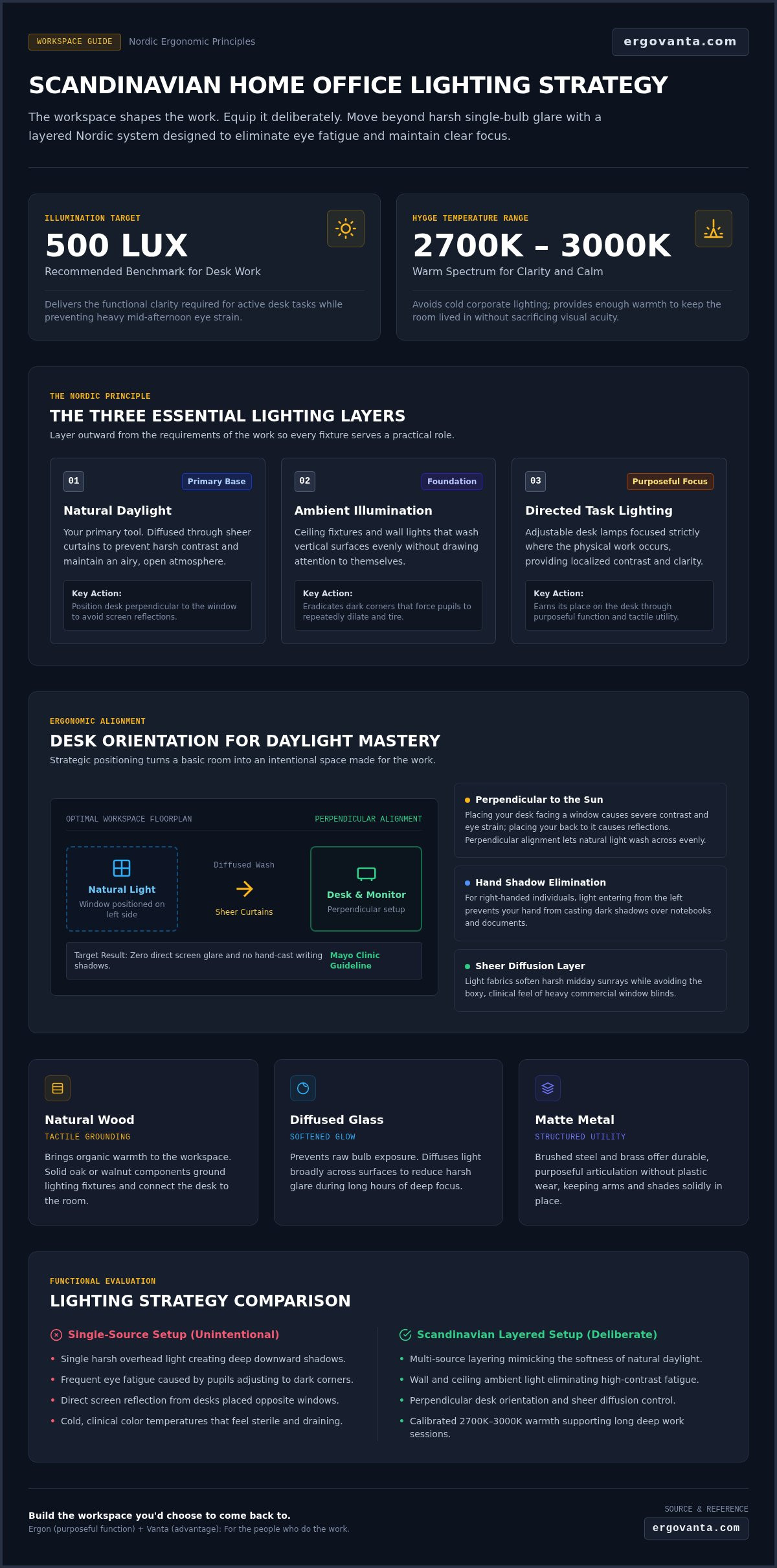
Building a balanced environment requires more than just a lamp; it requires a strategy. This approach focuses on the Nordic principle of layering light to reduce eye fatigue and eliminate harsh shadows during video calls. You'll learn how to reach the recommended 500 lux benchmark for desk work while keeping the atmosphere calm and considered. We'll preview ten ways to equip your space with functional tools that earn their place, helping you build a workspace that is truly made for the work.
Key Takeaways
- Implement scandinavian home office lighting ideas by layering multiple sources to eliminate eye strain and screen glare.
- Equip your desk with intentional task lamps that provide direct focus and earn their place through purposeful function.
- Balance natural daylight with subtle ambient layers to create a workspace foundation that feels considered and personal.
- Build a system that transitions between day and night by choosing fixtures that support different modes of focus.
- Start with the requirements of the work and layer outward to ensure every light source serves a specific, practical role.
Principles of Scandinavian Lighting for Functional Workspaces
The workspace shapes the work. Equip it deliberately. In Nordic regions, lighting isn't just about decoration; it's a tool for survival and clarity during long, dark winters. This functional necessity birthed the principles of Scandinavian design, where every fixture serves a specific role. When you look for scandinavian home office lighting ideas, start with the concept of ergon (purposeful function). Every light source should earn its place by solving a problem, whether that's reducing eye fatigue or defining a specific task area.
To better understand how to layer light for a functional atmosphere, watch this helpful video from Reynard Lowell:
Avoid the trap of a single, harsh overhead light. It creates deep shadows and causes the eyes to fatigue faster. Instead, build your workspace by layering light to mimic the soft, diffused quality of natural daylight. This approach ensures that your desk is well-lit without being clinical. It's about building a space you choose to come back to, rather than one that feels like a temporary station. By prioritizing diffused light over harsh glare, you create an environment that supports long hours of focus.
The Role of Hygge in a Productive Environment
Hygge is often misunderstood as simple coziness. In a workspace, it's about mental clarity. If your environment feels cold and clinical, your focus will likely suffer. Use warm color temperatures between 2700K and 3000K to make the room feel used and lived in. This range provides enough warmth to keep the space inviting while maintaining the clarity needed for deep work. Don't let your home office feel like a corporate cubicle; equip it with light that supports your well-being and keeps your eyes feeling fresh until the day is done.
Defining the Scandinavian Style Collection
The best tools are often the simplest. When selecting Scandinavian style fixtures, look for raw materials like wood, glass, and metal. These materials ground the workspace and provide a tactile quality that plastic lacks. Clean lines and sculptural shapes help these objects blend with your personal decor while still being highly functional. Every lamp or pendant should be considered for its ability to provide the vanta (advantage) of a clear, focused environment. Choose items that earn their place through both utility and a quiet, intentional presence.
Mastering Natural Light and Ambient Layers
The sun is your primary tool. Position your workspace to use it. Many people make the mistake of placing their desk directly facing a window, which leads to harsh contrast and screen glare. Instead, place your desk perpendicular to the light source. This setup allows natural light to wash over your work surface without hitting your eyes directly. Implementing these scandinavian home office lighting ideas ensures that your environment feels open and airy rather than cramped and artificial.
Sheer curtains are essential for diffusing direct sunlight. They prevent the clinical look of heavy blinds while maintaining privacy. Throughout the day, observe how the light moves through your space. You might find that your focus peaks when the sun is at a certain angle. Managing this natural flow is a key part of Mayo Clinic's tips for reducing eyestrain. It helps your eyes stay fresh during long sessions at the desk.
Positioning Your Desk for Optimal Daylight
A perpendicular desk placement minimizes shadows on your work surface. If you are right-handed, the window should ideally be on your left to prevent your hand from casting a shadow over your writing. This level of intentionality turns a standard room into a workspace made for the work. It's about building a space that works for you, not against you. Observe the sun's path to identify when your room is at its brightest.
Equipping the Room with Ambient Fixtures
Ambient lighting provides the foundation. It should fill the room without drawing attention to itself. Select ceiling lights that cast a wide, even glow across the entire room. This base layer eliminates dark corners that cause your pupils to dilate repeatedly; this constant adjustment is a common source of fatigue. Wall lights can add depth by washing the vertical surfaces, preventing the room from feeling flat or boxy. This layered approach ensures the room feels used and lived in.
Floor lamps and wall lights work together to create a balanced effect. Considered placement of floor lighting can soften the transition between high-focus work and the evening unwind. Use dimmable fixtures to adapt the room foundation as your tasks change throughout the day. When the sun sets, these layers take over to maintain a consistent environment. If you need help selecting the right tools for your specific layout, feel free to reach out to us for guidance. Equip your space with objects that earn their place.
Task Lighting: Choosing Tools That Earn Their Place
Focus is a finite resource. Protect it with intentional task lighting. While ambient layers provide the foundation, task lighting is where the work actually happens. It is the most deliberate layer in any setup. When you explore scandinavian home office lighting ideas, the goal isn't just to brighten a room; it's to direct clarity exactly where your hands and eyes are working. A well-chosen desk lamp provides the vanta (advantage) of adjustable focus, ensuring you aren't fighting shadows while you draft, design, or read.
Your workspace should feel personal. It is a room that gets used, so select tools that reflect your own style rather than a sterile corporate identity. Following OSHA workstation lighting guidelines helps you balance ambient illumination with dedicated task lighting to eliminate screen glare and reduce eye strain. By equipping your desk with objects that earn their place, you build a space you'd choose to come back to. These small objects should support your workflow without adding unnecessary clutter.
Desk Lamps vs. Monitor Light Bars
Desk lamps are better for paperwork, sketching, and tactile tasks. They provide a classic, intentional feel that grounds the desk and defines your primary work zone. If you spend serious hours at a screen, monitor light bars are made for the work. They mount directly to your display to illuminate the keyboard area without creating reflections on the glass. Choose a lamp with an adjustable arm or a rotating head to direct light exactly where it is needed. This flexibility prevents the flat look that often plagues unconsidered offices and allows you to adapt to different tasks throughout the day.
Selecting the Right Bulb for Focus
The quality of light matters as much as the fixture itself. For task-oriented desk work, the ideal lumen count falls between 450 and 800 to ensure sufficient brightness without inducing glare. High Color Rendering Index (CRI) bulbs are vital for designers, editors, and creators who need to see colors accurately. When implementing scandinavian home office lighting ideas, look for a CRI of 90 or higher to ensure your work looks the same on paper as it does under the light. Avoid flickering bulbs at all costs; they contribute to headaches and long-term eye strain. Stick to steady, high-quality LEDs that support your focus from the first morning task to the final evening review.
Building Your Lighting Scheme: A Step-by-Step Approach
The workspace shapes the work. Equip it deliberately. Building a functional scheme is a process of layering that starts with the requirements of your specific tasks and builds outward. By following a structured approach, you can implement scandinavian home office lighting ideas that support different modes of focus throughout the day. Use the three-layer rule: Ambient (room-wide foundation), Task (direct desk focus), and Accent (the personal touch that adds character). This method ensures that your space remains intentional rather than accidental.
Step 1: Set the Ambient Foundation
Start by setting the room foundation. Turn on your primary ceiling or floor light to identify any dark spots or areas where shadows pool. Adjust the brightness until the room feels evenly filled but not overly bright. This layer should provide enough light for you to move through the room safely without drawing attention to itself. If you notice any flickering or buzzing fixtures, eliminate them immediately; these minor distractions lead to significant fatigue over time. A consistent ambient layer prevents the visual shock that happens when you look away from a bright screen into a dark room.
Step 2: Equip Your Primary Task Zone
Next, equip your primary task zone. This is the area where you do the most work, whether it is typing, drafting, or reading. Add your task lamp or monitor light bar here to provide the vanta (advantage) of clear, directed illumination. Position the light source below eye level to prevent direct glare from hitting your pupils. To help anchor your focus, ensure the task light is the brightest point in the room. This visual cue tells your brain exactly where the work is happening, creating a clear boundary that helps you stay in the flow.
Step 3: Add Accent Layers for Character
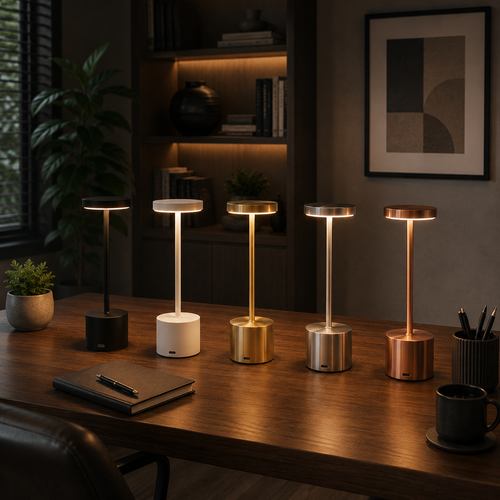
Finally, add accent layers for character. This is about the rooms that get used and the objects that earn their place. Use small accent pieces or wall lights to highlight bookshelves, artwork, or faux plants. This layer prevents the space from feeling like a sterile, corporate office and adds necessary warmth to the background. Accent lighting is personal; it defines the atmosphere of your workspace. Once your layers are in place, test your scandinavian home office lighting ideas at different times of day to ensure the setup remains functional as natural daylight fades.
Equipping Your Space with Considered Scandinavian Fixtures
The workspace shapes the work. Equip it deliberately. Ergovanta exists for the people who do the work; our lighting is built for purposeful function rather than just filling a room. The name itself represents this commitment: Ergo, from the Ancient Greek for purposeful function, and Vanta, a word for advantage. Together, they form the foundation of our design philosophy. When you implement scandinavian home office lighting ideas, you aren't just buying a lamp. You are choosing tools that provide a distinct advantage during long hours of focus.
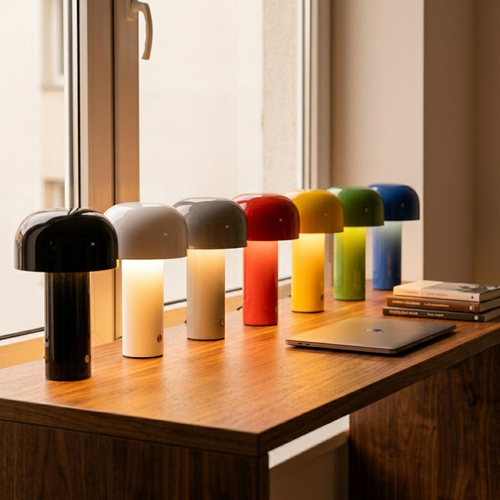
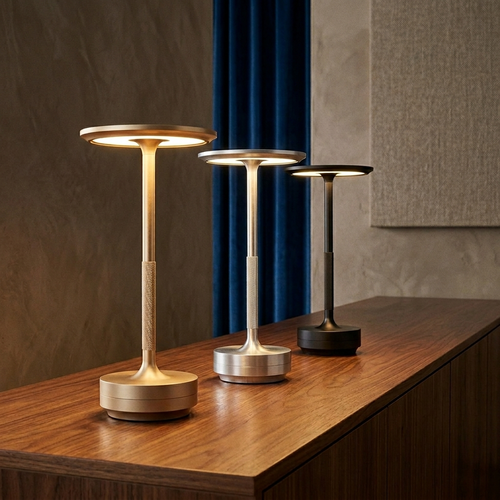
Select fixtures from our lighting collection that earn their place on your desk. This isn't about following a trend; it's about building the workspace you choose to come back to. By investing in objects that support your daily rituals, you ensure that your environment remains a source of clarity rather than a distraction. Every piece should be considered for how it helps you do the work.
Why Intentional Design Matters
Your environment is a tool. Equip it with the same care you use to choose your technology or your hardware. Minimalist design is often praised for its look, but its true value lies in how it reduces visual clutter. When your desk is equipped with clean lines and simple shapes, your mind is free to stay on the task. Considered lighting is a long-term investment in your physical comfort. It prevents the mid-afternoon burnout that comes from poor visibility and harsh shadows. By building a space that feels intentional, you support your focus for years to come.
Finding Your Style in the Ergovanta Collection
Every workspace is different because every person does different work. Explore our new arrivals for modern takes on classic Scandinavian shapes. Whether you prefer sculptural pendants that provide a soft ambient glow or minimalist desk tools that offer precise task illumination, choose the items that feel like yours. We focus on the small objects that earn their place, helping you build a sanctuary that is entirely your own.
Building your space today means thinking about the rooms that get used. From the material of the base to the warmth of the bulb, every detail should be made for the work. Equip your space with scandinavian home office lighting ideas that ground you and help you stay in the flow. Your workspace should not feel like everyone else's; it should be built for the person using it, supporting every hour you spend at the desk.
Build a Workspace Made for the Work
The workspace shapes the work. Equip it intentionally. You've seen how a functional lighting scheme transforms a flat desk into a sanctuary for focus. By implementing scandinavian home office lighting ideas, you've moved beyond clinical overhead bulbs to a layered environment that respects your eyes and your rituals. You now have the tools to balance natural daylight with dedicated task layers and warm accent pieces that make the room feel lived in.
Ergovanta exists for the people who do the work. We keep ergon (purposeful function) at the core of every design; this ensures every object earns its place on your desk. Our curated style supports your personal workspace ownership without the need for corporate identity. It's about building a space that feels like yours and helps you stay in the flow until the final task is complete.
Your environment is an investment in your daily output. Choose the objects that support your best efforts and build a room that works for you.
Frequently Asked Questions
How many lumens do I need for a home office desk?
You need approximately 450 to 800 lumens for a task lamp to reach the recommended 500 lux benchmark on your work surface. This level of brightness ensures you can read and write without straining your eyes. If you perform highly detailed work like drafting or design, aim for the higher end of that range. Always ensure the light is directed at the task rather than filling the entire room.
What is the best color temperature for Scandinavian office lighting?
The best color temperature for scandinavian home office lighting ideas ranges from 2700K to 4000K. Use neutral white light around 4000K during your peak focus hours to mimic daylight and stay alert. In the evening, transition to warmer tones between 2700K and 3000K to create a calm atmosphere that helps you unwind. This shift supports your natural circadian rhythm while keeping the workspace functional and inviting for daily use.
Where should a desk lamp be placed to avoid shadows?
Place your desk lamp on the side opposite your dominant hand to eliminate shadows on your work surface. If you're right-handed, the lamp should sit on the left side of your desk. This positioning ensures that your hand doesn't block the light while you're writing or sketching. For computer work, adjust the lamp's arm so the light hits the keyboard area without reflecting off the monitor or hitting your eyes directly.
Can I use a monitor light bar and a desk lamp together?
You can use a monitor light bar and a desk lamp together if your work involves both screens and physical documents. The light bar is made for the work on your display; it illuminates the keyboard and desk space without causing screen glare. A desk lamp provides a more directed beam for tactile tasks like reviewing papers or taking notes. Using both allows you to build a highly intentional and flexible lighting scheme for your space.
How do I reduce screen glare with Scandinavian lighting?
Reduce screen glare by using diffused light sources and positioning fixtures so they don't reflect directly off your monitor. Scandinavian design often uses shades or opal diffusers to soften the output of a bulb. You should also avoid placing your desk directly in front of an unshaded window. A monitor light bar is particularly effective because it directs light downward, completely bypassing the screen's surface and protecting your eyes from harsh reflections.
Why is layered lighting important for eye health?
Layered lighting is vital because it prevents the eye fatigue caused by high contrast. When you work in a dark room with only a bright screen, your pupils must constantly adjust, which leads to headaches. By combining ambient, task, and accent layers, you maintain a balanced luminance ratio between your work and the surroundings. This considered approach keeps your eyes feeling fresh throughout long sessions and ensures the workspace feels like a sanctuary of productivity.
What are the best Scandinavian materials for office lamps?
The best scandinavian home office lighting ideas prioritize honest, durable materials like powder-coated metal, spun steel, and solid wood. These materials ground the workspace and provide a tactile quality that earns its place on your desk. Pleated paper or linen shades are also common; they serve a purposeful function by diffusing light to prevent harsh glare. Choose materials that feel personal and support the work you do while avoiding the clinical look of plastic.
How can I make a small home office feel brighter without natural light?
Make a small office feel brighter by using wall lights to wash the vertical surfaces with illumination. When you light the walls, the room feels more expansive and less like a cramped cubicle. Combine a wide-angled ceiling fixture with a bright floor lamp in a dark corner to eliminate shadows. Adding small accent pieces or faux plants with dedicated lighting also adds depth, making the room feel used and intentional even without natural sunlight.
Disclaimer
Ergovanta publishes these guides to help people set up better workspaces. Product recommendations reflect what we sell. Specifications, prices and availability are accurate at the time of writing and may change. Nothing here is medical, ergonomic or professional advice; if you have a specific health concern about your workstation, speak to a qualified professional.
From the catalog