September 16, 2026
Acrylic and Glass Lighting: A Professional Selection Guide
The most expensive material on your desk is rarely the one that helps you get the most work done. The workspace shapes the work, so you must equip it deliberately. You likely want a space that feels intentional, but it's easy to get stuck choosing between the classic weight of glass and the resilient clarity of acrylic. You might worry that one looks cheap while the other feels too fragile for a high-traffic desk. This acrylic and glass lighting guide helps you move past that indecision to find a fixture that fits your specific needs.
Lighting dictates how you feel and how you focus throughout the day. Whether you are outfitting a home office or a shared studio, the materials you choose must serve your workflow. You'll learn the practical differences in light quality, maintenance, and durability for both materials. We'll examine how each choice affects your environment so you can build a space that's truly made for the work. By the end, you'll have the confidence to select a fixture that earns its place in your daily routine.
Key Takeaways
- Understand how lighting material dictates the function of your desk and shapes your daily work habits.
- Explore the durability of acrylic for high-traffic areas and its lightweight advantages for adjustable desk lamps.
- Identify when to choose glass for its scratch resistance and the sense of permanence it brings to stationary fixtures.
- Use this acrylic and glass lighting guide to find the right balance between weight, clarity, and maintenance for your space.
- Learn to build an intentional lighting setup by layering objects that earn their place and serve your specific needs.
Why Lighting Material Shapes Your Workspace
The workspace shapes the work. Equip it deliberately. When you sit down to focus, every object on your desk either helps or hinders your flow. Lighting is often treated as a secondary thought, something bought for its brightness rather than its behavior. However, the physical material of your lamp determines how light interacts with your desk, your screen, and your eyes. Glass and acrylic are the primary choices for modern lighting, and each brings a different set of properties to your environment. This acrylic and glass lighting guide explores how to choose the material that best supports your specific tasks.
The Role of Material in Light Diffusion
Material choice dictates how light spreads across your workspace. Clear glass offers maximum transparency, providing a sharp, direct beam that's excellent for detailed work. Frosted glass or opal finishes soften that light, spreading it evenly to reduce harsh shadows. Acrylic often excels at diffusion because it can be manufactured with specific refractive properties. It effectively scatters light to minimize glare on your monitor, which is a common source of eye strain during long hours. Choosing between a transparent or frosted finish isn't just an aesthetic choice; it's a functional decision about how much visual friction you want in your space. Reducing this friction helps you stay focused on the work at hand rather than the glare on your screen.
Intentional Choices for Personal Spaces
Building a workspace you'd choose to come back to requires moving away from generic corporate lighting. Standard office fixtures are designed for the masses, not for the individual doing the work. A considered space requires objects that serve a specific purpose and earn their place on your desk. Whether you prefer the solid, cool touch of glass or the resilient, lightweight nature of acrylic, your choice should feel personal. By selecting materials that align with how you use the room, you build an environment that feels like yours. This intentionality transforms a generic corner into a room that actually gets used, providing a functional advantage for your daily routine. When you equip your space with materials that suit your habits, you create a sanctuary of productivity rather than just a place to sit. Objects should be chosen because they work, not because they look like they belong in someone else's office.
The Utility and Versatility of Acrylic Lighting
Utility is the foundation of a functional desk. If your workspace involves constant movement, heavy hardware, or a busy schedule, you need materials that can keep up. Acrylic is often the pragmatic choice for those who prioritize resilience and flexibility. While glass has its own merits, this acrylic and glass lighting guide highlights why acrylic has become a staple in rooms that see real use. It's a material made for the work, offering a blend of durability and clarity that serves the daily routine without the fragility of traditional alternatives.
Performance Benefits of Acrylic
Acrylic is significantly more impact-resistant than glass. It's roughly 10 to 20 times stronger in terms of shatter resistance, making it a safer choice for a high-traffic desk or a shared office. Beyond safety, acrylic offers excellent light transmission. Clear acrylic allows up to 92% of visible light to pass through; this is often higher than standard glass, which can have a slight green tint from iron content. This clarity ensures your workspace stays bright and clear without the heavy weight of traditional fixtures. Additionally, acrylic remains cooler to the touch during long-term lamp use. This is a small but vital detail when you are adjusting your light throughout a long session. Because it handles heat well and resists breaking, it's an object that earns its place through long-term reliability.
Acrylic in Modern Workspace Design
A minimalist style relies on clean lines and transparency to keep a desk from feeling cluttered. Acrylic fits this aesthetic perfectly because it provides the look of glass with half the weight. This lightweight property makes it the ideal material for adjustable desk lamps and floor lamps that need to be moved or pivoted frequently. You can equip your space with items from our acrylic collections to maintain a sense of openness and order. Unlike heavy glass, acrylic doesn't strain monitor arms or delicate desk surfaces. It offers a modern look that feels intentional rather than accidental, fitting seamlessly into a space designed for focus. If you're unsure which material fits your specific workflow, reach out to us for a direct recommendation on building your setup. Choosing the right material is about more than just looks; it's about finding the tool that helps you do the work better.
The Lasting Presence of Glass Lighting
Permanence is a choice. While acrylic serves the need for mobility and impact resistance, glass offers a sense of weight and history that grounds a desk. It is a material for the objects that earn their place and stay there. If your work requires a stationary setup where focus is the priority, glass provides a tactile quality that other materials cannot replicate. This acrylic and glass lighting guide recognizes that while trends change, the functional benefits of glass remain constant. It is a deliberate choice for a workspace that feels established and ready for the work at hand.
The Technical Side of Glass
Glass is inherently scratch-resistant. Unlike synthetic materials that can pick up micro-abrasions from daily cleaning or accidental contact, glass maintains its clarity for years. It is also exceptionally heat-resistant. This makes it compatible with a wider variety of bulb types, including those that might run warmer over long sessions. The clarity of glass is natural; it does not yellow or become brittle when exposed to sunlight from a nearby window. Maintaining a glass fixture is straightforward. A simple wipe restores its original transparency, ensuring your light quality never degrades. The solid feel of a glass lamp provides a physical sense of stability that helps define the boundaries of your productivity zone.
The tactile experience of glass is distinct. When you reach out to adjust a glass shade, there is a thermal mass and a density that feels intentional. It doesn't flex or rattle. This rigidity is a technical advantage in precision environments where you need your equipment to stay exactly where you put it. Over a decade of use, a glass fixture will look identical to the day you bought it. This longevity makes it a sustainable choice for those who prefer to buy once and buy well. It is an object made for the work, resisting the environmental wear that often plagues lesser materials.
Integrating Glass into Your Desk Setup
A considered workspace often benefits from a mix of textures. Pairing the cool, smooth surface of glass with wood materials creates a balanced environment that feels both organic and functional. Glass helps to ground a workspace, serving as a visual anchor among your tech and tools. It works best in areas where you don't intend to move the light frequently, such as a dedicated reading corner or a primary task light. You can explore our glass lighting collection to find pieces that fit your specific layout. By choosing glass, you are investing in a material that doesn't just fill a space; it defines it. It is about building a room that gets used and objects that last as long as your career goals. Equip your space with tools that reflect your standard for the work you do.
Comparing Materials for Your Workspace
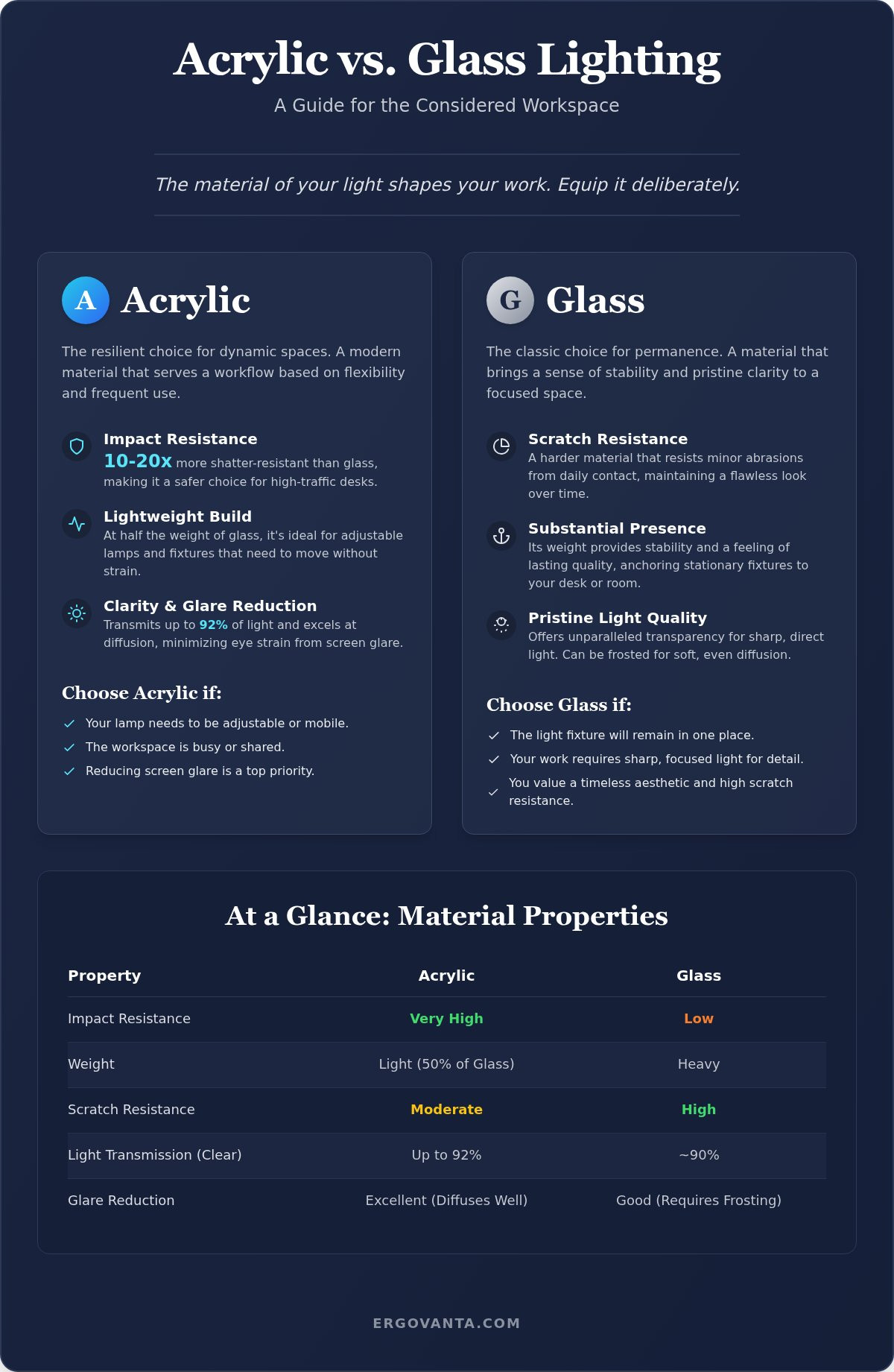
Selecting the right material is a balance of physics and personal preference. This acrylic and glass lighting guide provides a direct look at how these materials perform when you are actually working. You aren't just buying a lamp; you are equipping a tool that affects your focus and comfort. While previous sections detailed the individual strengths of each, comparing them side-by-side helps you decide which one fits your specific desk environment. Every object should earn its place based on how it serves your daily routine.
Durability and Maintenance Comparison
The trade-off between impact resistance and scratch resistance is the most significant factor. Acrylic is the clear choice for durability against drops or bumps; it won't shatter if a monitor arm swings into it. However, it is prone to micro-scratches from dust or rough cleaning cloths. Glass is the opposite. It is fragile if dropped, but its surface is incredibly hard. You can wipe it down daily with standard glass cleaner without worrying about hazing or scratches. For a dusty office, glass is often easier to keep looking new over several years. Acrylic requires specific, non-abrasive cleaners to maintain its original clarity and avoid long-term dullness.
Choosing Based on Your Work Style
Your daily routine should dictate your equipment. A flexible or mobile desk setup benefits from the lightweight nature of acrylic. It doesn't add unnecessary strain to adjustable stands or thin desk surfaces, making it easier to pivot as your needs change. Conversely, a permanent, stationary office is the ideal home for glass. The weight of a glass fixture provides a sense of stability that feels right on a solid wood desk. It's about matching the material to your existing workspace essentials to build a cohesive environment.
Beyond the physical weight, consider the visual impact on your eyes. Glass offers a crisp, sharp light that is perfect for reading physical documents or doing detail-oriented artisan work. Acrylic excels at soft diffusion, which is often better for reducing the harsh glare that bounces off digital screens. If you spend eight hours a day staring at a monitor, the diffused glow of an acrylic shade might offer more long-term comfort and less eye strain. Choosing the right tool means understanding how it interacts with the rest of your kit and the work you do.
Building an Intentional Lighting Setup
Intentionality is the key to a space you choose to come back to. It is about more than just brightness; it is about how a room feels at 2 PM versus 7 PM. You don't need a corporate project manager to tell you how to light your desk. You need objects that serve your specific habits. This acrylic and glass lighting guide concludes by focusing on the arrangement of those objects. When you equip your space with tools that help you do the work, you create an environment that supports your focus rather than draining it.
Layering Acrylic and Glass
Effective lighting requires layers. A single overhead light is rarely enough for focused work, often creating harsh shadows exactly where you need clarity. Instead, combine material types to create a space that feels uniquely yours. Use an acrylic lamp for direct tasks, such as reading or writing, where its soft diffusion reduces monitor glare. Reserve glass for ambient light or stationary accent pieces that ground the room with their physical weight.
Placing desk lamps effectively means considering your dominant hand and the position of your screen. To avoid cast shadows on your work surface, place your task light on the opposite side of your writing hand. By mixing the resilient clarity of acrylic with the solid presence of glass, you avoid a cluttered, mismatched look. Each material serves a distinct function; this helps you transition through different parts of the day without visual friction. It is a practical way to ensure every object on your desk earns its place.
Equipping for Long-Term Success
Investing in pieces that earn their place is a commitment to your own productivity. The right light improves how you feel at your desk, reducing the physical fatigue that comes from squinting or over-correcting for poor visibility. It is not about status or looking like a luxury catalog; it is about function. A workspace filled with considered objects is a space where you can actually get things done. When your tools work for you, you spend less time adjusting your environment and more time on the work itself.
Your next step is to evaluate your current shadows. Identify where the light fails you and equip your space with tools that solve those specific problems. Whether you choose the durability of acrylic or the permanence of glass, make sure every addition is made for the work. Building your ideal lighting setup is an ongoing process of refinement. Start with the small objects that earn their place, and the rest of the room will follow. A room that gets used is a room that was built with intention.
Equip Your Space for the Work Ahead
The workspace shapes the work. Equip it deliberately. By following this acrylic and glass lighting guide, you've learned how to choose materials that serve your daily habits rather than just filling a corner. Lighting is a functional tool. Whether you need the impact resistance of acrylic to soften monitor glare or the scratch-resistant weight of glass to ground a stationary desk, your choice should be intentional. Every object on your desk must earn its place through purposeful function.
Ergovanta is for the people who do the work. We focus on design that supports your focus and comfort without the noise of generic office trends. We offer national shipping on all workspace essentials, ensuring your considered tools arrive ready for use. Your environment is not an accident; it's a foundation for what you create. Choosing the right material is the first step in building a room you'd choose to come back to every morning.
Take ownership of your environment. Build a space that feels personal, functional, and ready for whatever the day requires.
Frequently Asked Questions
Is acrylic lighting as clear as glass lighting?
Modern acrylic offers clarity that rivals or exceeds glass. It allows approximately 92% of visible light to pass through; standard glass often carries a slight green tint from iron content. This means your workspace stays bright and clear without the visual distortion found in lower-grade materials. Choosing acrylic ensures that your lighting behavior remains consistent and transparent, providing a clean look that earns its place on your desk.
Does acrylic lighting yellow over time in a sunny office?
High-quality acrylics are manufactured with UV stabilizers to prevent yellowing or becoming brittle. While older plastics might have degraded in a sunny office, modern fixtures are built for long-term use near windows. This acrylic and glass lighting guide emphasizes that choosing the right grade of material is vital. Your light will maintain its original clarity for years, helping you build a workspace that stays functional and looks intentional.
Which material is better for reducing eye strain?
Acrylic is generally better for reducing eye strain because it diffuses light more effectively. It scatters the beam to create a softer glow, which is essential for minimizing the harsh reflections that bounce off digital screens. Glass provides a sharper, more direct light that is excellent for reading physical papers but can cause more glare on monitors. If you spend long hours at a desk, acrylic helps create a more comfortable environment.
Can I use high-wattage bulbs in acrylic light fixtures?
You must check the specific wattage rating on your fixture before installing a bulb. Acrylic is more sensitive to heat than glass and can warp if exposed to high temperatures for too long. We recommend using LED bulbs because they produce very little heat while providing high brightness. This combination protects your fixture and ensures your workspace remains cool, allowing you to focus on the work without technical issues.
Is glass lighting too heavy for a typical desk shelf?
Glass fixtures are heavier than acrylic, but most standard desk shelves can easily support a typical lamp. A glass lamp might weigh between 3 and 10 pounds depending on its size and base material. If you use a thin or adjustable shelf, verify the weight capacity first. Glass provides a sense of permanence and stability that anchors your space, making it a solid choice for stationary setups that don't require frequent movement.
How do I clean my acrylic light fixture without scratching it?
Clean acrylic using only a soft microfiber cloth and a mild soap solution or a dedicated acrylic cleaner. Never use paper towels or standard glass cleaners containing ammonia, as these will cause micro-scratches and permanent clouding. By treating your fixture with care, you maintain the clarity that makes it a considered part of your desk. This simple maintenance routine keeps your workspace looking sharp and ensures your lighting tools last for years.
What happens if I drop an acrylic lamp versus a glass lamp?
Acrylic is significantly more durable and will likely survive a fall without breaking. It is roughly 10 to 20 times more impact-resistant than glass. If you drop a glass lamp, it will almost certainly shatter, creating a safety hazard and a mess. Acrylic is the pragmatic choice for busy environments or high-traffic desks where objects might be bumped. It offers peace of mind for rooms that see real, daily use.
Is acrylic lighting better for a minimalist workspace?
Acrylic is an excellent choice for a minimalist workspace because its transparent, lightweight nature keeps the desk from feeling crowded. It provides the visual benefit of glass without the heavy profile, allowing your other tools to take center stage. This acrylic and glass lighting guide suggests using acrylic to maintain an open, airy atmosphere. It is a material made for the work, helping you build a space that feels organized and intentional.
Disclaimer
Ergovanta publishes these guides to help people set up better workspaces. Product recommendations reflect what we sell. Specifications, prices and availability are accurate at the time of writing and may change. Nothing here is medical, ergonomic or professional advice; if you have a specific health concern about your workstation, speak to a qualified professional.
From the catalog