September 28, 2026
Artisan and Handmade Desk Objects to Elevate Your Workspace
What makes a desk object worth keeping within reach? Artisan and handmade desk objects can bring character to a workspace, but labels such as “handmade,” “handcrafted,” and “artisan-inspired” don’t mean the same thing. A polished listing can still leave important details unclear. The best choice should suit both your taste and the way you work.
This guide explains what to look for in details about a maker, materials, and production methods, and how to assess online descriptions and photos without treating appearance as proof. Then weigh each piece against your routine and available space. Whether you’re considering a small desk object, a vase, a figurine, or an accent piece, start with what it adds to your day. Ergovanta’s artisan-style collection can offer aesthetic inspiration, but that style alone doesn’t confirm an item is handmade. Choose pieces with a clear purpose, and build a workspace you’ll want to come back to.
Key Takeaways
- “Handmade,” “handcrafted,” “artisan-made,” and “artisan-inspired” aren’t interchangeable. Check what a seller says about the maker and process before relying on a label.
- Assess artisan and handmade desk objects by reviewing details such as joins, edges, finish, stability, and consistency. Variation can prompt questions, but it doesn’t prove how an object was made.
- Compare functional desk objects, decor, and lighting by the role each could play in your routine. Check placement needs and product details before choosing.
- Use a simple choose-and-check process: identify a need, measure your space, review the available details, and decide whether the object earns its place.
- Explore Ergovanta’s artisan-style desk objects, vases, figurines, and accent pieces for ideas, while verifying product-specific provenance instead of assuming it.
What makes artisan and handmade desk objects different?
A useful desk object earns its space through function, craftsmanship, or personal meaning. Product labels can offer clues, but “handmade,” “handcrafted,” and “artisan-made” aren’t interchangeable, and sellers may use them differently. “Artisan-inspired” usually describes an appearance, not how an object was made.
For background, What makes handmade objects different explains handicrafts and their distinction from mass-produced goods. Use it as general context, not as evidence about a particular desk object. For that, look for product-specific information about the maker and process.
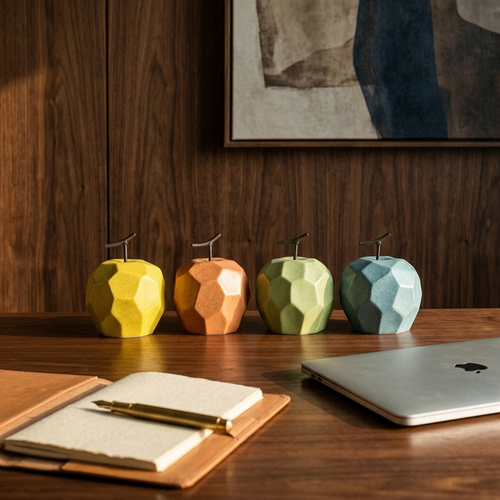
A sculptural shape may catch your eye, but it doesn’t tell you who made the object or how. To see one example of handmade desk decor, watch this video:
What does handmade mean when shopping for desk objects?
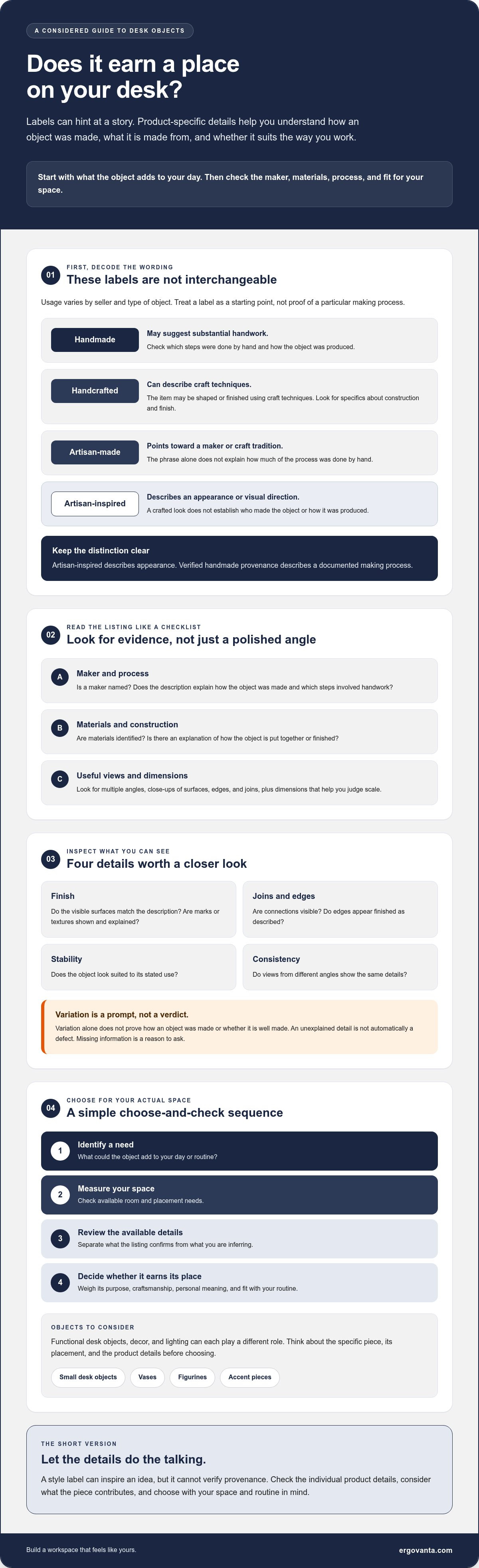
Production methods vary, and there isn’t one simple definition that applies to every kind of desk object. “Handmade” may suggest substantial handwork, while “handcrafted” can describe an item shaped or finished using craft techniques. “Artisan-made” points toward a maker or craft tradition, but the phrase alone doesn’t explain how much of the process was done by hand. Since usage varies, check the specifics.
Look for a named maker, an explanation of the production process, and product-specific information about materials and construction. Separate what the listing confirms from what you’re inferring. A handmade claim is more useful when it describes the work involved.
How is artisan-inspired style different from handmade provenance?
Artisan-inspired describes a visual direction, not verified authorship or production. Sculptural forms, distinctive finishes, or visible material character can create a crafted look, but they don’t establish who made an object or how it was produced. Artisan-inspired describes an appearance; verified handmade provenance describes a documented making process.
Keep that distinction in mind while browsing. Ergovanta’s artisan-style collection can be an aesthetic reference, but it isn’t proof that an item is handmade. If provenance matters to you, check the individual product details instead of relying on a finish or style label.
How to assess craftsmanship in handmade desk objects
A product page should tell you more than a flattering angle and the word “artisan.” To assess artisan and handmade desk objects, look for clear descriptions and images that help you judge how an item is put together. No particular finish is automatically better. The key questions are whether the details suit the object’s purpose and whether the listing explains what you’re seeing.
Useful information includes specific material and process details, clear views of joins and edges, stated dimensions, and information about who made the object. Together, these details help you assess the item and the claims made about it.
Which product details help you judge workmanship?
Start with the listing. Does it identify the materials and explain how the object is constructed or finished? Look for close-up photos of surfaces, edges, and joints, plus views from multiple angles. Dimensions help you judge scale. Photos of the whole object can help you see whether its parts appear aligned and suited to its stated use.
- Finish: Do the visible surfaces match the description? Are marks or textures shown and explained?
- Joins and edges: Are connections visible, and do the edges appear finished as described?
- Stability and consistency: Does the object look suited to its stated use? If there are several views, do they show the same details?
Handmade work can show variation, but variation alone doesn’t establish how an item was produced or whether it’s well made. An unexplained detail isn’t automatically a defect, either. Missing information is a reason to ask, not a verdict.
What questions should you ask about a handmade claim?
If the making process matters to you, ask who made the object and which steps involved handwork. Was it made individually, assembled by hand from prepared parts, or produced in batches? Ask which materials are used and how the finish is applied. Specific answers give you details to compare with the listing. A label alone can’t fill in the blanks.
Craft can carry personal meaning, too. The Kellogg School of Management at Northwestern University explores the psychology behind our attraction to the handmade. That appeal may help explain why a considered object feels at home on your desk, but it doesn’t replace evidence about its maker or process.
If a listing leaves a practical question unanswered, use Ergovanta’s contact page to ask what details are available for an item. Base your decision on what’s confirmed, then decide whether the object earns its space.
Which artisan desk objects fit your routine, space, and style?
Choose according to the role an object could play in your day. A phone stand or wireless charger can support a regular desk routine; a vase or figurine can add a personal detail; a desk lamp can provide a light source for work. Some objects may serve more than one purpose, but each still needs a place. Before adding one, check the available surface, its scale, and the equipment already on your desk.
The U.S. Bureau of Labor Statistics describes the work and skills of craft and fine artists, including creating objects from different materials. For your shopping decision, connect that broader context to the specific item and the details in its listing.
| Object role | Daily purpose | Placement needs | Details to verify |
|---|---|---|---|
| Functional desk object, such as a phone stand | Keeps an everyday device in a consistent spot | Room for the object and easy access to the device | Dimensions, materials, and how the item is designed to be used |
| Small decor, such as a vase or figurine | Adds visual interest or personal meaning | A stable spot that doesn’t crowd work areas | Size, listed material, care instructions, and any handling guidance |
| Lighting, such as a desk lamp | Provides a light source for your work routine | Space for its base and room to position it around existing equipment | Dimensions, materials, care instructions, and product-specific details |
Should you choose a useful object or a decorative one?
An object can serve a practical role, add visual interest, or do both. Start by naming its intended use and where it will go. A phone stand might sit near the spot where you usually use your device; a vase or figurine could go in a clear corner. If you can’t identify a place for it, your desk may already be full.
Browse workspace essentials for examples of functional categories, and consider decor separately if your space needs a more personal touch. Ergovanta offers desk objects, vases, figurines, accent pieces, and lighting. Artisan style can help you define an aesthetic, but it doesn’t verify how an individual item was made.
How do material and maintenance affect everyday fit?
Check the listed material and care instructions before comparing options. Think about where spills might happen, how much dust gathers, whether sunlight reaches the spot, and how often you’ll handle the object. Look for guidance that applies to your actual setup rather than assuming a material will suit it. Refer to a material such as wood only when the product listing confirms it.
The best fit is the one that works with your routine, available surface, and existing equipment. Keep those practical needs in view, then choose the details that make the space feel like yours.
How to choose handmade desk objects without adding clutter
A desk doesn’t need to fill every empty spot. Choose artisan and handmade desk objects by giving each one a clear role, then checking that it suits your space and routine. A few considered pieces can feel more personal than a surface crowded with objects that have nowhere particular to be.
What should you decide before buying a desk object?
Start with the job. Should the object help organize something, support a routine, provide light, or add visual interest? Measure the intended spot and account for nearby screens, work tools, and the movements you make during the day. Decide which materials, care requirements, and maker information matter to you before browsing. That way, a pleasing photo won’t make every object seem essential.
Use this four-step check:
- 1. Name the need. Identify the task or feeling the object should support.
- 2. Measure the space. Check the available area and consider what needs to stay within reach.
- 3. Assess the details. Compare the listing’s dimensions, materials, care instructions, images, and maker or production information with your criteria.
- 4. Decide. Choose the item only if its role and placement make sense alongside the things already on your desk.
How can you make an intentional choice online?
Compare product descriptions and images with your list, not with an imagined desk that has unlimited space. Consider reach, visibility, and existing tasks. Will the object be easy to use, block a screen, or compete with a tool you need often? If details are missing, pause and look for answers before deciding. An unanswered question is a reason to check, not guess.
If you’re unsure whether a piece fits, try adding one object at a time. Use it in its intended spot during your regular routine. Notice whether it helps, stays out of the way, or becomes one more thing to move before working. Keep what earns its place.
Before you decide, sort your notes into three quick groups:
- Must-haves: The purpose, available space, and practical details the object needs to meet.
- Preferences: The look, material, or personal meaning you’d like it to have.
- Questions: Anything about size, care, materials, or the maker that the listing hasn’t answered.
Explore artisan-style desk objects that feel right in your space
You’ve identified what your desk needs and considered what can fit. Now compare your preferences with details confirmed on the individual product listing. When assessing artisan and handmade desk objects, don’t treat a crafted look as proof of handmade production. Style, function, and provenance are separate questions.
How can Ergovanta help you explore an artisan-style workspace?
Ergovanta offers an artisan-style collection for exploring that aesthetic. Browse artisan-style desk objects for visual inspiration, then consider how an item’s role and scale might work in your space. The style category doesn’t guarantee that an item is artisan-made or handmade.
Ergovanta’s catalog includes small desk objects, vases, figurines, and accent pieces. Its decor category offers more examples to consider. Start with the kind of detail you want in your workspace, then narrow your choice according to what the listing confirms. A sculptural form might suit your taste, but its everyday fit still depends on where it will sit and what you want it to do.
What should you confirm before choosing a specific item?
Check the individual listing for material, dimensions, and care instructions. If provenance matters to you, look for information about the maker or production process. Don’t fill gaps with assumptions based on product photography, a style label, or the wording of a description. Clear product details give you a stronger basis for deciding whether an item suits your routine and preferences.
Use a quick final check before choosing:
- Purpose: Can you name the role this object will play?
- Fit: Do the listed dimensions work with your available space and nearby equipment?
- Care: Do the provided instructions suit how you use your desk?
- Provenance: Is maker or production information confirmed, or is it still an open question?
If an important detail isn’t clear, ask Ergovanta what product information is available before deciding. Choose an item because its confirmed details and intended role make sense for your space, not because every empty corner seems to need company.
Build a workspace you’ll want to return to
The right desk object earns its place. It might support a daily routine, make a task easier, or add a personal detail. Choose with intention instead of adding something just because an empty patch of desk is available.
As you compare artisan and handmade desk objects, separate appearance from provenance. A label or crafted look doesn’t prove how an item was made. Check the product-specific details, including materials, dimensions, care, and any available information about the maker or process. Then consider whether the object suits your space and the way you work.
Ergovanta offers an artisan-style collection, with desk objects, vases, figurines, and accent pieces among its catalog. The collection can help you explore a look you like, while each listing is where to check what’s known about a specific item. A few well-chosen pieces can make your workspace feel more personal without asking the desk to do too much.
Start with what matters to you, make room for what serves you, and build a workspace you’ll be glad to return to.
Frequently Asked Questions
What counts as a handmade desk object?
A handmade desk object is described as made through manual work, but the exact meaning can vary by seller and product type. Some items may be shaped or finished by hand, while others may involve hand assembly alongside other production methods. Check the maker’s description and the steps involved rather than assuming the whole item was made by hand. The label alone may not tell you enough.
How can you tell if a desk object is genuinely handmade?
Look for product-specific information about who made it and which parts of the process involved handwork. Clear photos of the object, construction details, materials, and finishing methods can help you assess the listing, but appearance alone can’t verify provenance. If important details are missing, ask the seller. Compare the answer with the product description, and treat unanswered questions as unknowns, not proof for or against a handmade claim.
Are artisan-style desk objects always handmade?
No. “Artisan-style” generally describes an aesthetic, not a verified maker or production method. Sculptural forms, distinctive finishes, or visible material character may suggest a crafted look, but they don’t establish how an object was produced. Ergovanta offers an artisan-style collection, but the available product information doesn’t establish that its items are handmade. Check the specific listing if production details matter to your decision.
What handmade objects are useful on a desk?
Useful options depend on your routine and the details confirmed for each item. A desk object may help keep something organized or support a daily task, while a vase, figurine, or accent piece can add personal meaning. Lighting can serve a practical role, too. Before choosing, consider the object’s intended use, listed dimensions, and placement. Ergovanta’s catalog includes desk objects, vases, figurines, accent pieces, and lighting.
How do you choose desk objects without creating clutter?
Give each object a clear role before adding it. Decide whether it should support a task, organize an item, provide light, or add visual interest. Measure the intended spot and check how the object fits around screens and tools you already use. Choose a few pieces that suit your routine rather than treating every open patch of desk as a display opportunity.
What should you check before buying a handmade desk accessory online?
Review the product’s dimensions, listed materials, care instructions, and photos from multiple angles. If handmade provenance matters, look for details about the maker and production process, or ask which steps involve handwork. Separate confirmed facts from assumptions based on a product’s style or label. Consider whether the item will fit your intended spot and routine, and ask about missing details before deciding.
Can a decorative desk object also be practical?
Yes. An object can add visual interest while serving a useful purpose, provided its design and listed details support that use. A desk object might hold or organize something, while a vase or figurine may have a more decorative role. Think about where it will sit, whether it stays within reach, and whether it interrupts everyday tasks. Choose the balance of function and appearance that works for your space.
Disclaimer
Ergovanta publishes these guides to help people set up better workspaces. Product recommendations reflect what we sell. Specifications, prices and availability are accurate at the time of writing and may change. Nothing here is medical, ergonomic or professional advice; if you have a specific health concern about your workstation, speak to a qualified professional.
From the catalog