October 10, 2026
Artisan Desk Accessories: A Practical Guide to Choosing Pieces That Earn Their Place
A striking object can still be the wrong choice for your desk. The best artisan desk accessories fit the work, the available space, and the routines you already have. Explore Ergovanta’s accessories with those needs in mind.
A product image can make a choice look simpler than it is. A lamp may add useful light but crowd a small surface. A canvas can bring character without taking up desk space, while a ceramic accent may look right but serve no practical purpose. The right fit depends on what you need your workspace to do.
This guide compares artisan desk accessories by purpose, material, finish, scale, and placement. You’ll see how hand-painted canvas, hand-blown glass, wood, and ceramic bring different qualities to a workspace, and how to weigh lighting, wall art, or a small accent against everyday needs. Start with the role you want a piece to play, then choose the material and character that make it feel like yours.
Key Takeaways
- Choose artisan desk accessories by the role they’ll play, from useful lighting to a personal accent.
- Compare material, finish, and visual weight to find a piece that fits your workspace.
- Decide where an object belongs before bringing it in. A shelf, wall, or credenza may suit a statement piece better than your active desk space.
- Use a simple decision path: identify the need, choose placement, assess materials, set visual priorities, then compare options.
- Consider how hand-painted canvas, hand-blown glass, wood, and ceramic can bring distinct character to a workspace.
What Counts as an Artisan Desk Accessory, and What Should It Add?
A desk accessory earns its place through more than a handmade look. Consider its material, visible signs of making, and the details that give it individual character. A useful starting point is the word itself: What is an Artisan? offers a broad overview of the craft tradition. For your workspace, the practical question is how that character meets your everyday needs.
An artisan desk accessory is a functional or decorative workspace object whose materials and signs of making give it distinct character, and whose presence supports use, adds meaning, or does both. That definition leaves room for different kinds of desks. A lamp can light a work area while adding texture and shape. Wall art can make a corner feel more personal without taking up desktop space.
How to tell whether an artisan piece suits a workspace
Start with your routine. Notice what you reach for, where you have room, and what feels missing. Then look closely at the object: hand-painted marks, the way glass catches light, carved wood details, or variations in ceramic form can make its making visible. These cues suggest character, but they don’t prove that every part of an item was made by hand.
Separate product details from assumptions about artisan goods. Ergovanta’s Artisan collection includes hand-painted canvas art, hand-blown glass lighting, ceramic pieces, sculptural accents, and wood details. These are specific materials and forms to consider, not a claim that every item uses the same process. Judge each piece by its description and the details you can see.
Useful object, visual anchor, or both?
Think about the job first. A lamp provides functional lighting, while its material and shape also affect the feel of the space. A wood table lamp, for example, brings a different visual presence from a hand-blown glass light. A vase or sculptural accent is mainly decorative, so it should be worth the space it occupies without interrupting your work.
Wall art offers another option. A hand-painted canvas can add color and a focal point while leaving the desk clear for tasks. That makes placement part of the decision, not an afterthought. If your desk is already busy, consider a wall or nearby shelf.
Before choosing, name what the piece will add. It might be task lighting, a visual pause, a material you enjoy seeing, or a detail that makes the room feel more like yours. If the answer is only “it looks interesting,” decide where it will live and whether you’ll notice it without having to work around it. Artisan desk accessories should bring character with purpose, not become another obstacle between you and the work.
Compare Artisan Desk Accessories by Material and Making
Material changes more than appearance. It affects how an object catches light, holds color, and looks against the rest of your desk. Compare what you can see: brushwork on canvas, the color and form of glass, the surface of ceramic, or the grain and shape of wood. Those details help you decide whether a piece will blend in or become a focal point.
The examples here come from Ergovanta’s Artisan collection. They include hand-painted canvas, hand-blown glass, ceramic, and wood. Individual artwork and finishes have their own character, so consider the specific piece rather than assuming every item was made or finished in the same way.
| Material | Typical role | What to consider |
|---|---|---|
| Canvas | Wall art and visual anchor | Look at color, brushwork, and how the artwork will sit against the wall behind your desk. |
| Glass | Lighting with a noticeable material presence | Consider the glass color and how the light will contribute to the room’s overall feel. |
| Wood | Lighting with visible natural material and form | Notice the wood shape and how the shade’s texture relates to nearby surfaces. |
| Ceramic | Vase or decorative accent | Assess its form and visual weight, especially if it will sit within your working area. |
What hand-painted canvas and hand-blown glass bring to a space
Dusk is described as original, hand-painted canvas art signed by the artist. Its marks and color give you details to respond to, while wall placement keeps it separate from the objects competing for desk space. Prism is a hand-blown colored-glass pendant with a warm Edison-style LED. Here, material and light work together. For a broader look at how workspace choices shape an environment, see Workspace Design and Productivity.
How wood, ceramic, and sculptural accents change the look
Kumo pairs a wood lamp form with a shade wound by hand from natural cord. The combination gives the lamp visible texture as well as a lighting role. Wabi, by contrast, is a ceramic vase, so its contribution is primarily sculptural. A small sculpture can offer a similar visual pause without serving as a lamp or vessel. Compare each piece by what it does, where it can sit, and how much visual attention it asks for.
Use those distinctions to narrow your options: a lamp brings light, a vase or sculpture adds form, and canvas introduces character on a wall. To compare these materials and forms for your own space, browse the Artisan desk accessories.
Will Artisan Desk Accessories Add Clutter or Earn Their Place?
An expressive object can still be the wrong fit if it gets in the way. The test isn’t whether it looks good on its own. It’s whether it works with your space and the way you use it. Choose a piece for a defined role before choosing its visual character. That role might be adding light, creating a visual pause, or giving a bare wall a focal point.
A lamp may justify the desk space it occupies because it serves a practical purpose as well as adding material and form. An ornament has to earn its spot on visual value alone. Neither is automatically the better choice. Consider what you’ll gain, then decide where the object can live without interrupting the work.
Choose the right scale for the surface
Look at your usable work area, not just the full size of the desk. Leave room for the tools and tasks you return to each day. Put a desktop accent where it won’t crowd your hands, papers, or devices. If it competes with those essentials, it may suit a shelf or credenza better. Wall art can add presence while leaving the desk clear.
Match placement to purpose:
- Desktop: Choose an object you’ll use or enjoy seeing nearby, and keep it outside your active work area.
- Shelf: Give a sculptural accent a visible spot without asking the desk to hold it.
- Credenza: Use the surface for a considered display that sits apart from hands-on work.
- Wall: Place art where it adds color or focus without taking up furniture space.
Balance color, texture, and the objects already there
Take stock of what’s already in view: the desk finish, lighting, screens, and objects you use every day. Then choose one clear visual role. A sculptural accent can stand out against simple surroundings, or a quieter finish can sit comfortably among existing textures. Color and material should complement your workspace, not dictate a full redesign. A desk doesn’t need a theme meeting.
If you’re considering an accent, browse the sculptural decor and desk accents with placement in mind. Picture each piece on a particular surface and ask whether you’ll see it easily without it getting in the way. For lighting, consider the same fit against its intended use: a lamp that provides useful light may deserve a desktop spot more than a decorative object does.
Try a quick edit before choosing. Clear a small area, place a temporary object there, and work as usual. Does it interrupt your routine, or make the space feel more considered? If the spot feels cramped, move the accent to a shelf or wall. A good fit belongs in your workspace without requiring you to work around it.
How to Choose Artisan Desk Accessories for Your Routine
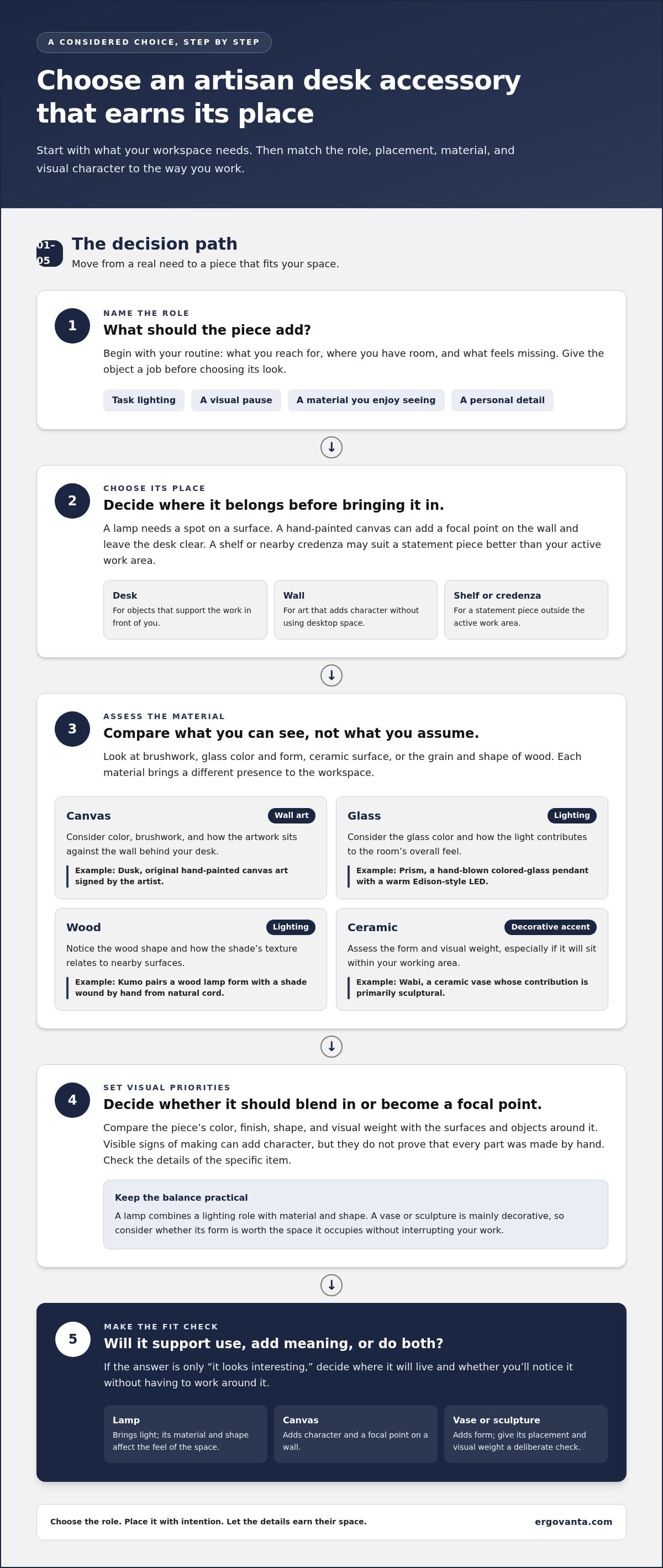
Let your daily routine narrow the options. Before browsing artisan desk accessories, decide what your workspace needs and where a new piece could fit. This five-step path keeps the choice tied to real use, instead of turning a product image into an unplanned desk makeover.
- Identify the role. Note whether you want task lighting, ambient light, wall art, or a small accent. If you need more light for desk work, compare a table lamp or pendant with the setup you already use.
- Choose the placement. Name the spot first: desk, shelf, credenza, or wall. For a decorative piece, decide what that surface needs before browsing.
- Assess the material. Think about the textures already in your space and which ones you’d like to add. Treat them as useful clues, not rules for matching everything.
- Set visual priorities. Decide whether you want the new piece to blend in, contrast with its surroundings, or draw the eye. One clear intention can make the choice feel more considered.
- Compare candidates. Weigh material, intended placement, visual presence, and the product features provided. Base your comparison on those details instead of guessing from an image.
Start with the job the object needs to do
Let the need lead. A table lamp may suit a desk where you want nearby light; a pendant may work better as part of the room’s overall lighting. For a blank wall, art can add interest without claiming desk space. If you’re choosing a purely decorative object, name its surface and purpose first. “Somewhere around here” is a location, technically, but not a useful one.
Shortlist pieces using a simple comparison
Compare options by the role they serve, the material described, and the place you have in mind. A table lamp, a glass lamp, and a canvas each make different demands on your setup. Read the supplied product details, then picture each option in its intended spot. If you’re coordinating lamps with other sources of light, the lighting collection can help you compare options for the room.
With your role and placement in mind, browse the Artisan collection and compare pieces for your space.
Standout Artisan Desk Accessories to Consider from the Collection
Use this shortlist to compare what each piece could contribute, rather than treating a product name as a verdict. Ask where it would go, what you’d notice during the day, and whether its role suits the way you use that part of the room. The strongest fit may solve a small everyday need, or simply be a detail you’re glad to see when you sit down.
Consider a lamp when your workspace needs light and character
Kumo, Boletus, and Prism are lighting options to weigh against your room’s setup. First, decide whether you need light close to your work or want to consider an overhead source. Then think about where each could sit or hang without disrupting your routine. If you already have a reliable task light, another lamp may be more useful elsewhere in the room. If your desk feels dim, prioritize the option that addresses that need before comparing its visual presence.
Choose art or a smaller accent for a more personal detail
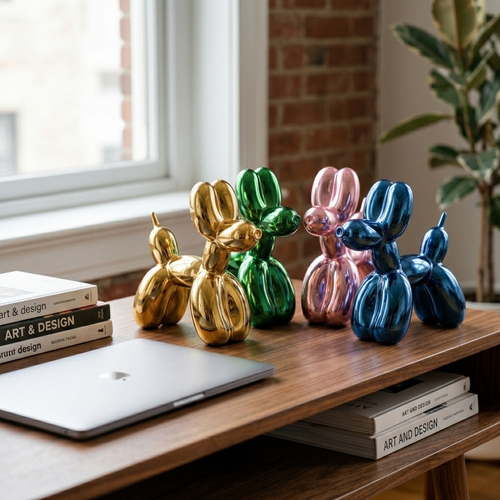
Dusk is worth considering if you want artwork on the wall rather than another object on the desk. Balloon and Wabi offer different ways to add a ceramic detail to a display surface. For Balloon, compare the listed color options with the tones already in your space. For Wabi, use the listed size options to decide which one suits your chosen surface. Neither needs to sit on your active work area to contribute to the room.
Use this table to make your shortlist practical. Placement describes a possible role, not a required location. Match each item to your setup and the room’s needs.
| Item | Material | Placement to consider |
|---|---|---|
| Kumo | Wood and natural cord | Desk or nearby surface |
| Boletus | Glass | Surface where its light suits your routine |
| Prism | Colored glass | Overhead position in the room |
| Dusk | Canvas | Wall near the workspace |
| Balloon | Ceramic | Desk, shelf, or credenza |
| Wabi | Ceramic | Display surface suited to your chosen option |
Before settling on a piece, picture it in its intended spot and consider what you’d remove or rearrange to make room. That small pause can turn browsing into a deliberate choice.
Make One Intentional Change to Your Space
Your workspace doesn’t need to feel finished all at once. Start with one small change that makes the hours you spend there feel more like yours. Notice what you reach for, what distracts you, and where your attention naturally settles. Let those everyday patterns guide your next choice instead of trying to solve the whole room in one go.
Artisan desk accessories can bring a personal detail into a space that’s already made for the work. Choose something you’ll use or enjoy seeing, give it a place, and live with the change. If it fits, build from there. If it doesn’t, your workspace has given you a clear answer, which is more useful than another object collecting dust.
Make the next choice your own. A workspace you want to return to is built one considered decision at a time.
Frequently Asked Questions
What makes a desk accessory artisan?
Look for specific information about how an object was made, who made it, or what material choices distinguish it. A broad style label alone won’t tell you much. Makers such as Aihki Design, for example, highlight handcrafted Finnish production across utility and decor goods like thermometers and home accents, illustrating how authentic craft values material and origin. Product descriptions that identify a process or artist give you a more grounded basis for comparing options. For artisan desk accessories, judge the details provided rather than assuming a handcrafted appearance tells the whole story.
Can artisan desk accessories work in a minimalist workspace?
Yes. Minimalism can make a crafted detail more noticeable, so consider how its shape and finish relate to the lines already in your setup. A single rounded accent can soften a desk with mostly straight-edged equipment, while a simpler form can sit quietly alongside it. The point isn’t to follow a strict style rule, but to choose a detail that feels at home.
How do I care for hand-painted or hand-finished desk decor?
Follow the care directions supplied for the specific item. Finishes and materials can differ, so don’t assume one cleaning method suits every piece. Keep care information with the product details, and avoid experimenting with cleaners or moisture on a surface unless its instructions say that’s appropriate. Care guidance is one more practical detail to weigh when deciding where an object will live.
Are hand-painted canvas pieces all exactly alike?
Not necessarily, but “hand-painted” by itself doesn’t guarantee that every canvas differs visibly. Check whether the product description identifies an original work, a print, or another format, and use the images and written details to understand what’s being offered. Colors can also appear different across screens. Base your choice on the stated product details, and don’t assume individual variation unless it’s described.
Can a desk lamp count as an artisan desk accessory?
Yes. A desk lamp can combine an everyday lighting role with considered material or design details. Assess both parts: whether its light suits the way you work, and whether its form belongs with the objects around it. If the lamp would duplicate a source you rarely use, its decorative appeal may not be enough to justify the space. Choose one that answers a real need.
How can I make a decorative desk accessory feel personal rather than random?
Give it a reason to be there. Choose an object connected to an interest, memory, or material you genuinely enjoy, then place it where you’ll notice it naturally during your day. For instance, an organic art object from dandelionsphere.com can introduce a quiet touch of nature to a desktop. A small ritual can help: let it mark the start of work or sit near the spot where you take a pause. Personal meaning comes from your connection to the piece, not from matching a display perfectly.
Disclaimer
Ergovanta publishes these guides to help people set up better workspaces. Product recommendations reflect what we sell. Specifications, prices and availability are accurate at the time of writing and may change. Nothing here is medical, ergonomic or professional advice; if you have a specific health concern about your workstation, speak to a qualified professional.
From the catalog