October 28, 2026
Modern Home Decor Aesthetic: Find a Style That Feels Right
A home doesn’t need one perfect label to feel intentional. Interior design styles bring together recognizable colors, materials, furniture, and details. This modern home decor aesthetic guide shows how to use those cues to create a space that feels like yours.
It’s easy to save a room because you like a chair, a color, or the way light falls, then wonder how those ideas fit together. Look for patterns, not rules. Learn how styles differ, how transitional design pairs modern and traditional elements, and how inspiration images can reveal what you’re drawn to.
Then bring the room into focus with thoughtful choices, such as plants that add color or create a natural division in an open space. The goal isn’t to copy a finished room. It’s to build a home aesthetic from details you’ll enjoy living with every day.
Key Takeaways
- Notice which colors, materials, furniture shapes, and architectural details define a style before deciding whether it suits your home.
- Blend modern and traditional pieces by choosing a clear lead style, then connecting both through a consistent color palette.
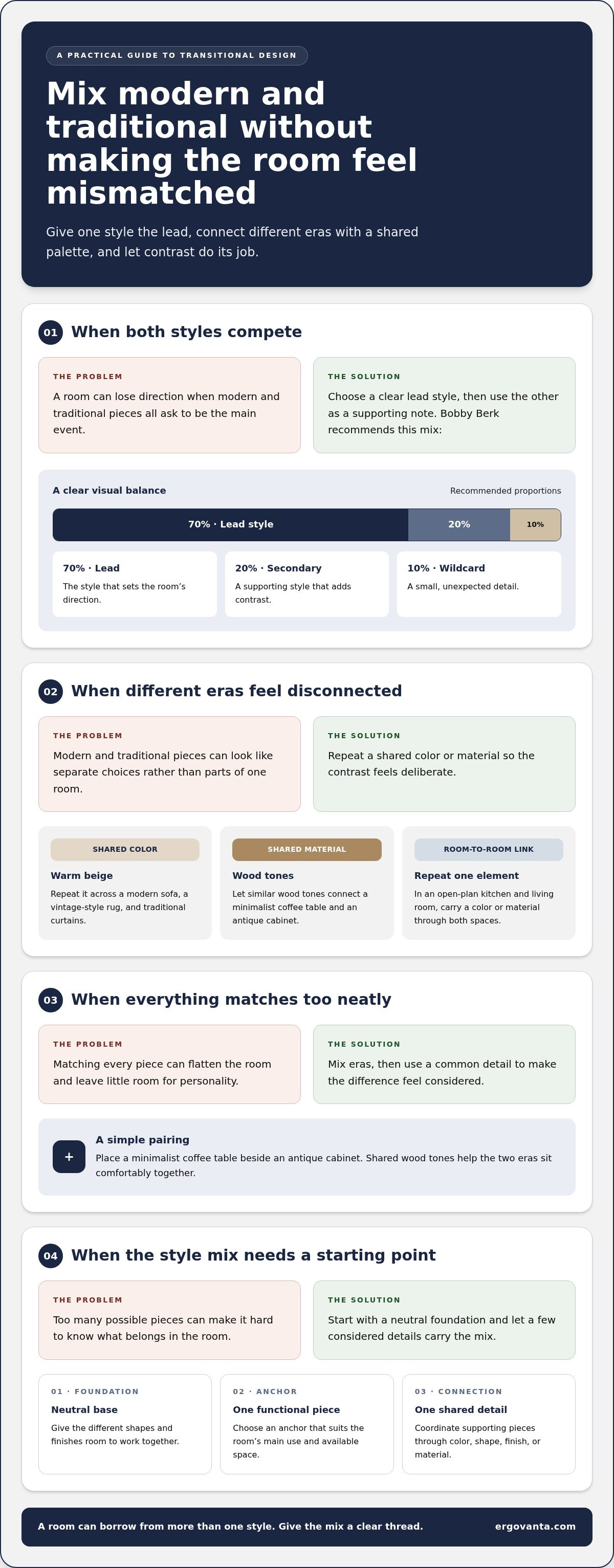
- Use inspiration images to spot recurring details you’re drawn to, rather than copying a room piece by piece.
- Balance natural and synthetic materials to create contrast while keeping the overall room intentional.
- Use plants to add color or define an open-plan area, and consider Ergovanta desk lamps when lighting is part of the look you’re building.
1. What are interior design styles?
Interior design styles are recognizable ways to combine furniture, colors, materials, and architectural features. Modern interior design emerged in homes in the early to mid-20th century, while today’s modern look can draw on mid-century modern, postmodern, and Nordic influences. Think of styles as useful reference points, not rules: a room can borrow clean lines from one and layered textures from another.
Mid-century modern design generally refers to pieces from the mid-1940s to the early 1970s, with the style rising to prominence in the 1950s and ’60s. Its focus is function first. The egg chair and Eames lounger are recognizable furniture examples, while picture windows connect interiors with outdoor views. Avocado, mustard yellow, and tangerine bring in era-specific color. To use the look now, pair one sculptural chair with simple flooring and a restrained backdrop.
Maximalism takes the opposite route from pared-back rooms: it combines color, pattern, and texture, with balance keeping the mix readable. The style gained traction in the 1980s as a response to minimalism. Try one floral print beside a striped cushion, then repeat a color from both in artwork. A neutral base of soft gray, warm beige, or creamy white can also give bold art or a sculptural accent piece room to stand out. A considered selection of decor accents can add personality without filling every surface.
California Coastal interiors often combine neutral, green, and blue palettes with wood, rattan, leather, and linen. Try pairing a sand-colored sofa with a blue throw and a woven basket. Scandinavian design also favors restraint, but balances minimalism with coziness and function. For either approach, choose a small color scheme and repeat its shades in textiles, furniture, and artwork. Repetition connects separate rooms without making them identical.
What lighting works best in a modern home? Start with ambient lighting for an even base, then add task lighting where you work or read and accent lighting to highlight art or texture. For example, place a desk lamp on a work surface or focused light beside a reading chair.
What are budget-friendly ways to achieve a modern home aesthetic? Rearrange existing furniture, clear crowded surfaces, and refresh a room with a few coordinated textiles or secondhand accent pieces. Painting a small area can also establish a clear color direction.
How much does it cost to furnish and decorate a modern living room? The total depends on what you already own, the room’s size, and the furniture and materials you choose. Prioritize essential pieces, then add lighting, textiles, and art as your plan develops.
How do you add texture and warmth to modern decor without creating clutter? Choose a few contrasting materials, such as linen, wood, and wool, and use them on functional pieces. Leave open space around each item so the textures remain visible.
2. Transitional design blending modern and traditional elements
Transitional design blends modern and traditional elements, giving familiar forms room beside cleaner lines. Start with a neutral foundation, then pair a streamlined sofa with a carved wood side table or a simple dining table with traditional upholstered chairs. Bobby Berk recommends letting one style lead at 70 %, using a secondary style at 20 %, and reserving 10 % for a wildcard. Those proportions create a clear direction without making every piece match.
Connect different eras with a consistent color palette. For example, repeat warm beige across a modern sofa, a vintage-style rug, and traditional curtains. Mix eras rather than matching proportions: a minimalist coffee table can sit beside an antique cabinet, while shared wood tones make the contrast feel deliberate. In an open-plan kitchen and living room, repeat a material or color in both spaces to create a visual connection.
Traditional interiors draw mainly from 18th- and 19th-century European styles, especially England and France. Look for symmetrical furniture arrangements, detailed woodwork, and classic prints. French Country design brings together natural materials, muted paint colors, toile fabrics, and antique furnishings. A toile cushion beside a plain modern armchair offers a small-scale way to combine those details without turning the room into a period set.
Mediterranean design draws on Spanish, Italian, and French influences. In a living room, pair natural textures and warm-toned materials with simple modern furniture. In a bedroom, a patterned textile can balance a clean-lined bed and uncluttered nightstands. Let each room lean into a different style, then carry a shared element, such as a neutral shade, through the home.
Modern design refers to a specific period, while contemporary design continues to change with current influences. That distinction can guide your choices: modern furniture often has a defined historical design language, while contemporary furniture reflects what’s being made and used now. For a living room, bedroom, or dining room, start with the room’s main use and available space. Choose a functional anchor piece, then add supporting furniture that shares its palette or material.
How do you choose modern furniture for a living room, bedroom, or dining room? Measure the available space, identify the room’s main function, and choose one anchor piece first. For example, select a sofa for a living room or a bed for a bedroom, then coordinate supporting pieces by shape, finish, or color.
For a considered mix of old and new, decide which pieces should lead and which should simply earn their place. If you’d like to discuss your choices, share your interior design question.
3. Finding personal style through inspiration images
Build an inspiration library before choosing a single style label. Collect 20–30 images of rooms you genuinely like, then compare them for recurring colors, materials, furniture shapes, and moods. You might notice natural materials, sculptural forms, or uncluttered surfaces appearing repeatedly. Those patterns offer a more useful starting point than trying to recreate one photographed room exactly.
Notice what draws you to each image. Mid-century modern interiors often pair recognizable furniture shapes with modern modifications, while minimalist rooms pare back decor and color. If you save both, identify their shared features, such as clean lines, warm wood, or open surfaces. Keep that common thread and let each style contribute different details.
Historical references can help you name a visual preference. Art Deco emerged in the 1920s, and its American presence extended from the 1910s to the 1940s. Style Moderne is another name for Art Deco; its precise corners and metal accents can guide choices for furniture or lighting. A room doesn’t need a complete period look. One geometric mirror beside simple furniture can carry the reference.
Eclectic rooms bring different colors, patterns, and textures together, while modern farmhouse mixes traditional farm features with sleeker accents. For example, wooden beams and plank flooring can sit beside streamlined furniture. Farmhouse style draws on American historical styles from the 18th and 19th centuries. Save images that show the balance you prefer, such as rustic materials paired with clean shapes rather than layers of decorative detail.
Turn your image collection into a practical reference. Group pictures by room, then note three recurring details in each group, such as pale wood, rounded furniture, or patterned textiles. Mark what you’d actually use, not just what looks good in a photo. A striking living room may offer little guidance for a bedroom with different needs and space.
Choose one leading style and draw on other influences selectively. Repeat a material or color across key pieces to connect different styles. If a room starts to feel busy, remove a competing pattern or decorative object and reassess. The aim isn’t to follow every image, but to use them as a filter for intentional choices.
What common modern decor mistakes should homeowners avoid? Don’t copy an inspiration image without considering your room’s layout, use, and existing pieces. Avoid combining styles without repeating a color or material to connect them.
4. What is modern home decor?
Modern home decor uses clean lines, considered materials, and purposeful details. It favors removing unnecessary elements and giving essential ones room to work. A neutral palette can keep the backdrop calm, while a sculptural chair or distinctive pendant adds focus. This modern home decor aesthetic guide can help you weigh these choices without treating a style label as a strict set of rules.
Combine natural and synthetic materials for contrast while keeping the room cohesive. Pair warm wood with metal finishes, for example, or place a glass table beside a textured wool rug. Acrylic offers the visual clarity of glass with greater durability. Reconstituted wood, made from recycled materials, can be used for furniture or flooring. Each material brings a different surface quality, so repeat a finish to make varied pieces feel related.
Concrete and microcement can give floors or accent walls an industrial character. Balance their cool, smooth surfaces with glass shelving, a wood table, or woven textiles. In a room with concrete flooring, a fabric sofa and natural wood details add visual softness. Choose materials with purpose: a finish should suit how you use the space, not simply add another surface to maintain.
Modern farmhouse design pairs traditional farm features, such as wooden beams and plank flooring, with sleek modern accents. Try a clean-lined dining table beneath exposed beams, then use a neutral wall color to connect old and new details. Natural materials help ground the combination. Choose one or two farmhouse references instead of repeating beams, distressed finishes, and rustic accessories throughout every room.
Art Deco offers another way to use material contrast. The style originated in France in the early twentieth century and drew influence from the Industrial Revolution. Its design language can include metal, glass, oversized forms, and sharp geometric edges. Bring that influence into a current interior with a metal-framed mirror or a glass table with strong angular lines. Let one distinctive feature lead, then keep nearby furniture simpler.
Build a material scheme by choosing a base, a contrast, and a repeated finish. For example, combine warm beige walls with a wood surface, then repeat metal details in a mirror frame and table legs. Natural materials show grain and variation, while synthetic surfaces can look cleaner and more uniform. Use this approach to choose combinations that suit your room and daily routines.
Which colors, materials, and finishes are common in modern interiors? Neutral shades such as warm beige, soft gray, and creamy white often pair with wood, metal, glass, concrete, or acrylic. Matte and polished finishes can work together, especially when a shared color or repeated material connects them.
5. Using plants in home decor
Plants bring a living element to rooms with clean lines, smooth finishes, or neutral furniture. Biophilic design emphasizes a connection to nature through greenery and natural light. Start with a plant in a room where it suits the space, such as a leafy floor plant in the living room or a small pot on a bedroom shelf. Choose each placement for the room, not to complete a checklist.
Match a plant’s location to the available light and how you use the space. A bright windowsill can suit a smaller plant, while an empty corner may work for a taller one. Keep leaves clear of walkways and doors, especially in narrow rooms. If caring for a live plant doesn’t fit your routine, consider how greenery can contribute visually without adding another task.
In an open-plan space, a larger plant can act as a natural room divider. Place it near the edge of a seating area to suggest a boundary without blocking the view across the room. In a studio, greenery can separate a desk from a lounge area while keeping the floor plan visually open. It adds color and helps distinguish how each part of the room is used.
Use foliage to complement existing colors rather than introduce a competing palette. Green leaves work against warm wood, pale walls, or deep-colored furniture, while a simple planter can echo a finish elsewhere. For example, choose a ceramic pot in a color that appears in a nearby vase. This repetition helps the plant feel like part of the room, not a last-minute addition.
A plant can balance artwork, patterns, and a statement accessory. In an eclectic room, place greenery near a patterned rug or gallery wall, then leave some surrounding surface clear. In a classic interior, a strong plant beside a traditional cabinet adds a natural counterpoint. The contrast works best when the plant has room around it instead of competing with nearby objects.
Consider scale before choosing a pot or placement. A tabletop plant can add detail to a shelf, while a floor plant can fill an unused corner. Keep the container in proportion to nearby furniture. A small pot on a crowded side table adds visual noise; moving it to an open shelf gives the leaves room to stand out.
How do you style modern wall art, rugs, plants, and accessories? Choose one focal point, such as artwork, then use a rug and greenery to echo its colors or textures. Limit nearby accessories so each item has room to stand out.
Plants can add color to modern decor, soften hard surfaces, and define open-plan areas without adding furniture. Start with a placement that meets a real need, then choose a plant and container that suit the colors and materials already in the room.
Ergovanta: desk lamps
Ergovanta offers desk lamps and other lighting to help a room work for everyday use. Use a desk lamp to define a focused work area, or place a floor lamp beside a reading chair. Wall lights and ceiling lights can contribute to the broader lighting plan. Choose based on where you need light and how you use the space.
Treat lighting as part of the decor, not an afterthought. A considered fixture can complement the room’s materials and style while serving a practical purpose. Browse Ergovanta’s lighting selection to explore options for your space.
For help with your next step, contact Ergovanta.
Choose the next detail with intention
Give your room time to become yours. Rather than changing everything at once, choose one detail that would make daily life feel more considered. Use this modern home decor aesthetic guide as a reference, then trust the patterns you’ve noticed in your own space. Choose what suits the room you actually use, not an imagined version of it.
Start with a small, practical decision, such as where to place a reading chair or which surface to clear. Notice how that choice changes the room’s flow before adding anything else. A considered space takes shape through choices that support your routines, not a checklist of details.
Build at your own pace. Your home can take shape one useful, personal choice at a time.
Your home doesn’t need a perfect formula. Make it work for the life happening inside it.
Frequently Asked Questions
What are interior design styles?
Style labels are practical reference points for making a room’s choices feel connected. Use one to narrow decisions, not dictate every purchase. Before replacing a dining table, for example, list what the room needs: more seating, easier cleaning, or room to move around. Compare possible pieces against those needs and the details you want to keep. The label organizes your options; your room sets the brief.
What is modern home decor?
It means arranging a home around how people use it, with deliberate choices about layout, objects, and finishes. Start with daily routines: where bags land in an entryway, where reading happens, or what needs to stay within reach near a desk. Arrange the space around those habits first. Then choose decorative details that support the setup rather than get in its way.
What are the defining features of modern home decor?
Look for rooms with a clear purpose, easy movement, and intentional furniture and accessory placement. In a living room, keep the route between the entrance and seating open, and put frequently used items within reach. Use storage to give everyday belongings a consistent home. These practical choices make the room easier to use and help decorative details feel considered rather than scattered.
How does modern decor differ from contemporary, minimalist, and mid-century modern styles?
Consider what guides each choice: modern design draws from a defined design period, contemporary choices reflect current tastes, and minimalism means editing down to what matters. Mid-century modern refers to a particular historical design language. To choose between them, assess a piece’s shape, visual weight, and fit in your room. That keeps a style preference connected to the space itself.
Disclaimer
Ergovanta publishes these guides to help people set up better workspaces. Product recommendations reflect what we sell. Specifications, prices and availability are accurate at the time of writing and may change. Nothing here is medical, ergonomic or professional advice; if you have a specific health concern about your workstation, speak to a qualified professional.
From the catalog
The faux plants this guide is about.
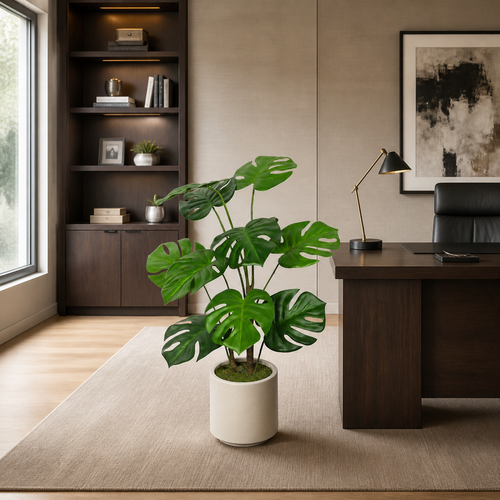 Monstera
$124.95
Add to cart
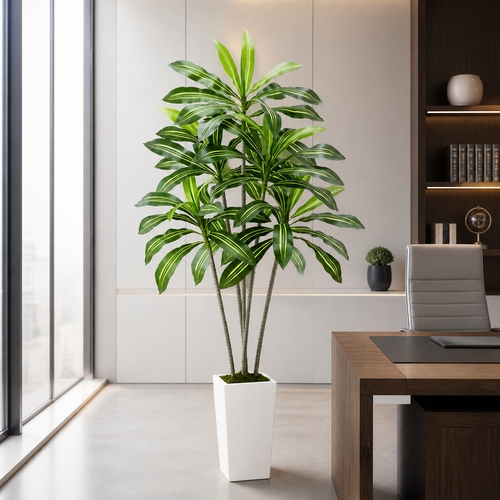 Dracaena
$96.95
Add to cart
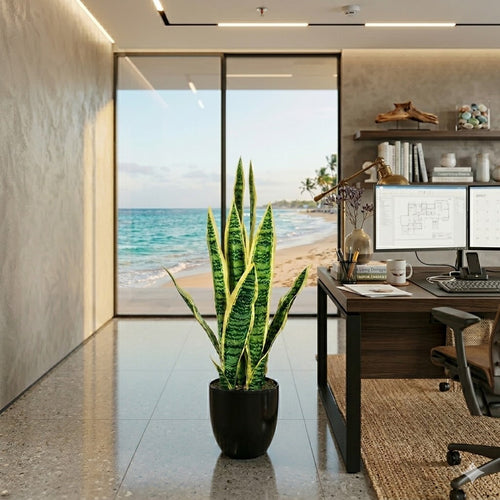 Sansevieria
$104.95
Add to cart
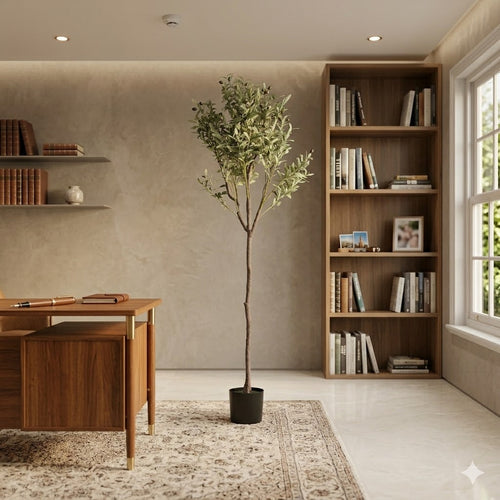 Olea
$95.95
Add to cart