September 7, 2026
Best Faux Plants for Your Office: Low-Maintenance Decor
A dead plant on a desk is a monument to a task you didn't have time for. Your workspace should support your focus; it shouldn't demand a rigid watering schedule or a specific window orientation. You likely want the visual rest that nature provides, yet you've seen the shiny, unrealistic greenery that makes a desk feel cluttered rather than considered. Real plants often struggle in low-light environments, leaving you with a collection of brown leaves that distract from the work at hand.
Finding the best faux plants for an office is about choosing objects that earn their place through texture and intentionality. We'll help you navigate the world of hyper-realistic greenery that stays visually restful for years without adding a single item to your to-do list. You'll learn how to identify materials that mimic life and which species translate best to artificial versions. We will cover how to equip your space with greenery that feels personal, durable, and entirely maintenance-free. This guide is designed to help you build a room that actually gets used, focusing on high-quality pieces that look authentic from every angle.
Key Takeaways
- Understand how biophilic design provides visual rest and breaks up the harsh lines of tech in your workspace.
- Identify the best faux plants for an office, from vertical snake plants to compact succulents made for small shelves.
- Spot the signs of high-quality greenery by looking for intentional leaf variation and materials that mimic organic textures.
- Learn to use desk lamps and monitor light bars to create realistic shadows that help artificial plants earn their place.
- Build a functional room where greenery and ergonomic tools work together to create a space you'd choose to come back to.
Why Faux Plants Earn Their Place in a Functional Office
The workspace shapes the work. Equip it deliberately. Most desk setups are dominated by hard angles, glass screens, and plastic peripherals. Adding greenery isn't just about decoration; it's about solving the problem of visual fatigue. When your eyes move from a bright monitor to the organic texture of a leaf, it provides a micro-break that helps maintain focus over long hours. Greenery earns its place by softening the environment and making it a room you actually want to inhabit.
Greenery as a Tool for Focus
Biophilic design is a functional workspace requirement that connects your desk to the natural world. Seeing organic shapes helps the brain reset after staring at spreadsheets or code for hours. This visual rest is essential for anyone who spends serious hours at a desk. By breaking up the harsh lines of your monitor and laptop stand, you create a space that feels less like a corporate cubicle and more like a personal sanctuary made for the work. It's about shifting the atmosphere from a place where you have to be to a place where you choose to be.
Real plants are often a liability in a high-focus office. They require specific light, consistent watering, and a level of attention that most people can't spare during a busy week. A dying plant is a distraction, not a tool for focus. Choosing high-quality faux plants is an intentional decision to equip your space with permanent greenery that stays vibrant without the maintenance burden. It's a one-time investment in the long-term utility of your workspace.
Overcoming the Tacky Stigma
Modern manufacturing has shifted artificial greenery from "tacky" to "considered." If you look into the history of artificial plants, you'll see how materials have moved from basic silk to advanced real-touch polymers. These botanical replicas mimic the waxy texture, varied color gradients, and slight imperfections of live leaves. Unlike "craft store" plastic that looks uniform and fake, high-quality replicas are indistinguishable from their living counterparts until you touch them. They provide the same psychological benefits as real plants without the risk of soil spills or pests.
We don't view greenery as an afterthought. We view it as a core component of the ergonomic ecosystem. When you select the best faux plants for an office, you're choosing objects that stay consistent regardless of how much natural light your room gets. It's about building a workspace where every object, from the accent pieces to the lighting, serves a purposeful function. Equip your space for the long term with items that don't demand your time, but instead, give you a more restful environment to do your best work.
The Best Faux Plant Species for Every Desk Type
The best faux plants for an office are those that respect the physical boundaries of your work. A sprawling fern might look good in a catalog, but it's a nuisance when it blocks your second monitor or tangles with your mouse cord. Choosing the right species is about matching botanical architecture to your specific desk footprint. Equip your space with intention; don't just fill it with greenery that gets in the way of the task at hand.
Sansevieria, commonly known as the Snake Plant, is the primary choice for minimalist setups. Its leaves grow straight up; it provides vertical interest without requiring a wide radius of desk space. It fits perfectly in the narrow gap between a monitor and the edge of a desk, adding a burst of green that doesn't invade your keyboard area. When researching the best faux plants for an office, focus on species like this that maintain their shape and don't require pruning or "fluffing" to look considered.
Compact Options for the Minimalist Desk
For those with limited real estate, succulents and air plants are the small objects that earn their place. These compact pieces are ideal for placing on monitor-laptop-stands or small accessory shelves. They offer thick, waxy textures that break up the matte finish of your tech without adding clutter. Because they don't grow, you don't have to worry about them eventually outgrowing the small nook you've built for them. They provide a quick visual reset for your eyes without demanding any surface area you need for your mouse or notepad.
Floor Plants for Room Framing
If your office is larger, you can use floor plants to frame the room and define your work area. A Fiddle Leaf Fig or a Monstera Deliciosa creates a visual boundary between your desk and the rest of the room. These larger replicas are particularly useful for hiding the inevitable tangle of wires behind a standing desk or a cable management tray. They anchor the space, making it feel permanent and structured rather than temporary.
The Olive tree is another considered choice for framing a corner. Its silvery leaves and slim trunk provide a calm aesthetic that feels professional and intentional. Trailing Ivy or Pothos replicas add depth to vertical spaces when positioned on high shelving or near wall lights. This draws the eye upward, making a small office feel more open and less cramped. If you're looking to build a workspace that feels uniquely yours, you can reach out to our team for advice on how to equip your specific layout with the right greenery.
Identifying High-Quality Artificial Greenery: What to Look For
Choosing the best faux plants for an office requires a discerning eye for material honesty. In a space built for work, every object should feel authentic and considered. High-quality greenery is defined by its ability to blend into the background without announcing itself as a plastic imitation. This means looking for the subtle irregularities that occur in nature, such as varied leaf sizes, non-uniform color gradients, and stems that don't follow a perfect grid. If every leaf is a carbon copy of the next, the plant will look like a prop rather than a part of your room.
Perfect symmetry is a red flag. Real leaves have small tears, slight curls, and varying shades of green based on their age. Botanical replicas that earn their place often feature hand-painted details and natural wood inserts in the trunks to provide that organic feel. Weight also matters. If you use a standing desk or a desk converter, a lightweight plastic pot will tip over the moment the motor starts. Look for weighted bases that provide stability during height transitions, ensuring your greenery stays exactly where you put it.
Material Science: PE vs. Silk
Modern polyethylene (PE) polymers allow for intricate leaf veins and a cool, waxy feel that traditional silk cannot replicate. While fabric leaves can offer a softer, more diffused look for delicate ferns, they often lack the structural integrity needed for larger species. PE is particularly effective for plants like the Sansevieria because it avoids the shiny plastic sheen that catches glare from desk lamps and monitor light bars. This material science ensures your greenery looks intentional under the direct lighting of a high-focus workspace.
The Vessel Matters: Pots and Planters
The pot is 50 percent of the visual impact. A high-quality plant in a cheap plastic nursery pot still feels like an unfinished project. To build a workspace that feels like yours, choose vessels made of ceramic, stone, or wood that match your other workspace essentials. These materials add a tactile, grounded element to your desk. You can find a variety of decor options that help integrate your greenery into the broader ecosystem of your room, ensuring it looks like it was made for the work you do. Focus on containers that feel heavy and permanent, reflecting the stability of the environment you're creating.
Styling Faux Plants to Complement Your Workspace Lighting
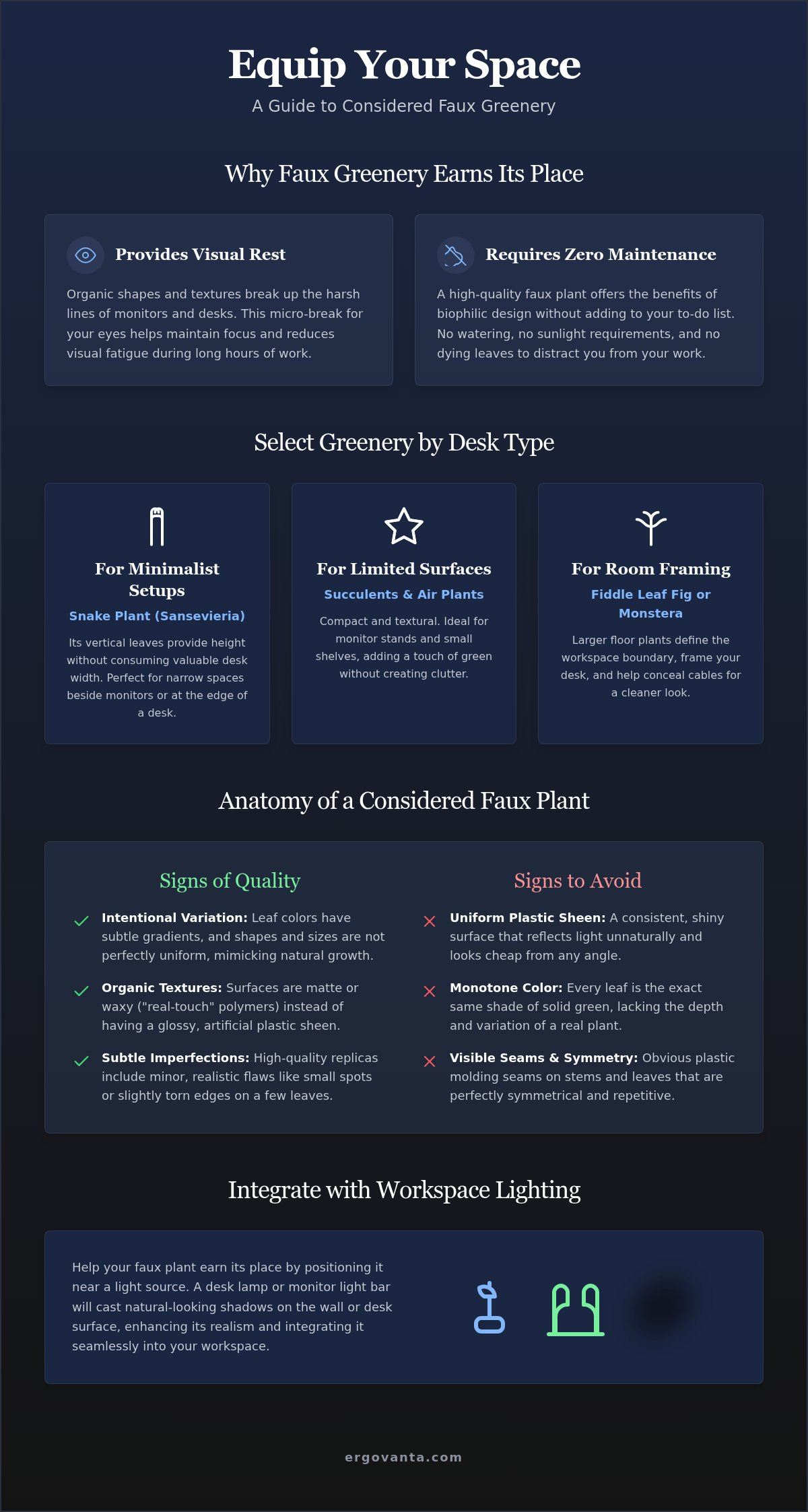
Faux plants don't require photosynthesis, but they do require considered lighting to look authentic. Even the best faux plants for an office can look like static plastic if they're tucked into a dead corner with no visual depth. Lighting creates the shadows and highlights that mimic the organic complexity of a living organism. When you equip your space, think of greenery as a surface for light to play across rather than just a filler object. It's about how the light interacts with the texture of the leaves to create a sense of life.
Monitor light bars are essential for reducing eye strain, but their downward-facing beam can create harsh glares on synthetic leaves. Position your greenery slightly to the side of your monitor arm's reach. This allows the light to catch the edges of the leaves without revealing the uniform texture of the material. By layering your light sources, you ensure that the greenery feels like a natural extension of the room rather than a distracting accessory. Avoid placing your greenery directly under overhead ceiling lights; this creates a flat, clinical appearance that highlights the artificial nature of the stems.
Pairing Greenery with Desk Lamps
Warm light is the key to making green tones appear vibrant and organic. A focused beam from one of our lamps can cast realistic shadows through the foliage, breaking up the visual monotony of a late-night work session. The leaves act as a soft diffuser, reducing the starkness of a single light source and making your desk feel more like a sanctuary. If you've spent hours choosing the best faux plants for an office, don't undermine that effort with poor placement. Aim for side-lighting. When light hits a leaf from the side, it emphasizes the texture of the veins and the variation in the green pigments.
Lighting the Corners
Small rooms often feel cramped because the corners are lost in shadow. Placing a floor lamp behind a larger plant, such as a Fiddle Leaf Fig, creates a sense of layered depth. Our floor-lighting options provide the upward or directional glow needed to highlight the silhouette of the plant against the wall. This technique pulls the eye toward the boundaries of the room, making the workspace feel more expansive and intentional. It transforms a dark corner into a curated focal point that adds to the visual rest of the entire office.
Positioning your plants relative to your light sources is the final step in building a workspace that feels like yours. Use the organic shapes of the leaves to break up the clean, architectural lines of your floor lamps and wall lights. This balance between the technical and the botanical is what makes a room feel complete and ready for the work ahead.
Build Your Space with Considered Faux Greenery
The workspace shapes the work. Equip it deliberately. At Ergovanta, we believe every object on your desk must earn its place. Greenery is no exception. Selecting the best faux plants for an office isn't about filling empty space; it's about completing a functional ecosystem. A considered workspace is one where the organic textures of nature balance the precision of technology. It is a room you choose to inhabit because it supports your focus.
Avoid chasing temporary decor trends. Instead, focus on intentionality. When you build your space with high-quality botanical replicas, you're creating a permanent environment that remains visually restful for years. This isn't just about aesthetics; it's about the psychological shift that occurs when you enter a room designed specifically for the tasks at hand. You are building a sanctuary for productivity.
The Final Build: A Workspace That Works
The final build of your office is a reflection of your own standards. Greenery acts as the connective tissue between your monitor stands, technical peripherals, and lighting layers. It softens the hard edges of a workstation, making the entire setup feel more integrated and less like a collection of separate parts. This sense of personal ownership is vital. When the space feels like yours, the work feels more manageable.
Take the time to consider how each plant interacts with your current equipment. A vertical snake plant next to a monitor arm or a trailing ivy near a wall light creates a cohesive visual narrative. These are the small, intentional choices that differentiate a generic office from a workspace that works. Finding the best faux plants for an office allows you to finalize your layout with pieces that fit your specific footprint and lighting conditions.
For the People Who Do the Work
The name Ergovanta is rooted in the concept of purposeful function. From the Greek "ergon," meaning work or purpose, we focus on the advantage that a well-equipped environment provides. Your office is a tool. Like any tool, it should be maintained and refined to serve your output. By adding greenery that requires zero maintenance, you protect your most valuable resource: your time.
Equip your space with objects that serve your focus. Whether you are a freelancer, a hybrid worker, or a creator, you deserve a room that is made for the work. Finalize your build with greenery that stays vibrant and textures that stay restful. It is time to create the workspace you would choose to come back to every single day.
View the Faux Plant Collection
Build a Workspace You Choose to Inhabit
The workspace shapes the work. Equip it deliberately. By choosing objects that earn their place, you transform a sterile room into a functional sanctuary. You now know that the best faux plants for an office are those that offer texture, stability, and botanical honesty. High-quality botanical replicas provide the visual rest your brain needs during deep work sessions without demanding a single minute of your time for care.
A considered office is built on the balance between technical precision and organic comfort. By layering your light sources and selecting species that fit your desk footprint, you create a room that is truly yours. Our collection focuses on no-nonsense designs made for the rooms that get used. We provide national shipping across the United States, ensuring you can equip your space with intentionality regardless of your location.
These are tools for the people who do the work. When your environment reflects your personal ownership, the work becomes the priority. Create a room that feels like yours. Focus on the small objects that help you do your best work. It's your space. Build it for the long term.
Frequently Asked Questions
Do faux plants look tacky in a professional office?
High-quality faux plants only look tacky when they are mass-produced with poor materials and perfect symmetry. Modern botanical replicas use real-touch polymers and hand-painted details to mimic nature accurately. When you choose a version with subtle color variations and natural-looking stems, it earns its place as a considered piece of decor. It is about selecting objects that feel intentional rather than like a cheap afterthought in your workspace.
How do I clean dust off my artificial office plants?
Maintenance is minimal but necessary to keep your greenery looking authentic. Use a damp microfiber cloth to wipe down larger leaves once a month; alternatively, use a can of compressed air for intricate species like ferns. Avoid using harsh chemical sprays that can leave a shiny, unrealistic residue on the foliage. Keeping the surface clean ensures the plant continues to provide visual rest without looking like a neglected plastic prop.
What are the best faux plants for a desk with no windows?
The best faux plants for an office with no natural light are species that naturally have a waxy or thick texture, such as Sansevieria (Snake Plant) or ZZ plants. These varieties are easier to replicate in high-quality polymers because their real-life counterparts already have a slightly structured appearance. Because they don't require photosynthesis, you can place them in windowless interior cubicles where live plants would typically wither and die.
Can faux plants actually improve productivity at work?
Incorporating greenery into your workspace can help maintain focus and reduce visual fatigue. This is part of biophilic design, which suggests that seeing organic shapes and green tones helps the human brain recover from the strain of staring at digital screens. By providing a point of visual rest, a plant helps you stay engaged with your work for longer periods. It is a functional tool that makes your room feel more habitable.
How do I make my artificial plants look more realistic?
Realism is achieved through intentional styling and placement. First, gently bend the stems and leaves to create a slightly asymmetrical, organic shape. Second, use a high-quality ceramic or stone pot instead of the plastic nursery container it arrived in. Finally, position the plant where it can catch light from a desk lamp or monitor light bar. These shadows create depth, making the artificial textures appear much more like living organisms in your space.
Are silk plants better than plastic ones for an office?
Not necessarily. While silk was the standard for years, modern polyethylene (PE) is often superior for creating realistic textures. PE allows for the creation of three-dimensional leaf veins and a waxy feel that silk cannot achieve. Silk leaves often fray at the edges over time, which is a clear sign of a low-quality replica. For thick-leaved office plants, modern polymers are the more durable and realistic choice for your workspace.
Where should I place a faux plant on my desk for the best look?
Place your greenery where it can break up the hard lines of your technology. A small succulent works well on a monitor riser or laptop stand, while a taller snake plant is ideal for the corner of your desk. Avoid placing plants directly in front of your screen or in your primary mouse path. You want the plant to be in your peripheral vision, providing a soft contrast to your monitors and peripherals.
How long do high-quality faux plants usually last?
A well-made botanical replica is a piece of permanent workspace equipment that can last for a decade or more. Unlike live plants that outgrow their pots or die from neglect, a faux plant maintains its height and color indefinitely. As long as you keep it out of direct sunlight and perform occasional dusting, it will remain a consistent part of your environment. Finding the best faux plants for an office is an investment in a space you'd choose to come back to.
Disclaimer
Ergovanta publishes these guides to help people set up better workspaces. Product recommendations reflect what we sell. Specifications, prices and availability are accurate at the time of writing and may change. Nothing here is medical, ergonomic or professional advice; if you have a specific health concern about your workstation, speak to a qualified professional.
From the catalog
The faux plants this guide is about.
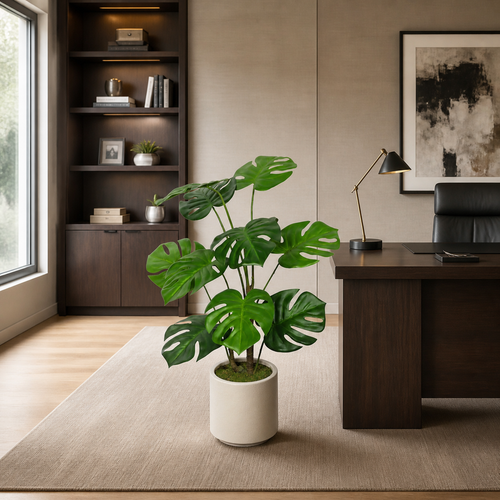 Monstera
$124.95
Add to cart
Monstera
$124.95
Add to cart
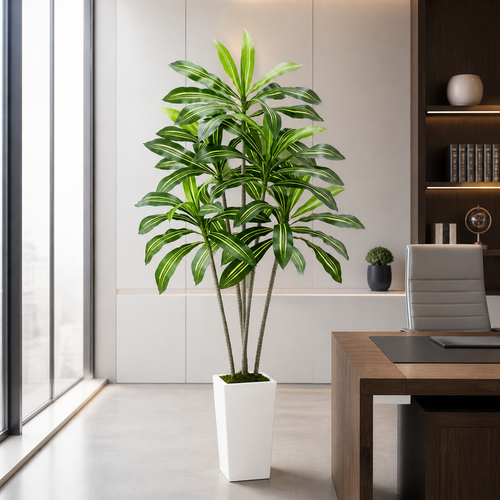 Dracaena
$96.95
Add to cart
Dracaena
$96.95
Add to cart
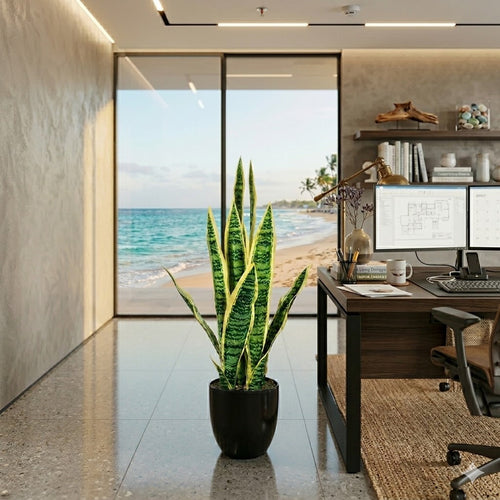 Sansevieria
$104.95
Add to cart
Sansevieria
$104.95
Add to cart
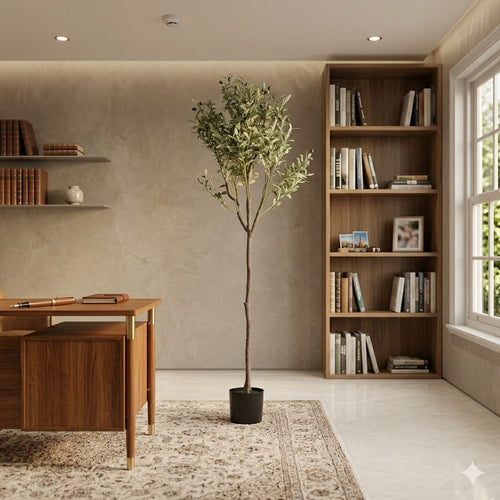 Olea
$95.95
Add to cart
Olea
$95.95
Add to cart