September 10, 2026
Best Floor Lamps for Living Room: Intentional Lighting Guide
A floor lamp is not a decoration; it is a tool that defines the boundaries and purpose of your space. Most people choose lighting based on how a fixture looks when it's turned off, yet the true test happens the moment you flip the switch. If you're tired of harsh overhead glare that causes eye strain or dark corners that make your home feel cramped, it's time to equip your space deliberately. Finding the best floor lamps for living room environments means looking for equipment that balances functional task lighting with a specific atmosphere.
We agree that a lamp should do more than just fill a gap in the floor plan. It must earn its place by supporting the way you actually live, whether that's focused reading or winding down after the day is done. This guide will show you how to select a lamp that feels intentional and considered. We'll explore the technical requirements of layered lighting, from achieving the 3,000 to 5,000 lumens needed for larger spaces to selecting the warm 2700K tones that make a room feel like yours. Learn to build a space that supports your work and your rest with equipment made for the job.
Key Takeaways
- Learn how to build a space that supports your daily rituals by choosing lighting that balances task-specific needs with ambient warmth.
- Identify the best floor lamps for living room layouts, including how arc lamps provide overhead illumination without the need for permanent ceiling fixtures.
- Equip your home with considered materials like solid wood, metal, and glass that ensure your lighting equipment earns its place for years to come.
- Master the ergonomics of light placement by positioning fixtures to eliminate shadows and selecting heights that protect your eyes during focused work.
- Explore a collection of over 30 unique designs to find a piece that feels personal and functional instead of looking like everyone else's.
Why Floor Lighting is Essential for a Functional Living Room
The workspace shapes the work. Equip it deliberately. In the living room, this means moving beyond the harsh glare of overhead fixtures that often lead to eye strain and mental fatigue. A floor lamp earns its place by making the space more usable and reducing the friction between you and your daily rituals. Finding the best floor lamps for living room environments isn't about filling a corner with a decorative object; it's about providing the specific illumination needed to support your focus. When you provide light exactly where it is needed, the room becomes a tool rather than just a backdrop.
The Role of Ambient vs. Task Lighting
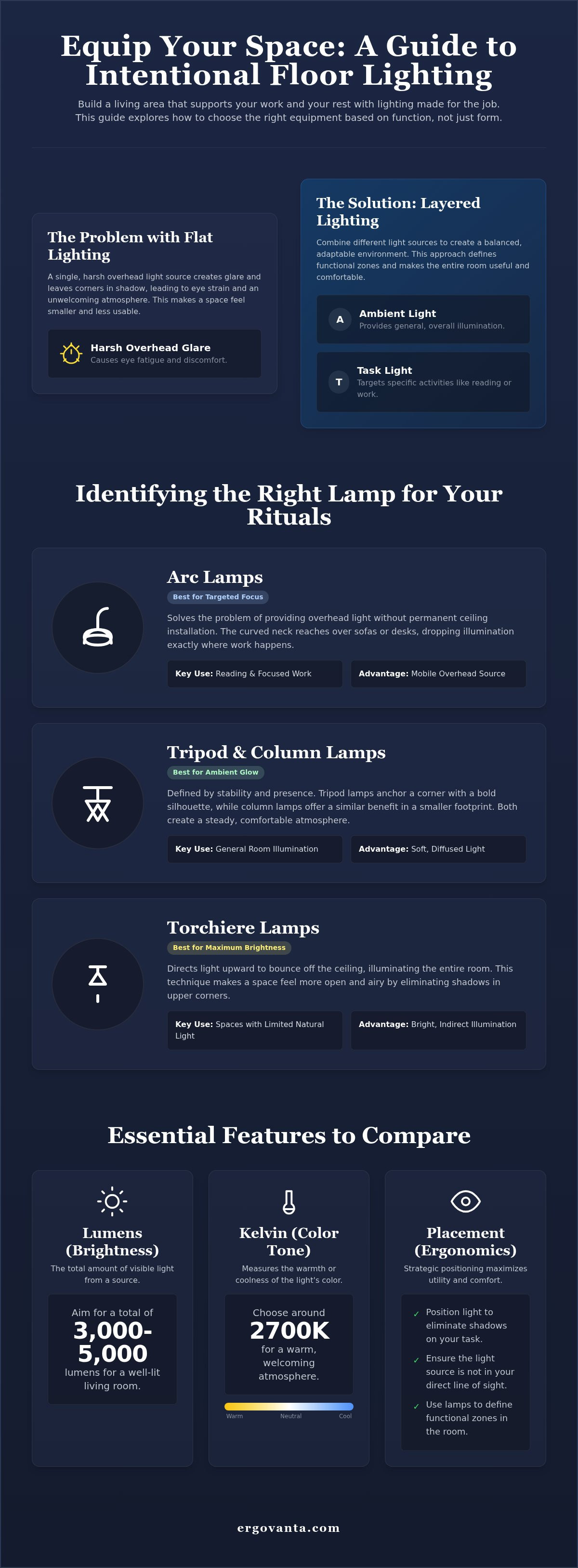
Most rooms suffer from flat lighting. This happens when a single source tries to do everything, leaving some areas too bright and others unusable. Principles of Architectural lighting design suggest a layered approach to solve this. Ambient lighting provides the base layer of visibility, while task lighting targets specific activities like reading or using a laptop. When you combine both, you build a space that adapts to how you feel throughout the day. It is the difference between a room that feels like a warehouse and one that feels like a home made for the work. Task-specific light reduces the effort of trying to see in a dim corner, allowing you to stay engaged with your projects without discomfort.
Defining Your Space with Light
Floor lamps act as invisible boundaries. You don't need a physical wall to separate a reading nook from a social area; you just need a change in light density. This creates a sense of ownership over specific corners, turning a generic room into an organized environment. A considered floor lighting setup makes a room feel larger by highlighting functional zones that might otherwise be lost in the shadows. It turns a dark, unused corner into a dedicated place for deep work or quiet reflection. By defining these zones, you give every part of the room a job to do. This intentionality ensures that every piece of equipment earns its place, making the environment personal and functional. Investing in the best floor lamps for living room layouts ensures that your lighting works as hard as you do.
Identifying the Right Lamp Type for Your Daily Rituals
The living room is rarely used for just one thing. It is a place for focused reading, late-night projects, and the quiet ritual of winding down. To build a space that truly supports these activities, you must choose equipment based on function rather than just form. Different lamp types provide different advantages. Selecting the best floor lamps for living room environments requires an understanding of how light interacts with your furniture and your eyes. When you equip your home with the right tools, the room becomes more than a collection of objects; it becomes a sanctuary of productivity and rest.
Arc Lamps for Targeted Focus
Arc lamps solve a specific structural problem: providing overhead light without the need for permanent ceiling installation. Their curved neck allows the light source to reach over the back of a sofa or a desk, dropping illumination exactly where the work happens. This makes them ideal for targeted focus, such as illuminating a laptop screen or a physical book. If you cannot install hardwired fixtures in a rental or a historic home, an arc lamp acts as a mobile overhead source. It provides direct, intentional light that helps reduce eye strain during long hours of concentration.
Tripod and Column Lamps for Ambient Glow
Stability and presence define the tripod lamp. Its three-point base offers a sturdy foundation and a bold architectural silhouette that anchors a corner. While tripod bases require a larger footprint, they provide a sense of permanence and order. For those working in more constrained environments, column lamps offer a similar ambient benefit while occupying minimal floor real estate. Both types are made for the work of creating a steady, comfortable atmosphere. They provide a soft, diffused glow that fills the room without the harshness of a direct bulb, making them a cornerstone of a well-lit space.
Torchiere Lamps for Maximum Brightness
A torchiere lamp doesn't aim at your task; it aims at the architecture. By directing light upward to bounce off the ceiling, these fixtures illuminate the entire volume of a room. This technique is particularly effective in spaces with limited natural light or dark ceilings. It helps a small living room feel more open and airy by removing shadows from the upper corners of the space. Using a torchiere is a considered way to provide general visibility while keeping the floor area clear of glare. If you are building a workspace and need help choosing the right equipment for your specific layout, reach out to our team for guidance on finding the best floor lamps for living room utility.
Essential Features to Compare Before You Buy
Equip your space deliberately. When searching for the best floor lamps for living room use, the focus often shifts to how a piece looks in a catalog. However, a lamp only earns its place if it functions reliably over time. You should build your setup with materials that last, such as solid wood, tempered glass, and reinforced metal. These materials don't just look better; they provide the weight and durability needed for objects that see daily use. Beyond the frame, consider the ergonomics of height. A light source should sit at eye level when you are seated. If the bulb is too high, you deal with glare; too low, and the light fails to cover your work area. Precision in these measurements makes the difference between a room that feels cluttered and one that feels considered.
Lighting should be as flexible as your schedule. Choosing equipment with dimmable options allows you to transition from high-focus work to a restorative ritual of winding down. This adaptability is vital for rooms that serve multiple purposes. Additionally, verify bulb compatibility before you commit. The U.S. Department of Energy finalized efficiency standards in 2024 that require bulbs to produce approximately 125 lumens per watt by 2028. Ensuring your lamp supports energy-efficient LEDs is a practical step toward a long-lasting, functional setup. It is about choosing equipment that respects your time and your environment.
Choosing Considered Materials
The material defines the atmosphere. Metal lamps offer a modernist look and high durability, making them ideal for high-traffic areas where equipment might be bumped. For those who prefer a natural, scandinavian feel, material-wood options provide a warmth that metal cannot replicate. Glass shades are another considered choice, providing a softer, more diffused light that is perfect for relaxation. These materials aren't about status; they are about the tactile experience of using your space every day. Select materials that age well and justify their place in your home.
Adjustability and Functionality
Precision matters. Look for lamps with adjustable necks or arms that allow you to direct light exactly where you need it. This functionality is essential for tasks that require deep focus. Stability is equally important. A heavy base ensures that your lighting stays put, even in a busy household. For the tech-integrated home, check for smart-plug compatibility. This allows you to automate your lighting schedules, ensuring your space is ready for you the moment you start your day. By focusing on these essential features, you ensure that the best floor lamps for living room environments are the ones that actually make your work easier.
Strategic Placement to Maximize Utility and Comfort
The layout of your room determines the effectiveness of your equipment. Even the best floor lamps for living room use will fail to perform if they are placed without intention. Strategic positioning is about more than aesthetics; it is about ergonomics and the flow of your daily life. To avoid casting shadows over your work, place task lamps on the side of your non-dominant hand. This simple adjustment ensures that your hand doesn't block the light while you are writing or taking notes. Similarly, you must consider the physical footprint of your fixtures. Position arc lamps so their long reach doesn't cross walking paths, which prevents them from becoming a hazard in high-traffic areas.
Glare is another critical factor in a functional living room. Avoid placing light sources directly in front of television screens or computer monitors. Instead, use corners to bounce light off the walls. This technique creates a more expansive feel by illuminating the boundaries of the space, helping to meet the 3,000 to 5,000 lumens often required for larger rooms. By treating light as a tool that interacts with your architecture, you build an environment that feels organized and intentional. When your lighting is placed correctly, the room feels larger and every corner becomes more usable.
Lighting Your Reading Nook
A reading nook is a sanctuary for focus. For the best results, the light should fall over your shoulder directly onto the page. This prevents the glare that occurs when light bounces off a glossy book or tablet screen. Ensure the lamp height is appropriate for your favorite chair so the bulb remains shielded from your direct line of sight. To support the ritual of winding down, choose a color temperature between 2700K and 3000K. This warm, golden glow mimics natural evening light, signaling to your body that it is time to transition away from the intensity of the day.
Integrating Light into a Hybrid Workspace
For those who use their living room as a part-time office, lighting must be versatile. Position your lamp to provide a soft fill light for video calls, which helps you look professional without the need for specialized studio gear. It is vital to maintain a clear distinction between your work light and your mood light. Use a brighter, more focused setting during the day and dim the lights when the work is done. For more layout inspiration, check our collection of workspace-essentials to see how different tools can work together in a shared environment.
Equip Your Home with the Ergovanta Lamp Collection
The workspace shapes the work. Equip it deliberately. At Ergovanta, we believe that the objects in your home should earn their place by being both functional and intentional. Our collection includes over 30 unique lamp designs, each selected for its ability to support the specific needs of those who spend serious hours at a desk. When you are looking for the best floor lamps for living room utility, you are looking for equipment that bridges the gap between your professional output and your personal rest. We provide tools for the people who do the work, ensuring that your environment is a sanctuary of productivity rather than just a place where you happen to be.
Building a space you choose to come back to requires a focus on longevity and purpose. We avoid the fleeting trends of status-driven decor in favor of considered designs that prioritize how you feel in your room. Whether you are finishing a project on your laptop or winding down with the ritual of reading, our lamps provide a steady, reliable presence. By focusing on materials like solid wood, metal, and glass, we ensure that every piece is built for the long haul. Finding the best floor lamps for living room environments is about more than just visibility; it is about choosing equipment that respects your time and your space.
Standout Styles from Our Collection
Our collection is categorized to help you find the right tool for your specific layout. We offer a variety of styles that allow you to build a room that feels personal and functional. You can explore the full range of options at the Ergovanta collection, where each piece is made for the work. Consider these primary styles for your setup:
- Minimalist Metal Designs: These fixtures offer a clean, efficient look for those who value a streamlined environment; they provide high durability and a focused beam for deep work.
- Scandinavian Wood Lamps: Using solid wood, these designs bring a natural warmth to your living room, making them ideal for areas where you want to wind down without sacrificing clarity.
- Modernist Glass Fixtures: These serve as functional focal points, using tempered glass to provide a softer, more diffused light that fills the room without causing glare.
Why Intentional Lighting Matters
Your space is a tool. Equip it with the same care you would use for your hardware or your furniture. Our lamps are designed for people who value purpose and function over corporate identity or status. When you invest in considered lighting, you are investing in your own ability to stay focused and comfortable. A well-lit room reduces the friction of your daily rituals, allowing you to move seamlessly from work to rest. Build your environment with objects that support your goals and justify their presence every time you flip the switch. For the people who do the work, intentionality is the only standard that matters.
Equip Your Space for Purposeful Function
The workspace shapes the work. Equip it deliberately. Choosing the right lighting is an act of intentionality that transforms a generic room into a personal environment. By balancing the technical requirements of task lighting with the quiet ritual of winding down, you ensure your equipment earns its place. Finding the best floor lamps for living room layouts requires a focus on material durability and ergonomic precision. It's the difference between a room that just exists and one that works for you.
Our collection features over 30 unique designs, including Minimalist and Scandinavian styles, made for those who value purposeful function. Whether you're defining a reading nook or building a hybrid workspace, your lighting should support your daily rituals and long-term goals. Every piece we offer is a considered choice designed to help you build a space you choose to come back to. Invest in objects that reflect your focus and your rest.
Equip your home with the tools that respect your time and your focus. Build a space that is truly yours.
Frequently Asked Questions
What is the best height for a living room floor lamp?
The light source should sit at eye level when you are seated to prevent direct glare from the bulb. For most standard armchairs and sofas, this means a lamp height between 58 and 64 inches. If the fixture is too tall, you will see the bare bulb; if it is too short, the light won't cover your reading area. Choose adjustable models to fine tune the height for your specific furniture.
How many lumens do I need for a standard living room?
A standard living room typically requires 3,000 to 5,000 total lumens for adequate illumination. Achieving this usually involves layering multiple light sources rather than relying on one fixture. One of the best floor lamps for living room use can provide between 800 and 2,000 lumens. Combine a primary floor lamp with wall lights or table lamps to reach the recommended threshold without creating harsh shadows in the corners.
Should I choose an arc lamp or a tripod lamp for my space?
Base your choice on how you intend to use the light. Arc lamps are ideal for task-specific work because they reach over furniture to provide overhead light where you need it. Tripod lamps require more floor space but offer superior stability and a bold architectural presence. If you need focused light for a laptop, choose an arc. If you want a steady ambient glow to anchor a corner, a tripod is the better tool.
Where should I place a floor lamp to avoid screen glare?
Position your lamp to the side or behind your seating area rather than directly in front of a television or monitor. This prevents the light source from reflecting off the glass and causing visual fatigue. You can also point torchiere lamps toward a corner to bounce light off the walls. This creates soft, indirect illumination that fills the room while keeping the screens clear of distracting bright spots.
Are LED bulbs better for floor lamps than traditional bulbs?
LED bulbs are the superior choice for modern lighting due to their efficiency and longevity. The U.S. Department of Energy has finalized standards requiring bulbs to produce 125 lumens per watt by 2028, making LEDs the industry baseline. They stay cool to the touch, which is safer for lamps with fabric or wood shades. Using LEDs allows you to achieve the brightness you need while using significantly less energy than traditional incandescent options.
How do I match a floor lamp to my existing furniture style?
Focus on the material and silhouette rather than trying to achieve a perfect match. If your space features clean lines and neutral tones, a minimalist metal lamp provides a functional, modernist edge. For rooms with organic textures, Scandinavian wood designs bring a sense of warmth and order. The best floor lamps for living room environments feel intentional when they complement the existing materials in your space without looking like a mass produced set.
What materials are most durable for a long-lasting floor lamp?
Solid wood, reinforced metal, and tempered glass are the most durable materials for long-term use. Metal offers high resistance to impact and a steady weight that prevents tipping in high-traffic areas. Solid wood provides a sturdy frame that ages well and maintains its structural integrity. Avoid lightweight plastics that can become brittle over time. Investing in equipment made from these considered materials ensures your lighting justifies its place in your home for years.
Disclaimer
Ergovanta publishes these guides to help people set up better workspaces. Product recommendations reflect what we sell. Specifications, prices and availability are accurate at the time of writing and may change. Nothing here is medical, ergonomic or professional advice; if you have a specific health concern about your workstation, speak to a qualified professional.
From the catalog