September 21, 2026
Cordless vs. Plug-In Desk Lamps: Which Is Better for You?
The lamp with the cleanest aesthetic might be the one that disrupts your focus the most. The workspace shapes the work, and lighting is less about raw wattage than how much friction an object adds to your desk. When weighing a cordless desk lamp vs plug-in desk lamp, you run straight into a familiar dilemma: do you tolerate another cable for dependable power, or trade cords for the hassle of keeping a battery charged?
Visual clutter on a desk drains your attention, but a light that dims mid-project is just as frustrating. You deserve a setup that feels calm, organized, and reliable through long sessions. In this guide, discover the functional differences between cordless and plug-in lighting to build a workspace that works for you. We examine lumen output, recharging realities, and daily usability so you can equip your desk with lighting made for the work.
Key Takeaways
- Deciding between a cordless desk lamp vs plug-in desk lamp comes down to whether you prioritize wire-free flexibility or uninterrupted, all-day output.
- Cordless task lighting clears away cable clutter on floating or sit-stand desks, but it requires regular charging habits to prevent mid-session dimming.
- Plug-in lamps deliver dependable, high-lumen brightness with zero battery degradation, making them ideal for long hours at a fixed workstation.
- Evaluating how your room gets used helps you pick task lighting that supports deep focus instead of adding daily maintenance friction.
- The right lamp works in harmony with your monitor stands and accessories to build a functional desk you want to return to every day.
Understanding the Fundamentals of Modern Desk Lighting
The workspace shapes the work. Equip it deliberately. When setting up a desk, lighting often gets treated as an afterthought, relegated to whatever ambient overhead bulb is already in the ceiling. Ambient light simply fills a room, but dedicated task lighting defines your immediate focus area, balances contrast against bright monitors, and keeps eye fatigue at bay during long hours. Deciding on the right fixture means weighing a cordless desk lamp vs plug-in desk lamp based on how you actually use your work surface.
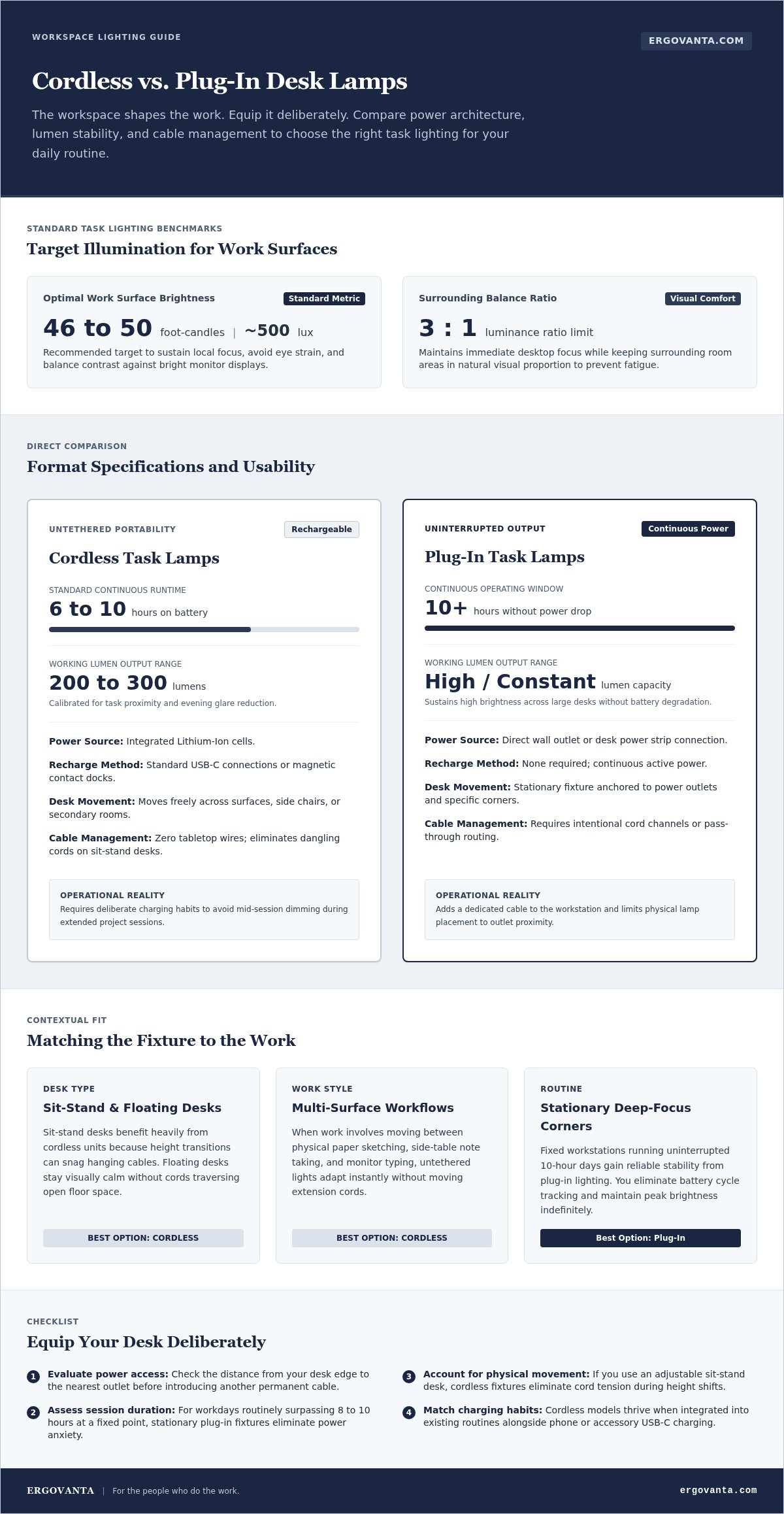
Modern task lighting has evolved past the hot halogen fixtures of the past. According to standard task lighting fundamentals, proper desk illumination targets between 46 to 50 foot-candles (roughly 500 lux) on the work surface, balancing local focus while keeping surroundings within a comfortable 3:1 luminance ratio. Getting that balance right directly shapes how calm and functional your setup feels by the end of the day.
The Role of Intentional Lighting
Light changes how you experience your desk. A harsh, poorly aimed glare causes you to squint, while insufficient light makes reading paper notes a strain. Before picking a fixture, identify your core routine: do you need steady, wide-beam illumination for paperwork, focused light for physical sketching, or a warm directional glow to soften screen glare at night? Every tool on your desktop takes up physical real estate. Pick small objects that earn their place through honest utility.
Defining the Two Categories
The practical difference between these formats rests on power architecture and mobility:
- Plug-in desk lamps: Stationary fixtures connected directly to a wall outlet or desk power strip. They deliver consistent, uninterrupted brightness across 10-hour days without power drops, making them a fixture of dedicated work corners.
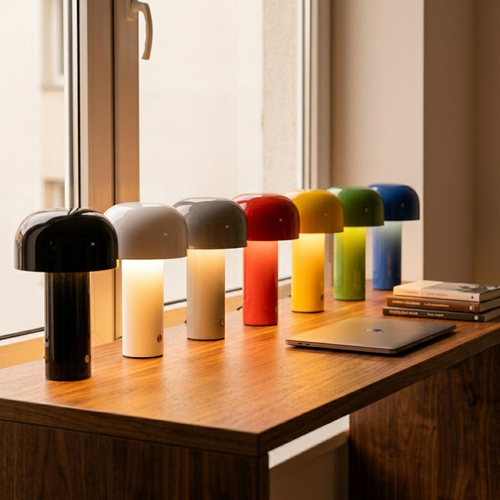
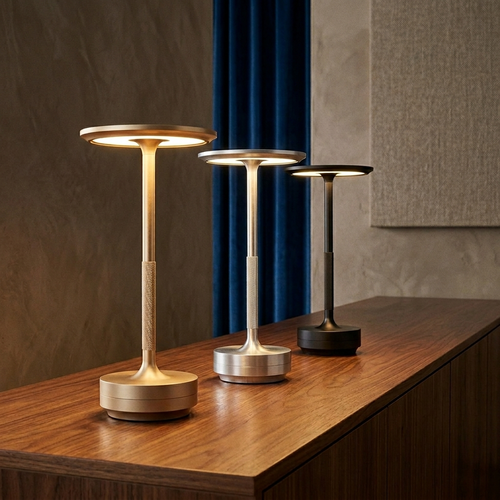
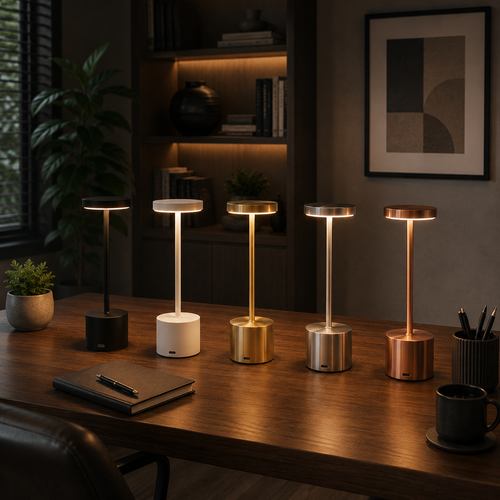
- Cordless desk lamps: Rechargeable units powered by integrated lithium-ion cells, replenished via standardized USB-C connections or magnetic contact docks. They free your desk from wire tangles and can travel between rooms.
Both categories now rely on high-efficiency LED modules rather than disposable bulbs. When evaluating a cordless desk lamp vs plug-in desk lamp, the question isn't whether modern LEDs are good enough; it is whether you need fixed, all-day power or portable, cable-free versatility to build a space you want to return to every morning.
Cordless Desk Lamps: The Freedom of an Untethered Workspace
Cables add invisible drag to your day. Beyond the visual clutter of another cord snaking across your desk mat, wires physically anchor your workflow to a single corner. A battery-powered fixture changes how you interact with your furniture. When assessing a cordless desk lamp vs plug-in desk lamp, going untethered removes friction for people who shift between writing notes, typing, and stepping away for focused reading.
Removing the cord transforms task lighting from a fixed architectural element into a portable tool. In line with OSHA computer workstation lighting guidelines, supplemental task fixtures should adapt to individual tasks and user positions to avoid harsh reflections. Cordless lamps let you place illumination precisely where you need it without running extension cables across walking paths or pulling against furniture edges.
Mobility and Flexibility
Work does not always happen in one chair. Cordless lamps give you the freedom to pick up your light source and carry it to a side table, a quiet lounge chair, or a temporary dining table workspace. Modern units deliver 6 to 10 hours of continuous runtime at standard working outputs (200 to 300 lumens), easily covering a full workday. Because current models recharge through standard USB-C cables, topping up the battery fits right into the same routine you use for your phone or wireless accessories.
The Aesthetic of the Minimalist Desk
Every object in your room should earn its presence. Sit-stand desks, in particular, benefit from cordless fixtures because they eliminate dangling cables that snag during height transitions. The visual calm of a clear, open desktop makes getting to work feel simpler and less chaotic. Cordless models lean into clean profiles, weighted metal bases, and intentional geometry that feels integrated into the tabletop.
Explore the Ergovanta lighting collection to see cordless options built for clean, functional surfaces. If you are configuring a custom layout and need guidance on balancing task illumination with room glare, you can always reach out to our team for advice tailored to your space.
Plug-In Desk Lamps: Reliable Power for Intense Work Sessions
Deep work demands consistency. When you are deep into a complex spread of drawings, proofreading documents, or finishing an all-day drafting session, the last thing you want is a light that dims without warning. Plug-in lamps offer absolute reliability. Because they draw uninterrupted current from a wall outlet, they deliver sustained brightness across 10-hour workdays without the subtle, gradual decline that lithium-ion cells experience as they deplete.
That endless power supply unlocks higher technical capability. While portable units conserve power to stretch battery runtimes, corded fixtures routinely push 500 to over 1,000 lumens. They also support high Color Rendering Index (CRI) ratings between 90 and 98 Ra, showing true pigment tones and reducing eye strain during visually demanding tasks. When comparing a cordless desk lamp vs plug-in desk lamp for a dedicated, stationary setup, the plug-in model remains the workhorse choice.
Consistent Performance
Steady illumination builds a reliable environment for focus. Plug-in models capitalize on their permanent wall connection by integrating helpful secondary features right into the base:
- Passthrough charging ports: Integrated USB ports allow you to charge phones or accessories directly from the fixture, turning your light into a practical utility hub.
- Advanced temperature controls: Higher wattage headroom allows broader circadian tuning, from 2700K warm tones that soften evening sessions to crisp 5000K daylight for morning focus.
- Zero battery degradation: Without chemical cells that lose capacity after 300 to 500 recharge cycles, a wired lamp delivers the exact same output year after year.
Managing the Connection
The main drawback of a wired lamp is the cord itself. An exposed black cable draped across an otherwise clean walnut or oak surface adds friction to your workspace. The solution is not avoiding the cord, but managing it deliberately.
Anchor your lamp close to the back edge or corner of the desk, keeping the cord run as short as possible. Routing the power lead directly into an under-desk channel or a cable management tray keeps wire clutter out of your sightline entirely. Once the wire is tucked away, you gain all the visual calm of a tidy desk alongside the uncompromised output of a permanent light source. Deciding between a cordless desk lamp vs plug-in desk lamp often comes down to this single detail: whether you prefer managing a battery or managing a cord.
The Comparison: Portability vs. Performance in Your Daily Workflow
Choosing between a cordless desk lamp vs plug-in desk lamp requires an honest look at your daily work patterns. If your desk stays anchored against a wall and you never leave it, mobility offers little value. But if your workspace doubles as an evening reading table, or sits centrally in an open floor plan without a nearby wall socket, a fixed cord creates instant clutter. Matching the tool to the room prevents daily frustration.
Look at your surface and take stock of your equipment. A setup crowded with multiple monitors, audio interfaces, or external drives already handles dozens of leads. Adding another stationary cable might tip your desk into disorder. Conversely, a clean writing surface with only a notebook and a laptop easily accommodates either format, leaving the decision down to performance and routine.
Brightness and Light Quality
Output scales with how the fixture draws power. Plug-in models easily generate 500 to 1,000 lumens, making them well-suited for architecture drafting, detailed physical repair, or review of dense fine print. Cordless models deliberately target 150 to 400 lumens at peak output. That lower range is ideal for normal keyboard typing, reading, and cutting the harsh glare of monitor displays without overwhelming your peripheral vision.
Maintenance and Longevity
Every tool extracts an operational tax. The choice comes down to which type of maintenance you prefer managing:
- The recharging cadence: Cordless units require deliberate charging habits. Expect a 3.5 to 6 hour recharge window every few days via USB-C, alongside the reality that lithium-ion batteries naturally lose capacity after 300 to 500 full charge cycles.
- The permanent route: Plug-in task fixtures are set-and-forget tools. You spend ten minutes routing cables during your initial desk build, after which the fixture delivers identical performance for the multi-year lifespan of its integrated LED diode.
When weighing a cordless desk lamp vs plug-in desk lamp, consider how much cognitive bandwidth you want to spend on power. If you dislike remembering to plug in devices at night, corded power eliminates that mental step entirely.
Building a Workspace That Earns Your Presence
Your desk is not a display showroom. It is a working surface where real hours happen, ideas take shape, and projects cross the finish line. When resolving the cordless desk lamp vs plug-in desk lamp question, remember that neither format holds an absolute advantage. The right choice is simply the one that removes friction from your routine. The goal is straightforward: build a workspace you'd choose to come back to tomorrow morning.
Lighting never exists in isolation. Your task lamp must physically and visually balance with your monitor and laptop stands, resting at an angle that avoids direct reflections on glass screens while illuminating physical notebooks. Every piece of equipment should share the tabletop harmoniously, leaving ample room for your hands to move without knocking over bases or tangling cords.
The Final Selection Process
Start with the geography of your room. If your desk floats in the center of an open layout, running an extension cord across the floor creates a real nuisance. A cordless lamp eliminates that hazard, keeping the floor clean and the desk purposeful. If your setup is anchored to a wall with dedicated power strips beneath, a wired lamp gives you maximum brightness without requiring you to remember another charging cable. Equip your space for the way it gets used every day, not how it looks in an idealized photograph.
Creating Your Personal Sanctuary
A thoughtfully illuminated surface changes how you feel when evening arrives. Softening the contrast between bright display panels and dark room corners prevents tired eyes and helps you settle into deep work. Pair your task light with supportive ergonomic accessories like seat cushions or foot rests to make your daily hours physically sustainable.
Every object in your space should earn its place through honest utility. Whether your work calls for the mobility of a cordless desk lamp vs plug-in desk lamp stability, browse the full Ergovanta collection to equip a desk that is personal, functional, and built for the work.
Equip Your Space for the Hours Ahead
Settling the debate between a cordless desk lamp vs plug-in desk lamp isn't about chasing specs. It comes down to eliminating friction. If you value a clear tabletop and move between surfaces throughout the day, an untethered light brings genuine calm to your setup. If you need sustained, high-output brightness for marathon editing or drafting sessions, a corded fixture provides unbroken reliability.
Every lamp on your desk should earn its place through purposeful function. When you equip your setup with considered tools and curated minimalist designs, visual clutter fades and the work gets easier.
Your desk doesn't need to look like anyone else's setup. Take ownership of your environment, trust your habits, and build a workspace you'll choose to come back to tomorrow.
Frequently Asked Questions
Are cordless desk lamps bright enough for long work sessions?
Yes, cordless lamps provide plenty of light for standard computer work, reading, and typing. They typically deliver between 150 and 400 lumens at full charge, which easily hits target desk surface illuminance when combined with ambient room lighting. If your daily routine involves intricate physical drafting or fine art restoration requiring 800 or more continuous lumens, a plug-in task fixture remains the better choice.
How long does a typical cordless lamp battery last on a single charge?
Most modern rechargeable desk fixtures run for 6 to 10 hours at standard working brightness (200 to 300 lumens). If you dim the fixture down to low ambient levels around 50 to 100 lumens for evening reading, battery life often stretches to 15 to 24 hours. A standard recharge from empty to full over USB-C generally takes between 3.5 and 6 hours.
Do cordless lamps lose brightness as the battery drains?
Modern LED units with regulated driver circuits maintain steady lumen output through most of the discharge cycle. Instead of fading slowly across the day, the internal circuitry holds consistent light levels until the cell hits a low voltage threshold, at which point the lamp steps down or turns off. This step-down prevents unexpected eye fatigue while protecting the internal battery chemistry from deep discharge damage.
Can I use a cordless lamp while it is still charging?
Most current models feature passthrough charging, letting you run the light normally while plugged into a USB-C source. Running the lamp during a charge cycle will slightly extend total recharging time because the incoming power splits between powering the diodes and filling the battery cells. It gives you immediate flexibility whenever you forget an overnight charging cycle.
Are plug-in lamps safer for the eyes than cordless options?
Both types are equally safe when equipped with high-efficiency LEDs, but corded options often have an edge in visual clarity. When comparing a cordless desk lamp vs plug-in desk lamp, plug-in fixtures routinely offer higher Color Rendering Index ratings of 90 to 98 Ra without worrying about battery drain. This high color accuracy prevents subtle eye strain during visually intensive work.
Which type of lamp is better for a small desk setup?
Cordless lamps are exceptionally well-suited for compact desks because they require no power cord clearance against the wall. You can tuck the weighted base tightly behind a laptop stand or shift the light out of the way when you need open desktop space for physical paperwork. Their minimal footprint keeps cramped surfaces feeling organized and intentional.
What is the average lifespan of a rechargeable desk lamp battery?
Standard lithium-ion cells support roughly 300 to 500 complete recharge cycles before capacity drops to 80 percent, which translates to two to three years of daily full-drain use. If your lamp uses lithium iron phosphate (LiFePO4) chemistry, it can achieve 2,000 to 3,000 cycles, lasting up to a decade. To maximize battery lifespan, avoid letting the lamp sit completely drained for weeks.
How do I hide the cord of a plug-in lamp on a minimalist desk?
Run the fixture cable straight toward the back corner of your tabletop and secure it using adhesive cable clips or an under-desk wire channel. Fastening the wire directly down the back of a desk leg ensures it stays hidden from sightlines. With clean routing, a corded lamp gives you unbroken, high-output task lighting without compromising the clean, focused look of your setup.
Disclaimer
Ergovanta publishes these guides to help people set up better workspaces. Product recommendations reflect what we sell. Specifications, prices and availability are accurate at the time of writing and may change. Nothing here is medical, ergonomic or professional advice; if you have a specific health concern about your workstation, speak to a qualified professional.
From the catalog