October 11, 2026
Corner Bar Cart Ideas for a Living Room That Make Every Inch Count
What if the living-room corner you keep working around could make hosting easier instead? The best corner bar cart ideas start with the room, not the bottles. A cart that’s too wide can interrupt the flow, while one without a clear purpose can become a small, stylish pile of things you meant to put away.
When choosing between an open cart and a closed cabinet, think about your space and routine. The goal is a setup that earns its footprint, keeps what you use within reach, and feels like part of the room. This guide will help you assess the available space, organize bottles, glassware, and serving pieces, and add a few considered details without crowding the corner. Start with how you’ll use it, then build around what belongs.
Key Takeaways
- Give the corner a clear purpose and choose a setup that fits its footprint, instead of letting serving pieces spread across the room.
- Match your setup to the living-room layout, from a compact serving station to a more discreet display.
- Compare a cart and cabinet by how much you want on view, how much storage you need, and how you use the space.
- Measure first, keep walkways and seating access clear, then edit the cart to the items you actually use.
- Choose your setup around your hosting habits, storage preference, and willingness to keep the arrangement tidy.
Why a Corner Bar Cart Can Make a Living Room Corner More Useful
A useful corner earns its place through fit, storage, and a clear purpose. A cart brings serving pieces together on one dedicated surface instead of scattering glasses, napkins, and mixers across a coffee table or sideboard. But a corner isn’t automatically available space. If a cart would pinch a walkway or make seating awkward, leaving the area open is the more functional choice.
A corner bar cart setup is a cart placed in a living-room corner and arranged for serving, storing glassware, or displaying a small selection of useful objects. Alcohol isn’t a requirement. The history of serving carts includes tea trolleys and many uses beyond a traditional bar, a reminder that the setup can fit your routines rather than a fixed idea of entertaining.
For a quick visual reference, this short video shows a corner bar cabinet arrangement:
Start with the corner, not the cart
Look at how the room works before choosing furniture. Note nearby doorways, the edge of the seating area, windows, and the paths people take between them. A cart can sit neatly in a corner and still get in the way when someone opens a door, pulls out a chair, or walks through carrying a drink. Access matters more than filling every unused patch of floor.
Then take a quick inventory. What needs a home: a few glasses, serving pieces, sparkling water, or something else you reach for regularly? How often will you use them? A setup for occasional hosting may need a different footprint from one used most evenings. These answers help you choose a cart that fits both the corner and your routine.
Choose a purpose beyond storing bottles
Give the cart a job. It might gather glassware and serving pieces for guests, keep non-alcoholic options such as sparkling water and mixers ready, or hold a compact display that brings a quiet corner into the room. One clear purpose makes it easier to decide what belongs there, and easier to notice when the surface is doing too much.
Keep the contents practical and easy to maintain. Put frequently used items within reach, and resist turning every shelf into a display. A small selection of glassware, a decanter, or a simple decorative accent can feel considered without making the cart harder to use. These corner bar cart ideas work best when the furniture serves the room, not the other way around.
Corner Bar Cart Ideas for Different Living-Room Layouts
The best setup depends on what the room needs around it. A shared living room may call for a cart that blends into the background, while an open-plan space can give a more expressive arrangement room to breathe. These ideas pair each setup with a layout, a room feel, and a practical set of contents. Treat them as starting points, not rules. Your corner should work with the furniture already there.
A compact setup for a tight or shared living room
Keep the arrangement spare in a small room where the cart sits near a sofa, media unit, or shared walkway. Choose a short list of regular-use items, such as a few glasses, sparkling water, and napkins. Group them on a small tray, leaving some surface visible. A visually light display keeps attention on the room, not the storage, and makes it easier for the setup to coexist with everyday living.
A display-led setup for an open corner
An open corner can carry a little more visual weight. Arrange glassware, a decanter, and a few decorative accents in separate groups, with enough open space between them to keep the display readable. A lamp nearby can connect the cart to the rest of the room through a shared pool of light. Choose living-room decor accents that echo colors or shapes already in the space rather than introducing a competing theme.
A sofa-side station for easy serving
For a living room where guests gather around the sofa, position a cart close enough to make serving convenient without crowding the route past the seating. Keep the top shelf focused on what you’ll bring out, such as glasses and a carafe of sparkling water. Use lower shelves for less frequently used serving pieces. The result feels ready for company but still belongs in the room between visits.
A quiet corner with a flexible display
If the cart will sit in a corner that isn’t part of the main hosting area, let it serve more than one occasion. Pair a small selection of glassware or serving pieces with a vase or another accent, and keep the arrangement easy to clear when needed. This approach suits a reading nook or an underused corner beside a window, as long as the setup doesn’t interfere with curtains, light, or access.
In every layout, repeat a finish or color already present in nearby furniture, then leave breathing room around the objects. A cart can stand out without looking like it arrived from another room. Ergovanta offers bar carts and decor to help you build a setup that feels at home in your space.
Bar Cart or Bar Cabinet: Choose the Right Corner Setup
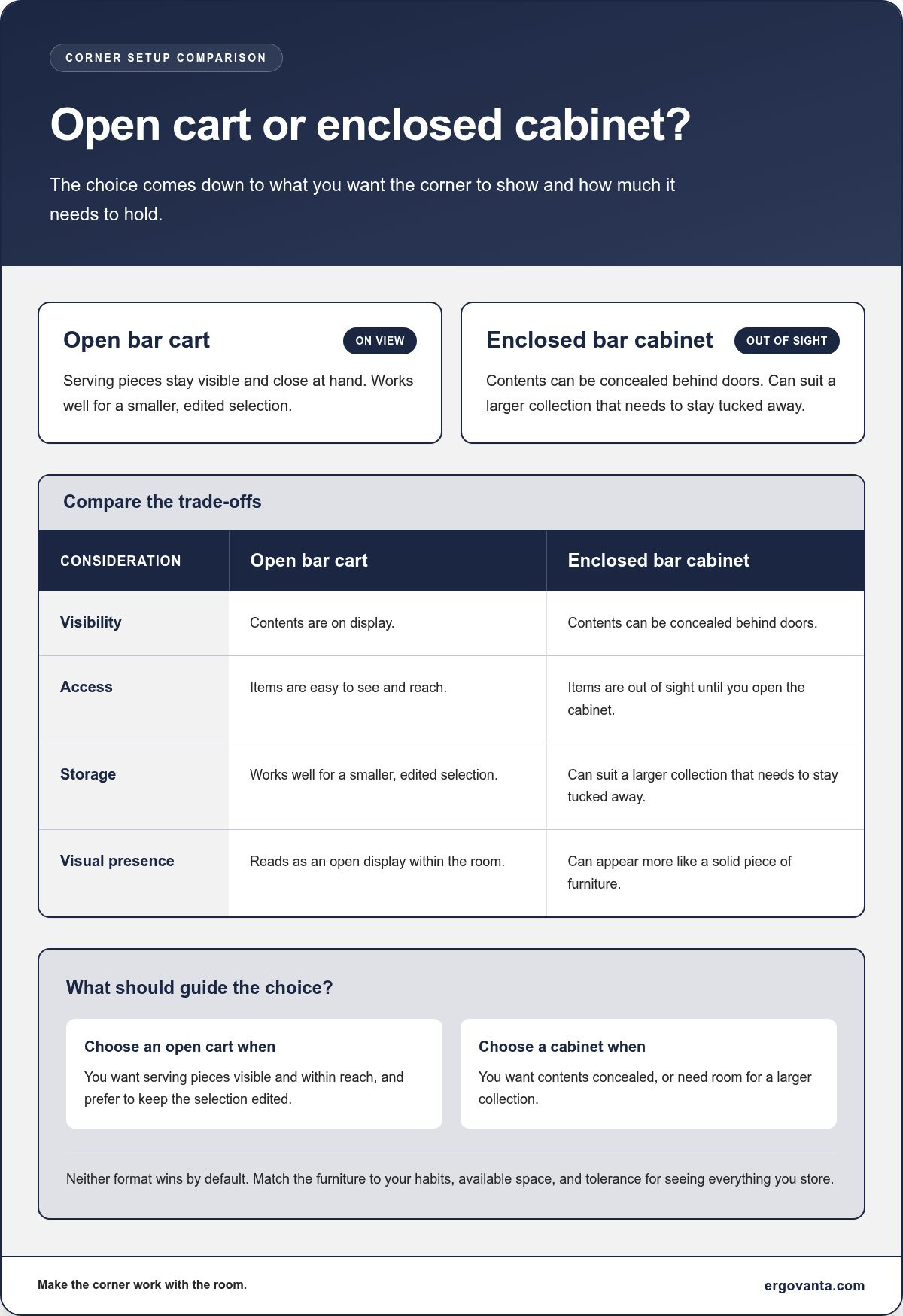
The choice comes down to what you want the corner to show and how much it needs to hold. An open cart keeps serving pieces visible and close at hand. A cabinet conceals its contents and can give the room a quieter look. Neither format wins by default. Match the furniture to your habits, available space, and tolerance for seeing everything you store.
Use this quick comparison to see which trade-offs fit your living room:
| Consideration | Open bar cart | Enclosed bar cabinet |
|---|---|---|
| Visibility | Contents are on display. | Contents can be concealed behind doors. |
| Access | Items are easy to see and reach. | Items are out of sight until you open the cabinet. |
| Storage | Works well for a smaller, edited selection. | Can suit a larger collection that needs to stay tucked away. |
| Visual presence | Reads as an open display within the room. | Can appear more like a solid piece of furniture. |
An open cart puts your selection on show; an enclosed cabinet keeps more of it behind the scenes. That difference is a useful starting point when comparing a cart with a cabinet setup.
When an open bar cart makes more sense
Choose an open cart if you reach for the same glassware or serving pieces often and like having them visible. It can suit a room where a compact, open arrangement feels lighter than a solid furniture piece, or where you want the corner to contribute to the room’s display. A cart also makes sense when you prefer to keep the setup focused on what you use, rather than storing a larger collection in the living room.
Visibility comes with a small assignment: edit the arrangement now and then. Return items to their place, remove anything that has drifted onto the cart, and keep the display to a few useful pieces. Otherwise, the cart can start to look less like a considered setup and more like a shelf that has given up.
When enclosed storage may suit the room better
A cabinet may work better if the living room already has several focal points, or if visible bottles and glassware would make the corner feel busy. Concealing contents can help the setup sit quietly alongside other furniture. This can also be a better fit if you need space for more items than you want on display.
Think about access before choosing enclosed storage. If you serve from the setup often, consider whether opening doors and reaching inside feels convenient in that corner. If the room is tight, check that the cabinet’s position won’t interfere with nearby seating or movement. Choose based on how you use the space, not on the assumption that more storage is always better.
Once you know whether you prefer an open display or concealed storage, you can build the rest of the corner around that choice. Ergovanta’s bar carts and bar accessories can help you put the setup together.
How to Place and Style a Corner Bar Cart Without Creating Clutter
A cart can fit neatly into a corner and still make the room harder to use. Plan the route around it, then arrange the contents so serving feels straightforward. These steps take the setup from an empty patch of floor to a corner that works on an ordinary day, not just when company comes over.
- Measure the usable footprint. Note the width and depth available, including the space needed to approach the cart and reach its shelves. Check nearby furniture, windows, doors, and seating. The corner is part of a working room, so don’t count every inch as display space.
- Map how people move through the room. Trace the usual routes between doorways, seating, and other frequently used areas. Preserve clear paths, and avoid blocking doors or making it awkward to sit down or get up. If the cart interrupts a route, try another corner or reconsider the setup.
- Mark the footprint before choosing a piece. Use removable tape or a simple outline on the floor to represent the cart or cabinet’s intended position. Walk past it and approach it as you would during normal use. This quick test can reveal a tight turn or a blocked seat before furniture arrives.
- Group items by how you use them. Keep related serving pieces together so you can find them without shifting everything else. For example, place glasses with the carafe or decanter you use alongside them, and keep napkins near other serving items. A small surface is easier to navigate when objects have clear jobs and places.
- Add only a little visual interest. Use one or two decorative objects, such as a small vase or accent, rather than filling every open patch. If the corner feels disconnected from the room, nearby light can help tie it in. A desk or floor lamp can add a useful pool of light while connecting the corner to the rest of the space.
- Edit after regular use. Once you’ve used the setup a few times, notice what you reach for and what stays untouched. Remove the unused items, return misplaced pieces to their groups, and leave enough open surface to set something down. A brief reset keeps the arrangement useful instead of turning the cart into a new catch-all.
The aim isn’t to make the corner look untouched. It’s to make the setup easy to use and easy to keep in order. If a cart makes movement awkward or requires constant rearranging, the layout needs another pass.
Ergovanta’s bar carts and accessories give you a place to start building a corner that works for your routine.
Build a Corner Bar Cart Setup Around the Way You Host
The most useful setup isn’t the one with the fullest shelves. It’s the one that fits how your living room gets used. Think about whether you host now and then, have people over regularly, or simply want a tidy place for everyday drinks and serving pieces. Let that routine shape what earns a spot on the cart.
Make the setup work for your kind of gathering
For occasional hosting, keep a few versatile glasses, napkins, and serving pieces together, then add drinks when guests arrive. If you entertain regularly, you may want frequently used items ready in one place, including sparkling water, mixers, or other non-alcoholic options. For everyday display, make room for the carafe or glassware you actually reach for, with perhaps one decorative object to give the arrangement some character.
Use a staged display as inspiration, not an inventory list. A cart doesn’t need every bottle, glass, and accessory to look complete. Choose pieces that suit your gatherings and leave the rest stored elsewhere. The corner will be easier to use, and resetting it after company won’t become its own event.
Keep the final choice personal and practical
Before settling on a setup, revisit the corner’s usable footprint and what you want to store. Decide whether seeing your items suits the room or whether you’d rather keep most of them out of view. Then consider how often you’ll use the arrangement and how much upkeep feels reasonable. A display that needs constant attention may not be right for a busy everyday room.
Use this short checklist to make the decision:
- Purpose: Will the setup support occasional hosting, regular entertaining, or everyday use?
- Footprint: Does it fit the corner without interfering with movement, doors, or seating?
- Storage preference: Do you want items visible and easy to reach, or mostly concealed?
- Contents: Which glasses, non-alcoholic drinks, and serving pieces do you genuinely use?
- Upkeep: Can you keep the arrangement in order with a quick reset?
Once those answers are clear, the next choice gets simpler. Ergovanta’s bar carts and bar accessories can help you build a setup around your routine, not a picture-perfect version of someone else’s living room. The right corner bar cart ideas are the ones that make sense in your home and still feel useful after the guests have gone.
Make the Corner Yours
A living-room corner doesn’t need a grand plan. It needs a purpose that fits your routines and a setup that feels natural in the room. Let the first version be simple. Live with it, notice what you reach for, and adjust as your needs change. The best corner bar cart ideas aren’t frozen displays; they leave room for real life, from a quiet evening at home to an impromptu visit from friends.
Start with one useful choice: decide what you want the corner to do. From there, choose pieces that suit the space and earn their place. A setup that works for you will always feel more considered than one copied down to the last glass.
Build a corner you’ll be glad to use, and let the rest come together one thoughtful choice at a time. Explore Ergovanta’s bar carts and accessories as you build your setup.
Frequently Asked Questions
Can a bar cart work in a small living room?
Yes, a bar cart can work in a small living room if it fits without taking over a useful route or surface. Consider what already occupies the room, including a floor lamp, side table, or storage basket. If the cart would make the seating area feel cramped, a narrower surface or another corner may be a better fit. The best corner bar cart ideas make daily movement feel natural.
What should I put on a living-room bar cart?
Put items on the cart that match how you’ll use it. For a casual evening, that could mean tumblers, a carafe of water, coasters, and a small bowl for snacks. If you serve drinks to guests, add the glassware and serving pieces you reach for most. Keep less-used items elsewhere, so the cart is ready to use without becoming a second storage cupboard.
How do I keep a bar cart from looking cluttered?
Give each item a clear place, and avoid filling every shelf just because it’s there. Store duplicates and occasional-use pieces elsewhere, then check the cart after hosting to return stray objects to their homes. If the arrangement still feels busy, remove one category at a time, such as extra glassware or decorative pieces. A little open surface makes the cart easier to use and easier to reset.
Can I use a bar cart if I do not drink alcohol?
Absolutely. Use it as a station for sparkling water, juice, tea, or other drinks, with cups, napkins, and a pitcher or carafe. It can also hold serving dishes for snacks or provide a small home for items used during gatherings. The cart’s purpose is yours to define. You don’t need bottles of alcohol for it to be useful or to belong in your living room.
Where should I put a bar cart in the living room?
Place it where you can reach it without interrupting how the room is used. A spot near the seating area can be convenient for serving, while a quieter corner may suit a display or drinks station. Check that the cart won’t interfere with a door, window treatment, or the route to a seat. Try the intended location during a normal day before settling on it.
Should a living-room bar cart match the furniture?
No, it doesn’t have to match exactly. A cart can feel connected to the room by repeating one detail, such as a nearby finish, color, or shape, while still bringing a different texture. For example, if the room has simple wood furniture, a cart with a contrasting finish can add definition without looking unrelated. Aim for a shared visual cue, not a matching set.
What can I use instead of a bar cart?
A side table, console, open shelf, or small cabinet can serve a similar purpose if it suits the room better. A side table may work for a few everyday items beside seating, while a cabinet can keep supplies out of sight. Choose based on the surface area and storage you need, plus how much floor space you can spare. The cart is an option, not a requirement.
Disclaimer
Ergovanta publishes these guides to help people set up better workspaces. Product recommendations reflect what we sell. Specifications, prices and availability are accurate at the time of writing and may change. Nothing here is medical, ergonomic or professional advice; if you have a specific health concern about your workstation, speak to a qualified professional.