August 15, 2026
Desk Organization Ideas for Small Spaces: Build a Functional Workspace
The workspace shapes the work. Equip it deliberately. A small desk is not a limitation; it is a filter for what actually matters. When surface area is scarce, every object must earn its place. You likely feel the weight of mental clutter every time you sit down to a tangled mess of cables and a crowded desktop. It's difficult to focus when your tools are fighting for the same few inches of wood. Implementing effective desk organization ideas for small spaces is about more than just tidying up. It is about building a workspace that supports your work instead of getting in the way of it.
You deserve a surface that remains clear and a setup where everything you need stays within reach but out of your sightline. We will show you how to equip your compact area with intentional objects that maximize utility without sacrificing the room you need to think. This guide covers how to use vertical space with monitor stands, define your boundaries with purposeful lighting, and clear the path with better cable management. Build a space you actually choose to come back to.
Key Takeaways
- Audit your surface to identify friction points and remove any objects that do not earn their place through daily utility.
- Look upward to reclaim your desktop by using monitor stands to create a second level of usable storage.
- Apply effective desk organization ideas for small spaces by using lighting to define clear boundaries in a shared or multi-use room.
- Reduce visual noise and mental clutter with a dedicated cable management strategy for your tech gear.
- Focus on equipping your workspace with intentional tools that maximize function without requiring a larger physical footprint.
The Reality of Working in Limited Square Footage
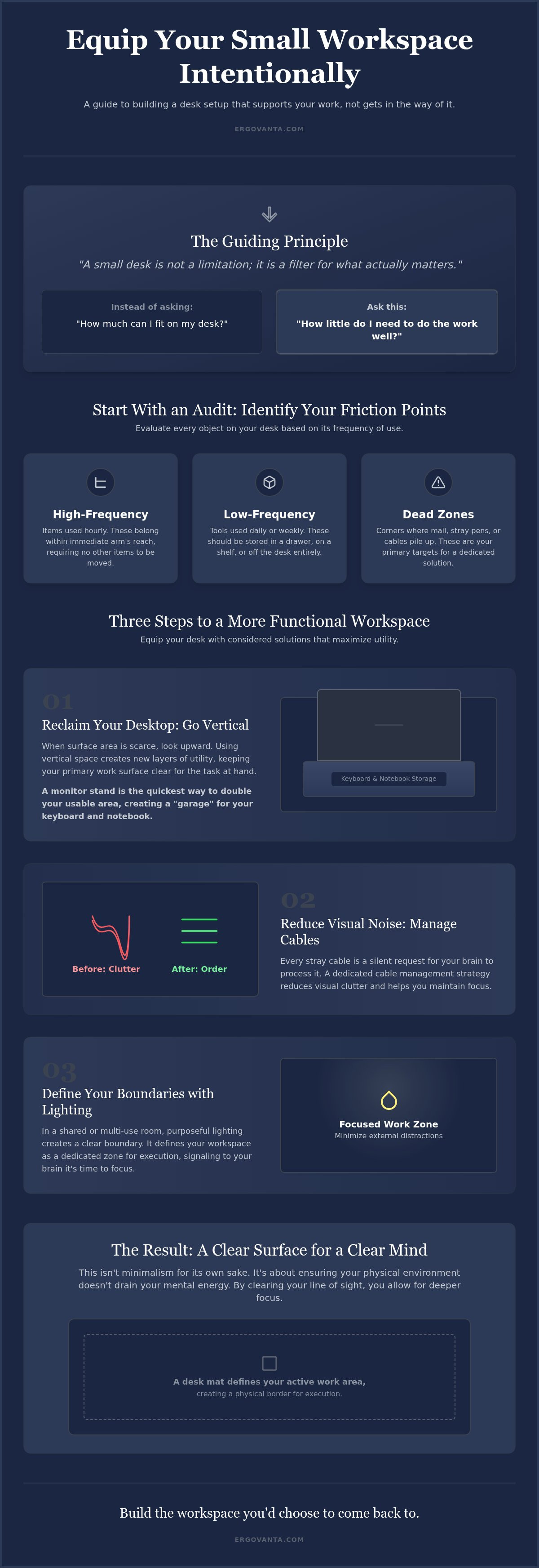
The workspace shapes the work. Equip it deliberately. For the nearly eight in ten remote-capable employees in the U.S. who work at least partially remote, the home office is no longer a temporary fix; it's a permanent fixture. When you work in a compact area, your environment is either a partner in your productivity or a constant obstacle. Small spaces require more intentionality than large ones because there is no room for "just in case" items. Every inch must be considered. You aren't just looking for a place to park your laptop. You are building a workspace you'd choose to come back to. This requires a shift in perspective. Instead of asking how much you can fit, ask how little you need to do the work well.
Identifying Friction Points in Small Setups
Friction is the physical resistance you feel when your space isn't working for you. If you find yourself constantly moving your phone stand to reach your coffee, or shifting a stack of papers to find your mouse, your layout is failing. Start by tracking your physical movements during a typical hour of work. Notice what you reach for most often and what sits untouched. The rooms that get used are the rooms that are equipped correctly.
Evaluate your objects based on frequency of use:
- High-Frequency: Items used hourly should be within your immediate reach without moving anything else.
- Low-Frequency: Tools used once a day or once a week belong in a drawer, on a shelf, or off the desk entirely.
- Dead Zones: Look for corners where mail, pens, or cables naturally pile up. These are your primary targets for better desk organization ideas for small spaces.
Identifying these zones allows you to replace chaos with a dedicated solution, such as a small tray or a cable management clip. When square footage is low, efficiency is found in the details.
The Psychology of a Clear Surface
Visual clutter competes for your attention. Every stray cable or unnecessary object is a silent request for your brain to process it. Clear the line of sight to allow for deeper focus. Intentionality starts with removing what does not serve the work. If an object hasn't been used in three days, it shouldn't earn its place on your primary surface.
Consider the boundary of your desk. A clear desk mat can define your active work area. It creates a physical border for your keyboard and mouse, signaling to your brain that this is the zone for execution. By equipping your space with workspace essentials that are made for the work, you transform a cramped corner into a purposeful station. Effective desk organization ideas for small spaces prioritize this mental clarity. They ensure that the only things you see are the things you need to finish the task at hand. This isn't about minimalism for its own sake; it's about making sure your physical environment doesn't drain your mental energy.
Maximizing Vertical Space to Reclaim Your Desktop
When square footage is low, look upward for storage. Most small desks lack drawers, which forces every tool, notebook, and device onto the primary work surface. This leads to horizontal sprawl that eats into your thinking space and creates unnecessary friction. Vertical desk organization ideas for small spaces focus on reclaiming the desktop by creating new layers of utility above the surface. By moving stationary objects off the desk mat, you protect the area where actual work happens. Every inch of your wall or the space above your desk is an opportunity to equip your setup more effectively.
Using Monitor Stands and Risers Effectively
A monitor stand is the most immediate way to double your usable area. It serves as more than just a tool for neck comfort; it creates a physical "garage" for your keyboard, notebook, or phone when they aren't in use. Equip your space with a stand that matches your desk material to maintain a cohesive, intentional look. Ensure the riser height allows for a neutral neck position so you feel better at the end of a long session. By lifting the screen, you open up several square inches of territory that was previously dead space. This is a considered choice for anyone who needs to clear their desk quickly for non-digital tasks.
Wall Mounting and Floating Solutions
If your desk is pushed against a wall, use that vertical plane to your advantage. Floating shelves keep the desktop clear for active tasks like sketching or writing. Place them at arm's reach for items you use frequently, such as reference books or small tools. Pegboards offer a customizable storage system that evolves with your needs. Unlike a fixed drawer, a pegboard allows you to rearrange hooks, bins, and shelves as your gear changes. This ensures your setup remains made for the work you're doing right now. Magnetic strips are another smart addition. They hold small metal tools or tech accessories that would otherwise roll around and cause visual noise.
Don't let paper stacks grow horizontally and swallow your surface. Vertical file holders turn a disorganized pile into a structured library, requiring only a fraction of the physical footprint. If you're finding it difficult to choose the right configuration for your specific layout, ask us about building your setup. Moving these items off the primary surface leaves you with the room you need to think and execute. When you look upward, you find the space you thought you'd lost.
Managing the Tech Jungle: Cables and Devices
The workspace shapes the work. Equip it deliberately. In a compact setup, technology often feels like it's winning. Cables are the primary source of visual noise in small spaces. They create a "tech jungle" effect that fragments your focus and eats into your limited surface area. Effective desk organization ideas for small spaces start with a dedicated routing strategy. Don't let your devices float around the surface. Give them a home where they can function without causing friction. When you control your tech, you reclaim the mental clarity needed for deep work.
Intentional Cable Routing Strategies
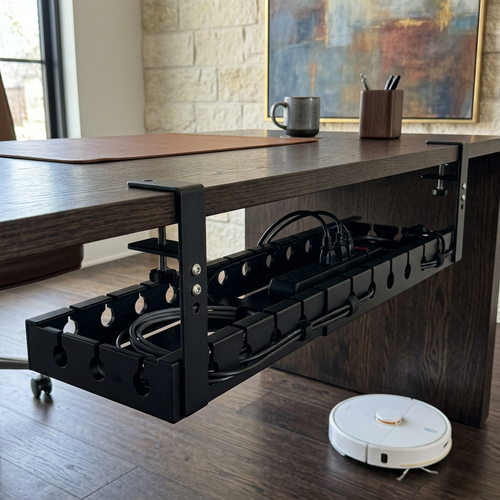
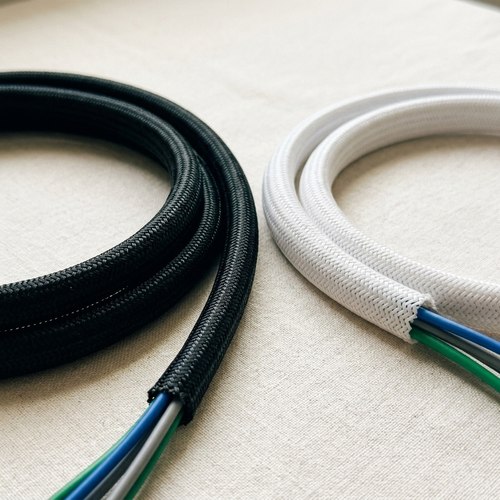
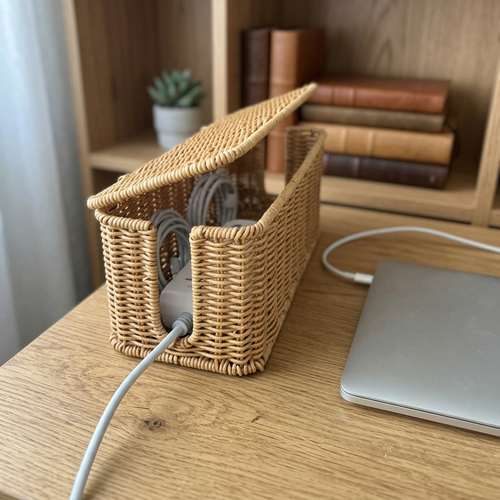
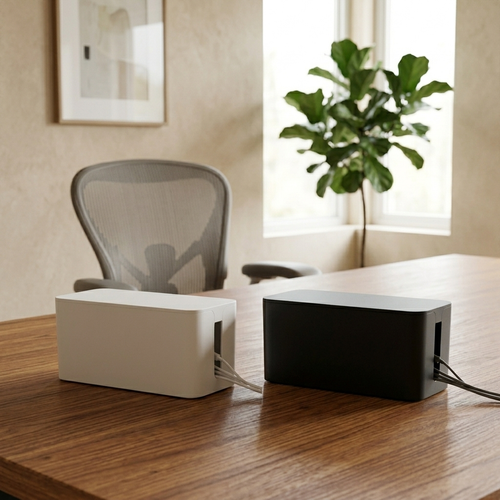
A clean desk isn't about going entirely wireless; it's about making sure the wires you need follow a logical path. Use a cable management tray to keep heavy power bricks off the floor and out of sight. This keeps the area under your desk as clear as the surface itself. Route cables along the back edge of the desk using clips or ties. This prevents strands from crossing your active work zone. Group cables by destination, such as monitor cables in one bundle and peripherals in another, to minimize the number of visible strands. Intentional placement ensures that your tech supports your workflow instead of cluttering it.
Consolidating Tech with Multi-Functional Tools
Small spaces can't accommodate a separate cord for every gadget. A tech accessory like a multi-port charger reduces the need for multiple wall outlets. It centralizes your power source into one considered object. Wireless charging pads are another intentional choice. They eliminate the clutter of individual cords for your phone or earbuds. Bulky gear like headphones shouldn't sit on your desk mat. Use headphone stands to move them off the primary work surface. This keeps your tools within reach but out of your way.
Every object on your desk should earn its place. Phone stands and dedicated docking stations prevent your mobile devices from migrating across your workspace throughout the day. When every device has a fixed position, you spend less time clearing a path and more time doing the work. Implementing these desk organization ideas for small spaces helps you reclaim the room you need to think. It's about building a space that feels like yours through personal ownership and smart equipment. Equip your station for the work you do, not the gear you own.
Lighting and Atmosphere in Compact Corners
The workspace shapes the work. Equip it deliberately. In a multi-use room, lighting defines the boundaries of your workspace. It creates a psychological perimeter around your desk, separating your professional focus from your personal life. When square footage is limited, light serves as a non-physical wall. It signals to your brain that it's time to execute. Smart desk organization ideas for small spaces always account for the atmosphere because a poorly lit corner is a corner that won't get used. You want your workspace to feel intentional, not like a temporary station squeezed into a spare corner.
Choosing Task Lighting That Saves Space
Task lighting should be focused and adjustable. Don't waste surface area on a lamp with a massive base. Consider the footprint of your tools before you buy them. A desk lamp with a built-in charger serves two purposes at once, reducing the number of cables on your surface. This is a considered choice for anyone trying to minimize visual noise. Monitor light bars are another intentional choice. They sit on top of your screen, casting light exactly where you need it while saving valuable desk real estate. If you prefer a traditional look, swing-arm lamps can be clamped to the edge. They offer maximum flexibility and can be moved out of the way when the work is finished. This ensures your primary surface remains clear for other tasks.
Adding Life Without Adding Clutter
Atmosphere is not an excuse for clutter. One or two considered objects are better than a collection of trinkets that serve no purpose. Natural elements like faux plants add life to your corner without requiring maintenance or taking up significant room. They provide a vital visual break from screens and tech, helping you stay grounded during long sessions. Choose containers that match your overall desk aesthetic for a unified, intentional feel. This isn't about decoration; it's about building a space you actually choose to come back to. By integrating these desk organization ideas for small spaces, you create an environment that feels made for the work. A workspace should be a place of clarity, not just a place where gear is stored.
Equipping Your Space with Objects That Earn Their Place
The workspace shapes the work. Equip it deliberately. A room that gets used is a room that is equipped correctly. In a limited area, you cannot afford to waste space on objects that don't serve a clear purpose. Every tool on your surface must earn its place through daily utility. These desk organization ideas for small spaces are not about aesthetics alone; they are about building a functional advantage for the person doing the work. If an object does not assist your workflow, it is merely an obstacle. Remove it. When you filter your environment through the lens of utility, you reclaim the mental room needed to execute at a high level.
The Ergovanta Philosophy: Purposeful Function
The name Ergovanta is rooted in the Ancient Greek "ergo," meaning purposeful function, and "vanta," a coined word for advantage. We build for the people who do the work. Our workspace essentials are designed to be considered and functional. They are tools made for the work, not just items to fill a shelf. When you choose objects based on their utility rather than their corporate identity, you create a station that is uniquely yours. This is about personal ownership. You are the architect of your own efficiency, choosing objects that provide a tangible benefit to your daily routine.
Building a Workspace You Want to Return To
Start with the foundation: a clear surface and managed cables. Once you've reclaimed your desktop using the vertical strategies and tech consolidation mentioned earlier, add tools that solve your specific friction points. Equip the space slowly. Don't buy a full set of organizers just because they look tidy in a photo. Only add what proves its value over several days of use. Consider the specific requirements of your day:
- Reclaim your surface: Use monitor stands to move static gear off the primary work zone.
- Solve your friction: Identify the items you reach for most and place them in your immediate line of sight.
- Equip with intention: Only introduce objects that have a dedicated purpose and a fixed home.
Your workspace should not feel like a corporate template or a generic showroom. It shouldn't look like everyone else's. Build it for the specific tasks you perform every day. Intentionality in selection leads to a space you actually enjoy sitting at. When your environment reflects your specific needs, it becomes a sanctuary of productivity rather than just a place to store gear. Build the workspace you'd choose to come back to. This is how you transform a small corner into a professional advantage.
Equip Your Station for the Work Ahead
The workspace shapes the work. Equip it deliberately. Building a functional area in a compact corner isn't about finding more room; it's about making better use of the room you have. You've seen how looking upward with monitor stands can reclaim your surface. You've learned to silence the tech jungle through intentional cable management. These desk organization ideas for small spaces ensure that every object on your desk mat earns its place through daily utility.
We build for the people who do the work. Our considered designs maximize small square footage so you can focus on execution instead of clutter. Whether you are defining boundaries with task lighting or adding life with a single faux plant, every choice should be intentional. Your workspace should feel personal and made specifically for the work you do every day. It's time to build a station you actually choose to come back to.
Start today by removing one object that no longer serves your workflow. The path to a clear desk and a clear mind begins with a single considered choice. You have the tools to build a space that supports your ambition.
Frequently Asked Questions
How do I organize a desk with no drawers?
When your desk lacks drawers, you must look to vertical planes and the space beneath your primary surface. Monitor stands are essential here; they create a second level of storage for notebooks and keyboards. You can also use small trays or desktop organizers to group loose items. By keeping high-frequency tools on the surface and moving everything else to floating shelves or wall-mounted pegboards, you maintain a clear area made for the work.
What is the best way to hide cables on a small desk?
The most effective way to manage cables is to use an under-desk cable management tray to house power bricks and excess cord length. Route the remaining wires along the back edge of your desk using adhesive clips or hook-and-loop ties. Grouping cables by their destination reduces visual noise. This intentional approach prevents the tech jungle from swallowing your limited surface area, keeping your workspace clear and your mind focused on the task at hand.
Can a monitor stand actually save space in a small setup?
Yes, a monitor stand is a fundamental tool for reclaiming desktop real estate. It lifts your screen to a comfortable height while opening up the footprint it previously occupied. This creates a "garage" where you can slide your keyboard or mouse when you need room for analog tasks like writing or sketching. It is one of the most effective desk organization ideas for small spaces because it maximizes utility without requiring a larger desk.
How do I make a small desk look less cluttered without buying new furniture?
Start by removing every object that doesn't earn its place through daily use. Clutter is often caused by items that have no fixed home. Group remaining essentials into small trays or containers to create clear boundaries. Clearing your line of sight is a psychological win; it reduces the mental load of processing unnecessary visual information. If an object hasn't been touched in three days, it shouldn't be on your primary work surface.
Should I use a desk mat on a small desk or does it take up too much room?
A desk mat is a considered addition that defines your active work zone. Rather than taking up room, it creates a physical border for your keyboard and mouse; signaling to your brain that this is the area for execution. Choose a mat that fits your specific dimensions to avoid overhang. It protects your surface and provides a unified aesthetic that makes a cramped setup feel more intentional and less like a temporary arrangement.
How do I choose a desk lamp for a tiny workspace?
Focus on the footprint of the lamp base. In a tight corner, every inch counts. Consider a monitor light bar that sits on top of your screen or a swing-arm lamp that clamps to the desk edge. These solutions provide focused task lighting without occupying any surface area. Look for lamps with built-in charging ports to consolidate your tech gear and reduce the number of visible cables in your space.
What are the most essential items for a small desk organization?
Effective desk organization ideas for small spaces rely on three foundation pieces:
- Monitor stands: These reclaim vertical storage space and create layers of utility.
- Cable management: This foundation clears visual noise and mental clutter.
- Task lighting: This defines the workspace boundary in a multi-use room.
Equip your space with these intentional tools first. Only add accent pieces or secondary accessories once your primary work zone is clear and functional.
Disclaimer
Ergovanta publishes these guides to help people set up better workspaces. Product recommendations reflect what we sell. Specifications, prices and availability are accurate at the time of writing and may change. Nothing here is medical, ergonomic or professional advice; if you have a specific health concern about your workstation, speak to a qualified professional.
From the catalog