August 8, 2026
Entryway Lighting to Make a Statement: Build a Space That Welcomes You Home

Article by
George
George is the founder of Ergovanta. He spent years on Wall Street, first as an investment banker and then as a private equity investor. The work took him into the home and corporate offices of other bankers, private equity investors, venture capitalists, hedge fund managers, and Fortune 500 executives across a wide range of industries. The longer he spent in those workspaces, the clearer the pattern got: the rooms people actually wanted to return to were never the biggest or the best funded. They were the ones built on purpose. Ergovanta turns that into pieces anyone can put in their own room, whatever the work is. He works out of New York City, mostly on lighting and the small objects that decide whether a desk gets used.
The front door is more than a point of entry; it is the boundary between the world and the space you've built. Most people treat the foyer as an afterthought, but choosing entryway lighting to make a statement is the first step in claiming ownership of your home. It is the difference between walking into a dark hallway and arriving at a space that feels intentional.
It is frustrating when a fixture looks too small for the ceiling height or emits a clinical glare that kills the mood. You want a home that welcomes you, not one that feels like a cold lobby. We agree that every object in your home should earn its place through function and design. A foyer should not just be a passage; it should be a considered environment that works for you.
This guide shows you how to equip your entryway deliberately. You will learn to master scale, use layering to set the tone for different times of day, and understand how the latest Matter 1.5 protocols can simplify your setup. Build a foyer that reflects your own standards, starting with the very first light you see.
Key Takeaways
- Lighting is an essential object that defines the purpose of a room. Learn why choosing entryway lighting to make a statement is the first step in claiming ownership of your home.
- Match your fixture to the specific footprint of your foyer. Understand when to equip a space with focused pendants or choose the broader impact of a chandelier.
- Ensure your lighting looks intentional by calculating proper scale and proportion. Use room measurements to select fixtures that fit the ceiling height and floor area perfectly.
- Create a functional environment by layering different light sources. Combine your main fixture with secondary ambient lighting to make the transition from the world to your home feel seamless.
- Build a space that works with your existing environment. Learn to assess natural light patterns to choose bulbs and fixtures that feel right at any time of day.
Defining the Statement in Your Entryway
A statement fixture is an object that defines the purpose of a room. Most home design advice suggests that bold lighting exists only to impress guests or signal status to neighbors. This is a mistake. You should choose entryway lighting to make a statement for yourself. The entryway is the first space you inhabit when you return home from a long day. It is a functional boundary. Equip this area with intentional light that signals a transition from the noise of the world to the focus of your own space.
When you walk through the door, the environment should immediately feel like yours. It should not feel like a generic waiting room or a corporate lobby. By selecting specific types of light fixtures, you decide exactly how that transition feels. The goal is to build a foyer that serves your needs before anyone else's.
The Role of Intentional Lighting
Lighting shapes how you feel when you cross the threshold. If the light is too dim, the space feels uninviting. If it is too sharp, it feels clinical. Avoid generic fixtures that fade into the background or look like they belong in a temporary rental unit. Instead, look for objects that earn their place through both form and function. A considered light fixture does more than just illuminate a floor mat; it anchors the room. You can equip your space with lighting that matches the way you actually use the foyer, ensuring every object is made for the work of welcoming you home.
Building a Personal Homecoming
Your space should feel like yours from the very first step. We often spend our energy on the home office or the kitchen, but the rooms that get used every single day deserve the most attention. The entryway is one of those rooms. It is the beginning and the end of your daily routine. Identify the mood you want to set for your evening and select materials that support it.
- Choose metal or glass for a sharp, organized feel.
- Opt for wood or artisan materials to add immediate warmth.
- Ensure the scale of the light matches the volume of the room.
By focusing on entryway lighting to make a statement that serves your own needs, you build a home that feels personal. It is about ownership, not performance. Equip your foyer with the same intentionality you bring to your workspace. This ensures the environment remains a sanctuary of productivity and rest.
Choosing the Right Fixture for Your Space
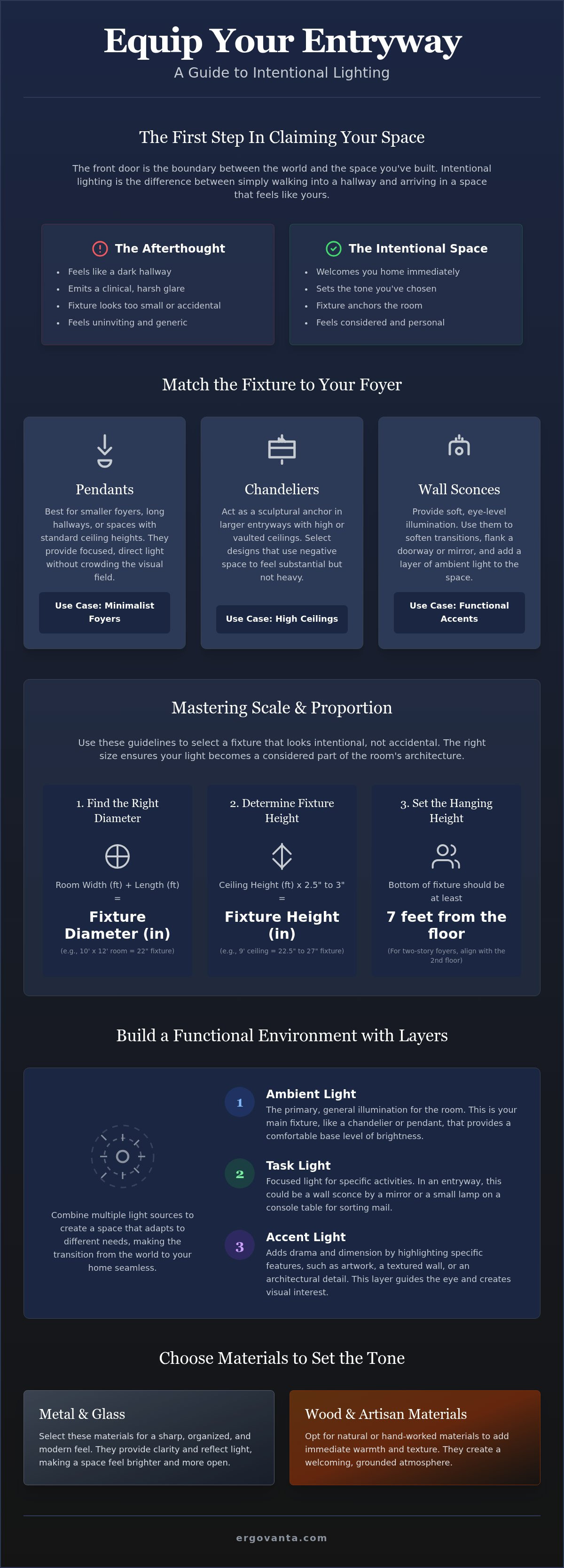
Selecting a fixture involves more than just picking a design you like. It requires an understanding of how light interacts with your specific floor plan. Pendants offer a focused, direct source of light that works well for smaller foyers. In contrast, chandeliers provide a broader, more sculptural impact that anchors larger spaces. When you choose entryway lighting to make a statement, consider the material carefully. Glass provides clarity and a modern edge, while wood offers immediate warmth and texture. Match the fixture to the architectural lines of your home to ensure the piece looks like it was made for the room.
Pendants for Minimalist Foyers
Pendants are the practical choice for narrow hallways or compact entryways where floor space is limited. They provide illumination without crowding the visual field. You can explore modernist lighting options to find fixtures with clean, uncluttered silhouettes. If you have a long, thin corridor, don't rely on a single light. Use multiple small pendants to create a rhythmic, guided path that leads you into the rest of the house. This approach follows the fundamentals of lighting design by providing consistent task lighting where you need it most.
Sculptural Chandeliers for High Ceilings
A chandelier acts as a central anchor for rooms with significant vertical volume. If your entryway features high ceilings, a small fixture will look accidental rather than intentional. Select designs that utilize negative space. This ensures the fixture has a large physical presence without feeling heavy or overwhelming. Look for artisan styles that highlight the texture of metal or the grain of wood. These pieces show the hand of the maker and add a personal layer to your space that mass-produced items lack. Using entryway lighting to make a statement in a tall foyer helps fill the void and makes the entry feel like a finished room.
Wall Lights as Functional Accents
Wall lights provide eye-level illumination that softens the transition between rooms. While ceiling fixtures provide the general glow, sconces add depth. You can browse wall lighting collections to find pairs that flank a doorway or a mirror. Sconces are particularly effective at highlighting specific architectural features or a favorite piece of decor. They help equip a space for different times of day; use them alone in the evening for a low-energy, calm homecoming. If you're unsure which configuration fits your hallway best, you can always reach out for a second opinion on your layout.
Scale and Proportion: Making the Light Fit
Scale is the difference between a room that feels decorated and one that feels built. A fixture that is too small looks accidental; it suggests the lighting was an afterthought rather than an intentional choice. When selecting entryway lighting to make a statement, the physical volume of the room dictates the size of the object. If the proportions are off, even the most striking artisan piece will lose its impact. You aren't just buying a lamp; you are equipping a transition point in your home. The light must earn its place by fitting the space it occupies.
To find the correct size, measure the width and length of your foyer in feet. Add these two numbers together. The resulting sum is the ideal diameter for your fixture in inches. For example, a 10x10 room requires a light roughly 20 inches wide. This formula provides a solid baseline, but you should also account for visual weight. An airy, minimalist glass design can often be slightly larger than a solid wood or metal piece without overwhelming the space. The goal is to ensure the light anchors the room without blocking the view of the stairs or adjacent areas. If the space feels crowded, the light hasn't earned its place.
Calculating Diameter and Width
A 10x10 room needs a fixture roughly 20 inches wide. If your foyer is an irregular shape, measure the widest points to ensure the light doesn't feel lost. Visual weight is a critical factor here. A fixture made of thin metal rods and clear glass occupies less visual space than a solid brass drum. You can afford to go slightly larger with airy designs. This creates a bold look without making the hallway feel cramped. Always prioritize the path of travel; the light should guide you in, not act as an obstacle. Browse our ceiling lights to find a size that matches your specific measurements.
Managing Vertical Space
Vertical space requires equal attention. The standard rule is to ensure the bottom of the light sits at least seven feet above the floor. This provides enough clearance for the tallest person in your home and maintains clear sightlines across the house. Higher ceilings allow for multi-tier fixtures that fill the volume, preventing the room from feeling hollow. Without this vertical presence, a high foyer can feel cold and unfinished.
If you are working with a standard eight-foot ceiling, look for semi-flush mounts. These fixtures stay close to the ceiling but still offer the character and presence needed to ground the entry. They are the considered choice for standard residential heights, providing the entryway lighting to make a statement without the risk of a safety hazard. If you have a double-height entry, the light should be visible from the second-floor landing, serving as a visual bridge between different levels of your home. Build the entrance you want to walk through every day by respecting the math of the room.
Light Layers: Beyond the Main Fixture
A single light source is rarely enough to ground a room. Layering is the secret to using entryway lighting to make a statement that holds up throughout the day. While the primary fixture acts as the focal point, it needs support from secondary sources to create a space that feels inhabited. A layered approach prevents harsh shadows and ensures the foyer is functional for every task, from greeting a neighbor to finding your keys on a dark winter evening.
Ambient lighting provides the general glow that fills the room, making it safe and navigable. Task lighting is more focused; it belongs near console tables or mail drops where you need clear visibility for specific actions. Accent lighting is the final, considered touch. It draws attention to the small objects you love, such as a sculptural vase or a piece of wall art. By combining these layers, you build a foyer that feels intentional and complete rather than flat and clinical.
The Importance of Color Temperature
The atmosphere of your homecoming depends heavily on color temperature. Use warm light, typically between 2700K and 3000K, to create a soft and welcoming feel. Avoid cool white light that mimics a corporate office or a hospital corridor; it's too sharp for a personal space. Kelvin is the standard scale used to measure the visual warmth or coolness of a light source. Lower Kelvin numbers provide the amber glow that signals rest and comfort. When you choose entryway lighting to make a statement, ensure the bulbs match the mood you want to set for your evening routine.
Integrating Floor and Table Lamps
Overhead fixtures aren't the only way to equip your foyer. A floor lamp placed in a quiet corner adds immediate depth and visual interest. It breaks up the vertical lines of the room and provides a secondary light source that feels more personal. Table lamps on a console provide a low-level, intimate glow that's perfect for late-night arrivals when you don't want the full brightness of a chandelier.
Mix materials like metal and glass to build a space that feels curated over time. A glass pendant paired with a metal floor lamp creates a balanced, modern look. These are the small objects that earn their place by making the room feel finished. Every light source should be made for the work of making your home feel like yours from the moment you step inside.
Equipping Your Space with Intentional Lighting
The workspace shapes the work; the entryway shapes the home. Just as you carefully equip a desk with objects that earn their place, your foyer requires a deliberate plan. Choosing entryway lighting to make a statement is about more than aesthetics. It is an act of ownership over your environment. Start by assessing the natural light available during the day. A room flooded with afternoon sun needs a different approach than a windowless corridor. Understand the baseline of your space before you add your own layers. With LED adoption in the U.S. now exceeding 50% of residential sockets, efficiency is the standard, but your focus should remain on how the light actually feels when you walk through the door.
Every successful room has a clear hierarchy. Choose one primary object to be the focal point of the entry. This is your anchor. Once you've selected this central piece, build the rest of your lighting around that choice. If you have chosen a bold, sculptural chandelier, keep your secondary sconces or floor lamps minimalist. This prevents visual clutter and ensures your primary statement remains clear. When you equip a room this way, the result feels intentional rather than accidental. It becomes a space you'd choose to come back to every day.
Selecting Materials That Last
Focus on quality over passing trends to build a space that lasts. Look for metal and glass fixtures for a timeless, durable feel. These materials age well and maintain their character over years of use. Avoid plastic components that do not earn their place; they often feel temporary and brittle. In an environment that sees daily use, the tactile quality of wood or the clarity of glass makes a difference. Choose objects that reflect the permanence you want for your home.
Final Steps for Installation
The final details of installation determine the utility of the light. Always use a dimmer switch to control the mood of the space. This allows you to transition from bright, functional light during the day to a soft, low-energy glow in the evening. As smart home standards evolve, ensure your setup is compatible with Matter 1.5 or Thread 1.4 protocols for seamless control. Ensure the fixture is centered on the main door or the primary axis of the hallway to maintain visual order. If you're working with a unique floor plan, discuss your space with our team for specific lighting advice. Equip your home with the same precision you bring to your work.
Build a Space with Purpose
The entryway is the first room that gets used every day. It deserves the same intentionality as your primary workspace. Choosing entryway lighting to make a statement isn't about impressing others; it's about claiming ownership of your environment. You now know how to use room dimensions to calculate the perfect scale and how to layer ambient and task light to suit your evening routine. These considered choices ensure your foyer is both functional and personal.
Equip your foyer with objects that earn their place. Focus on materials like metal, glass, and wood to build a foyer that feels right for you. We provide considered designs for the people who do the work, featuring curated modernist and artisan collections. With national shipping available across the United States, you can start building a space that reflects your own standards instead of following temporary trends.
Your home should be a space made for the work of living and resting. Start with the light that welcomes you through the door and build the rest with intent.
Frequently Asked Questions
How high should a pendant light hang in an entryway?
A pendant light should hang so that the bottom of the fixture is at least seven feet above the floor. This height ensures sufficient clearance for most people and maintains an open line of sight through the foyer. If you have a taller doorway or a double-height ceiling, you can hang the light higher to maintain proportion. Always prioritize safety and movement when you equip your space with new fixtures.
Can I use a chandelier in a small foyer?
You can use a chandelier in a small foyer if the scale is intentional. A fixture that is roughly 12 to 18 inches wide often works well for compact entries. Look for designs that use negative space or clear glass to prevent the room from feeling crowded. Choosing entryway lighting to make a statement in a small space requires balancing visual weight with the actual footprint of the room.
What is the best light bulb temperature for an entryway?
The best light bulb temperature for an entryway falls between 2700K and 3000K. This range provides a warm, welcoming glow that feels personal rather than clinical. Avoid bulbs above 4000K, as they produce a cool blue light that can make your home feel like a corporate office. Stick to warm tones to ensure the transition from the outdoors to your space feels considered and calm.
How do I choose a light that matches my existing decor?
Focus on the materials and architectural lines already present in your home. If your space features dark wood or black metal accents, choose a fixture that mirrors those elements. You don't need a perfect match; you need a considered connection. Select objects that earn their place by complementing the existing textures of your room. This approach ensures your new light feels like it was made for the work of grounding the entry.
Is a dimmer switch necessary for entryway lighting?
A dimmer switch is essential for controlling the mood and functionality of your foyer throughout the day. It allows you to use full brightness when you're cleaning or searching for keys, then drop to a low glow for a softer evening homecoming. Being able to adjust your entryway lighting to make a statement at different intensities makes the space more versatile. It's a small technical addition that significantly changes how you feel in the room.
How many lumens do I need for a standard entryway?
A standard entryway typically requires between 30 and 40 lumens per square foot. For a 50-square-foot foyer, aim for a total of 1,500 to 2,000 lumens. This provides enough brightness to navigate safely without overwhelming the space. If your entry lacks natural light, you might need to increase this number slightly or add secondary sources like wall lights to fill the corners and maintain an even glow.
What are the most durable materials for foyer lighting?
Metal, glass, and solid wood are the most durable materials for foyer lighting. These materials stand up to the temperature changes and moisture that often occur near a front door. Unlike plastic or low-quality composites, metal and glass age well and maintain their structural integrity over time. Build your lighting plan around these high-quality materials to ensure your fixtures earn their place in your home for years to come.
Disclaimer
Ergovanta publishes these guides to help people set up better workspaces. Product recommendations reflect what we sell. Specifications, prices and availability are accurate at the time of writing and may change. Nothing here is medical, ergonomic or professional advice; if you have a specific health concern about your workstation, speak to a qualified professional.
From the catalog