July 5, 2026
Ergonomic Desk Accessories: Equip Your Space for the Work Ahead

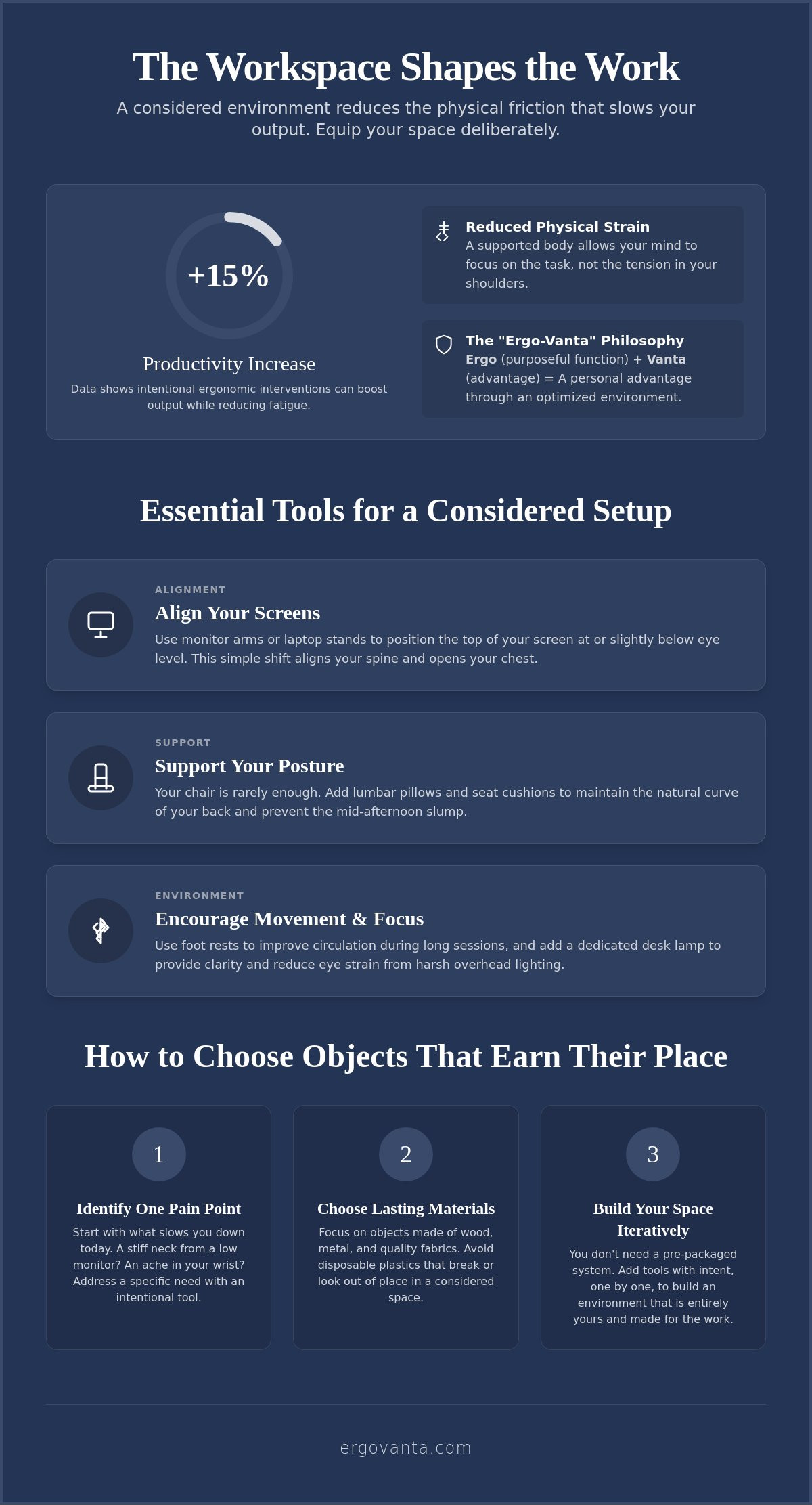
The workspace shapes the work. Equip it deliberately. If you spend serious hours at a desk, the physical environment around you matters more than you think. You likely know the heavy feeling of a stiff neck from a low monitor or the mental friction caused by a cluttered, disorganized desk. These are not just minor inconveniences; they are obstacles to your best output. Data shows that intentional ergonomic interventions can increase productivity by 15% while significantly reducing the physical fatigue that often follows a long day of focus.
You will learn how to build a workspace that supports your body and your work through intentional tool selection. This guide explores how to choose ergonomic desk accessories that earn their place, from monitor arms to considered support tools. We will show you how to equip a streamlined environment that feels entirely like yours, moving away from low-quality items that break or look out of place. By the end, you will understand how to build a space that is truly made for the work ahead.
Key Takeaways
- Understand how purposeful function provides a personal advantage in your daily workflow.
- Align your screens at eye level using monitor arms or laptop stands to reduce physical strain.
- Support your natural posture by equipping your chair with considered ergonomic desk accessories like lumbar pillows and seat cushions.
- Build your setup by identifying one specific pain point and choosing tools made of lasting materials like wood or metal.
- Create a workspace that feels like yours through intentional tool selection and personal ownership.
The workspace shapes the work: Why intentional ergonomics matter
The workspace shapes the work. Equip it deliberately. If you spend serious hours at a desk, the physical environment around you is more than just a backdrop; it is the infrastructure for your focus. A considered environment reduces the physical friction that slows your output. When your body is supported, your mind is free to do the work. Choosing ergonomic desk accessories is about removing the obstacles between you and your best results.
To see how specific tools can change your daily workflow, watch this guide on selecting long-lasting pieces:
The "Ergo" and "Vanta" philosophy
We view ergonomics through a specific lens. The name Ergovanta is rooted in the Ancient Greek word "Ergo," meaning purposeful function in action, and "Vanta," a term for advantage. This isn't about clinical compliance or filling your room with medical-grade plastic that looks out of place in a home. It's about gaining a personal advantage through an optimized environment. True ergonomics should feel natural, allowing you to focus on the task rather than the strain in your shoulders or the clutter on your surface.
Equip your space deliberately
The workspace is not just a place to sit; it is a tool for the work. Every item on your ergonomic desk must earn its place. This requires moving away from generic, low-quality accessories that break or look disjointed. Instead, focus on intentionality. When you build your space with considered tools, you create a personal environment that supports long hours of deep focus. Only include objects that provide a clear functional benefit and fit the aesthetic of a room you actually want to spend time in. The goal is a streamlined, organized desk environment where every piece is made for the work ahead.
Essential tools for a considered desk setup
The workspace is an ecosystem. If you spend serious hours at a desk, the tools you choose determine how you feel when the day ends. Curation is always better than accumulation. Focus on the foundational ergonomic desk accessories that address the basic physics of your posture. When you equip your space with intent, you remove the physical distractions that stand between you and your output.
Elevation and alignment
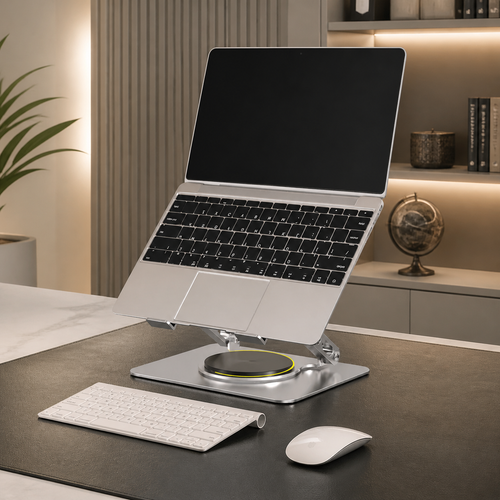
Eye level is the non-negotiable goal. When you look down at a laptop screen for hours, you invite chronic neck and shoulder tension. Using monitor laptop stands allows you to align your display with your natural line of sight. This simple shift changes your physical state instantly. It aligns your spine and opens your chest, making it easier to breathe and focus. This practice is a cornerstone of effective office ergonomics.
Support for the long haul
Your chair is rarely enough on its own. Most people need the targeted support provided by ergonomics and comfort tools. Lumbar pillows and seat cushions help maintain the natural curve of your back. They prevent the mid-afternoon slump that kills focus. These are the small objects that earn their place by keeping you in the room and on the task. A considered chair setup ensures you aren't fighting your furniture while you work.
Move your feet. Foot rests and massage boards encourage subtle movement, which helps with circulation during long sessions. Pair this with intentional lighting. A dedicated desk lamp provides clarity and reduces the eye strain caused by harsh overhead lights or dim corners. If you need help deciding which tools fit your specific space, ask us for a recommendation. Building a workspace that feels like yours starts with these practical, everyday choices.
Building your space: How to choose objects that earn their place
Building a workspace is an iterative process. You don't need to buy a pre-packaged system to find comfort. Start with the essentials by identifying the one physical pain point that slows your work today. Is it a dull ache in your wrist or a screen that sits too low? Addressing these specific needs with intentional ergonomic desk accessories helps prevent work-related musculoskeletal disorders while keeping your desk uncluttered.
Focus on materials that last. Choose wood, metal, and fabric over disposable plastic whenever possible. These materials feel grounded and permanent; they don't have the clinical look of typical office gear. When an object feels made for the work, you're more likely to respect the space and the time you spend in it. Organize the small things with tech accessories and cable management to clear mental space. A clear surface leads to a clear head.
Intentional selection over clutter
The goal is a room that gets used, not a showroom that feels sterile. Browse workspace essentials to find tools that serve a clear purpose in your daily routine. Every item should earn its place through utility and personal preference. If a tool doesn't solve a problem or fit the way you work, it's just clutter. Equip your space with pieces that support your specific workflow and nothing more.
Lighting the work
The room around the desk matters just as much as the desk itself. Functional lighting and even faux plants contribute to an environment you actually want to inhabit. High-quality desk lamps are more than just decor: they define the focus of the space. They provide the clarity needed for deep work while setting the atmosphere for the room. When you combine functional tools with a considered environment, you build a workspace you'll choose to come back to every day.
Build a workspace that earns its place
The workspace shapes the work. Equip it deliberately. By now, you understand that ergonomics isn't about clinical compliance; it's about building a personal environment where you can focus without physical friction. From aligning your screens at eye level to selecting ergonomic desk accessories that use lasting materials like wood and metal, every choice you make should support your specific workflow. These are the small objects that earn their place in the rooms that get used every day.
Founded in 2021 to support the people who do the work, Ergovanta offers a curated selection of tools that balance functional necessity with a considered aesthetic. We provide national shipping across the United States to ensure you have the equipment you need, wherever you do your work. If you're ready to stop fighting your furniture and start building a setup that feels like yours, we're here to help. Equip your workspace with tools made for the work. Your desk is the foundation for everything you do next. Build it well.
Frequently Asked Questions
What are the most important ergonomic desk accessories for a small home office?
The most important tools for a compact space are those that maximize your vertical area while supporting your body. Start with a laptop stand to reclaim desk surface and a seat cushion to improve your existing chair. These ergonomic desk accessories earn their place by solving physical strain without adding unnecessary bulk to a small room. Focus on the essentials that address your specific pain points first.
Do I really need a monitor arm if I have a laptop?
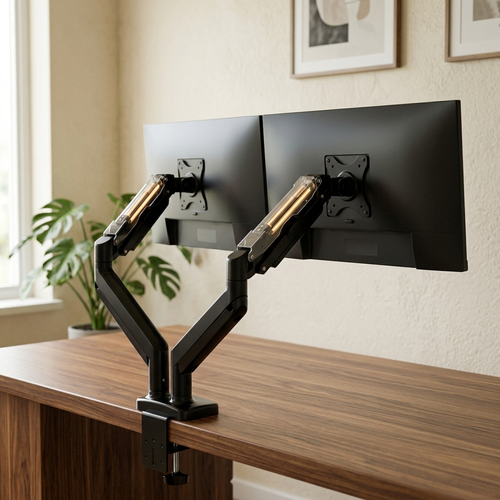
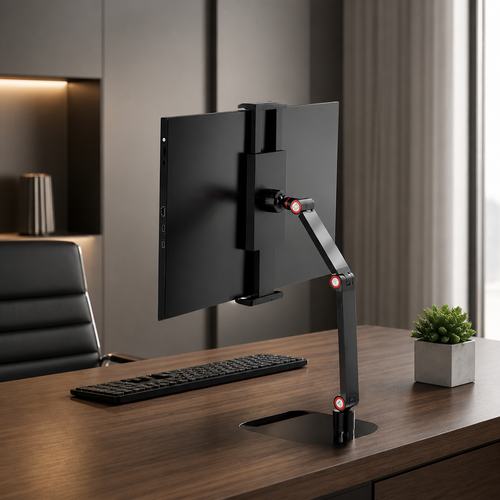
Yes, because a laptop alone forces you to choose between neck strain and wrist strain. To protect your posture, you must separate the display from the keyboard. Using a laptop stand or a monitor arm allows you to align the screen with your eyes while using an external keyboard at elbow height. This simple change stops the "laptop slouch" that leads to long-term discomfort during long sessions.
How do I know if my desk height is actually ergonomic?
Your desk is at the right height when your shoulders are relaxed and your elbows stay at a 90-degree angle while you are typing. If your feet don't touch the floor comfortably at this height, you need a foot rest to stay grounded. Proper alignment ensures you aren't reaching up or hunching down; this keeps your focus on the work rather than your physical fatigue.
Can ergonomic accessories help with existing back or neck pain?
Intentional tools help by removing the physical stressors that cause pain in the first place. Equipping your space with ergonomic desk accessories like lumbar pillows or monitor arms can reduce the constant strain on your spine and neck. While these objects aren't medical devices, they build a workspace that stops the cycle of daily fatigue and allows your body to feel supported while you work.
From the catalog