June 5, 2026
Ergonomic Desk Accessories for Productivity: Build a Workspace Made for the Work

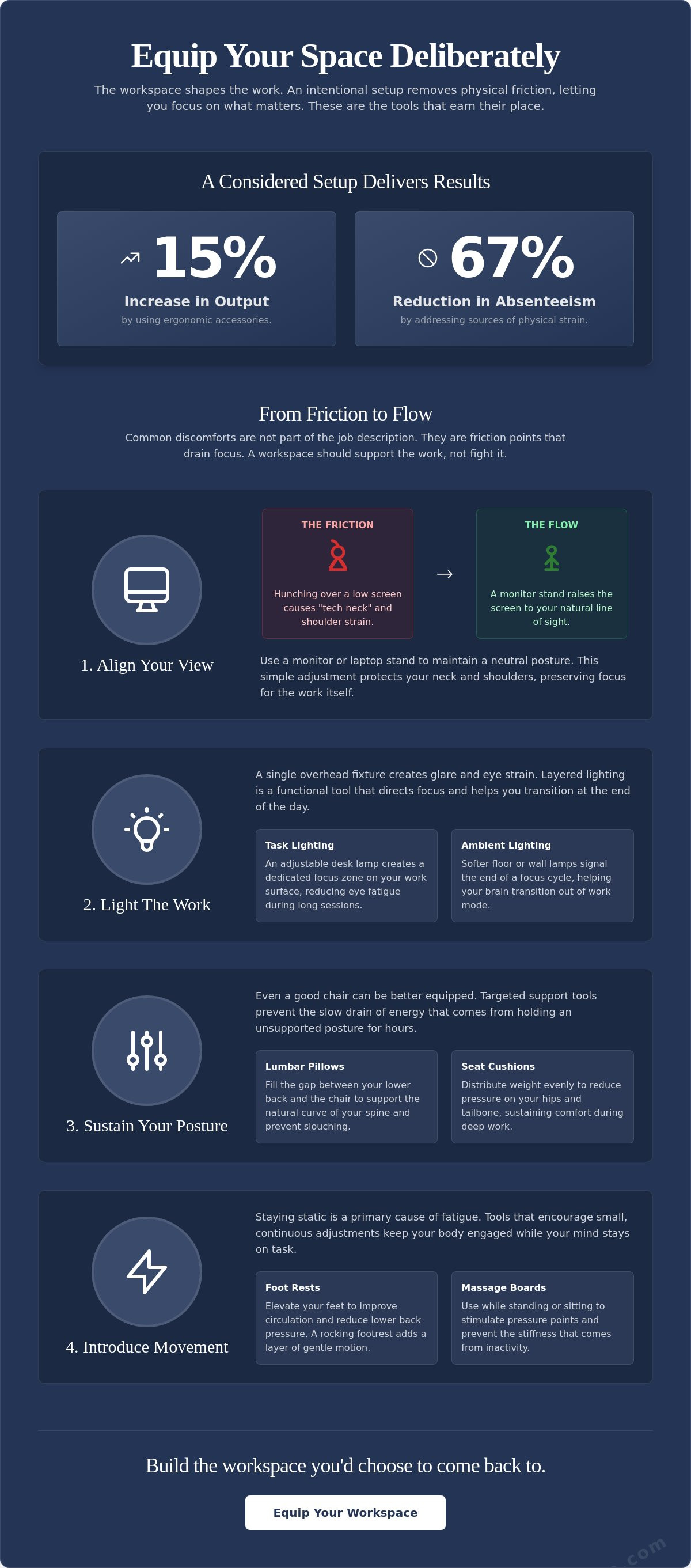
The workspace shapes the work. Equip it deliberately. Research from early 2026 shows that using ergonomic desk accessories for productivity can increase output by 15% and reduce absenteeism by up to 67%. As new safety standards like Washington's ESSB 5217 take effect this year, it's clear that a considered setup is no longer optional for anyone who spends serious hours at a desk. These aren't just gadgets; they are the tools that determine how you feel at the end of a long session.
Most of us accept neck strain and lower back fatigue as unavoidable parts of the day. We let cluttered surfaces kill our focus because we haven't yet built a space designed for the way we actually move. You shouldn't have to fight your environment to get things done. We'll show you how to equip your desk with intentional tools that support your body and sharpen your focus for the hours ahead. From monitor arms to considered lighting, we're looking at the small objects that earn their place in a workspace made for the work.
Key Takeaways
- Learn why every object on your desk needs to earn its place to help you build a workspace made for the work.
- Discover how to select ergonomic desk accessories for productivity that reduce physical strain and keep your focus sharp.
- Understand the science of eye-level alignment and how tools like monitor arms protect your neck and shoulders.
- Equip your current chair with intentional tools like lumbar pillows and seat cushions to sustain your energy throughout the day.
- Explore how foot rests and massage boards introduce subtle movement into your routine to prevent fatigue during long sessions.
The Intentional Desk: Why Accessories Must Earn Their Place
The workspace shapes the work. Equip it deliberately. When you spend eight hours a day in one spot, every object on your desk should justify its existence. We don't view these tools as decor; we view them as functional advantages. Choosing the right ergonomic desk accessories for productivity isn't about following a trend. It's about building a space where you can actually get things done without your body paying the price at 5:00 PM.
To understand this approach, we look at the roots of the word. "Ergo" comes from the Ancient Greek for purposeful function in action, while "Vanta" represents the advantage you gain through a considered setup. When we talk about What is Ergonomics?, we aren't interested in clinical jargon or medical-grade aesthetics. We care about how your space feels when you're deep in a project. It's the difference between a desk that drains your energy and one that supports your focus.
To better understand how intentional tools can change your daily workflow, watch this look at some functional additions for your desk:
From Sitting to Working: The Shift in Perspective
A desk is a tool. You should treat it with the same intentionality as your laptop or the software you use to manage your projects. Too often, people fall into the trap of buying items because they look good in a photo or signal a certain level of success. Forget the trap of performative productivity. Focus instead on building a room that gets used. The best objects are the ones that earn their place through daily utility. When you equip your space with ergonomic desk accessories for productivity from a collection of workspace essentials, you're making a choice to own your environment rather than just occupying it.
The Advantage of a Considered Environment
Physical comfort translates directly into mental clarity. If your neck is strained from a poorly positioned monitor, your brain is busy processing discomfort instead of solving problems. By removing these physical friction points, you allow for longer focus cycles. There is a real psychological benefit to having a workspace you choose to come back to. It isn't about status; it's about making the work feel sustainable. When your tools are made for the work, the work itself becomes more fluid. Intentionality in your physical surroundings creates a steadier rhythm for your day.
Equipping Your Space: Tools for Posture and Focus
If you spend serious hours at a desk, the physical setup determines your output. Equipping your desk with ergonomic desk accessories for productivity means addressing the friction points that slow you down. It starts with how you position your primary tools. You shouldn't have to hunch or lean to see your screen. When you build a workspace around your natural posture, you remove the physical distractions that break your concentration.
The Foundation: Monitor and Laptop Positioning
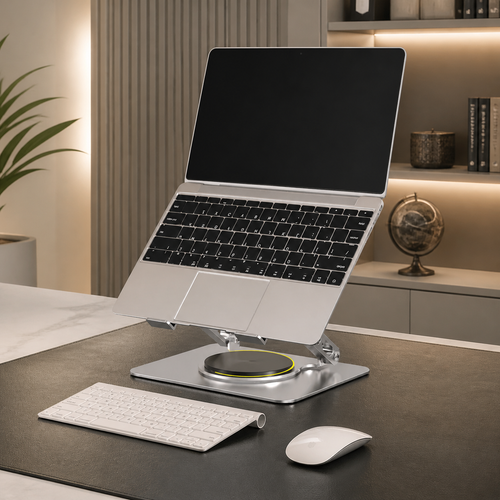
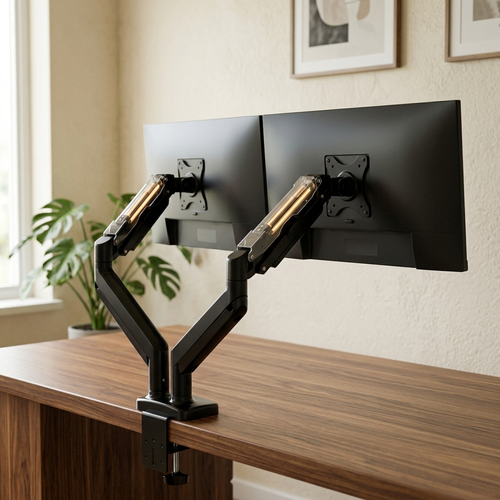
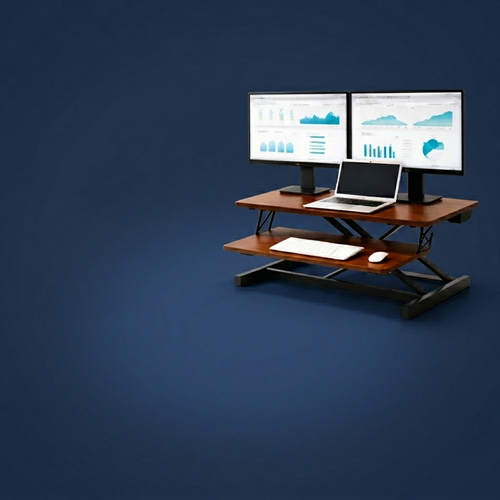
Eliminate "tech neck" by bringing your display to your natural line of sight. According to the OSHA Ergonomic Guidelines, maintaining a neutral body position is essential for preventing long-term strain. Using monitor and laptop stands ensures your neck stays straight while you work. A walnut monitor stand earns its place by doing double duty: it positions your screen correctly and clears desk real estate. This recovered space underneath the stand is perfect for the small objects you use daily, keeping your surface organized and intentional.
Lighting for the Work: Beyond the Ceiling Fixture
Lighting is a functional tool, not just a design choice. Relying on a single overhead fixture often leads to glare and eye strain, which can trigger headaches during long sessions. You need to layer your environment. Use desk lamps to create a dedicated focus zone. This task lighting should be adjustable so you can direct it exactly where the work is happening.
Consider the room around the desk too. The right lighting helps you transition out of work mode when the day is done. Wall lights or floor lamps can soften the atmosphere, signaling to your brain that the focus cycle has ended. If you need help deciding which tools will best fit your specific workflow, you can always get in touch with us for a second opinion.
The Final Layer: Comfort and Ritual in the Workspace
The final layer of your setup is about sustained endurance. You've already aligned your screen and fixed your lighting; now you must address how your body interacts with your seat for the long haul. Selecting the right ergonomic desk accessories for productivity ensures you aren't fighting your furniture while trying to finish a project. It's about making your existing chair and desk work harder for you through intentional additions.
Support That Does Not Look Like a Clinic
Lumbar support is a requirement, not an optional extra. If you spend serious hours at a desk, your lower back will eventually demand attention. You don't need a medical device that ruins the look of your room. You can find ergonomics and comfort items that blend with your home while providing the necessary structure. Following a guide on How to Set Up Your Desk helps you identify where your current setup is failing you. Complement your chair with foot rests or foot massage boards to encourage subtle movement. This prevents the stagnation that leads to late-afternoon fatigue.
The Small Objects That Earn Their Place
Organization is a form of ergonomics. A cluttered desk is a friction point that kills focus. Small tech device accessories, such as phone stands, keep your primary tools visible but out of the way. These are the considered items that earn their place by reducing the daily micro-annoyances of a messy surface. When you remove friction, you protect your focus cycles.
Once the functional tools are in place, focus on the ritual of the desk. Integrating decor and faux plants makes the environment feel like yours. These items aren't just for show; they define the atmosphere of the room that gets used. By choosing ergonomic desk accessories for productivity that you actually enjoy looking at, you build a space you'd choose to come back to. Build the room that supports the person doing the work. Ownership of your space is the ultimate advantage.
Build a Workspace That Supports Your Work
A desk shouldn't be a place you tolerate; it should be a space you've built to support the way you actually move. We've looked at how intentionality transforms your environment from a cluttered surface into a functional advantage. By prioritizing eye-level alignment and layering in comfort that doesn't look like it belongs in a clinic, you remove the physical friction that breaks your focus cycles. These are the small objects that earn their place through daily utility and considered design.
Investing in ergonomic desk accessories for productivity is about more than just posture. It's about personal ownership. Our tools are designed for the people who do the work, utilizing minimalist aesthetics and materials that feel as good as they function. If you're ready to stop fighting your furniture and start equipping your room for the long haul, we can help you find the right fit. Equip your workspace with the tools made for the work.
The rooms that get used are the ones that feel like yours. Build yours deliberately and get back to what matters.
Frequently Asked Questions
How do I start building an ergonomic desk setup on a budget?
Start by addressing your most immediate friction points. You don't need to equip your entire space in one afternoon. Focus on the objects that solve your most persistent discomfort, such as a laptop stand for neck strain or a lumbar pillow for back fatigue. Building a considered setup is a gradual process of adding intentional tools that earn their place on your desk through daily utility.
Can ergonomic desk accessories really improve my productivity?
Physical comfort directly supports mental output. Research from early 2026 indicates that using ergonomic desk accessories for productivity can boost performance by 15% while reducing absenteeism. When you aren't distracted by persistent neck pain or a cluttered surface, your brain can stay in a deep focus cycle for longer. These tools aren't just gadgets; they are the functional infrastructure for better work.
Do I need a monitor arm or is a monitor stand enough?
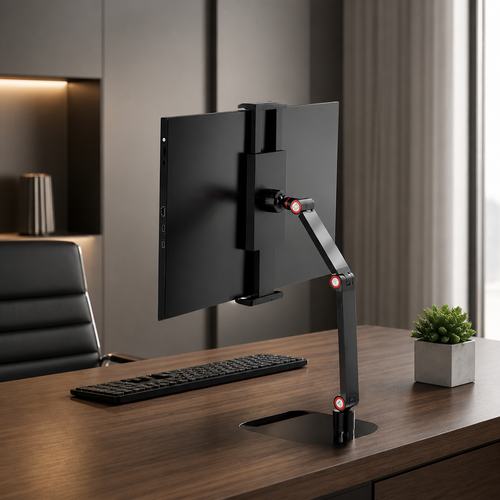
The choice depends on how you use your desk real estate. A monitor stand is a grounded choice for a fixed setup and provides useful storage space underneath the display. A monitor arm offers a greater range of motion and clears the entire desk surface. If you want a stable, minimalist look, a stand is often enough. If you need to move your screen frequently, an arm provides the functional advantage.
What is the most important ergonomic accessory for someone who works from home?
Eye-level alignment is the most critical starting point for any home setup. Most people spend hours hunched over a laptop or a low monitor, which creates the physical strain often called "tech neck." Using monitor arms or laptop stands to bring your display into your natural line of sight is the most effective way to build a workspace you'd choose to come back to. It's the foundation of a space made for the work.
From the catalog