October 2, 2026
Guide to Ceramic Vases and Desk Objects for Your Workspace
A desk object earns its place through proportion, purpose, and presence. A ceramic vase can add shape and texture, but the wrong size or placement can turn useful desk space into an obstacle. The goal isn’t to fill every corner. It’s to choose a few things that make the desk feel like yours.
Use this ceramic vases and desk objects guide to compare materials, sizes, functions, and visual styles. You’ll learn how to balance a vase with smaller accents, keep work zones clear, and combine forms without making the arrangement feel busy. A narrow surface may suit one compact object, while a larger desk can hold a vase without crowding the tools you reach for daily. Start with what the surface needs, then give the remaining space a little character.
Key Takeaways
- Choose a vase or desk object for its role, from holding stems to adding a focal point.
- Use silhouette, height, visual weight, and finish to shape the feel of your desk without crowding it.
- Compare ceramic with glass, metal, and wood based on your setup and how you use the space.
- Use a simple placement sequence to keep work zones clear and decor away from frequently used items.
- Build around one anchor object, then add only a few accents that support the mood or function you want.
Ceramic Vases and Desk Objects: What Belongs on a Working Desk?
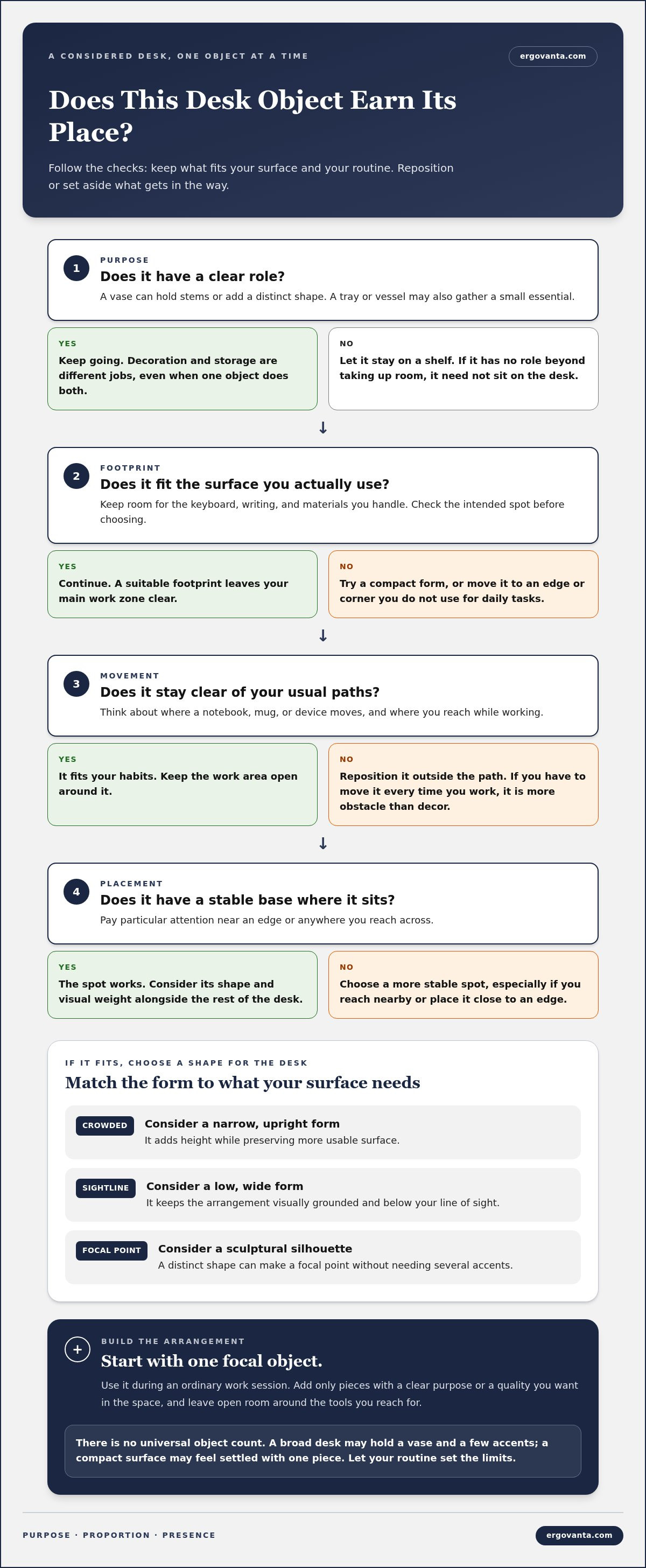
A useful desk object suits both the surface and your daily routine. A vase that leaves room for your keyboard, or a small accent that stays clear of papers you reach for, earns its place. If you have to move it every time you work, it’s less decor and more obstacle.
A desk-friendly ceramic vase or object has a clear role, a suitable footprint, and a place that doesn’t interrupt your work. It might hold stems, add a distinct shape, or organize a small essential. Some objects do more than one job, but decoration and storage aren’t automatically the same thing. A vase can simply add form; a tray or vessel may also keep small items together.
Ceramic art takes many forms. A brief look at the history of ceramic art offers context for the material beyond its role as desk decor. For your workspace, the practical question is simpler: does the piece fit the desk you use?
What makes a vase or desk object desk-friendly?
Look for a stable base, a manageable footprint, and a spot outside your main work zone. Keep the area where you write, type, or handle materials clear. A compact vase can add a different shape without claiming the whole surface, especially near an edge or in a corner you don’t use for daily tasks. If an object also holds essentials, make sure that function is genuinely useful, not just a reason to keep more things within reach.
Think about movement, too. If you regularly shift a notebook, mug, or device through a particular spot, don’t place decor in its path. Desk-friendly means it fits your habits, not an imaginary desk where nothing ever moves.
How many decorative objects should a desk hold?
Begin with one focal object. Use it during an ordinary work session, then add only pieces with a clear purpose or a quality you want in the space. A small accent might give a quiet corner character; a useful container might keep a frequently used item together. If an object has no role beyond taking up room, it can stay on a shelf.
There’s no universal object count. A broad desk may have room for a vase and a few accents, while a compact surface may feel settled with one piece. Leave open space around your work tools. It gives your hands room to move and lets each object read clearly, instead of turning the desk into a display that happens to contain a laptop. Let your routine set the limits.
How Ceramic Shape, Finish, and Scale Change a Desk’s Feel
Shape sets the rhythm. A rounded vase softens a desk of straight-edged screens and notebooks; a narrow, angular piece adds a sharper note. Height matters, too. A low form keeps sightlines open, while a taller silhouette draws the eye upward without using much surface area. Make sure its footprint feels stable, especially near an edge or a spot you reach across.
Visual weight describes how substantial an object appears, not just its measurements. A broad, dark shape can feel prominent beside a slim lamp, while a taller, lighter-looking form may seem less dominant. Ceramic pieces vary in shape and finish, so consider the individual object rather than assuming they will all look alike. For background on changing ceramic forms and techniques, see this overview of the history of modern ceramic style.
| Desk situation | Shape to consider | Visual effect |
|---|---|---|
| Compact or crowded surface | Narrow, upright form | Adds height while preserving more usable surface |
| Open sightline needed | Low, wide form | Keeps the arrangement visually grounded and below your line of sight |
| Desk needs a focal point | Sculptural silhouette | Creates a distinct shape without needing several accents |
Which vase shape suits a small or crowded desk?
Choose by footprint first. A narrow base can leave more room for daily work, while a low-profile shape is less likely to interrupt the view across your desk. Taller forms can work outside your main sightline, but consider their stability and how often you reach nearby. Measure the intended spot before choosing. A quick check beats discovering your new focal point occupies the mouse’s parking space.
How do ceramic finishes affect the overall arrangement?
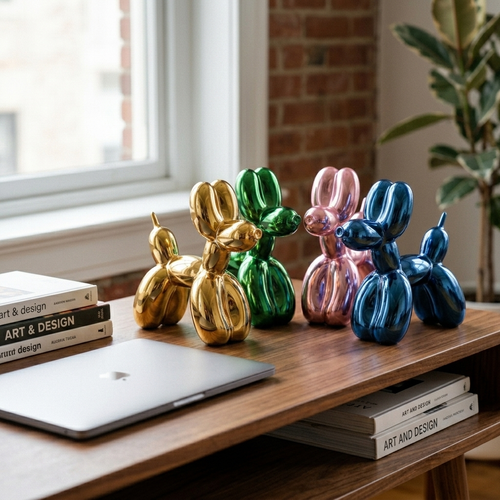
A glossy or smooth finish tends to catch the eye through reflected light; matte or textured surfaces usually draw attention through a quieter, tactile appearance. Treat these as visual differences, not guarantees about durability or care. A matte piece can balance a reflective glass surface, while a glossy form may add contrast beside wood or metal. Explore sculptural decor styles if you’re drawn to more pronounced forms.
Consider shape and finish alongside the pieces already in your room. Start with one contrast, such as a smooth form against visible wood grain, then pause before adding another. Ergovanta offers sculptural decor and other accents for building a desk arrangement that feels considered without being overfilled.
Ceramic Versus Glass, Metal, and Wood Desk Accents
Choose a material that works with what’s already on your desk, not just what caught your eye online. Ceramic adds an opaque form and can bring visual texture; glass keeps the surface feeling open; metal introduces a reflective accent; wood adds visible grain and a natural note. The shape and size of each piece still determine how much desk space it uses.
If your desk already has reflective screens and metal accessories, a ceramic or wood accent can add softer visual contrast. If it has darker, solid forms, glass may create a lighter-looking counterpoint. Treat that as a starting point, not a rule. Match the object to its role, its footprint, and the mix of materials in your space.
| Material | Visual character | Consider for your desk |
|---|---|---|
| Ceramic | Opaque, with appearance shaped by its form and finish | A distinct shape or surface contrast beside screens, wood, or metal |
| Glass | Transparent or visually light | A desk where you want an accent that doesn’t block the view of surfaces behind it |
| Metal | Reflective, with a crisp visual presence | A setup that already uses metal details or benefits from another reflective element |
| Wood | Grain-led and visually warm | A natural-looking counterpoint to glass, metal, or smooth surfaces |
When does ceramic make more sense than glass or metal?
Consider ceramic when you want an opaque shape or a tactile-looking surface, rather than something transparent or reflective. Glass can preserve a sense of visual openness, while metal may echo details already present in a lamp or desk accessory. None is automatically the better choice. Decide whether the arrangement needs contrast, continuity, or simply one object that feels at home. Trends can wait. Your desk has to work on Monday.
How can wood and ceramic work together on a desk?
Wood grain and a ceramic surface can create contrast without making the arrangement feel disconnected. Give them a shared detail: repeat a color in another small object, or echo a rounded shape elsewhere on the desk. Balance the forms and number of accents so each material has room to register. If you’re comparing finishes for this kind of pairing, browse wood decor options.
Material alone doesn’t determine an accent’s footprint or handling needs. Check its shape and size, and think about where you’ll place it and how often you’ll move it. Keep objects within easy reach, away from the edge, and out of the route your hands take during work. The most useful ceramic vases and desk objects guide helps you make choices for your setup instead of declaring one material the winner.
Where to Place a Ceramic Vase and How to Care for It
Place an object where it’s easy to see and easy to work around. A vase can sit in a desk corner or on a nearby secondary surface, as long as it doesn’t interrupt your view, reach, or routine. Keep it clear of electronics, papers, and items you move often. Choose a spot where the vase can be seen without taking over the space your work needs.
Where should a vase sit on a desk?
Test the spot before settling on it. Clear the surface, identify your main work zone, and place the vase in a corner or secondary area. Check it from your usual seated position, then reach for the items you use throughout the day. Make sure it doesn’t block your monitor sightline, crowd the space used by your dominant hand, or cross a cable path.
If the vase will hold flowers or water, leave extra distance from electronics and papers. Keep it away from the edge and from places where your arm, sleeve, or a frequently moved object might catch it. Add other desk accents only after the vase has a practical spot of its own.
How should ceramic desk objects be cleaned and handled?
Handle ceramic objects gently, and use a suitable cleaning approach. Care depends on the object’s finish and construction, so follow any product-specific instructions rather than assuming every piece should be cleaned the same way. Keep the care guidance somewhere easy to find.
Keep small objects on a stable surface, away from desk edges and high-traffic areas. Recheck their position after rearranging your workspace, not just on the day they arrive. A spot beside a monitor may look clear until a cable needs attention or a notebook starts making regular visits there.
- Clear the surface. Move aside items that aren’t part of your everyday setup.
- Mark the work zone. Leave room for your hands, tools, and usual movements.
- Test the vase placement. Check sightlines, reach, cables, and distance from electronics and papers.
- Add supporting objects. Keep only accents that fit without crowding the work area.
A ceramic vases and desk objects guide should help you make an arrangement work in real life, not just from one carefully chosen angle. Recheck the setup during a normal work session. If you have to keep shifting the vase to get things done, move it.
Build a Personal Desk Arrangement with Vases and Small Objects
A considered desk arrangement starts with one anchor object. It might be a vase, a figurine, or another accent that gives your setup a point of focus. Place it outside your primary work zone, then leave some open space around it. Empty space is part of the arrangement, not a request for more decor.
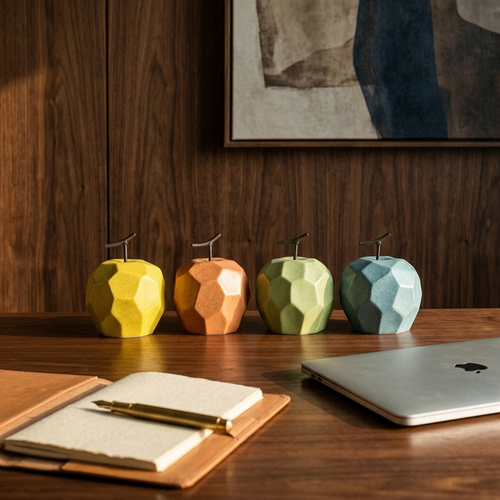
Build outward only when another object adds something useful or meaningful. A small desk object you reach for often can sit nearby; a second accent might add a shape or color that balances the anchor. Ergovanta offers vases, figurines, accent pieces, and small desk objects. Think in terms of roles rather than matching sets, with each piece contributing something different.
How do you style a desk vase without creating clutter?
Give the vase breathing room and keep it clear of the area where you type, write, or move work materials. If you add smaller objects, choose one or two with a clear visual or practical role. A low accent beside a taller vase can create variety, while repeating one color elsewhere helps the pieces feel connected without making them identical. Prefer fewer visual elements? Explore minimalist decor ideas.
Try the arrangement during a normal work session. If you need to shift an object to reach a notebook or clear space for a task, adjust its position or remove it. Your desk doesn’t need to pass a styling exam. It needs to work for you.
Which desk objects make an arrangement feel personal?
Choose objects tied to your routine, interests, or everyday use rather than filling every open spot. A useful small object can keep a daily essential close; a figurine or accent can add a detail you enjoy seeing between tasks. Pair function with a little character. That balance makes the setup feel personal without turning the desk into a shelf with a keyboard.
For cohesion, vary heights and shapes, then repeat a color or visual detail across a few pieces. For example, let one accent echo a color already present in your desk accessories while keeping the main objects distinct. Start with what you genuinely want nearby. Add only what earns its place.
Use this ceramic vases and desk objects guide to build an arrangement around your actual work habits and preferences. Choose an anchor, leave room to work, and let the smaller details be yours.
Build a Desk That Feels Like Yours
The right desk objects balance presence with purpose. Choose a vase or accent that suits your available space, consider how its shape and finish work with nearby materials, and keep it clear of the area you rely on for daily tasks. A stable, intentional arrangement doesn’t need to fill every open spot.
Start with one anchor, then add only pieces that support your routine or bring a detail you enjoy. Ergovanta offers vases, figurines, accent pieces, and small everyday desk objects to help you make the setup your own. Follow product-specific care guidance, and give each object a place that works beyond the photo.
Start with what you use and what you like seeing each day. Leave room for the work, and let the small details make the space feel more like yours.
Frequently Asked Questions
How do you choose the right ceramic vase for a desk?
Choose a vase that fits your available space and the way you use your desk. Check its footprint, height, shape, and finish, then decide where it can sit without crowding your main work area. A stable-looking form in a secondary spot may suit a busy desk; a more sculptural shape can work where there’s room to notice it. Start with your routine, not a trend.
Are ceramic vases practical on a work desk?
Yes, a ceramic vase can work well if it has a suitable place and doesn’t interrupt your work. Keep it away from electronics, papers, cables, and items you move often. An empty vase can add shape on its own, while one used for flowers has a clear decorative role. If you find yourself shifting it throughout the day, move it to a nearby surface instead.
What size vase works best on a small desk?
A vase with a compact footprint is often easier to fit on a small desk, but the right size depends on your space and daily setup. Measure the intended spot, including room to reach nearby objects. A low shape can keep sightlines open; a taller, narrow form can use vertical space if it sits securely and doesn’t block your view or work area.
Can you put water and fresh flowers in a ceramic desk vase?
Use a ceramic vase for water and fresh flowers only if its product guidance says it’s suitable for that use. Decorative vessels can differ in finish and construction, so don’t assume every vase is intended to hold water. If it is suitable, place it on a stable surface away from electronics, papers, and cables. Leave enough room to lift and move it without crossing your work zone.
How do you clean a ceramic vase or desk object?
Handle it gently and follow any product-specific care instructions. If no other guidance is provided, start with a soft, suitable cleaning approach rather than abrasive materials or forceful scrubbing. The right method depends on the object’s finish and construction, so don’t assume all ceramics can be cared for alike. Keep the piece away from desk edges while cleaning, then return it to a stable spot.
What desk objects pair well with a ceramic vase?
Pair a vase with objects that add a useful role or a detail you enjoy, such as a small everyday desk object, a figurine, or an accent piece. Varying heights can make the arrangement feel balanced, while repeating a color or shape helps connect pieces without requiring a matching set. Keep the objects outside your main work zone, with enough open space to use the desk comfortably.
How can you decorate a desk without making it feel cluttered?
Start with one focal object, then add only accents that support your routine or the feel you want. The simple test is whether you can see and use what you need without moving decor first. Keep breathing room around each piece, use open space deliberately, and remove anything that has no clear purpose or personal meaning.
Disclaimer
Ergovanta publishes these guides to help people set up better workspaces. Product recommendations reflect what we sell. Specifications, prices and availability are accurate at the time of writing and may change. Nothing here is medical, ergonomic or professional advice; if you have a specific health concern about your workstation, speak to a qualified professional.
From the catalog