July 14, 2026
Modern Floor Lamps: Equip Your Workspace with Intentional Lighting

The workspace shapes the work. Equip it deliberately. If you spend serious hours at a desk, your overhead lighting is likely failing you, causing eye strain and fatigue before your day is half over. Integrating modern floor lamps into your setup isn't about decoration; it's about reclaiming your desk surface and controlling how light hits your workspace without adding to the clutter.
You probably realize that a poorly lit room makes the work harder than it needs to be. It's difficult to stay focused when you're squinting at a screen or fighting shadows. Moving your light source to the floor is a considered choice that clears your desk for the tools that actually need to be there. It's about building a space that feels like yours through intentionality and functional ownership.
This article explains how to choose and position floor lighting to build a workspace that works as hard as you do. You'll learn which lamp types solve specific lighting problems, how to navigate current energy efficiency standards, and how to pick equipment that fits a minimalist aesthetic. It is time to equip your room for the work you actually do.
Key Takeaways
- Learn how modern floor lamps clear your desk surface and provide the layered lighting needed to reduce shadows and eye strain.
- Identify which lamp designs, from arc lamps to task lighting, solve the specific lighting problems of your unique workflow.
- Understand intentional placement rules to avoid monitor backlighting and ensure your equipment supports your natural movement.
- Equip your workspace with considered lighting that defines the room and builds an environment you actually want to work in.
Building Your Space: The Role of Modern Floor Lamps
The workspace shapes the work. Equip it deliberately. Many people treat lighting as an afterthought or a piece of decor for a living room, but in a workspace, lighting is a structural tool. Modern floor lamps earn their place by defining the boundaries of your desk area and creating a zone dedicated to the task at hand. By moving the light source to the floor, you reclaim surface area for the objects that actually need to be within reach.
To better understand how different lighting styles impact a room, watch this helpful video:
Why Overhead Lighting Fails the Work
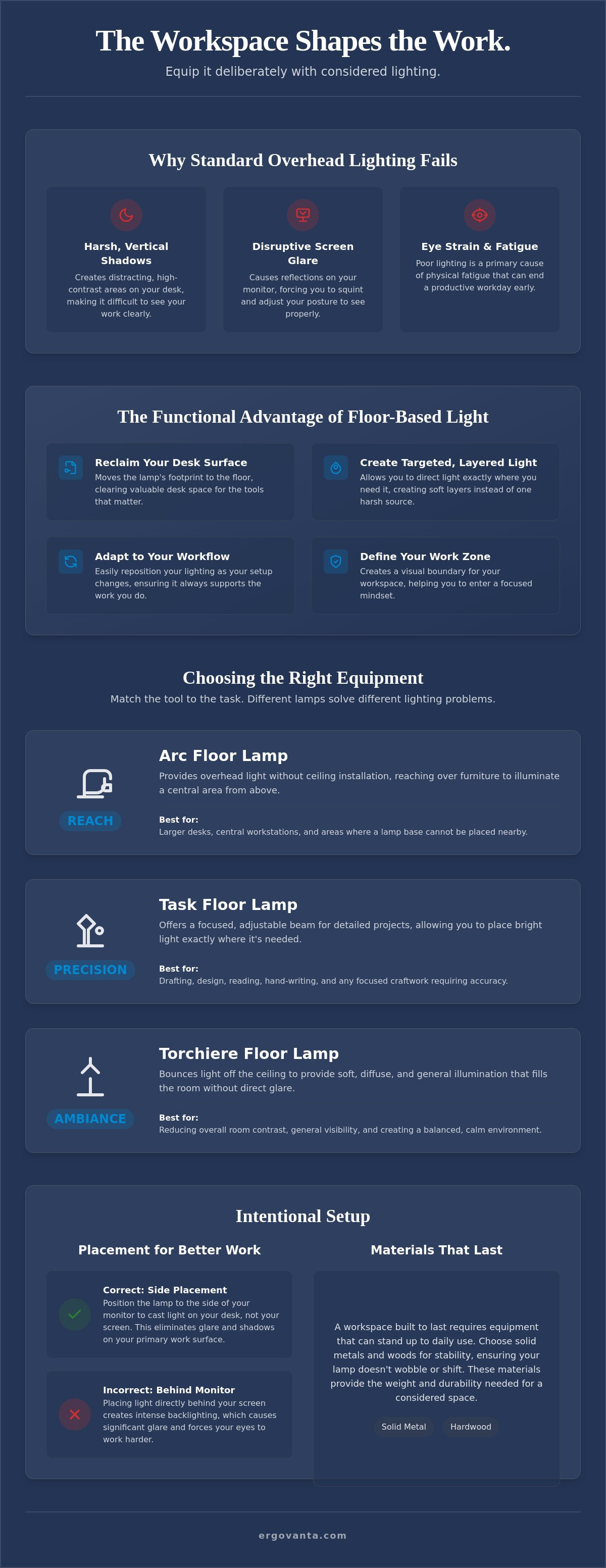
Ceiling lights are often the default, but they're rarely the best choice for long hours. They create harsh, vertical shadows and cause glare on screens, leading to the kind of eye fatigue that ends a workday early. A considered workspace uses Ergovanta lighting to build ambient layers. This approach softens the room while providing targeted illumination where you need it most. It's about intentionality. Even iconic modern floor lamp designs were originally built with this purposeful function in action: to provide overhead light without the permanence of a ceiling fixture.
The Functional Advantage of Floor-Based Light
The most immediate benefit is the physical space you gain. When the lamp base is on the floor, your desk is clear for monitor arms, laptop stands, or a clean writing surface. Modern floor lamps are also adaptable. As your workflow changes or your room layout evolves, you can reposition your equipment to maintain the right light spread. It's a flexible system made for the work, ensuring your lighting setup remains as mobile as your ideas.
Using floor lamps allows you to separate your work zone from the rest of the room. This visual cue helps you switch into a focused mindset the moment you step into the light. It is a simple way to build a room that gets used exactly how you intended.
Choosing the Right Equipment: Types of Modern Floor Lamps
Equip your space based on the specific work you do. Different tasks require different light spreads; choosing the wrong one leads to frustration. Modern floor lamps are not one-size-fits-all solutions. They are specific tools designed for specific environments. If you are drafting by hand, your needs differ from someone who spends ten hours a day staring at a high-resolution monitor.
Arc lamps provide overhead light without the need for ceiling installation. They are made for the work that happens at a desk, reaching over furniture to light a central area. Task floor lamps offer adjustable necks for precision. These are considered tools for creators and designers who need light exactly where the pen meets the paper. For general visibility, torchiere lamps bounce light off the ceiling to provide a soft, intentional glow. This fills the room without blinding you, creating a balanced environment that supports long-term focus.
Arc vs. Task Lamps: Which Earns Its Place?
The choice between an arc and task lamp comes down to reach versus precision. An arc lamp is a tool for reaching over furniture to light a central workspace, making it ideal for larger desks where a standard lamp cannot reach. Conversely, task lamps provide a focused beam for detailed projects. When selecting floor lighting, choose based on your desk size and the depth of your workstation. Proper placement is key to maintaining ergonomic lighting for computer work, as it helps minimize screen glare and reduces the constant squinting that leads to headaches.
Materials That Last
Avoid flimsy plastics. A workspace built to last requires materials like solid metal or wood that stand up to daily use. These materials provide the weight needed for stability, ensuring your equipment does not wobble every time you adjust the arm. Minimalist designs integrate seamlessly with other workspace essentials, ensuring the room feels cohesive rather than cluttered. Objects that earn their place are those that combine durability with purposeful function. If you have questions about how these pieces fit into your specific layout, you can reach out for more information.
Placing Your Lamp: Intentional Layouts for Better Work
Placement is as important as the lamp itself. You can choose the most considered equipment, but if it sits in the wrong corner, it is just a hurdle. Position your modern floor lamps to support your natural workflow rather than fighting against it. A common mistake is placing a lamp directly behind your monitor. This creates a harsh backlighting effect that strains the eyes as they try to adjust to two different light levels simultaneously. Instead, set your lamp to the side of your dominant hand. This simple adjustment ensures your hand does not cast a shadow across your notes while you are writing or sketching.
The 4-Step Placement Guide for Your Workspace
Building an intentional layout requires a systematic approach to your environment. Follow these steps to ensure your equipment earns its place:
- Identify the surface: Determine the primary area where you do the work, whether it is a keyboard tray, a tablet, or a physical drafting board.
- Find the angle: Position the lamp at a 45-degree angle to your screen. This specific angle is the most effective way to eliminate glare and reflections.
- Adjust the height: Set the light source above eye level. Ensure the bulb is shielded from your direct line of sight to prevent distracting "hot spots" in your peripheral vision.
- Manage the floor: Ensure the base is stable and secure all power cords using tech-device accessories. This keeps your workspace streamlined and prevents safety hazards.
Managing Glare and Eye Comfort
If you suspect your lighting is causing fatigue, use a simple mirror test. Place a small mirror on your screen; if you can see the reflection of the light bulb, your lamp is positioned incorrectly and will cause eye strain over time. Beyond physical placement, consider the color temperature of your light. Cool, blue-toned light is made for the work during the morning hours to keep you alert and focused. As the day ends, transition to warmer, amber tones. This shift signals to your body that it is time to wind down, ensuring your workspace remains a place you choose to come back to every day.
Equip Your Space for the Work Ahead
The room around your desk matters more than you think. By shifting to modern floor lamps, you move beyond basic visibility and start building a functional environment. You've seen how the right arc or task lamp clears your desk while the correct placement protects your eyes from unnecessary strain. These aren't just decorative objects; they are considered tools made for the work.
At Ergovanta, we value considered designs for the people who do the work. Our collection prioritizes a minimalist aesthetic that fits any intentional space, utilizing durable materials that earn their place. It is about personal ownership of your environment and ensuring every object serves a purposeful function in action. When your lighting is intentional, your focus follows.
Build a better workspace with Ergovanta lighting. Stop settling for a room that fights you. Equip it deliberately and build a workspace you'd actually choose to come back to.
Common Questions About Workspace Lighting
How tall should a modern floor lamp be for a desk setup?
The light source for modern floor lamps should sit above your eye level but below the top of your monitor to avoid glare. Usually, this means looking for equipment between 58 and 64 inches tall. If the lamp is too short, you'll end up with shadows on your work surface; if it's too tall, the bulb might shine directly into your eyes. Aim for a height that allows the light to spread evenly across your primary zone.
Can a floor lamp replace a traditional desk lamp?
Yes, a floor lamp can effectively replace a desk lamp while clearing up valuable surface area. This is a considered choice for those who use monitor arms or large laptop stands and don't have room for a bulky base. By moving the light to the floor, you maintain a minimalist aesthetic without sacrificing the focused illumination needed for deep work. It's about building a space that feels open and organized.
What is the best type of floor lamp for a small home office?
An arc lamp or a slim torchiere is often the best choice for constrained spaces. Arc modern floor lamps are particularly useful because the base can sit in a corner while the light reaches over your desk. This provides overhead illumination without requiring a permanent ceiling fixture. If you only need ambient light, a torchiere uses vertical space to bounce light off the ceiling, making a small room feel less cramped.
Do LED floor lamps provide enough light for detailed work?
LED floor lamps provide more than enough light for detailed tasks, provided you choose the right lumen output. Most people find that 800 to 1,100 lumens is the sweet spot for reading or sketching. LEDs are made for the work because they don't emit the heat of older halogen bulbs, keeping your workspace comfortable during long sessions. Look for adjustable brightness to match the light to the time of day.
From the catalog