October 16, 2026
Scandinavian Design Floor Lamps: A Practical Guide to Choosing One
The floor lamp that suits your room best isn’t always the one with the most striking silhouette. Scandinavian design floor lamps are known for clean lines and restrained forms, but good design has a practical job: provide light that works for the way you use your space.
Choosing one takes more thought than a style label suggests. Listings use “Scandinavian” in different ways, and a shape that looks right in a photo may not give you the light you need. The shade, materials, and overall scale also need to work with the room around them.
This guide covers common features of Scandinavian floor lamp design, then helps you choose based on your room, lighting purpose, materials, and available space. Use the style as a starting point, not a strict formula. The right lamp is the one that fits your room and earns its place there.
Key Takeaways
- Look for functional lighting, uncluttered forms, and a calm visual presence, not a rigid checklist of style rules.
- Choose ambient, task, or accent light according to what the room needs. A floor lamp is usually one part of a wider lighting setup.
- Compare materials and shade styles by their visual weight and how they work with your existing furnishings.
- Before choosing among scandinavian design floor lamps, define the lamp’s purpose, plan its placement, and measure the available footprint.
- Use your room and lighting criteria to browse Ergovanta’s Scandinavian-style collection with a clearer sense of what fits.
What Defines Scandinavian Design in Floor Lamps?
Scandinavian floor lamp design often combines functional lighting, uncluttered forms, and a calm visual presence. The lamp should do useful work without demanding that every other object in the room move aside.
Scandinavian design in a floor lamp is a visual approach, not a product specification: it pairs practical light with restrained form and a sense of ease. That distinction matters when listings use the same style label for lamps with very different shapes and materials. Treat these traits as recurring cues, not a checklist every lamp must satisfy. A piece can suit the style without using a particular material or matching one template.
A floor lamp adds a vertical light source without requiring a table or a furniture rearrangement. Place one beside a reading chair, near a desk, or in a dim corner, and it can bring light to an area that an overhead fixture may not serve as well. The footprint still matters, but a floor lamp can work where there is no spare surface.
Common shapes, materials, and visual cues
Look for simple silhouettes, clear proportions, and restrained detailing. A narrow stem, uncomplicated shade, or gently curved arm may suggest this approach, but no single outline defines the style. Wood, fabric, glass, and metal are possible material choices, each with a different texture and visual weight. They’re options to consider, not features shared by every Scandinavian-style lamp.
A limited palette can help a lamp sit quietly with its surroundings. That doesn’t mean your room needs to be all white. Wood tones, muted colors, darker accents, and existing textiles can all contribute to a composed mix. Ask whether the lamp feels connected to the room, rather than whether every surface matches.
Scandinavian design and neighboring styles
Scandinavian design and mid-century modern often share clean lines, practical thinking, and an appreciation for simple forms. Their visual emphasis can differ: mid-century pieces may lean toward distinctive curves, tapered shapes, or a stronger sculptural presence, while Scandinavian design often keeps the effect quieter and focused on everyday use. These are broad tendencies, not rules that every lamp follows.
Minimalism overlaps with Scandinavian design, but the terms aren’t interchangeable. Minimalism can describe a preference for fewer visual elements across many design traditions. Scandinavian design has its own history and broader principles around useful objects and considered form. The overview of Scandinavian design principles offers useful context beyond lighting.
Don’t let a trend label make the decision for you. With scandinavian design floor lamps, judge the actual shape, materials, and presence in your room. Ergovanta’s Scandinavian-style collection is a place to browse once you know which cues matter to you.
How Scandinavian Floor Lamps Shape a Room’s Light
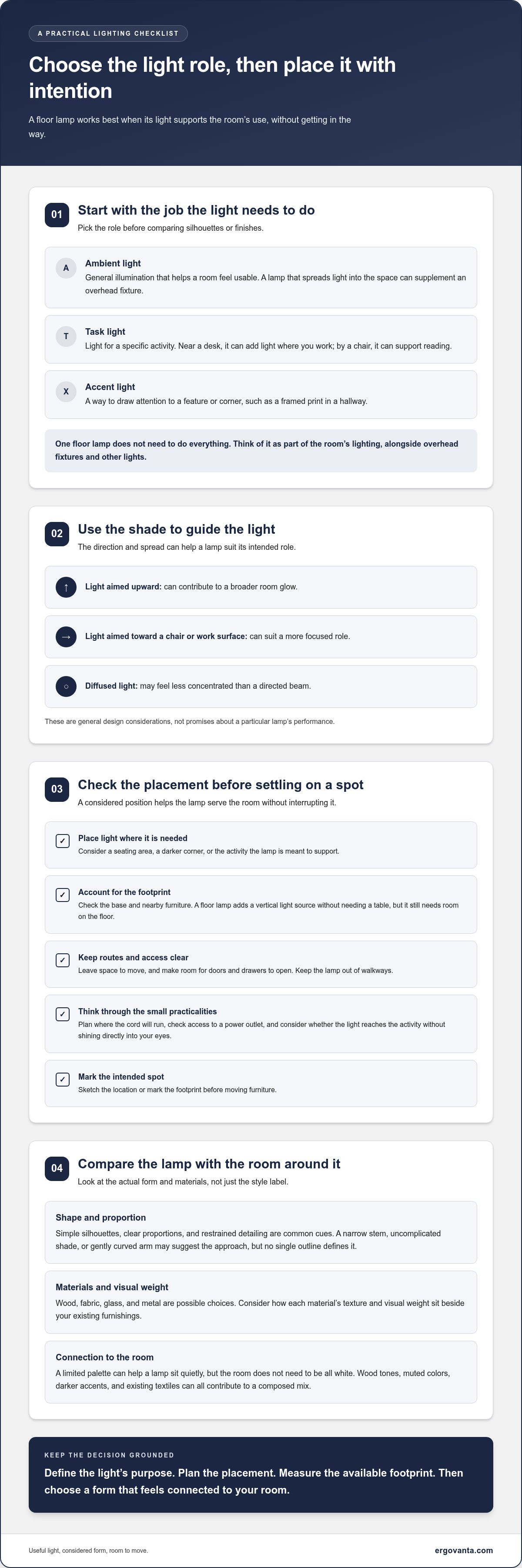
A floor lamp can change how a room works without replacing the ceiling light or requiring a new layout. It adds light at a different height, helping brighten a shadowy area or support a particular activity. Decide what the light needs to do before comparing silhouettes.
Match a floor lamp’s role to the room’s lighting plan: use it for general glow, focused activity, or a detail you want to notice. One lamp won’t necessarily cover every need. Think of it as part of the room’s lighting, working alongside overhead fixtures and other lights rather than carrying the whole scene alone.
Ambient light, reading light, and accent light
Ambient light is the general illumination that helps a room feel usable. In a living room, a floor lamp that spreads light into the space can supplement an overhead fixture, especially in the evening. Task light supports a specific activity. In a study, a lamp positioned near a desk can add light where you work. Accent light draws attention to a feature or corner, such as a framed print in a hallway.
Shade direction helps shape the intended effect. A shade that directs light upward can contribute to a broader room glow; one aimed toward a chair or work surface can suit a more focused role. Diffused light may feel less concentrated than a directed beam. These are general design considerations, not promises about a particular lamp’s performance.
Start with the job. If you’re comparing scandinavian design floor lamps before deciding whether you need reading light or a calmer background glow, you’re choosing the outfit before checking the weather. Identify the activity first, then compare forms and finishes that suit it.
Choosing a placement that feels intentional
Place the lamp where its light can reach the intended area without turning a walkway into an obstacle course. Near a seating area, it can support reading or conversation. Beside a darker corner, it can add a distinct pool of light. Before settling on a spot, account for the base, nearby furniture, and access to a power outlet.
Consider what the lamp sits beside. A floor lamp next to a low chair can help balance that part of a room vertically, while a larger piece of furniture may already provide enough visual weight. Leave space for people to move and for doors or drawers to open. The goal isn’t to fill every empty corner. Place light where the room needs it, while keeping the route through the room clear.
Sketch the location or mark the intended footprint before moving furniture. Then consider where the cord will run and whether the light will reach the activity without shining directly into your eyes. These small placement decisions can make a lamp feel like part of the room rather than a late addition.
For questions about Ergovanta’s floor lamps, contact Ergovanta.
Scandinavian Floor Lamps Compared: Materials, Shades, and Styles
Material and shade choices affect how a floor lamp sits visually in a room. Compare them with what’s already there: furniture, flooring, textiles, and the amount of visual detail you want. When coordinating with high-end home furnishings from benjaminmaxwell.net, thoughtful material pairings help create a balanced, cohesive look. A lamp doesn’t need to match every surface. It needs a reason to belong.
How materials change the feel of a lamp
Wood can bring warmth and visible grain. Metal often reads as crisp, while glass may feel visually light and fabric can add softness or texture. These are broad impressions, not guarantees about a lamp’s weight, durability, or light quality. Check the individual product details to see which materials are used.
| Material | Common visual impression | May suit |
|---|---|---|
| Wood | Warm, with visible grain | Rooms with wood furniture or natural textures |
| Metal | Crisp, defined lines | Spaces with other clear, structured details |
| Glass | Light or reflective | Rooms where a solid shape might feel heavy |
| Fabric | Soft, textured | Spaces with textiles or a quieter visual mood |
Shade opacity also changes the impression. An opaque shade reads as a more defined shape; a translucent one can appear lighter and show more of the light source through its material. Those are visual comparisons, not promises about brightness or how a specific lamp distributes light. Check the product details and consider how the shade will look beside nearby colors and textures.
Scandinavian design doesn’t require pale wood, white walls, or a room with almost nothing in it. A darker floor, colorful rug, or well-used bookshelf can all work with a considered lamp choice. Relate the lamp’s color and finish to one or two existing elements, then let the rest of the room be itself. The Scandinavian-style collection gives you a place to compare options through that lens.
Scandinavian, minimalist, or mid-century modern?
These labels overlap, but they aren’t interchangeable. Use them as clues about visual emphasis, not rules for what can share a room. A single space can mix styles: the pieces don’t need matching labels, just a thoughtful relationship in shape, color, or material.
| Style label | Shared traits | Useful distinction |
|---|---|---|
| Scandinavian | Simple forms, practical intent | Often balances function with a calm, welcoming feel |
| Minimalist | Restraint and reduced detail | Focuses on limiting visual elements across styles |
| Mid-century modern | Clean lines and practical forms | May lean more toward distinctive curves or sculptural shapes |
For scandinavian design floor lamps, the useful comparison isn’t “Which label is correct?” but “What will this form add to my room?” A restrained lamp can sit comfortably beside a more sculptural chair or a patterned rug. Choose the visual balance you want instead of trying to make every object follow the same design vocabulary.
How to Choose a Scandinavian Floor Lamp for Your Space
Choose by need, then by look. This keeps the search for scandinavian design floor lamps grounded in how your room is used, not just how a product photo is staged. Work through these steps in order.
- Define the light’s purpose. Decide what the lamp should support: reading, working, adding a general glow, or drawing attention to a corner. Think about when you use the room, too. A spot used for evening reading may call for a different light role than a room that mostly needs a softer backdrop after dark.
- Choose the placement. Pick the chair, desk, or corner the light should serve. Consider where the shade will face and how nearby furniture might affect the light. Keep walkways clear, leave room for doors and drawers, and make sure the placement works with access to a power outlet.
- Assess the available space. Measure the floor area you can give the lamp, including the base’s intended footprint. Compare listed product dimensions with that spot, and consider the lamp’s height in relation to the ceiling and nearby furniture. A quick outline on the floor can reveal a tight fit before the lamp arrives.
- Compare the design. Once purpose and placement are clear, compare silhouettes, shades, colors, and materials. Look at how each option relates to nearby furniture and the room’s overall visual weight. The most restrained choice isn’t automatically the best one; choose what works with the space you have.
Match the lamp to the room and its daily use
Scale matters. A tall lamp can feel out of place beside very low furniture, while a wide base may crowd a narrow corner. Use the listed dimensions to judge both height and footprint, and check that the chosen spot still leaves room to move. If possible, compare a lamp’s appearance with the furniture around it in daylight and again in the evening. Color and shade can look different as the room’s light changes.
Make the style personal, not formulaic
Start with textures, colors, and shapes already in your room. Then consider one deliberate contrast: a clean-lined lamp beside a rounded chair, or a different material alongside familiar wood and fabric. A single contrast can make the choice feel personal without asking every object to compete for attention. Scandinavian style is a useful guide, not a demand to make your space look like a catalogue.
For questions as you narrow down a floor lamp, contact Ergovanta.
Explore Scandinavian Floor Lamps at Ergovanta
You’ve narrowed down the important details: what the light needs to do, where it will sit, how much room it has, and which materials and shapes belong in your space. Browse with those decisions in mind. Ergovanta’s Scandinavian-style collection gives you a focused place to explore lamps with that design direction. Judge each lamp by its listed materials and features, rather than assuming every product shares the same details.
Browse by design direction and lamp category
Start with Scandinavian-style lighting if you want to compare options through the design cues discussed in this guide. Keep your room’s actual needs in view: a lamp for a reading spot has a different job from one intended to brighten a dim corner. Compare each product’s listed details, including dimensions and materials, with your intended location rather than relying on the collection label alone.
If you’re still deciding which kind of lamp suits the room, broaden the comparison to other lighting categories. A different floor lamp shape or another type of lamp may fit your plan better than the first silhouette that caught your eye. Browse lamp styles and types as part of that wider comparison, and keep the purpose of the light as your filter.
A simple test makes browsing more useful. Can the lamp serve the purpose you chose? Does its footprint fit the spot? Do its materials, shade, and visual weight make sense beside what’s already there? If it doesn’t meet those needs, the style label doesn’t need to rescue it.
Take the next step with your room in mind
Before settling on a lamp, return to your notes: purpose, placement, dimensions, materials, and visual fit. Compare the product dimensions with the space you measured. Consider how the lamp looks next to nearby furniture in daylight and evening light, since surrounding colors and textures can read differently as the room changes. A considered contrast can feel personal; the rest of the room doesn’t need to match perfectly.
There’s no single formula for a room that feels like yours. Use Scandinavian design as a helpful direction, then make the final choice around the way you live and work. The right lamp fits the space and earns its place through both appearance and purpose.
Make the Next Choice Yours
A useful lamp becomes part of the room’s rhythm. It’s there for the last pages of a book, a slower evening, or the familiar start of a workday. Let scandinavian design floor lamps be a starting point, not a set of rules. Choose a lamp that feels right in your space and keeps earning its place after the first impression fades.
Ergovanta’s floor lamps and Scandinavian-style collection offer a place to keep exploring. Other lamp and lighting collections give you more directions to consider if your needs or preferences shift. Take your time. The right choice works in the room you actually have, not an imagined version with fewer cables and more spare corners.
Build a room you’ll want to return to, one considered choice at a time.
Frequently Asked Questions
Does Scandinavian design always mean minimalism?
No. A room can use Scandinavian-inspired pieces and still feel layered, personal, and lived in. Think of a lamp as one choice among many, not a reason to remove the books, art, or objects you use. A patterned rug and a stack of well-read books can sit comfortably alongside a straightforward floor lamp. The label describes a design direction, not a rule about how much you’re allowed to own.
Can a Scandinavian floor lamp work in a room with dark furniture?
Yes. Look at the undertones in the furniture and floor, such as reddish wood, cool charcoal, or deep brown. Then choose a lamp that shares a note with the room or provides a deliberate point of difference. Dark surroundings don’t rule out scandinavian design floor lamps. A photo of the room can help you compare the lamp’s overall tone with the furniture before deciding.
Should a floor lamp match the other lighting in a room?
No. Matching every fixture can make a room feel overly planned. Instead, consider how you use different areas at different times. A ceiling fixture might be useful while cleaning, while a floor lamp may suit a quieter evening activity. If the lights serve different moments, they can have different shapes. Let the room’s overall atmosphere guide your choices rather than trying to make every fixture look like part of a set.
Can a floor lamp provide enough light for reading?
It can, depending on the lamp and where you read. Try the setup with a book or screen at your usual reading distance, and notice whether your hand casts a shadow across the page. If the light feels awkward, shifting the chair or lamp may help. For longer reading sessions, consider whether the beam reaches the page while allowing you to sit naturally, rather than craning toward the light.
How do I choose the right size floor lamp for a room?
Make a full-height mock-up with a cardboard tube or a taped pole, then view it from the doorway and from your usual seat. This can reveal whether the lamp feels too prominent or disappears beside nearby furniture. Check that the shade won’t interrupt your view across the room. This visual test complements product measurements and helps you imagine the lamp in place before bringing it home.
Can Scandinavian design work with mid-century modern furniture?
Yes. Let one style lead in a particular area, then use a small repeated detail to connect the pieces. For instance, if a mid-century chair has a rounded back, a nearby object with a softer curve can help the mix feel considered without making every shape identical. You can also repeat a color from the chair elsewhere in the room. The aim is a room that feels assembled by you, not by a matching set.
Disclaimer
Ergovanta publishes these guides to help people set up better workspaces. Product recommendations reflect what we sell. Specifications, prices and availability are accurate at the time of writing and may change. Nothing here is medical, ergonomic or professional advice; if you have a specific health concern about your workstation, speak to a qualified professional.
From the catalog