September 27, 2026
Sculptural Desk Lamps: Elegant Statement Lighting Guide
A sculptural desk lamp earns its place when its form and everyday lighting role work together. Sculptural desk lamps and statement lighting can give your workspace a distinct point of view, but a striking silhouette won’t help if it crowds your notebook or leaves your work in shadow.
Start with how you use the space. A lamp should support the task in front of you, fit the room around it, and feel like an object you chose on purpose, not one you’re constantly working around. Before comparing styles, identify where you need light and how much desk space you can spare.
This guide explains how to compare sculptural forms, assess scale and placement, and decide what role a lamp should play alongside other lighting. You’ll also find practical checks to make before choosing, so your statement piece can do more than look good from across the room.
Key Takeaways
- See how sculptural desk lamps and statement lighting can bring visual interest while serving a task, ambient, or accent role.
- Compare compact, vertical, arched, and broad shapes by how they fit your desk and direct light.
- Check the lamp’s footprint, height, shade direction, and product specifications before choosing.
- Match the lighting to the work you do, and consider how it may affect screen visibility and reflections.
- Build a balanced desk setup by pairing a distinctive lamp with useful task lighting and clear work space.
What makes sculptural desk lamps and statement lighting work in a real space?
A lamp can do more than brighten a desk. Sculptural desk lamps and statement lighting bring visible form into a room, making the light itself part of the space’s character. The shape may catch your eye first, but its everyday job matters just as much. A striking lamp isn’t automatically a useful one.
Think of statement lighting as a design choice with a lighting job. On a desk, a lamp may help illuminate work. Elsewhere, a floor or ceiling fixture can contribute to general room lighting, while a wall light can add a focused accent. The basics of architectural lighting design also begin with how light serves people and the activities taking place in a space.
For a visual introduction to sculptural lamp forms, watch:
How is a sculptural desk lamp different from a standard task lamp?
A task lamp is usually chosen for the work it helps you see. A sculptural lamp also has a visible presence through its shape, height, or position on the desk. Those features affect its footprint and where it can sit. Neither style guarantees useful light, so check the shade design and direction. Ask whether light can reach your pages or materials without creating distracting reflections.
Start with your routine. If you move between a keyboard, notebook, and hands-on work, note where light needs to fall and what must stay clear. Then assess the lamp’s shape and footprint. Function and visual interest can coexist, but evaluate them separately rather than expecting the silhouette to do all the work.
When does statement lighting belong on the desk?
A desk lamp can make a strong statement when the desk is a visible, frequently used part of the room, such as a workspace in an open corner or within view from the main seating area. If the desk is already crowded, or the lamp would dominate the work surface, let another fixture carry the visual emphasis.
Placement helps clarify the options. A desk lamp sits close to the work; a floor lamp stands beside a seating or work area; wall and ceiling lights serve from above or around the room. These fixtures can complement one another, but one shouldn’t be assumed to replace another. Explore sculptural lighting styles to compare forms, then judge each against the job and space you have.
How sculptural desk lamps offer light and visual interest
A desk lamp can shape the feel of your workspace while helping you see what’s in front of you. Its role depends on the light it provides and where you place it. Task lighting is aimed at a specific activity, such as reading a page or writing. Ambient lighting adds general light to a room. Accent lighting draws attention to a particular area or object. A fixture may contribute to more than one role, but its sculptural form alone doesn’t show how well it performs each one.
Light direction matters. A shade that directs light down toward a notebook may help with focused work, while light that spreads outward may contribute more to the room’s overall feel. The surface, shade, and position all affect where light falls. A shiny desk or a monitor at the wrong angle can catch reflections, so assess the lamp beside your actual setup, not just in a product photo.
What should a desk lamp illuminate during focused work?
Begin with the work you do most. Reading and writing call for light over the page; detailed handwork may need a more precisely placed pool of light. Position the lamp so your hand or another object doesn’t cast a shadow across the area you’re using. If you work at a screen, check for reflections from your usual seated position. Even a small change in placement can affect what you see.
Which lamp specifications are worth checking?
Product details help you compare function beyond appearance. Check what’s listed for the light source, brightness, and color temperature. These describe different things: the source type, the amount of light, and whether its appearance reads warmer or cooler. Color rendering describes how accurately a light source shows colors. What matters depends on your work and room, so there isn’t one universal ideal specification.
- Light source and brightness: Check the listed type and output, if provided.
- Color temperature and rendering: Review these details if the appearance of light or accurate color matters for your tasks.
- Controls and compatibility: Verify whether dimming, adjustability, or bulb compatibility is specified. These features vary by lamp.
For another perspective on practical selection factors, see expert advice on choosing a desk lamp. Use product specifications to confirm what a particular lamp can do instead of inferring performance from its shape or style.
Once you know what your desk needs, compare those requirements with the design. If you have a question about Ergovanta’s lighting options, get in touch with the team.
How should you compare sculptural desk lamps for shape, scale, and placement?
Compare a lamp with the desk you actually use, not an imagined empty one. Sculptural desk lamps and statement lighting can have a strong visual presence, but the practical questions are how much room the lamp takes, where its light points, and whether the remaining surface still works for you.
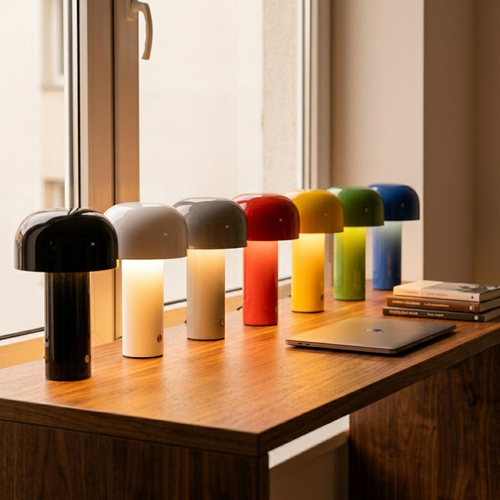
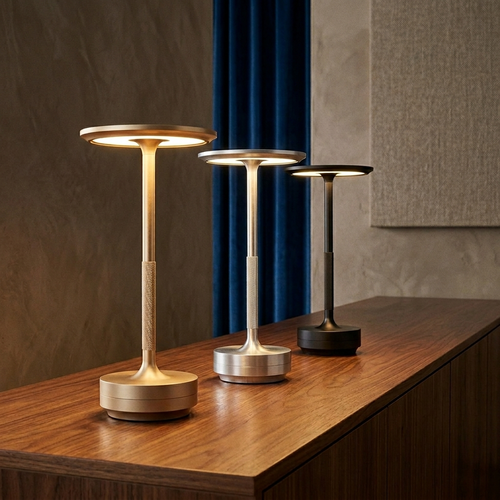
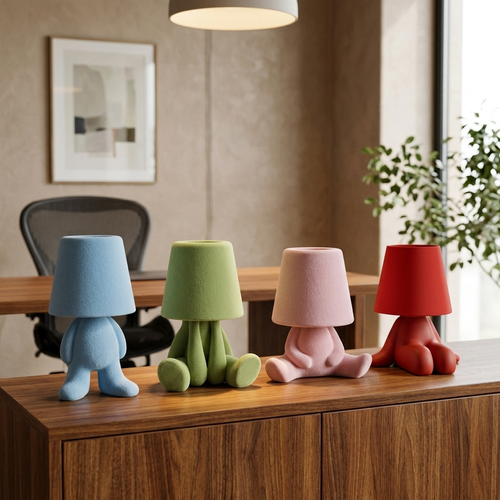
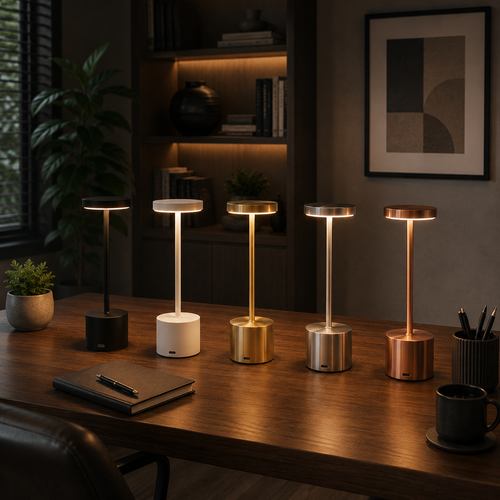
Start by comparing four broad forms. A compact shape may occupy less surface area, while a vertical one draws the eye upward. An arched form may extend over part of the desk, and a broad form can take up more of the visual field. These are shape descriptions, not promises about a particular lamp’s dimensions or performance. Check each product’s listed measurements and light direction.
| Form | Desk footprint | Light direction to assess | Possible role |
|---|---|---|---|
| Compact | Potentially limited, verify the base dimensions | Check whether light reaches your main work area | Task light where desk space is tight |
| Vertical | Base size matters; height alone doesn’t save space | Check how the shade directs light from above | Visual focal point with a task or accent role |
| Arched | May extend over more of the surface | Check the reach and direction of the shade | Light positioned over a specific desk area |
| Broad | May occupy more of the desk or nearby space | Check whether light spreads or concentrates | Statement presence, with task use depending on design |
What size desk lamp suits your work surface?
Measure the usable area, then mark where monitors, shelves, and everyday objects already sit. Include room for writing or other tasks, not just the empty corner that looks available in a photo. A tall silhouette can balance low furniture or draw attention upward, but its base still takes up desk space. Check the listed height, width, and base dimensions before deciding.
Visual weight matters, too. A broad or tall outline may feel dominant beside a small monitor, while a compact form can appear lost beside larger furniture. Consider the room’s existing lines and nearby objects. Aim for a lamp that relates to the setup without making every other object feel crowded.
Where should a statement lamp sit in the room?
Place it on the desk if it needs to support desk activities and the surface can spare the footprint. A side surface may keep the work area clear while giving the lamp a visible position. Consider sightlines from the doorway and your seat, along with how nearby lights affect the overall balance. Browse desk lamp options once you know the size and placement that suit your space.
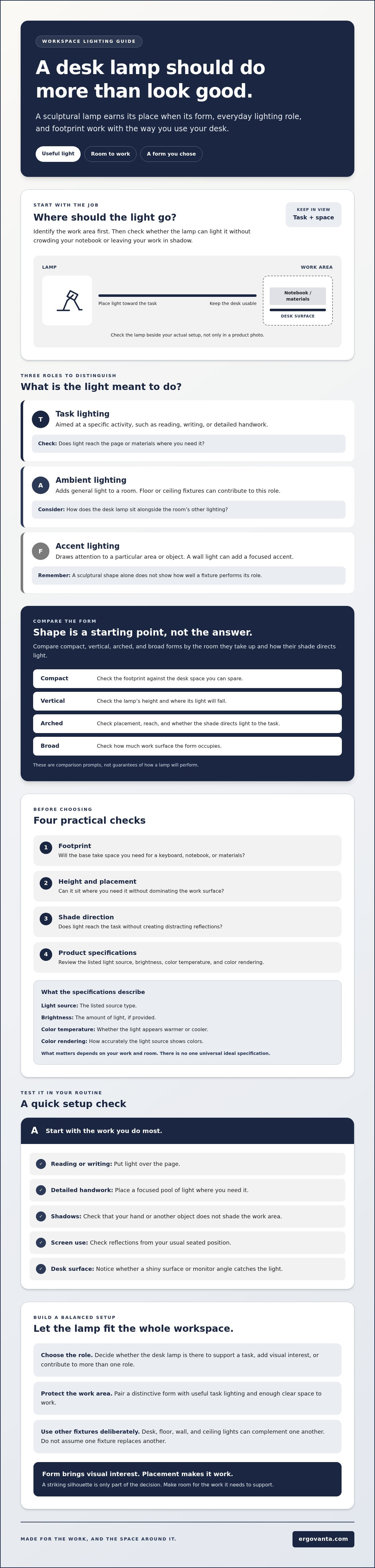
What should you check before choosing statement lighting for your desk?
Choose for the desk you use, not an idealized setup with nothing on it. Sculptural desk lamps and statement lighting should suit the work, the available space, and the room’s existing character. A short checklist makes it easier to compare options without treating one shape or style as right for everyone.
A five-step checklist for choosing a desk lamp
Work through these checks before deciding. They separate what the lamp needs to do from how you want it to look.
- Name the job: Decide whether you need light for reading, writing, detailed work, or more than one task.
- Map the space: Measure the area available and note monitors, shelves, cords, and anything else that limits placement.
- Check the view: Consider screen reflections and whether the lamp can sit without interrupting how you use the desk.
- Compare the form: Assess its scale, footprint, and shade direction against your work area.
- Verify the details: Check listed dimensions and product specifications, including light-source or control information if provided.
Keep the product page open while comparing. A small difference in base size or light direction can matter more in your setup than a dramatic silhouette does in a styled photo.
How can you make a statement lamp feel intentional?
Choose one feature to connect with the room. It could be a rounded shape echoed by another object, a finish that relates to nearby materials, or a silhouette that contrasts with straight desk and shelf lines. You don’t need a matching set. One considered relationship can be enough.
Then account for the objects that earn their place on your desk every day. Leave clear room for work, and check that the lamp doesn’t crowd the items you reach for or compete with nearby furniture. If you’re comparing fixtures for the wider room, explore lighting for considered spaces. The right choice depends on your room, routines, and what you want to see when you sit down.
How can you build a workspace around sculptural desk lamps and statement lighting?
Let the lamp set a direction, not dictate every other choice. A sculptural light can give your desk a focal point, then help you decide what to keep nearby, what to move, and where the room’s other lighting belongs. The aim isn’t a staged desk that nobody can use. It’s a space that feels like yours and works for the things you do there.
How do you balance a statement lamp with the rest of the desk?
Look at the setup from two viewpoints: seated at the desk and entering the room. From your seat, check that the lamp doesn’t crowd the work surface or block access to items you reach for often. From the doorway, notice whether its shape fits the room’s other lines or draws attention in a way you enjoy.
Keep the arrangement simple at first. Place the lamp, clear a useful area for work, then add only the objects you use or want nearby. If the lamp already has a strong outline, several competing accents can make the desk feel busy. If the room is spare, one sculptural form may be enough. Your routine and taste get the final say.
Live with the arrangement during a typical work session. Notice whether you move objects out of the way, miss a practical light source, or find the lamp distracting. Adjust the setup before adding more. A small change in placement may be more useful than another accessory.
Where can you explore lighting options or ask for help?
Ergovanta’s desk lamps and sculptural-style lighting are starting points for browsing, not a promise that every option will suit every setup. Explore sculptural lighting styles, then check each listing for dimensions and stated features. Compare those details with your available space and the role you want the lamp to play.
If a product detail or fit question is still unresolved, contact Ergovanta with your question. A considered choice should look at home and earn its place in the work you actually do.
Choose a lamp that earns its place
The right sculptural desk lamps and statement lighting make room for both visual interest and everyday use. Start with the work you do, then check how the lamp’s size, shape, and light direction fit your desk. A striking form is only part of the choice; the space it takes and the light it provides matter just as much.
Keep the setup personal. Consider how the lamp sits alongside your room’s colors, materials, and other objects, and leave enough clear space for the work itself. Ergovanta offers desk lamps and a sculptural-style lighting category to explore. Check individual product details to see whether a specific option fits your needs.
To compare Ergovanta’s lighting options or ask about a product detail, contact the team.
Build a workspace that feels considered, works for your routine, and gives you a reason to enjoy sitting down again.
Frequently Asked Questions
What is sculptural lighting?
Sculptural lighting is lighting whose visible form contributes to a room’s design as well as providing light. Its shape can act as a focal point, whether it’s placed on a desk or elsewhere in the room. Sculptural desk lamps and statement lighting can serve practical or decorative roles, but appearance alone doesn’t tell you how a lamp will perform. Check its intended use, light direction, dimensions, and listed specifications.
Can a sculptural desk lamp provide enough light for working?
It can, if its light output and direction suit the tasks you do. Check the product information for brightness and how the shade directs light, then consider whether the light can reach your reading, writing, or detailed work area. A striking shape doesn’t guarantee useful task lighting. Your setup matters, too: look for possible screen reflections and consider whether another light source is needed for the room.
How do I choose the right size desk lamp?
Measure the usable desk area and compare it with the lamp’s listed dimensions, including its base, width, and height. Leave room for the items you use regularly and for the work itself. Check nearby monitors, shelves, and other placement limits before deciding. A tall lamp may draw the eye upward, but that doesn’t mean it has a smaller footprint. Consider both its dimensions and visual scale.
What should I look for in a desk lamp for focused work?
Start with your main task, then check whether the lamp’s light direction suits it. For reading or writing, consider how light reaches the page and whether your hand may cast a shadow. Review listed brightness and color temperature, plus the light source if specified. Check whether dimming, adjustability, or bulb compatibility is stated rather than assuming those features are included. Assess the placement against your screen to spot reflections.
Where should a statement lamp be placed in a workspace?
Place a statement lamp where it can serve its intended role without disrupting your work area. On the desk, it can provide nearby task light if its dimensions and direction suit your setup. A side surface may keep the desk clearer while giving the lamp a visible position in the room. Check the view from your seat and the doorway, and consider how the lamp relates to other light sources.
Can statement lighting work in a small room or on a small desk?
Yes, but assess the lamp’s actual footprint and height against the space available. A compact form may leave more surface clear, while a tall design can draw attention upward without necessarily using less desk area. If the work surface is already full, consider whether another suitable surface could hold the lamp. Check product dimensions and keep room for the items and activities that need the desk.
How do I coordinate a desk lamp with the rest of my room?
Connect one detail, such as the lamp’s shape, color, or finish, with an existing object or line in the room. You can also use contrast deliberately, for example, a rounded form among straight-edged furniture. There’s no need for every item to match. Consider the lamp from both your seated position and the room entrance, then adjust nearby objects so the desk stays useful and the overall arrangement feels like yours.
Disclaimer
Ergovanta publishes these guides to help people set up better workspaces. Product recommendations reflect what we sell. Specifications, prices and availability are accurate at the time of writing and may change. Nothing here is medical, ergonomic or professional advice; if you have a specific health concern about your workstation, speak to a qualified professional.
From the catalog