August 26, 2026
Small Home Office Lighting Ideas for Intentional Workspaces

The smallest desk in the house shouldn't be the hardest place to see your work. Equip your space deliberately. You likely know the frustration of a "cloffice" or a corner nook where a traditional lamp takes up half the usable surface. It's difficult to maintain focus when you're battling screen glare or squinting through the late afternoon shadows. Your workspace should feel like a choice, not a compromise.
Discover how to build a bright, functional environment in even the tightest square footage. By exploring intentional small home office lighting ideas, you can reduce eye fatigue and reclaim your desk real estate. We'll look at how to use monitor light bars, wall-mounted fixtures, and considered placement to create a workspace that's made for the work. From eliminating glare to maximizing natural light, this guide provides the tools to equip a space you'll actually want to come back to. Every object must earn its place; your lighting is no exception.
Key Takeaways
- Learn how to layer light to ensure every square inch of your desk is usable and free from distracting shadows.
- Discover small home office lighting ideas that save desk real estate, focusing on tools like monitor light bars that occupy zero footprint.
- Identify the best ways to position your desk relative to windows and fixtures to stop screen glare before it starts.
- Understand why small spaces amplify lighting mistakes and how to correct them with intentional design.
- Equip your workspace with only the objects that earn their place; starting small and adding layers as your work evolves.
The Role of Light in a Small Workspace
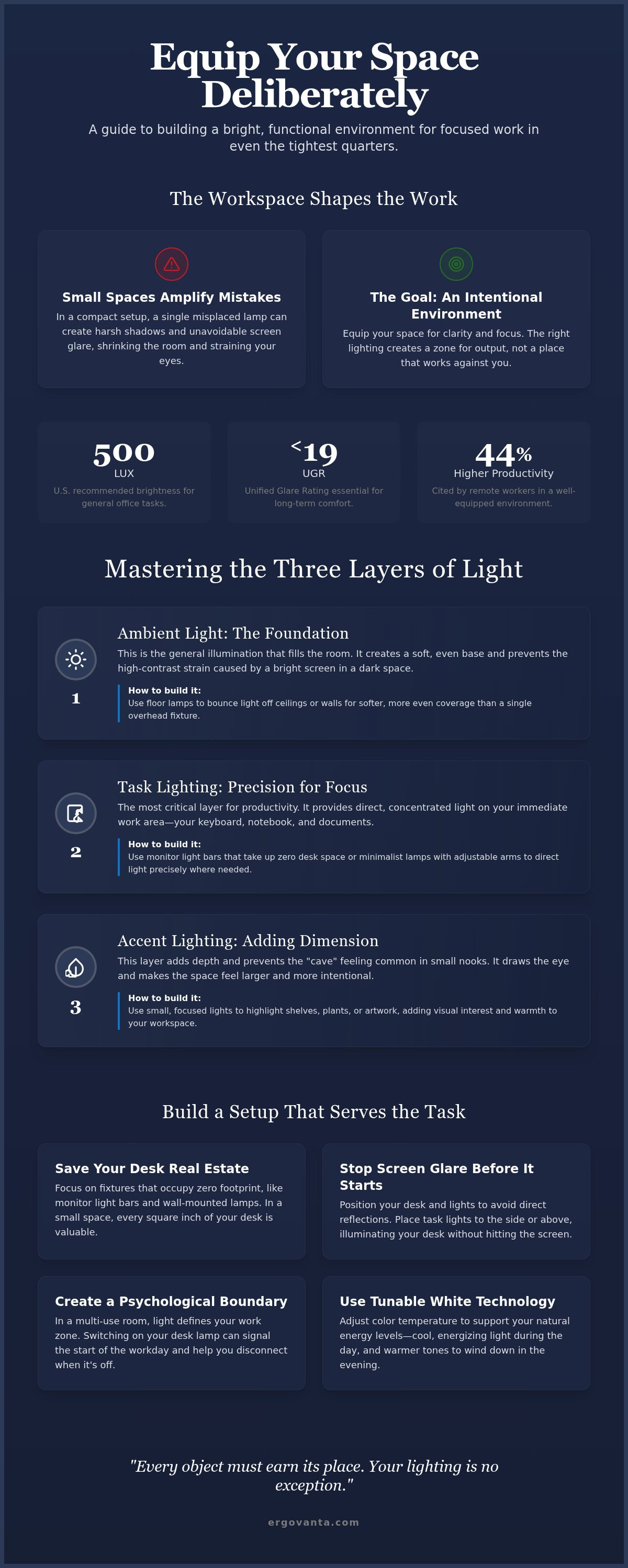
The workspace shapes the work. Equip it deliberately. In a compact setup, light is often an afterthought, yet it's the most influential tool you have for clarity. Small spaces amplify lighting mistakes. A misplaced lamp in a tight corner creates harsh shadows that shrink the room further. Glare becomes unavoidable when your desk is forced into a specific, narrow position. You need a setup that serves the task, not one that works against it.
According to a 2026 study by SurveyMonkey, 44% of remote workers cite higher productivity as a primary benefit of their arrangement. Achieving that focus requires more than just a desk; it requires the right environment. U.S. standards recommend between 30 and 50 foot-candles (roughly 500 lux) for general office tasks. When your lighting is intentional, your brain recognizes the space as a place for output. Every object must earn its place, especially those that dictate how you see your work.
To better understand this concept, watch this helpful video:
Combating Eye Strain in Tight Quarters
Your screen shouldn't be the only light source in the room. This is the science of contrast. When a bright monitor is surrounded by darkness, your eyes work harder to adjust, leading to physical fatigue and headaches. Consistent illumination across your desk surface reduces this strain. Incorporating dedicated task lighting ensures your documents and keyboard are as visible as your display. For computer workstations, maintaining a Unified Glare Rating (UGR) of less than 19 is essential for long-term comfort. If you're looking for ways to equip your workspace, start with fixtures that provide even, flicker-free light.
Lighting as a Boundary for Remote Work
In a multi-use room, light defines the zone. It's a psychological boundary. Switching on your desk lamp signals the start of the workday, while turning it off creates a clean break. This is vital when your "office" is also your bedroom or living area. Effective small home office lighting ideas don't just brighten a surface; they claim the space. With roughly 25% of all paid workdays in the U.S. being performed from home as of 2026, the need for a distinct work environment is permanent. Build a setup that feels like yours alone. Use light to create a sense of ownership, ensuring your home remains a home once the work is done.
Mastering the Three Layers of Office Lighting
A single light source is rarely enough for a productive day. Layering light ensures no corner of your small desk remains unusable. It's about building a system where each fixture has a specific job. When you layer, you move beyond just turning on the lights and start equipping a zone for focus. This approach prevents the flat, sterile feel of a corporate cubicle and helps you build a space you'd choose to come back to.
Ambient Light: Beyond the Ceiling Fixture
Overhead lights often cast shadows right where you work. In a small room, this creates a cramped, uninviting feel. Instead, use floor lamps to bounce light off the ceiling or walls. This creates a softer, more even base for the entire room. Pay attention to color temperature. Research from 2026 highlights human-centric lighting as a dominant trend, focusing on user well-being. Using bulbs with "tunable white" technology allows you to adjust from cool, energizing light during the day to warmer tones in the evening. This supports your natural circadian rhythms and keeps you from feeling drained by mid-afternoon.
Task Lighting: Precision for the Desk
Task lighting is where the real work happens. It's the most critical layer for productivity because it provides precision. You need adjustable arms to direct brightness exactly where it's needed without crowding your keyboard. Many small home office lighting ideas fail because the chosen lamps are too bulky for a compact desk. Consider minimalist desk lamps or monitor light bars that save real estate. Following OSHA's ergonomic lighting guidelines ensures you position these tools to minimize glare. Proper placement prevents the eye strain that often cuts a long workday short.
Accent Lighting: Adding Dimension to Small Rooms
Accent light prevents the "cave" feeling common in windowless corners or small "cloffices." When exploring small home office lighting ideas, remember that accenting isn't just for looks; it's for visual comfort. Small wall lights can make a tight corner feel larger by drawing the eye to the room's perimeter. Subtle backlighting behind your monitor reduces the harsh contrast between your screen and the wall. This is a considered way to build a space that feels intentional rather than cluttered. Every light should earn its place. If you're struggling to balance these layers in a unique layout, you can reach out to our team for advice on how to equip your specific setup.
Space-Saving Fixtures That Earn Their Place
Small desks don't have room for bulky accessories. If a fixture takes up 20% of your surface area, it's not earning its place. You must equip your workspace with tools that provide maximum utility with a minimal physical footprint. This is where most traditional small home office lighting ideas fall short. Many guides suggest large pendants or floor lamps that clutter a narrow room; however, the goal is to keep the surface clear for the work itself. Every object must be considered for its function and its scale.
The Case for Monitor Light Bars
A monitor light bar is the ultimate tool for intentional workspaces. It sits on top of your display, using zero desk space. Unlike standard lamps, it uses an asymmetrical optical design to direct light onto the desk surface without hitting the screen. This drastically reduces glare, which is a common pain point in "cloffice" setups and narrow desks. It provides clear, direct illumination for your keyboard and notes while keeping your desk entirely open. This is a functional choice for anyone who needs high-quality task light without the clutter of a traditional base.
Wall and Ceiling Solutions for Small Footprints
When desk space is non-existent, look to the perimeter of the room. Building a setup with wall lights allows you to clear the desk surface entirely. Sconces provide stable task or accent lighting without the need for a base plate that competes with your mouse or notebook. In some cases, a well-placed ceiling light is more effective than a floor lamp that might block a walkway in a tight apartment. Choose minimalist fixtures to keep the room feeling open. A clean, metal or glass finish prevents the room from feeling weighed down by heavy, traditional decor.
Desk Lamps with Small Bases
If you prefer a traditional setup, look for a desk lamp designed with a compact footprint. The best options for small desks often feature integrated utility, such as wireless chargers built into the base. This removes the need for extra cables and charging pads, further decluttering your zone. Material choice matters here; metal and glass offer a slim profile that feels substantial without occupying excessive visual space. Choose a lamp with an adjustable arm to ensure you can direct light exactly where it's needed as your tasks change. These small home office lighting ideas ensure your equipment supports your focus rather than creating new distractions.
Build Your Lighting Setup with Intentionality
The workspace shapes the work. Equip it deliberately. A functional setup isn't something you buy in a single transaction; it's a system you refine over time. In a compact room, the margin for error is slim. Every object you add must earn its place by providing utility without creating clutter. By focusing on intentionality, you ensure that your small home office lighting ideas actually support your focus instead of just filling a corner with unnecessary hardware. A well-equipped desk is a choice you make every day.
Starting with the Essentials
Your foundation should always be the light that directly impacts your eyes. Don't fall into the trap of buying multiple cheap fixtures to solve a dark-room problem. One high-quality, considered tool is far more effective than three low-grade lamps that flicker or cast uneven shadows. Quality lighting provides stable illumination that prevents the physical fatigue often associated with long hours at a desk. Start with your primary task source. Once that is established, you can assess where the shadows remain. This "eyes-first" approach ensures your most critical need is met with the best possible equipment before you move to secondary layers.
Evolution of a Personal Workspace
A workspace is a living environment. It should change as your work changes. You might find that your needs during deep-focus writing are different from your needs during collaborative video calls. Building your setup gradually allows you to see these patterns in real-time. Instead of over-equipping on day one, add layers as you identify specific gaps in your comfort. This process of gradual refinement is what makes a space feel personal. It moves the focus away from corporate identity and toward personal ownership. You're building a room that gets used, not just one that looks good in a curated photo.
Maintaining Your Setup for Long-Term Use
Intentionality doesn't end after the purchase. It extends to how you care for your tools. Dust on bulbs and diffusers can significantly reduce the brightness and quality of your light over time. Make it a habit to clean your fixtures regularly to maintain the crisp environment you've built. Every six months, take a step back and re-evaluate the entire setup. Check if your fixtures still serve their intended purpose or if a change in desk placement has made a specific light redundant. Staying disciplined about what stays on your desk ensures your workspace remains a focused sanctuary for the people who do the work.
Equip your space with lighting made for the work
Build Your Lighting Setup with Intentionality
The workspace shapes the work. Equip it deliberately. A functional setup isn't something you buy in a single transaction; it's a system you refine over time. In a compact room, the margin for error is slim. Every object you add must earn its place by providing utility without creating clutter. By focusing on intentionality, you ensure that your small home office lighting ideas actually support your focus instead of just filling a corner with unnecessary hardware. A well-equipped desk is a choice you make every day.
Selecting Your Essential Lighting Tools
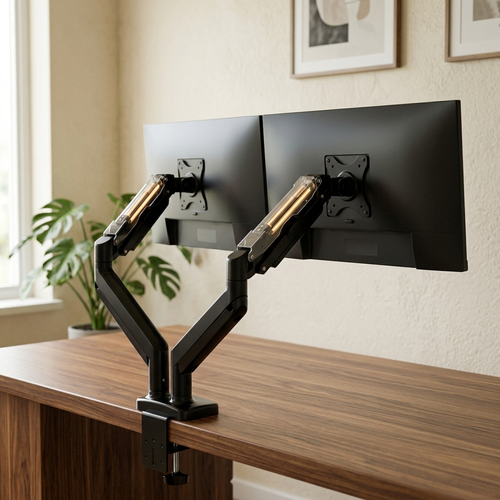
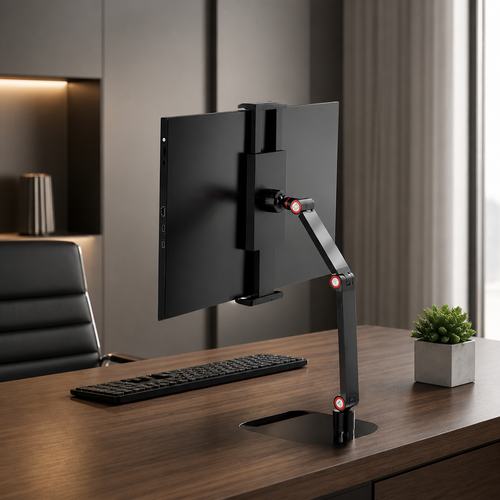
Your foundation should always be the light that directly impacts your eyes. Don't fall into the trap of buying multiple cheap fixtures to solve a dark-room problem. One high-quality, considered tool is far more effective than three low-grade lamps that flicker or cast uneven shadows. Quality lighting provides stable illumination that prevents the physical fatigue often associated with long hours at a desk. Start with a monitor light bar for immediate desk space recovery. It clears the surface while providing stable task light. Add a minimalist desk lamp for focused work that requires more than a screen-top source. Finally, consider workspace essentials that complement your light, such as monitor arms that further free up real estate.
Making the Space Yours
Your setup shouldn't look like everyone else's. Avoid the generic, one-size-fits-all approach of corporate offices. The goal is to build the workspace you would choose to come back to. This is the core of the Ergovanta approach: ergon (purposeful function) combined with vanta (advantage). We design for the people who do the work. A considered, organized environment is an advantage in itself. It reduces the mental friction of starting a task and allows you to focus on the output. When you own your space, you own your work. Use these small home office lighting ideas to build a sanctuary of productivity that feels personal and functional.
Before finishing your setup, run through this final checklist for a well-lit, small home office:
- Does every light source serve a specific layer (ambient, task, or accent)?
- Is the desk surface clear of unnecessary lamp bases and cable clutter?
- Have you eliminated glare on your monitor through proper positioning or light bars?
- Does the color temperature support your work hours without causing eye fatigue?
- Is the setup flexible enough to evolve as your tasks change over time?
Equip Your Workspace for Purposeful Function
The workspace shapes the work. Equip it deliberately. By mastering the three layers of light and choosing fixtures that earn their place, you turn a cramped corner into a sanctuary of focus. We've explored how monitor light bars reclaim desk real estate and how specific positioning stops screen glare before it starts. These small home office lighting ideas are not just about brightness; they're about building a room that gets used. Every object should support your output rather than adding to the clutter.
Ergovanta provides tools with purposeful function for the people who do the work. Our minimalist designs are specifically made for small spaces, ensuring your equipment never competes with your productivity. With free shipping on curated workspace tools, it's simpler to build a setup you would choose to come back to. It's time to move away from generic setups and toward a workspace that feels personal and functional.
Your environment is a choice you make every day. Build it with intent and stay focused on what matters.
Frequently Asked Questions
What is the best lighting for a small home office with no windows?
High-CRI LED bulbs are the best choice for windowless spaces. They mimic the full spectrum of natural light. Aim for a Color Rendering Index of 80 or higher to ensure colors appear accurate and vibrant. Layer your light by combining a ceiling fixture with task-specific tools like monitor light bars. This prevents the "cave" effect often found in closets or basements. Equip your space with bulbs that support your natural circadian rhythms.
Where should I place a desk lamp to avoid shadows?
Place your desk lamp on the opposite side of your dominant writing hand. This simple move eliminates distracting shadows. If you are right-handed, the light should come from the left. Position the lamp so the beam falls directly on your documents without hitting your screen. Adjustable arms are essential for fine-tuning this angle. This ensures your workspace remains clear and your focus stays on the work itself.
Are monitor light bars better than traditional desk lamps for small spaces?
Monitor light bars are often superior for small desks. They occupy zero physical footprint because they sit on top of your display. This frees up the surface for notebooks or hardware. Unlike traditional lamps, they use asymmetrical optics to direct light downward without causing screen reflections. This makes them one of the most effective small home office lighting ideas for narrow desks. Choose a light bar to reclaim your workspace.
What color temperature of light is best for focus and productivity?
Cool white light between 4000K and 5000K is best for alertness. This temperature mimics daylight and helps maintain focus during peak hours. As the day ends, switch to warmer tones around 2700K to help your body wind down. Modern "tunable white" bulbs allow you to automate this transition. Equip your office with lighting that adapts to your schedule, ensuring you feel energized when you start and relaxed when you finish.
How can I reduce glare on my computer screen in a small room?
Position your monitor at a 90-degree angle to any windows. This stops direct sunlight from hitting the screen and causing glare. Avoid placing your desk directly in front of or behind a window. The resulting high contrast causes significant eye strain. If overhead lights are the problem, use a monitor light bar with a hooded design. These small home office lighting ideas ensure your screen remains readable throughout the entire day.
Do I need a floor lamp if I already have a desk lamp?
A floor lamp provides an ambient layer that a desk lamp cannot reach. While your desk lamp focuses on specific tasks, a floor lamp bounces light off the ceiling to fill the entire room. This reduces the harsh contrast between your bright desk and a dark room. Such contrast is a major cause of eye fatigue. Use a floor lamp to create a base level of light that makes your small office feel open.
How many lumens do I need for a small home office?
Aim for approximately 500 lux for general office tasks. This is roughly 30 to 50 foot-candles. Industry standards suggest a total output of 2,000 to 4,000 lumens across all light sources for a standard small room. Don't rely on a single bulb to hit this target. Distribute the output between your ambient, task, and accent layers. This ensures the room is bright enough for detailed work without feeling sterile.
Can smart lighting help with a small workspace setup?
Smart lighting provides the flexibility required for multi-use rooms. Use smart bulbs to automate transitions between focus-heavy morning work and softer evening lighting. This is especially helpful if your office is in a shared living area. You can program specific settings that dim secondary lights while keeping your desk bright. Equip your space with bulbs that allow for precision control, helping you maintain a functional environment regardless of the time of day.
Disclaimer
Ergovanta publishes these guides to help people set up better workspaces. Product recommendations reflect what we sell. Specifications, prices and availability are accurate at the time of writing and may change. Nothing here is medical, ergonomic or professional advice; if you have a specific health concern about your workstation, speak to a qualified professional.
From the catalog