August 20, 2026
Statement Chandeliers: Guide to High Ceiling Scale
A high ceiling is often treated as a trophy, but without the right scale, it usually feels like a vacuum. It is difficult to focus when the air above you feels empty and cold. You likely chose your space for its volume, yet finding a statement chandelier for high ceilings that doesn't look like a postage stamp once installed is a common frustration.
A room should feel built for the person using it, not just the architecture. We agree that a fixture should do more than fill a gap; it should anchor the room and make it functional. This guide will show you how to select and position a chandelier that balances tall rooms and earns its place in your space. You will gain the confidence to handle technical specs like drop lengths and scale without the guesswork.
We will break down the essential math for vertical clearance, the shift toward integrated LED standards, and the placement rules that turn a cavernous hall into a considered workspace. Equip your room with intentionality and stop letting the height dictate the atmosphere.
Key Takeaways
- The workspace shapes the work. Understand how to fill vertical volume so your room feels considered rather than empty.
- Calculate the exact diameter and drop length required to balance your room using dimension-based formulas.
- Choose between minimalist profiles and sculptural forms to build an environment that supports your focus.
- Secure the right placement by following clearance rules, ensuring your statement chandelier for high ceilings is safe and effective.
- Equip your room with lighting that anchors your workspace essentials and makes the space useful.
Scaling Your Space: Why High Ceilings Demand Intentional Lighting
The workspace shapes the work. Equip it deliberately. When you enter a room with significant vertical volume, the space above your head shouldn't feel like a forgotten zone. A high ceiling is a structural advantage, but without the right equipment, it often results in a "floating" effect where standard fixtures look disconnected from the room's purpose. Choosing a statement chandelier for high ceilings is about more than aesthetics; it's about filling that volume with intentionality to make the room feel human-scaled. You want a fixture that feels like it was made for the work you do beneath it.
To better understand this concept, watch this helpful video:
Defining the High Ceiling Requirement
Rooms with ceilings exceeding 10 feet require a shift in how you think about scale. Standard lights are designed for 8-foot or 9-foot heights, and they simply lack the vertical presence to bridge the gap between the floor and the roof. Before you select a fixture, identify the room's primary function. A workspace requires light that supports focus, while a transition area or entryway might prioritize an inviting atmosphere. Consider how your light interacts with your workspace essentials. If your lighting is too small or hung too high, your desk and chair will feel isolated in a cavernous hall. The goal is ergon: purposeful function that supports your daily routine.
The Problem of the Empty Void
Tall rooms often feel cold or uninviting because the eye has nowhere to rest between the floor and the ceiling. This "empty void" can be distracting during long work hours. A statement piece earns its place by acting as a central anchor that defines the room's boundaries. It brings the visual ceiling lower, creating a more intimate, considered environment. One common mistake is choosing a fixture based solely on the square footage of the floor. In a tall room, the cubic volume is what matters. You need a piece with enough visual weight to hold its own against the architecture. By selecting ceiling lights that respect the room's scale, you build a space you actually want to spend time in. This isn't about status; it's about creating a room that works for you.
The Geometry of Height: Balancing Drop, Diameter, and Visual Weight
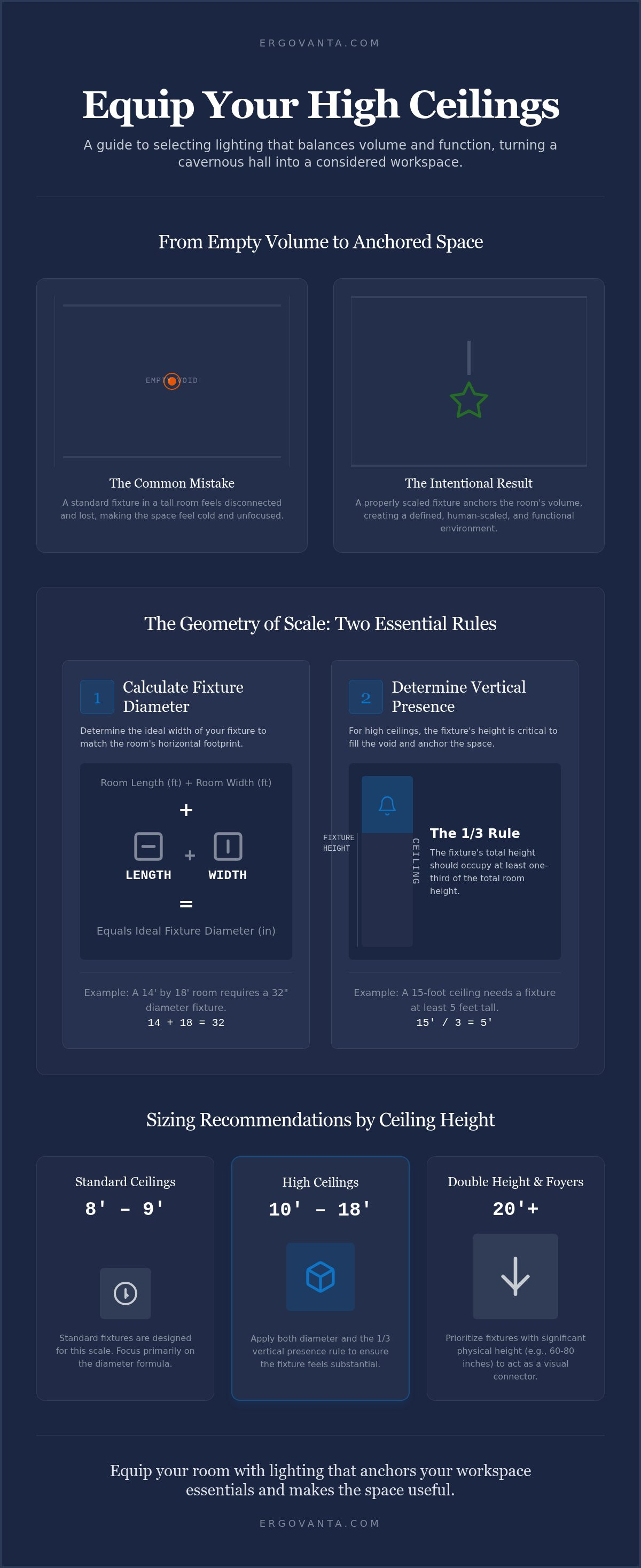
The workspace shapes the work. Geometry is the blueprint for how that space feels. To build a room that feels intentional, you must start with the math of the volume. Finding the right diameter for your fixture is a straightforward calculation: add the length and width of your room in feet. The sum of those two numbers is the ideal width of your chandelier in inches. For instance, a room measuring 14 by 18 feet should be equipped with a fixture roughly 32 inches wide. However, in tall environments, width is only part of the equation. A statement chandelier for high ceilings must also account for vertical drop to avoid looking lost in the rafters.
Proportion is what makes a room feel considered. A general rule for high ceilings is that the fixture should occupy at least one third of the total room height. In a 15-foot room, a 5-foot tall fixture provides the necessary presence to bridge the gap between the floor and the ceiling. This prevents the "postage stamp" effect where a light looks too small for the air it inhabits. If you're struggling to visualize how these proportions fit your specific floor plan, you can reach out to us for technical guidance.
Sizing for Vertical Presence
Verticality is the defining trait of a high-volume room. For 20-foot ceilings, you should prioritize fixtures with a physical height of 60 to 80 inches. In double-height foyers or stairwells, the vertical scale of the piece often matters more than its width. It acts as a visual ladder, drawing the eye upward and connecting the different levels of the home. Most ceiling lights designed for these spaces come with adjustable chains or rods. Use these to fine-tune the placement so the light aligns with architectural features like window transoms or second-floor landings.
Understanding Visual Density
Physical dimensions tell you how much space a fixture occupies, but visual weight tells you how it feels. Not all large lights are perceived the same way. Consider these material differences:
- Minimalist frames: These provide the necessary scale without cluttering the view. They are ideal for workspaces where you want to maintain a sense of openness.
- Solid materials: Fixtures made of metal or wood create a strong anchor. They are best for very large, open-concept spaces that need a definitive focal point.
- Glass and acrylic: Options using glass allow light to permeate the room. They provide scale without feeling heavy or oppressive, making them a good choice for smaller rooms with high ceilings.
The goal is to equip your room with a piece that earns its place. It should feel like a natural extension of the architecture, not a heavy object competing with it.
Selecting Your Profile: Minimalist Lines vs. Sculptural Presence
The workspace shapes the work. Equip it with a profile that supports your routine. When you select a statement chandelier for high ceilings, you are choosing the visual boundary of your focus zone. A fixture should not just fill space; it should match the rhythm of your day. Whether you prefer the stripped-back clarity of a minimalist frame or the expressive weight of a sculptural piece, every object in your room must earn its place. Lighting is the catalyst that makes your environment functional. Choose a profile that feels intentional.
Minimalist and Modernist Foundations
Modernist designs prioritize function and clarity above all else. If your work requires deep focus and an environment free from visual noise, look for minimalist styles that earn their place through simplicity. These fixtures often use thin, geometric lines to define the room's volume without cluttering your line of sight. They provide the necessary light for your desk while remaining quiet in the background. Avoid overly ornate pieces that clash with your ergonomic tools or monitor setup. A modernist approach ensures that the architecture of the room remains the hero while the lighting provides the essential ergon needed to get things done.
Sculptural and Artisan Statements
Sculptural lighting adds a sense of personal ownership to the room. In a large, simple space, a sculptural piece acts as a point of interest that defines the area as yours. These artisan pieces reflect a considered choice rather than a corporate standard. They turn a cavernous void into a room that feels lived-in and ready for the work. Choosing a statement chandelier for high ceilings with a unique profile signals that the space is built for a specific purpose.
Material choice is vital for texture. You can choose materials like wood or glass to complement your desk setup. Each material brings a different weight to the space:
- Wood: Offers natural warmth and a tactile quality that softens tall, white walls.
- Glass: Provides a sense of artisan craft, allowing light to permeate the room without feeling heavy.
- Metal: Delivers a disciplined, sharp aesthetic that pairs well with tech accessories and hardware.
Your space should not look like everyone else's. Build a room that feels personal. By matching the profile of your lighting to the work you do, you equip a workspace you'd choose to come back to every day.
Positioning for Purpose: Installation Heights and Lighting Function
The workspace shapes the work. Equip it deliberately. Once you have selected a statement chandelier for high ceilings, the final step in building your room is positioning. A fixture that hangs too high feels detached from the living area; one that hangs too low becomes an obstacle. In open walkways or foyers, the standard rule is to maintain a clearance of 7 to 9 feet from the floor. This ensures the fixture is safe for movement while still filling the vertical volume. For safety and code compliance, the bottom of the fixture must be at least 7 feet above any walking surface, such as a floor or stair tread.
When positioning lighting over a specific workspace, like a desk or a meeting table, the rules shift. Hang the light 30 to 36 inches above the surface. This creates a more intimate zone for focus and ensures the light is concentrated where you need it most. However, you must consider your line of sight. Ensure the fixture does not block your view of a window or create reflections on a monitor or screen. A considered space is one where every object supports your productivity rather than hindering it. If you're unsure how your lighting will interact with your existing equipment, it's worth checking the layout before the final install.
Managing Light Distribution
A chandelier provides the ambient base layer of light for the entire room. While task lighting like desk lamps handles the heavy lifting for reading or writing, the overhead fixture sets the tone. Use dimmers to adjust the atmosphere as your day moves from high-intensity work to an evening wind-down. This flexibility is a requirement of a functional space. Ensure the light reaches your work surfaces without creating harsh glare, which can lead to eye fatigue during long hours at the desk. Ambient light should support the room's purpose, not distract from it.
Installation Logistics
Building a functional room requires attention to the technical requirements of your equipment. High ceiling chandeliers are often heavier than standard lights and may require reinforced junction boxes to support the weight. For exceptionally high ceilings, equip your space with a motorized lift. This allows you to lower the fixture for maintenance without needing scaffolding. Given that professional installation costs for high ceilings in 2026 typically range from $700 to over $2,000, getting the placement right the first time is essential. Equip your fixture with long-life LEDs to reduce the frequency of bulb changes in hard-to-reach places. Safety is a fundamental requirement of any space made for work.
Consult with our team on technical installation requirements
Equip Your Room: How Lighting Anchors a Considered Workspace
The workspace shapes the work. Equip it deliberately. A room is not a showroom; it is a collection of small objects that earn their place through daily utility. While the architecture provides the frame, your equipment provides the function. In a high-volume space, a statement chandelier for high ceilings acts as the anchor that holds these elements together. It is the catalyst that makes your workspace essentials visible and useful, turning a cold hall into a room where work actually happens. When you build a space you choose to come back to, you are layering light with ergonomic comfort to create an environment that feels like yours.
Personal ownership is the final step in building a functional room. Avoid choosing a light simply because it looks good in a catalog. Instead, choose a piece that reflects how you use the space. If your desk is the center of your world, the light should support that focus. If the room is for transition and hospitality, the light should invite movement. By being intentional with your selection, you ensure that every fixture serves a purpose. This is the essence of ergon: purposeful function that supports the person doing the work.
The Holistic Environment
Lighting affects how you feel in a space throughout the day. It is the bridge between the physical objects you touch and the atmosphere you inhabit. Connect your ceiling lighting to the textures of your desk and accessories. A metal fixture might mirror the finish of your monitor arm, while a glass piece complements the glassware on your desk. A well-lit room feels organized and purposeful. It signals that the environment is ready for the work, allowing you to settle in without distraction. When your lighting interacts correctly with your ergonomic tools, the entire room becomes a sanctuary of productivity.
Final Selection Checklist
Before finalizing your choice, run through this considered checklist to ensure the piece fits your specific needs:
- Scale: Does the vertical height match the room's volume? Ensure it occupies enough space to avoid the floating effect.
- Material: Is the material consistent with your other lighting choices? Consistency creates a sense of visual order.
- Purpose: Does the light serve the specific work you do in this room?
- Maintenance: Have you accounted for long-term logistics like LED lifespan and reach?
Equipping a room is an ongoing process of refinement. When the lighting is right, the rest of the space falls into place. Build your room with intention, and it will serve you for years to come.
Equip Your Space with Intentionality
The workspace shapes the work. Equip it deliberately. Selecting a statement chandelier for high ceilings is the definitive act of bridging the gap between the room's volume and your daily routine. By calculating the correct diameter and vertical drop, you ensure that your lighting earns its place as a functional anchor rather than a floating distraction. You now have the technical requirements to balance scale, profile, and positioning with confidence.
A considered space is built through intentionality. Whether you choose the clarity of minimalist lines or the presence of a sculptural profile, your lighting should support both focus and atmosphere. We provide boutique ergonomic solutions designed for intentional spaces, ensuring every object in your room serves a purposeful function. Purposeful lighting for the work is the catalyst that makes your environment useful and personal.
Take ownership of your environment. Build a workspace that you'd choose to come back to every day.
Frequently Asked Questions
How high should a chandelier hang in a room with a 20-foot ceiling?
For a 20-foot ceiling, the bottom of the fixture should stay at least 7 to 9 feet above the floor to ensure safe movement. If you're hanging a statement chandelier for high ceilings over a desk or table, aim for 30 to 36 inches above the surface. Because the room is tall, the fixture height itself should be between 60 and 80 inches. This fills the vertical volume without making the light look disconnected.
What is the best size chandelier for a large great room?
Determine the diameter by adding the room's length and width in feet. The sum is your ideal width in inches. For a 20-foot by 20-foot great room, you need a fixture with a 40-inch diameter. Don't forget the vertical scale; the fixture should ideally occupy one third of the room's total height. This ensures the piece earns its place as a central anchor rather than looking like a small object lost in a cavernous space.
Can I use a regular chandelier for a high ceiling?
Standard fixtures are typically designed for 8-foot or 9-foot ceilings and often lack the vertical presence required for tall rooms. While you can technically install one, it will likely create a "floating" effect that makes the space feel empty and cold. A statement chandelier for high ceilings is built with the extended rods or chains and the physical volume necessary to bridge the gap between the floor and the roof effectively.
How do I change the bulbs in a high ceiling chandelier?
Maintenance in tall rooms requires planning. For exceptionally high ceilings, equip your space with a motorized lift that allows you to lower the fixture to a reachable height. If a lift isn't an option, you'll need scaffolding or an industrial-grade ladder. To minimize these efforts, always use long-life LEDs. These bulbs reduce the frequency of changes, which is a fundamental requirement of a functional and low-maintenance workspace.
What is visual weight and why does it matter for tall rooms?
Visual weight is the perceived density of a fixture based on its materials. A minimalist frame made of thin metal lines has less visual weight than a solid wood or opaque glass piece of the same size. In tall rooms, you need enough visual weight to anchor the space without making it feel oppressive. Choosing the right density ensures the lighting supports the room's atmosphere and complements your other equipment without overwhelming the architecture.
Should a chandelier be wider or taller for a foyer?
Foyers with high ceilings benefit more from verticality than width. A tall, tiered, or elongated fixture acts as a visual ladder that connects the different levels of the home. It draws the eye upward and fills the cubic volume of the entryway more effectively than a wide, flat piece. This vertical presence makes the transition into your home feel intentional and considered rather than leaving a large, unlit void above the door.
How many lumens do I need for a room with high ceilings?
High ceilings require more lumens because light disperses as it travels through a larger volume of air. Aim for 3,000 to 5,000 lumens for the ambient base layer in a large room. However, don't rely on the overhead fixture alone. Layer your lighting by using desk lamps or floor lamps to provide focused light where you do the work. This combination ensures the room feels organized and purposeful at any time of day.
Do I need a special mounting box for a heavy statement chandelier?
Heavy fixtures often require reinforced junction boxes that are rated for the specific weight of the piece. Standard plastic boxes aren't built to support the 50 to 100 pounds common in large-scale lighting. Given that professional installation for high ceilings can be a significant investment, it's vital to ensure the structural support is correct from the start. Safety is a non-negotiable requirement for a functional room that is made for the work.
Disclaimer
Ergovanta publishes these guides to help people set up better workspaces. Product recommendations reflect what we sell. Specifications, prices and availability are accurate at the time of writing and may change. Nothing here is medical, ergonomic or professional advice; if you have a specific health concern about your workstation, speak to a qualified professional.
From the catalog