October 15, 2026
Task Lighting for a Kitchen Island: A Practical Buying Guide
Task lighting for kitchen island prep should reach the work surface without throwing shadows across your hands or glare into your eyes. The fixture that looks right above the island is not automatically the one that helps you work. Start with the tasks, then choose the light. Ergovanta’s lighting selection offers options to consider as you plan the room.
An island may serve as a chopping station, homework desk, serving counter, or all three before dinner. Begin by noting where you work and where people sit. That makes it easier to judge coverage, fixture scale, and sightlines before appearance takes over the decision.
This guide explains how task lighting differs from ambient light, compares pendants and other fixture types, and walks through a practical planning process. You’ll consider how island proportions, existing light, fixture placement, shadows, and glare shape the result. The aim is a useful setup for your actual kitchen, whether the island is a compact worktop or the room’s main gathering spot.
Key Takeaways
- Choose task lighting for kitchen island activities, and identify the work areas that need coverage.
- Map existing light before comparing fixtures for coverage, visual presence, and planning needs.
- Measure the island, ceiling, seating, and sightlines before deciding on fixture scale and placement.
- Compare product details on light output, distribution, and controls instead of assuming similar fixtures work alike.
- Balance focused island light with the wider room to build a setup that works as well as it looks.
Why Task Lighting for a Kitchen Island Starts With How You Use It
Task lighting supports a specific activity. Ambient lighting illuminates the wider room, while accent lighting draws attention to a feature or adds visual interest. An island can benefit from all three layers, but the balance depends on what happens there. A surface used for chopping needs useful, even coverage. One used mostly for serving and conversation may call for a softer feel, while still making the counter easy to see.
Kitchen-island task lighting is focused light intended to make activities at the island easier to see and do. That could mean preparing food, reading a recipe, serving a meal, or sorting through mail. A fixture can look right and still leave the work surface partly in shadow. Choose for the task as well as the view.
For a visual overview of pendant styles, watch Top 14 Kitchen Island Pendant Light Ideas from Omni Home Ideas:
What task lighting does over a kitchen island
Think of task lighting as a deliberate layer, not a synonym for a “bright kitchen.” General room lighting fills the broader space; accent lighting creates visual focus. Island task lighting is meant to reach the surface where work happens. Its role depends on how you use the island, what light is already in the room, and whether the area shifts from food prep to gathering during the day. Understanding Task Lighting offers a general overview of the approach. To explore fixture categories, browse Ergovanta’s lighting collection.
Where shadows and glare can disrupt island tasks
Stand where you usually chop or read. If the light is behind you, your body may cast a shadow over the work. A visible light source or a fixture aimed toward your eyes can cause glare, even when the counter itself looks bright. Check the view from stools, nearby walkways, and the opposite side of the island. A fixture that works from one position may distract from another.
Make the assessment concrete. Put a cutting board where you normally prepare food, then notice where your hands, head, and body fall between the light and the surface. Imagine reading a recipe without leaning into glare, or serving without leaving a dark patch at one end of the counter. This simple check gives you a more useful brief than “looks good.” The goal is not one fixture that solves every lighting need in the room. It is an intentional island layer that supports the tasks you actually do.
How to Plan Comfortable, Useful Task Lighting for a Kitchen Island
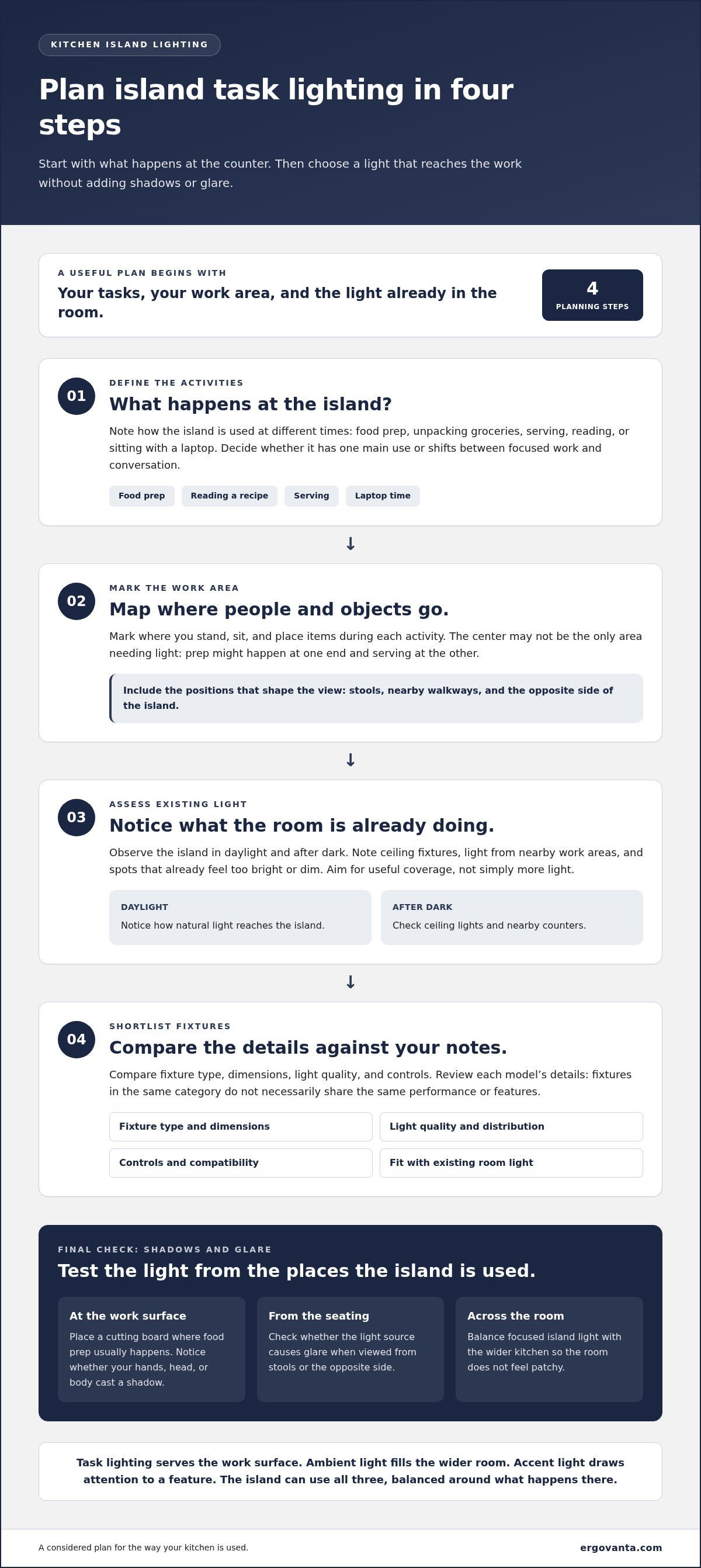
A useful lighting plan starts before you compare shades or finishes. Work in order: define the tasks, mark the work area, assess existing light, then shortlist fixtures. This keeps the decision grounded in your room and routines, rather than a showroom arrangement that may not translate to everyday use.
- Identify the tasks. Note what happens at the island at different times, from food prep to unpacking groceries or sitting with a laptop. Decide whether the surface has one main use or needs to shift between focused work and conversation.
- Map the work area. Mark where you stand, sit, and place items during those activities. The center may not be the only area that needs light, especially if prep happens at one end and serving at the other.
- Assess existing light. Observe the island in daylight and after dark. Note ceiling fixtures, light from nearby work areas, and any spots that already feel too bright or dim. The aim is useful coverage, not simply more light.
- Shortlist fixtures. Compare fixture type, dimensions, light quality, and controls against your notes. Review the details for each model, because fixtures in the same category do not necessarily have the same performance or features.
A successful island lighting plan fits the activities at the counter and the way light moves through the room.
Match light quality to food preparation and everyday use
Clear, comfortable light makes ingredients and the work surface easier to see. Color temperature describes whether light appears warmer or cooler; color rendering describes how naturally colors appear beneath it. Neither term alone guarantees a good result. Consider how the light looks in your kitchen and how it shows the colors of food, finishes, and other surfaces. Govee’s Creative Kitchen Lighting Solutions also explores lighting choices and their visual effect.
When product details are available, compare them with the light already in the room. A warmer appearance may suit the atmosphere you want, while another color quality may feel clearer during focused work. There is no single setting for every home, finish, and preference. If you can, view the light in a similar setting before deciding.
Layer island task lighting with the rest of the kitchen
Island lighting works with the room’s broader illumination and any accent light, not in isolation. Daylight changes throughout the day, and ceiling fixtures and nearby counters affect how the island looks at night. Notice whether the lighting feels balanced as you move between areas. A fixture that seems effective on its own can still leave the overall kitchen feeling patchy.
Dimming can be useful when the island shifts from focused work to conversation, but controls and compatibility depend on the fixture and setup. Treat them as selection criteria, not assumed features. Compare the lighting options with your plan. If you have a general question for Ergovanta, you can use the contact page.
Pendants, Linear Fixtures, or Recessed Lights: Compare Island Lighting Options
The right fixture type depends on what needs light, how much visual presence you want, and what the rest of the kitchen is already doing. Pendants and linear fixtures hang over the island and make the lighting zone visible. Track and recessed lights can keep the ceiling view simpler. None is automatically best for task lighting for kitchen island use. Compare the trade-offs with your layout and the work you do there.
| Fixture type | Light distribution | Visual presence | Flexibility | Planning considerations |
|---|---|---|---|---|
| Pendants | Light comes from separate points above the island; coverage depends on the fixture and arrangement. | Distinct shapes create a visible rhythm. | Placement is set by the installation. | Consider sightlines, spacing, and how each fixture relates to the work zones. |
| Linear suspended fixtures | A single elongated form can distribute light along the island. | Creates one continuous visual line. | Placement is set by the installation. | Compare the fixture’s length and light distribution with the island’s proportions. |
| Track lighting | Multiple heads can direct light toward selected areas. | Track and heads remain visible on the ceiling. | Adjustable heads can offer aiming flexibility. | Check aiming positions, ceiling layout, and potential glare from nearby seats. |
| Recessed lighting | Light comes from ceiling openings; coverage depends on placement and fixture details. | Less visually prominent than suspended fixtures. | Installed positions determine where light falls. | Plan spacing and aim in relation to the island and other kitchen lighting. |
When pendants or linear fixtures make sense
Suspended fixtures can define the island as a lighting zone, which may suit an open kitchen where the island anchors the room. Individual pendants create a repeating rhythm; a linear form gives the eye one continuous line and may suit an uninterrupted work surface. Actual coverage depends on the fixture. Compare its dimensions, light output, and mounting details with the areas you need to illuminate. Do not infer performance from shape alone.
When track or recessed lighting may suit the layout
Track heads can be aimed toward selected parts of the counter, which can help when prep and serving happen in different areas. Recessed fixtures keep the ceiling less visually busy and may contribute to general or task lighting, depending on their placement and specifications. Neither approach guarantees even coverage on its own. Check how the light lands on the surface and whether it works from seating and walking routes.
Look beyond appearance. Consider whether the light supports the work, interrupts a sightline, and fits the kitchen’s existing shapes and finishes. Think about upkeep too: reachable surfaces and exposed parts may be simpler to clean than details that are difficult to access. Product information can clarify dimensions, output, mounting, and maintenance needs, but those details vary by model. Choose the form that fits your island and wider room, then use the specific product details to plan the layout.
Get the Scale and Placement Right Before Choosing Island Task Lighting
A fixture can suit the room on paper and still feel misplaced overhead. Before choosing task lighting for kitchen island use, measure the space and sketch where the light needs to reach. The island’s centerline is a useful reference, but it is not a complete plan. Prep zones, seating, and routes through the kitchen may call for a different arrangement.
Use island dimensions to judge fixture scale
Record the island’s length and width, then compare its footprint with the full fixture arrangement. Include the visual weight of shades, bars, or tracks, not just the points where they attach to the ceiling. Several smaller fixtures can read differently from one larger form, even if they span a similar area. There is no universal sizing rule: proportions depend on the fixture and the room.
Use this checklist before comparing options:
- Island dimensions: Measure the full work surface and note its main zones.
- Ceiling height: Record the distance from floor to ceiling and note any beams or changes in ceiling level.
- Seating: Mark stool locations and where seated people look across the room.
- Work zones: Identify where food prep, serving, or other regular tasks happen.
- Sightlines: Note views across the kitchen and into adjacent rooms, plus the routes people use to approach the island.
Check hanging positions, sightlines, and work zones
Sketch the island from above. Mark where someone stands to prepare food, sits to eat, or sets down a serving dish. Place possible fixtures in relation to those activities instead of automatically centering everything. Compare the sketch with the ceiling layout and the dimensions and mounting details of each fixture you are considering.
Then test the layout at full scale. Use removable tape or a paper outline to represent the fixture footprint, and hold it in the proposed position. Look from three places: standing at the work surface, seated at the island, and approaching along the usual walking route. Ask whether the fixture blocks a view, feels visually crowded, or puts light where the work happens. It is a quick check, and easier than discovering a sightline problem after installation.
Clearance and spacing depend on the fixture, room, and local requirements. Do not treat a general rule of thumb as a universal specification. Use reliable guidance for numerical recommendations and the selected fixture’s actual dimensions. A considered layout leaves room for people to use the island while keeping the light aligned with the tasks and sightlines that matter in your kitchen.
Build a Kitchen Island Task-Lighting Shortlist That Fits Your Space
You’ve mapped the activities, considered the room, and compared fixture types. Now turn those notes into a shortlist you can use. Keep the goal simple: choose task lighting for kitchen island work first, then compare proportion and style. A clear list beats a dozen open tabs and a vague feeling that one option “just looks right.”
Use a final checklist to compare candidate fixtures
Assess every candidate against the same criteria. Product details vary, so compare the information provided for each fixture rather than assuming similar-looking options perform alike.
- Task fit: Does the fixture type suit the activities and work zones you identified?
- Room context: Will it work alongside the kitchen’s existing light, rather than leaving gaps or adding an unnecessary competing layer?
- Scale: Do the fixture’s verified dimensions and overall visual weight feel in proportion to the island and ceiling?
- Light quality: Review listed light output and color characteristics where available. Consider how the light may feel during food preparation and everyday use.
- Controls: If you want to adjust the light for different activities, look for relevant control information in the product details. Do not assume dimming or compatibility based on appearance.
- Viewpoints: Picture the fixture from the kitchen’s main standing and seating positions. Check that its shape and placement work for the room, not just for a straight-on product photo.
Keep notes beside each option. “Fits the prep zone,” “light details are unclear,” or “may interrupt the view from the stools” makes trade-offs easier to spot. If a specification matters to your decision, do not fill a gap with a guess. Compare the details available and set aside options that do not give you enough information to assess.
Choose a considered next step for your lighting plan
Usefulness comes first. Proportion and style come next, shaped by the island, the room, and your preferences. Browse lighting fixtures and pendants with your shortlist in hand, then compare each option with the needs you have identified. Read the details for each fixture before deciding how it fits your plan.
Before you decide, picture the light in the room at the times you use the island most. Does the fixture make sense for the work, fit the space, and feel right from the seats and walkways? If so, you have a considered direction. If not, adjust the shortlist. The right choice earns its place in your kitchen by serving the way you use it.
Make Your Next Lighting Choice With Confidence
Before choosing a fixture, write a one-line brief for your island: what should the light help you do, and how do you want the space to feel? That keeps task lighting for kitchen island use grounded in your routines, not just in a photo or a passing trend. Keep the brief nearby as you compare options. It gives you a clear reason to choose, or to keep looking.
Your kitchen does not need to follow someone else’s formula. The right plan makes sense for your room and the people who use it. Choose deliberately, leaving space for personal preference alongside the practical details.
Build a kitchen that works for everyday moments, too. Explore Ergovanta’s lighting collection and choose the pieces that earn their place in your space.
Frequently Asked Questions
Is pendant lighting enough for task lighting over a kitchen island?
Yes, pendant lighting can provide task lighting for a kitchen island when the fixtures suit the activities and illuminate the areas you use. An island used for both chopping and serving may need coverage beyond one central spot. Consider how the light works with existing fixtures, then compare product details for output and distribution. Check the layout from your usual work position and nearby seats.
How many pendant lights should go over a kitchen island?
There is no fixed number that suits every island. A long island with separate prep and serving areas presents a different layout from a compact island used mainly for breakfast. Sketch the proposed fixtures over the island’s dimensions, including their actual widths, then view the arrangement from seated and standing positions. Output and light spread matter too. Use the fixture’s guidance when planning spacing.
Can recessed lights provide task lighting for a kitchen island?
Yes, recessed lights can contribute to island task lighting when their placement and distribution serve the work surface. They may also illuminate the wider kitchen, so consider the island in relation to nearby counters and existing ceiling lights. For a practical check, stand where you usually prepare food and look for dark patches across the work area. Assess the result alongside any suspended fixtures.
What color temperature is best for kitchen island task lighting?
The best color temperature depends on the atmosphere you prefer and how the kitchen’s other light sources look together. Color temperature describes whether light appears warmer or cooler. Compare the fixture’s listed details with light from existing ceiling fixtures and daylight at different times. If several finishes or adjoining rooms are in view, consider how the light looks across those surfaces. Avoid choosing by a universal rule alone.
How do I prevent shadows on a kitchen island?
Start by noticing where you stand during common tasks and whether your body falls between the light and the surface. If you prep at one end, a layout focused only on the island’s center may leave that area poorly lit. Consider how the fixture distributes light across the work zone, and assess the proposed arrangement from more than one position. Product details can help you compare likely coverage.
Should kitchen island lights match the rest of the kitchen lighting?
No, the fixtures do not need to be identical. They should feel like parts of the same room. Island pendants can provide a visual focal point while simpler ceiling fixtures handle broader illumination. Compare finishes, scale, and the overall appearance of the light instead of matching every detail. A consistent plan lets the island stand out without making the rest of the kitchen feel disconnected.
Are dimmable lights useful over a kitchen island?
They can be useful if the island serves different purposes throughout the day. You might prefer more light for reading a recipe, then a softer setting while sharing a meal. Dimming is a product-specific feature, not something to assume from a fixture’s appearance. Check the fixture and control information for compatibility. If adjustment matters to your routine, make it a clear requirement on your shortlist.
Disclaimer
Ergovanta publishes these guides to help people set up better workspaces. Product recommendations reflect what we sell. Specifications, prices and availability are accurate at the time of writing and may change. Nothing here is medical, ergonomic or professional advice; if you have a specific health concern about your workstation, speak to a qualified professional.
From the catalog