July 6, 2026
Are Foot Rests Good for You? Building a Workspace That Supports the Work

If your feet don't firmly meet the floor while you work, you aren't just sitting; you're spending the day in a state of constant, subtle strain. It's a common problem for anyone who spends serious hours at a desk. You might find yourself asking, are foot rests good for you, or is it just another accessory taking up space? When your legs dangle or your feet can't find a flat surface, the tension eventually finds its way to your lower back and hips. Since musculoskeletal disorders are the leading cause of work-related disability, how you position your body matters.
We agree that a workspace should be built to support the person doing the work. This guide will show you how a considered foot rest grounds your posture and helps you stay focused during long hours. We'll look at the physical benefits of active sitting and how optimizing your setup can lead to a 15% improvement in overall well-being. By the end, you'll have total clarity on whether this tool earns its place in your space.
Key Takeaways
- Ground your workspace by understanding how a foot rest bridges the gap between your chair and the floor.
- Identify the subtle physical signs, such as thigh pressure and restless legs, that prove your current desk setup needs an adjustment.
- Discover why the answer to "are foot rests good for you" lies in how the tool supports a more intentional and focused posture.
- Learn how to choose between static and dynamic options to ensure your equipment supports the way you actually move.
- Equip your room with considered materials like wood or steel that match the aesthetic of a space made for the work.
The Role of a Foot Rest in a Considered Workspace
The workspace shapes the work. Equip it deliberately. If you spend serious hours at a desk, the room around it matters more than you think. A foot rest is a tool designed to support your feet when your chair height prevents them from resting flat on the floor. It isn't a status symbol; it is an anchor. When looking at what is a footrest, you'll find its primary purpose is to provide a stable base for the body. It acts as a foundation for your posture, allowing your chair to support your back as intended.
To better understand this concept, watch this helpful video:
Why Physical Grounding Matters for Focus
Stability starts from the floor up. When your feet dangle, the weight of your legs pulls on your lower back. This creates a quiet but constant physical distraction. You might not notice it at 9:00 AM, but by the mid-afternoon slump, your body works harder than it should just to stay upright. Grounding your feet is about creating a stable base for focus. Intentionality in your setup means removing the small frictions that break your concentration. When you build a workspace that supports the person doing the work, you eliminate the physical "noise" that leads to fatigue.
Moving Beyond the Medical Device Stigma
We need to shift the perspective from "fixing a problem" to "equipping a space." People often ask, are foot rests good for you, as if they are only for those with specific injuries. In reality, it's about purposeful function. At Ergovanta, we look at the Greek root "Ergo," which means purposeful function in action, and "Vanta," meaning advantage. This is for the people who do the work. Whether you are tall or short, if your desk height requires you to raise your chair, you need a way to bring the floor to you. You can find these tools in our ergonomics and comfort collection. It's an essential for anyone who spends serious hours at a desk.
Signs Your Current Setup is Working Against You
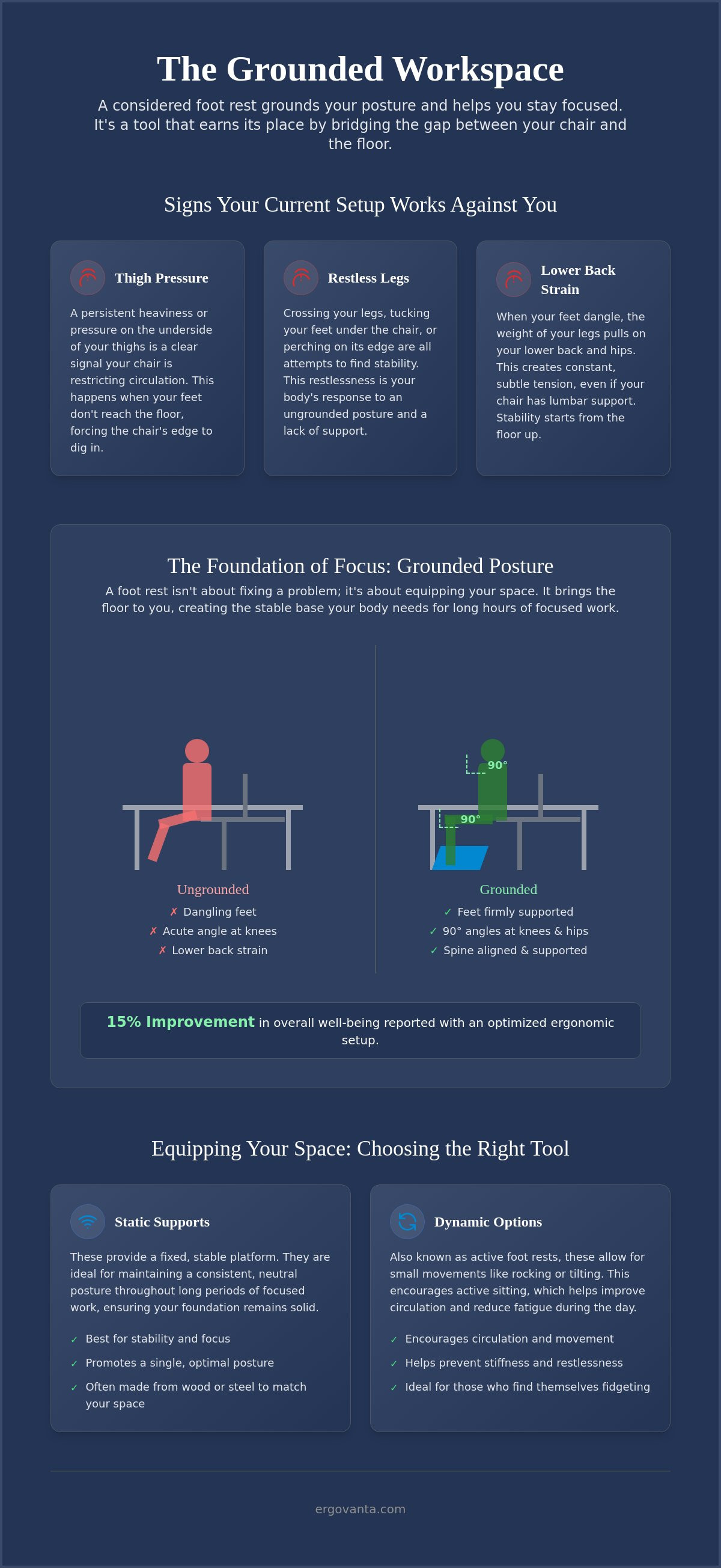
If you spend serious hours at a desk, your body usually tells you when the room isn't equipped properly. You might wonder, are foot rests good for you, when you notice a persistent heaviness in your legs by noon. This pressure on the underside of your thighs is a clear sign that your chair is restricting circulation. When your chair height is dictated by the desk rather than your body, your feet end up hovering. This forces you to cross your legs or perch on the edge of your seat to find a sense of balance. Even the best lumbar support can't fix lower back tension if your foundation is unstable.
The Dangling Feet Test
Stability requires a neutral position. Your hips and knees should stay at approximately 90 degrees to keep your spine aligned. If you have to raise your chair to reach your keyboard, and your heels no longer touch the floor, the setup is working against you. Shorter individuals face the most friction here, as standard desk heights are often built for a specific average. If your feet don't rest flat, your lower back pays the price for that lack of grounding.
Circulation and the Feeling of Restlessness
Restricted blood flow leads to physical fatigue and a loss of focus. A considered tool allows for active sitting, where small, intentional movements keep you alert throughout the day. You might think you can just use a cardboard box, but these temporary fixes lack the durability and specific angle needed for real support. A dedicated tool earns its place by staying put and providing the stability required for long sessions. If you're unsure which adjustments your space needs, you can always reach out to our team for clarity on equipping your room.
Equipping Your Space: Choosing a Tool That Earns Its Place
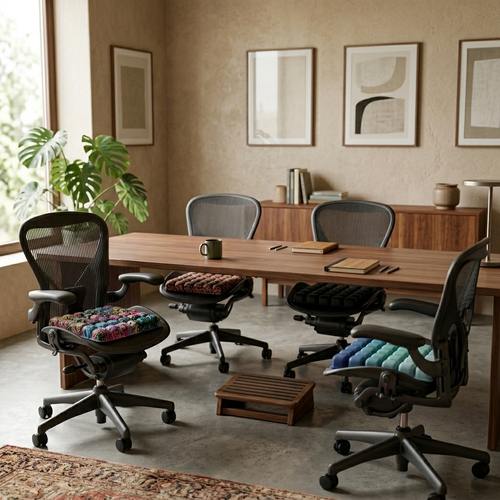
The workspace shapes the work. Equip it deliberately. When deciding if are foot rests good for you, the answer often depends on the quality of the object itself. Avoid the clinical look of gray plastic medical devices. Instead, choose materials that match the room you use: wood, steel, and considered fabrics. These objects earn their place by being both functional and visually quiet. A foot rest should fit your space without becoming an obstacle. An intentional choice here prevents the room from feeling like a cluttered office and makes it feel like a space made for the work.
Static Supports vs. Massage Boards
Select for the work. A fixed angle is ideal for those who need a consistent, grounded feeling throughout the day. If you prefer active sitting, foot massage boards provide sensory feedback that helps ground your focus through subtle movement. This isn't about status; it's about purposeful function. Research from 2026 shows that workers in optimized ergonomic settings report a 6% increase in productivity and a 15% improvement in overall well-being. Choose the support that suits your specific desk routine and the way you actually move.
Integration and Maintenance
Position the tool so it supports your natural stance. It should sit exactly where your feet land comfortably when your back is firmly against the chair. Keeping your ergonomics and comfort tools clean and functional ensures they remain part of a room that gets used. The room around the desk matters. A considered foot rest fits into a broader minimalist aesthetic, proving that the foundation of your posture is as important as the work itself. When you build a workspace you choose to come back to, every object must serve a clear purpose. This intentionality is what separates a room that gets used from one that causes friction.
Build a Foundation for the Work
A workspace that supports the person doing the work starts from the floor up. If you've spent your day shifting in your seat or dealing with restless legs, you now have the answer to the question: are foot rests good for you? These tools aren't just accessories; they're essential anchors that allow your chair to function correctly and your body to remain neutral. By removing the subtle friction of dangling feet, you reclaim the focus needed for long sessions at your desk.
Intentionality is the difference between a room you have to work in and a room you choose to work in. Every object should earn its place through purposeful function and design that respects the aesthetic of your space. Don't settle for temporary fixes that clutter your floor. Instead, select tools made of wood, steel, or considered fabrics that integrate seamlessly into your environment. The room around the desk matters, and grounding your posture is the first step in building a setup that lasts.
If you're ready to stop fighting your setup, equip your space with considered ergonomic tools that support your posture and your process. Build a room that works as hard as you do. For the people who do the work.
Common Questions About Workspace Grounding
Is a foot rest necessary if my chair is adjustable?
An adjustable chair only solves half the problem if your desk height is fixed. If you lower your chair so your feet touch the floor, you might find your elbows sit below the desk surface. This forces you to reach up, which strains your shoulders and wrists. A foot rest allows you to set your chair height based on the desk while keeping your feet grounded. It's a tool for bridging the gap in a workspace that wasn't custom built for your proportions.
Can a foot rest help with lower back pain?
A foot rest helps reduce lower back tension by providing a stable base that prevents your legs from pulling on your lumbar region. When your feet dangle or lack firm support, your pelvis often tilts, causing you to slouch. This is a primary reason why people ask are foot rests good for you. Providing that floor level support keeps your spine in a neutral position and reduces the mechanical strain on your back during long sessions.
How high should a foot rest be for the best posture?
Your foot rest should be high enough to ensure your knees and hips stay at approximately a 90 to 100 degree angle. The goal is to have your thighs parallel to the floor with your feet resting flat. If the support is too low, you'll still feel pressure on the underside of your thighs. If it's too high, your knees will sit above your hips, which can cause hip flexor tightness. Adjust the height until your weight feels evenly distributed.
What is the difference between a static foot rest and a foot rocker?
A static foot rest provides a fixed, stable angle for those who prefer a consistent sense of grounding. In contrast, a foot rocker or dynamic board encourages active sitting by allowing your feet to move back and forth. This movement helps maintain circulation and reduces the restlessness that often sets in during the afternoon. Choosing between them depends on whether you find small movements helpful for focus or if you prefer the solid foundation of a stationary tool.
From the catalog