July 8, 2026
Equip Your Space: Intentional Pendant Lighting Ideas for Focus

A pendant light isn't a decoration: it's a functional boundary that earns its place by defining where your work begins. If you spend serious hours at a desk, the room around it matters more than you think. Most of us settle for harsh overhead lights that cause eye strain and leave our workspace feeling undefined. It's difficult to switch from work mode to rest mode when the environment never shifts. Exploring intentional pendant lighting ideas can change the way you interact with your space.
The workspace shapes the work. Equip it deliberately. You deserve a setup that signals focus and reduces physical fatigue. In this guide, you'll learn how to use pendant lighting as a tool to define your workspace and build a room that supports the work you do. We'll explore how to choose considered fixtures that act as a visual anchor, helping you build a workspace you actually want to come back to. From the 2026 efficiency standards to the impact of natural materials, it's time to build a space made for the work.
Key Takeaways
- Define your focus by using a pendant as a visual anchor to separate your workspace from the rest of your home.
- Select the right fixture for your specific tasks, such as metal domes for direct light or glass globes for even distribution.
- Discover pendant lighting ideas that help you build a considered environment made for the work you actually do.
- Reduce eye strain by layering your light sources and avoiding the harsh contrast of a single screen in a dark room.
Defining Your Focus with Intentional Pendant Lighting Ideas
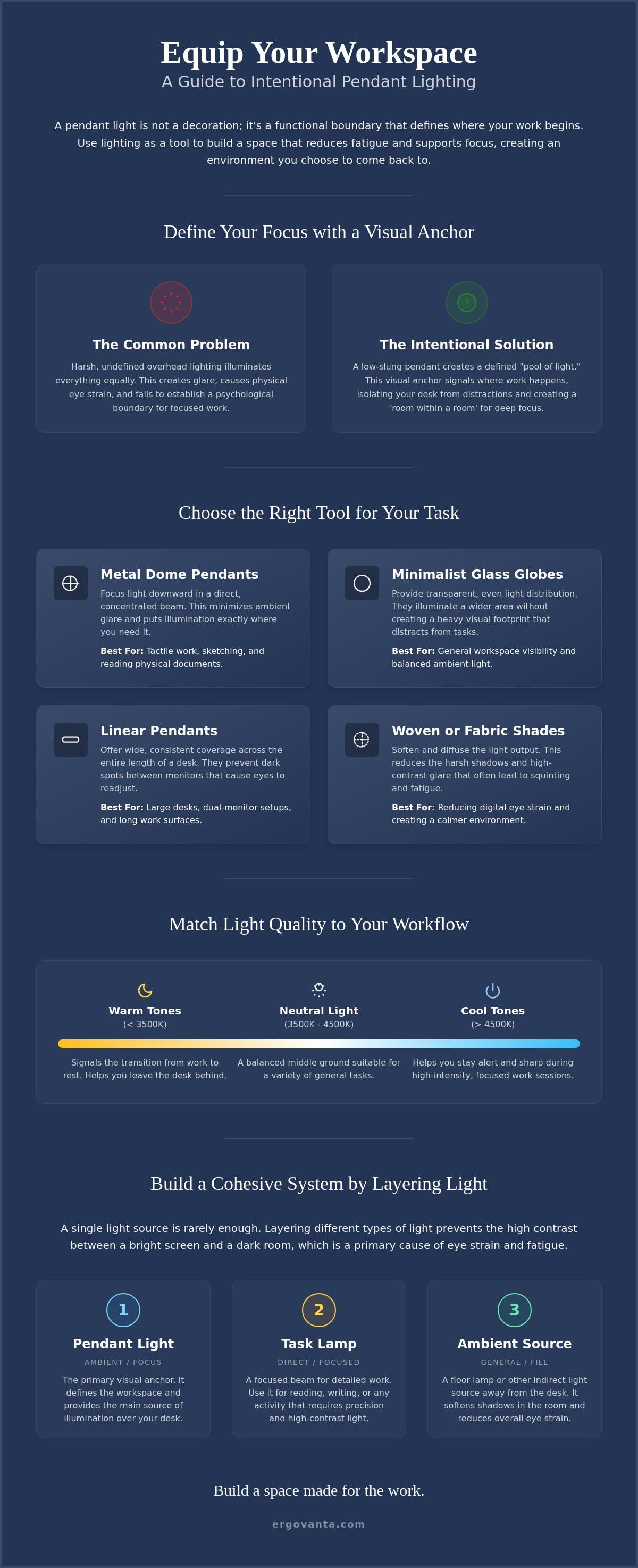
The workspace shapes the work. Equip it deliberately. If you spend serious hours at a desk, the room around it matters more than you think. Lighting is a fundamental requirement for a considered workspace; it shapes how you see the work. When you're browsing pendant lighting ideas, look for fixtures that serve a purpose beyond basic illumination. A well-placed light acts as a visual anchor. It defines a "room within a room" to signal the start of focus.
Understanding What is a Lighting Fixture? helps you see these objects as functional tools rather than just decor. Every object in your space should earn its place through purposeful function. Considered choices help prevent burnout because the right light reduces the physical toll of long hours at a desk. It's not about style alone; it's about building an environment that works for you.
To better understand this concept, watch this helpful video:
The impact of light placement on concentration
Positioning is everything. Using low-slung pendants creates a pool of light that physically isolates your desk from household distractions. This pool acts as a boundary. Centering a light over your workspace creates a psychological boundary for deep work. It tells your brain exactly where the work happens. When you build your space this way, you create a focused environment that feels separate from the rest of your home.
Color temperature and the workday
Light quality dictates energy levels. Cooler light helps you stay alert during high-intensity tasks. Aim for 4000K to 5000K bulbs when you need to be sharp. As the day ends, switch to warmer tones. This signals the transition from work to rest, helping you leave the desk behind. Implementing these pendant lighting ideas ensures your environment supports your natural rhythm. Your space should support the work you do, but it should also know when the work is done.
Choosing Pendant Lighting Ideas for Function and Clarity
If you spend serious hours at a desk, every object must earn its place. Choosing from various pendant lighting ideas isn't about finding the most decorative look; it's about finding the right tool for your specific workflow. The physical properties of your light fixture dictate how your eyes feel after eight hours of deep work. You need clarity without the clutter. The right pendant lighting ideas help you build a room that supports the work you do.
- Minimalist glass globes: These provide transparency and even light distribution. They illuminate the room without creating a heavy visual footprint that distracts from your tasks.
- Metal dome pendants: These focus light downward directly onto the desk surface. They're the right choice for tactile tasks, sketching, or reading physical paperwork.
- Linear pendants: If you use a larger desk or dual-monitor setup, these offer wide, consistent coverage. They prevent the dark spots that cause your eyes to constantly readjust.
- Woven or fabric shades: These soften the output. They reduce the harsh shadows and glare that often lead to squinting and physical fatigue.
Task lighting vs. ambient glow
Your workflow determines your needs. Detailed work requires a focused beam, while a balanced room benefits from a soft, ambient glow. You don't have to settle for one or the other. Explore our collection of ceiling lights to find tools that fit how you actually use your space. A considered setup uses both to keep you focused and comfortable throughout the day.
Materials that earn their place
Durability matters in a high-use room. Metal and glass are practical choices because they're easy to maintain and built to last. The weight and texture of your lighting should reflect the intentionality of your workspace. Avoid flimsy materials that feel like an afterthought. When you equip your room with considered materials, you build a space that supports the work you do. If you have questions about which material fits your desk setup, feel free to reach out to our team for advice.
Building a Cohesive Lighting Setup for Your Room
The workspace shapes the work. Equip it deliberately. One light source rarely suffices for a productive day. When exploring pendant lighting ideas, think about how they interact with the rest of your equipment. Effective layering means combining a central pendant with workspace essentials like desk lamps. This setup gives you total control over your environment, allowing you to shift the mood as your tasks change from deep focus to administrative maintenance.
Working in a dark room with only a glowing screen is a recipe for fatigue. This extreme contrast forces your eyes to work harder than they should, leading to the kind of strain that ends a workday early. Use ambient lighting to bridge the gap between your display and the rest of the room. Personal ownership means ignoring rigid design tropes like the "rule of three" if they don't serve your specific workflow. Choose pieces that reflect how you actually use the room rather than mimicking a static photo in a catalog. Build a space you would choose to come back to every morning.
Placement and ergonomics
Height is a functional decision, not just a stylistic one. Your pendant needs to be high enough to clear your monitor but low enough to cast a meaningful pool of light on your desk surface. Positioning is equally critical to avoid screen glare. If your light reflects off your display, it's a hindrance rather than a tool. Angle or offset your fixture to keep your display clear and your focus sharp. Small adjustments in placement are often what make a room truly usable.
The rooms that get used
Your desk doesn't exist in a vacuum. How general lighting in your home is handled influences your overall focus and how you feel when you finally step away from the screen. If the rest of the room feels neglected, your desk will feel like an island rather than a part of a considered home. When you integrate intentional pendant lighting ideas throughout your space, you create a cohesive environment that supports both work and rest.
At Ergovanta, we believe the objects you choose should earn their place. Ergo comes from the Ancient Greek for purposeful function in action. Vanta is your advantage. Use both to build a space that is truly yours.
Equip Your Workspace for the Long Haul
The workspace shapes the work. Equip it deliberately. By implementing intentional pendant lighting ideas, you've moved beyond simple decor to create a functional boundary that supports your focus. You now understand how a visual anchor separates your desk from the rest of the room and how specific materials like metal or glass reduce the physical toll of long hours. Layering your light ensures your eyes stay fresh while your environment remains adaptable to the task at hand.
Every object in your room should earn its place through purposeful function. At Ergovanta, we build considered minimalist tools designed for the people who do the work. We focus on aesthetics that support focused environments because we know the right room makes the work easier. Your workspace is a personal environment for doing the work; build it into a place you'd choose to come back to every day.
Build a workspace that works for you: contact us to find the right lighting tools. Take ownership of your space and equip it for the work you do.
Frequently Asked Questions
What is the best height for a pendant light over a desk?
The ideal height for a pendant light is typically 30 to 36 inches above the surface of your desk. This height ensures the light clears your monitor and stays out of your direct line of sight while still casting a focused pool of light. If you use a sit-to-stand desk, ensure the cord length allows for this functional distance. Equip your space deliberately to avoid a fixture that hangs too low and creates a visual obstruction.
How many lumens do I need for a workspace pendant light?
Aim for approximately 450 to 800 lumens for a single pendant used as task lighting. For a broader workspace, you might need a total room output of 3,000 to 5,000 lumens across all your fixtures. When browsing pendant lighting ideas, prioritize dimmable bulbs. This allows you to adjust the intensity based on the time of day or the specific work you're doing. It's about finding the right balance for your eyes.
Can a pendant light replace a traditional desk lamp?
A pendant can replace a desk lamp if it provides enough downward focus and is positioned directly over your work area. However, layering your light is usually a better approach for a considered workspace. Combining a pendant with other tools helps you eliminate shadows that a single source might create. It's about building a setup that handles the intensity of your work without causing physical fatigue or squinting.
How do I avoid glare on my monitor from a pendant light?
Position the pendant slightly in front of or to the side of your monitor rather than directly behind your head. This prevents the light from reflecting off the glass and causing distracting glare. Using a dome pendant with an opaque shade also helps by directing the light downward instead of letting it scatter across the room. Implementing these intentional pendant lighting ideas ensures your screen remains clear and your focus stays unbroken.
From the catalog