August 9, 2026
Floor Lamps for Reading: Equip Your Space for Focus


Article by
George
George is the founder of Ergovanta. He spent years on Wall Street, first as an investment banker and then as a private equity investor. The work took him into the home and corporate offices of other bankers, private equity investors, venture capitalists, hedge fund managers, and Fortune 500 executives across a wide range of industries. The longer he spent in those workspaces, the clearer the pattern got: the rooms people actually wanted to return to were never the biggest or the best funded. They were the ones built on purpose. Ergovanta turns that into pieces anyone can put in their own room, whatever the work is. He works out of New York City, mostly on lighting and the small objects that decide whether a desk gets used.
The wrong light doesn't just dim a room; it drains the person working in it. Squinting shouldn't be a standard part of your workflow. When shadows fall across your page or harsh glares bounce off your screen, your focus breaks. You don't need another decorative object; you need a tool that earns its place. Finding the right floor lamps for reading is about more than aesthetics. It's about intentionality. Equip your space with the same care you give your craft.
We all want a workspace that feels like ours, yet eye fatigue and poor contrast often turn a productive afternoon into a struggle. You deserve a setup that clarifies rather than complicates. Learn how to select and position a floor lamp that supports your eyes and clarifies your workspace. We will preview the technical requirements for focus, including the IES-recommended range of 15 to 60 foot-candles for reading, and the placement strategies that eliminate intrusive shadows. Build a space you actually want to come back to.
Key Takeaways
- Contrast is the secret to focus. Learn why directional light outperforms standard overhead fixtures to clarify your workspace and reduce strain.
- Technical specs matter. Identify the specific color rendering index (CRI) and color temperature needed to support your eyes during long sessions.
- Select the right frame. Discover why pharmacy lamps or arc styles are the most effective floor lamps for reading in a considered workspace.
- Position for clarity. Master the placement rules that eliminate shadows and keep the light source at the optimal height for your seated position.
- Equip with intention. Build a workspace you want to come back to by selecting lighting designed for purposeful function and personal ownership.
Beyond General Lighting: Why Reading Demands Intentional Design
The workspace shapes the work. Equip it deliberately. Most people treat lighting as a background utility, but it's the primary environmental factor affecting your output. Throughout the history of artificial lighting, we've moved from simple visibility to specialized function. While a single bulb in the center of the room might prevent you from tripping, it does little to support the mental energy required for deep reading. Effective lighting is an object that earns its place by clarifying your focus.
General lighting is often too diffuse. It creates a flat environment where contrast is lost. Choosing specific floor lamps for reading allows you to reclaim that contrast. By directing light exactly where it's needed, you reduce the cognitive load your brain spends on deciphering text rather than absorbing ideas. It's a small change that yields a significant difference in how you feel after two hours at the desk. Contrast is the secret. It clarifies the work.
To better understand the practical application of these design principles, watch this helpful guide on selecting the right lamp for your needs:
The Problem with Ambient Light
Ambient light is for navigation. It's meant to illuminate paths, not pages. When you rely on overhead fixtures, shadows from the fixture itself or your own body often fall directly across your lap or desk. This forces your eyes into a state of pupillary fatigue. Your pupils must constantly adjust between the dim page and the brighter room. It's an invisible drain on your stamina. You shouldn't have to fight your environment to finish a report or a novel. Common issues with relying solely on ambient light include:
- Overhead glare that washes out digital screens and glossy pages.
- Inconsistent brightness levels that cause visual tension.
- Harsh, unshielded bulbs that create unnecessary visual noise.
The Role of Task Lighting
Task lighting provides a concentrated beam designed for specific activities. It defines your reading zone. When you equip your space with a dedicated floor lamp, you create a visual boundary for focus. This intentionality signals to your brain that it's time for the work. A considered reading lamp increases the contrast between the text and the paper or screen, making the information pop. It's about building a space you'd choose to come back to. These aren't just lamps; they are catalysts for the deep work that matters most. Shadows are the enemy. Intentionality is the solution.
Technical Specs of a Considered Reading Lamp
Technical specs are the difference between a lamp that works and one that earns its place. Lighting quality isn't subjective; it's measurable. When selecting floor lamps for reading, look past the frame and focus on the output. High-quality light reduces the strain of processing fine print. It clarifies the workspace. You aren't just buying a fixture; you're equipping your environment for focus.
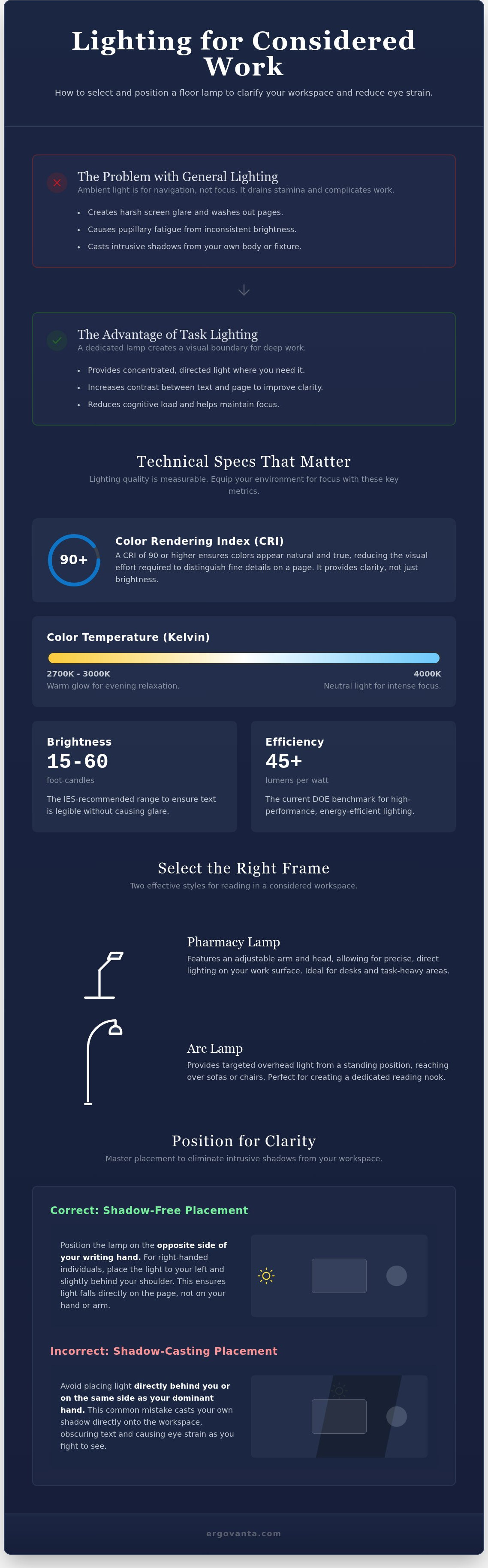
According to current DOE standards as of July 2026, the efficiency standard of 45 lumens per watt remains the benchmark for performance. For the work plane, the IES recommends 300 to 500 lux for general office tasks. If you're focusing on general reading and writing, aim for a range of 15 to 60 foot-candles to ensure the text remains legible without causing glare. With the sunset of ENERGY STAR specifications for portable lamps at the end of 2024, focusing on these specific efficiency metrics is the best way to ensure your equipment is made for the work.
Understanding CRI and Color Accuracy
CRI, or Color Rendering Index, is the measure of light quality relative to natural sunlight. For a considered reading environment, look for a CRI of 90 or higher. This level of accuracy ensures that colors appear as they should and reduces the visual effort required to distinguish fine details on a page. Low CRI light can make paper look yellowed or muddy, forcing your eyes to work harder than necessary. It's about clarity, not just brightness.
Choosing the Right Color Temperature
Color temperature, measured in Kelvins, dictates the atmosphere of your space. A range of 2700K to 3000K produces a warm glow that is suitable for evening relaxation or winding down. For periods of intense focus, 4000K to 5000K mimics natural daylight and supports alertness. Many considered floor lamps for reading now include tunable white technology or dimmable settings. These allow you to adjust the light as the day progresses. You should have total ownership over your environment.
Beyond color and brightness, flicker-free LED technology is essential. Subliminal flickering in lower-quality bulbs can lead to headaches and eye strain. Following OSHA lighting standards helps ensure your lighting levels are arranged to minimize glare and maximize comfort. If you have questions about how to best outfit a specific layout, feel free to reach out to us for guidance on choosing the right tools for your space.
Choosing the Right Frame: Task vs. Ambient Floor Lamps
The frame is the foundation of your lighting setup. It dictates where the light lands and how much floor space you sacrifice. When selecting floor lamps for reading, the choice between task and ambient frames depends on how you use your space. Ambient light, like that from a torchiere lamp, bounces off the ceiling to provide a soft, indirect glow. While this is helpful for reducing general shadows in a room, it often lacks the intensity needed for fine print. Task-oriented frames, conversely, are built specifically for the work.
Minimalist task lamps are a practical solution for smaller rooms or tight corners. These frames take up very little floor space while delivering high-intensity light exactly where you need it. By focusing on objects that earn their place, you can build a highly functional reading nook without overcrowding the environment. A considered frame doesn't just hold a bulb; it directs your focus. It's about intentionality in every square inch of your floor plan. Not all floor lamps for reading are designed equal; some are meant to blend in, while others are meant to lead.
The Versatility of the Swing-Arm
Swing-arm or pharmacy lamps offer the most precise directional control available. These designs allow you to bring the light source closer to the page, which is vital for shared spaces where seating heights vary. If you move from a desk chair to a lounge chair, the lamp moves with you. These frames are made for the work. You can find highly adjustable options in our collection of considered lamps that prioritize utility over unnecessary ornamentation. Precise control means fewer adjustments and more time spent in deep focus. It is the ergonomic choice for those who value flexibility.
When to Choose an Arc Lamp
Arc lamps provide overhead light without the requirement of a ceiling installation. They are ideal for lighting over the center of a sofa or a large armchair where a traditional straight-pole lamp might not reach. The sculptural curve allows the light source to hang directly above your materials, providing a wide pool of light that covers larger reading items. You can equip your space with a sculptural arc frame to anchor a dedicated reading nook. It turns a simple chair into a sanctuary for focus. The arc frame is a bold choice that balances aesthetic presence with functional reach.
Ultimately, the right frame is the one that gets used. Whether you choose a swing-arm for its mobility or an arc lamp for its reach, ensure the frame supports your specific habits. Every object in your workspace should serve a purposeful function. Build the room you choose to come back to by selecting equipment that supports your eyes and your workflow. Lighting shouldn't be an afterthought. It should be the first thing you get right.
How to Position Your Floor Lamp for Maximum Clarity
The workspace shapes the work. Equip it deliberately. Even the most considered floor lamps for reading lose their utility if they are positioned poorly. Placement is a functional decision that dictates how much mental energy you spend squinting at shadows. Start with the dominant hand rule. If you are right-handed, place the lamp on your left side. This arrangement prevents your hand and arm from casting shadows across the page as you write or turn pages. It's a small, intentional choice that clarifies your field of vision.
Height and angle are the next variables to master. When you are seated, ensure the bottom of the lampshade is at eye level. This positioning shields your eyes from the direct glare of the bulb while focusing the light downward. Angle the light directly onto your reading material rather than toward your face. You want to illuminate the task, not your surroundings. Maintain a consistent distance between the light source and the page to prevent hot spots. Hot spots are areas of uneven brightness that force your pupils to work harder, leading to quicker fatigue.
Avoiding Glare and Reflection
Position the light to hit the page from the side rather than from directly behind you. Light coming from behind often causes your own head to cast a shadow on the work. If you read on a tablet or laptop, be mindful of reflections. Light bouncing off a screen is a primary source of eye strain. Adjust the lamp's arm or tilt your device to break the line of reflection. Using a shade that diffuses light will soften the output, providing the contrast you need without the harshness you don't. It's about intentionality in every adjustment.
Integrating Lighting with Furniture
Build a space you'd choose to come back to by integrating your lighting with your furniture. Tuck the base of the lamp under the edge of a chair or sofa to reclaim floor space. This is especially useful in rooms where every square inch matters. Create a dedicated zone for focus by grouping the lamp with a side table and a chair that you actually use. Pair your lamp with workspace essentials to create a cohesive environment. When integrating floor lamps for reading into your room, consider the physical footprint alongside the light output.
Build a Better Reading Environment with Ergovanta
The workspace shapes the work. Equip it deliberately. At Ergovanta, we believe that your environment is a tool that either supports your focus or creates friction. Our name is rooted in this philosophy, drawing from the Ancient Greek ergon, meaning purposeful function, and vanta, a coined term for advantage. This commitment to functional utility drives our collection of floor lamps for reading. We don't believe in filling a room with objects for the sake of status. We believe in providing the equipment that people need to do the work. Your space should be a sanctuary of productivity, built through intentionality and personal ownership.
Finding the balance between functional utility and intentional design is essential for a workspace you'll choose to come back to. A lamp shouldn't just occupy a corner; it must earn its place. This means providing the clarity required to process information without the hidden tax of eye strain or mental fatigue. We focus on the small objects that make a significant difference in how you feel during a long session at the desk or in your favorite chair. When you equip your space with the right tools, you are investing in your own ability to stay focused and effective.
Considered Lighting for Every Workspace
Every reader has a different ritual, and your lighting should reflect that reality. Whether you are a freelancer tackling a deep research project or a student preparing for exams, your equipment must adapt to your habits. Browse our floor lighting for directional reading support that clarifies your materials and eliminates intrusive shadows. Our curated range of lamps is designed for durability and visual clarity, using minimalist frames that fit seamlessly into the rooms that actually get used. Select pieces that align with your specific workflow rather than settling for generic, unconsidered fixtures. The right light makes the work feel lighter.
Equip Your Space Today
A well-lit space is an inviting space. By focusing on the small objects that earn their place, you build an environment that supports both professional and personal growth. This isn't about following a corporate identity or a "hustle" mentality; it's about creating a space that feels like yours. Personal ownership of your workspace starts with intentionality in every choice, from the chair you sit in to the way you light your page. When you remove the distractions of poor contrast and harsh glares, you create room for your best work to happen. This is lighting made for the work and for the people who do it.
Building a better environment is a steady process of making considered choices. If you are ready to move away from flat, ambient lighting and toward a setup that supports deep focus, we are here to help. Reach out to our team to discuss your lighting needs and find the tools that fit your specific workspace. Equip your space for the work you do today.
Equip Your Space for Purposeful Focus
The workspace shapes the work. Equip it deliberately. Choosing floor lamps for reading is an intentional act of reclaiming your focus. You've learned that lighting isn't just about visibility; it's about contrast, clarity, and the ergonomics of placement. By prioritizing technical specs like a high CRI and the correct color temperature, you reduce the cognitive load on your brain. Positioning your light to avoid shadows and glare ensures your environment remains a sanctuary for productivity rather than a source of fatigue. Small adjustments, like the dominant hand rule, make the difference between a room that works and one that drains you.
At Ergovanta, we focus on objects that earn their place. Our lighting is designed with considered materials like metal and wood, ensuring durability and a clean, minimalist aesthetic. We build equipment for the people who do the work, emphasizing purposeful function in every frame. We believe your environment should be a source of clarity, not a collection of status symbols. Your space should feel like yours. Build the room you choose to come back to through intentionality and personal ownership.
Frequently Asked Questions
What is the best type of floor lamp for reading?
The best type of floor lamp for reading is a pharmacy or swing-arm lamp because they offer precise directional control. These frames allow you to bring the light source closer to your page or screen without moving the entire base. This adjustability is vital for maintaining focus across different seating heights. Unlike ambient lamps that scatter light, these tools are made for the work, focusing every lumen exactly where your eyes need it most. It's a functional choice that clarifies your environment.
How many lumens do I need for a reading lamp?
You typically need between 450 and 800 lumens for a focused reading environment. This range provides enough brightness to clarify text without causing intrusive glare. The IES recommends a range of 15 to 60 foot-candles for general reading tasks at the work plane. When selecting floor lamps for reading, ensure the output is sufficient to increase contrast between the page and the background, which significantly reduces the cognitive load on your brain.
Where should a floor lamp be placed for reading?
Position your lamp beside or slightly behind your shoulder on the side opposite your dominant hand. This placement ensures that your hand and arm don't cast shadows across the text as you work. Ensure the bottom of the lampshade is at eye level when you are seated. This intentional arrangement shields your eyes from the direct bulb while angling the light directly onto your material for maximum clarity and comfort.
Are LED floor lamps good for your eyes?
LED floor lamps are excellent for your eyes if they utilize flicker-free technology and offer a high color rendering index (CRI). LEDs provide a stable, consistent light source that doesn't pulse like older fluorescent bulbs. Look for a CRI of 90 or higher to ensure colors and text appear natural and sharp. When choosing floor lamps for reading, these considered tools help prevent the subtle headaches and fatigue often caused by poor-quality artificial lighting in a workspace.
What color temperature is best for reading at night?
A warm color temperature between 2700K and 3000K is best for reading at night. This range provides a soft, amber glow that is easier on the eyes as you wind down. While cooler daylight tones (4000K to 5000K) support alertness during the day, warmer tones help signal to your brain that it's time to relax. Choosing a lamp with adjustable temperature allows you to equip your space for both deep focus and evening rest.
How do I choose a lamp that prevents eye strain?
Choose a lamp with a high CRI, an adjustable arm, and an opaque shade to prevent eye strain. High CRI (90+) clarifies the print, while an adjustable arm lets you direct light from the side to avoid reflections. An opaque shade ensures the light is focused downward rather than bleeding into your peripheral vision. These features work together to create a considered environment that supports your eyes during long reading sessions. It's about building a space you actually want to use.
Can a floor lamp replace a desk lamp for reading?
A floor lamp can certainly replace a desk lamp, especially in smaller rooms where desk surface area is limited. Tall, adjustable frames like arc or swing-arm styles provide the same directional support as a desk lamp without taking up valuable workspace. By moving the light source to the floor, you reclaim your desk for other essentials. It's a practical way to equip your space for focus without sacrificing functionality or organization. It's about making every object earn its place.
What should I look for in a minimalist floor lamp?
Look for a small footprint, durable materials like metal or wood, and a design that prioritizes purposeful function. A minimalist floor lamp should earn its place by being useful rather than just decorative. Ensure the base is heavy enough for stability but slim enough to tuck under furniture. Focus on the quality of the light and the ease of the adjustment mechanisms. Every part of the object should serve your work, helping you build a space you'd choose to come back to.
Disclaimer
Ergovanta publishes these guides to help people set up better workspaces. Product recommendations reflect what we sell. Specifications, prices and availability are accurate at the time of writing and may change. Nothing here is medical, ergonomic or professional advice; if you have a specific health concern about your workstation, speak to a qualified professional.
From the catalog