May 21, 2026
How to choose a seat cushion for office chair: A guide for those who do the work

The workspace shapes the work. Equip it deliberately. If you spend serious hours at a desk, the objects you choose to surround yourself with matter more than you think. A seat cushion isn't a band-aid for a poorly designed chair; it's a tool that earns its place by supporting the endurance required for deep focus. Understanding how to choose a seat cushion for office chair involves looking past the marketing and focusing on how you actually feel after four hours of intentional output.
We've all felt that familiar numbness or tailbone pressure that breaks a productive flow just as things are getting good. It's frustrating when your physical environment works against your concentration. This guide will help you build a setup that supports your body without the clinical jargon. You'll learn the practical differences between memory foam and cooling gel, how to integrate a cushion into your existing desk setup, and how to select an object that's truly made for the work.
Key Takeaways
- Identify the materials that earn their place by supporting your body through hours of deep work.
- Learn how to choose a seat cushion for office chair that integrates with your existing setup instead of fighting it.
- Use measurements to find a fit that maintains circulation; this keeps you grounded in your space.
- Build an environment for endurance by layering considered objects that support your intentional focus.
Understanding the materials that earn their place
The workspace shapes the work. Equip it deliberately. Choosing the right material is the first step in learning how to choose a seat cushion for office chair that actually stays in your setup. Your sitting style dictates what you need. If you stay still for hours, you need contouring. If you move often, you need responsiveness. This choice is as fundamental as understanding the history and types of office chairs that have defined our workspaces for decades.
To see how these tools function in a real workspace, watch this experience:
Memory foam vs. gel: Choosing your support layer
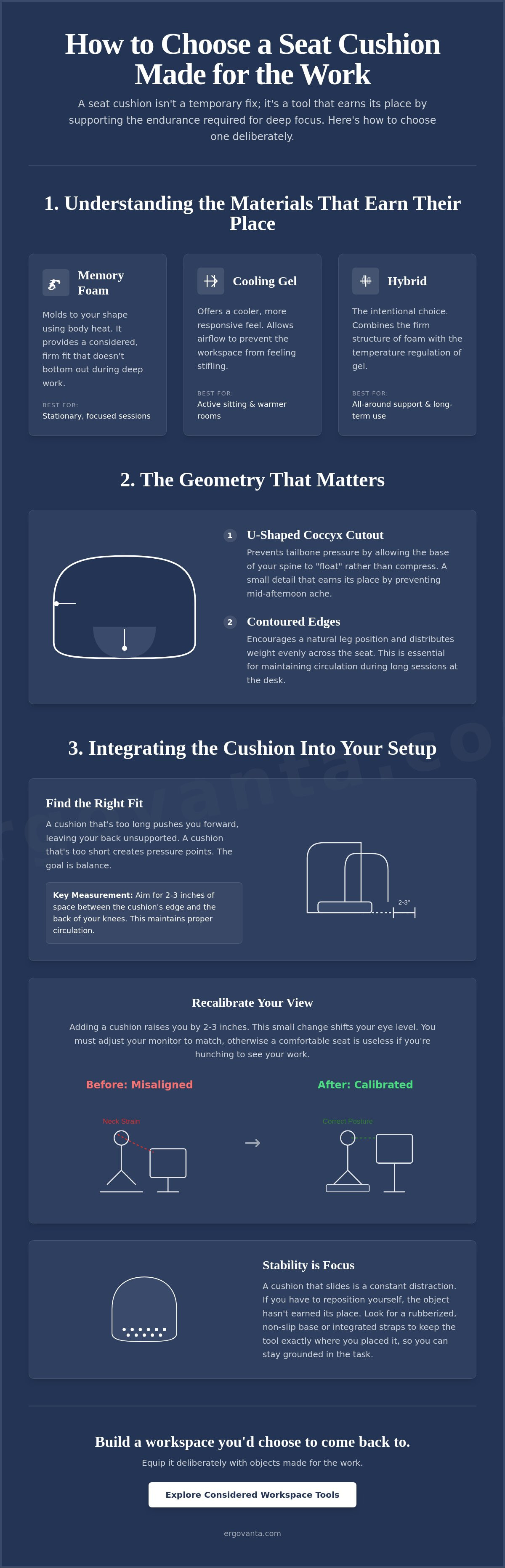
Memory foam is a material that prioritizes contouring over immediate bounce; it uses your body heat to mold to your shape. High-density versions provide a considered fit that doesn't bottom out during deep work. Honeycomb gel layers offer a cooler, more responsive feel for those who find foam too warm. Gel prevents the workspace from feeling stifling by allowing airflow through the material. Hybrids are often the most intentional choice, combining the structure of foam with the temperature regulation of gel. The best choice is the one that allows you to forget the chair and focus on the task.
The role of contouring and coccyx cutouts
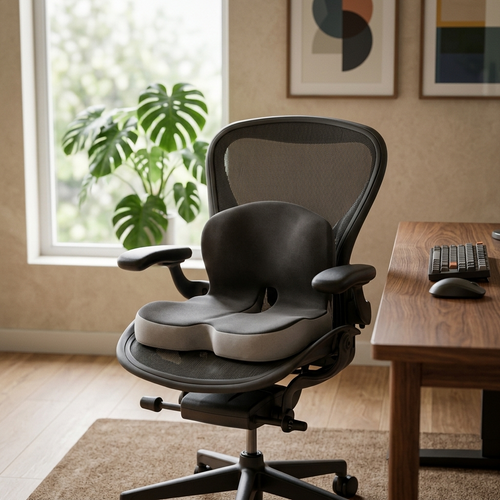
Geometry matters as much as material. A U-shaped cutout prevents tailbone pressure by allowing the base of the spine to float rather than compress against a hard surface. This is a small detail that earns its place by preventing the mid-afternoon ache. Contoured edges are equally vital. They encourage a natural leg position and even weight distribution, which is essential for long sessions at the desk. When you build your space with considered ergonomics and comfort tools, you aren't just adding padding; you're equipping yourself for the work.
How to choose the right cushion for your specific setup
A seat cushion doesn't exist in isolation. It’s one part of a larger system that either supports your focus or disrupts it. When you consider how to choose a seat cushion for office chair, you must account for the environment you've already built. Start with the chair itself. If your current seat is already soft, adding a high-loft, soft cushion creates instability. This lack of a firm foundation often leads to micro-adjustments and muscle fatigue. You want a pairing that feels intentional, not like you're sitting on a stack of loose pillows.
Measurement is your most reliable tool. Check your seat depth before you buy. A cushion that's too long will push your torso forward, leaving your back without support. Ideally, you want two to three inches of space between the edge of the cushion and the back of your knees. This helps maintain circulation during long sessions. Following established ergonomic guidelines for office chairs ensures that your physical setup remains functional rather than just padded. Consider the cover material as well. Mesh is practical for airflow, while fabric provides a more considered, residential feel for a room that gets used every day.
Matching cushion height to your monitor level
Adding a cushion usually raises your seating position by two or three inches. This change is small, but it completely shifts your eye level relative to your screen. To avoid neck strain, you’ll likely need to adjust your monitor stand to bring the top of the display back to eye level. Every change in the workspace requires a recalibration of the surrounding tools. Don't ignore the screen height; a comfortable seat is useless if you're hunching to see your work.
Stability and the non-slip factor
A cushion that slides is a distraction. If you have to reposition yourself every twenty minutes, the object hasn't earned its place. Look for rubberized bases or integrated strap systems that keep the cushion exactly where you placed it. Stability allows you to stay grounded in the task. If you're unsure which setup fits your specific desk, you can reach out to us for guidance on building a space that works for you.
Equipping your workspace for long-term endurance
The workspace shapes the work. Equip it deliberately. Building a space you choose to come back to means looking at the room as a whole system. A seat cushion is a starting point, but it works best when paired with other ergonomic comfort tools that support your posture from different angles. When you understand how to choose a seat cushion for office chair, you're actually learning how to build a foundation for long-term focus. This is the essence of 'Ergo': purposeful function in action.
This process isn't just about adding soft layers. It's about intentionality. Just as you'd research how to choose an ergonomic chair to find a solid base, you must select accessories that earn their place. The goal is simple: you want to feel the same level of focus at the end of the day as you did when you started. The small objects you choose should earn their place by improving your physical endurance. If an object doesn't help you do the work, it doesn't belong in the room.
The synergy between cushions and footrests
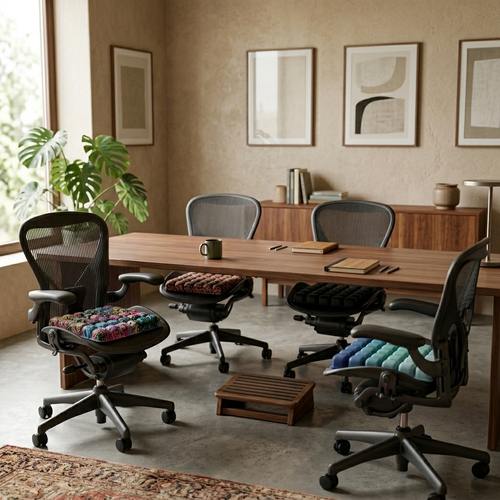
If a cushion makes your chair too high for your feet to reach the floor, the build is incomplete. Dangling feet create pressure on your thighs and pull on your lower back; it's hard to do great work when you're literally losing touch with the floor. A footrest becomes an essential part of this setup to keep your posture neutral. It grounds you. By supporting your feet, you reduce the load on your spine and maintain the circulation needed for deep work sessions. This synergy between objects is what creates a room that actually gets used.
Maintenance: Keeping your essentials in rotation
Intentionality extends to how you treat your equipment. Choose a cushion with a removable, washable cover to keep your space clean and ready for the next day. Maintaining your gear is as important as knowing how to choose a seat cushion for office chair in the first place. Treat your workspace essentials as a collection of tools that require care. Rotate the cushion occasionally to ensure even wear and longevity. Cleaning the cover isn't just about hygiene; it's a ritual that signals your space is a place for focus. A workspace that is cared for is a workspace you'll choose to come back to. One that isn't is just a storage unit for a chair you've grown to resent.
Build a workspace for the long haul
The room around you dictates the quality of what you produce. Choosing a seat cushion is about more than just adding padding. It is about selecting a material that reacts to your specific sitting style and ensuring it integrates with your existing tools. Whether you prioritize the contouring support of memory foam or the breathability of gel, the goal is to create a setting where you can focus without physical distraction.
Remember that every addition requires a recalibration. When you add height to your seat, adjust your monitor to match. Keep your essentials in rotation by maintaining them properly. Understanding how to choose a seat cushion for office chair is just one part of building a room you actually choose to come back to. We offer intentional design that earns its place on your desk, made specifically for the people who do the work.
Equip your space with considered ergonomic tools that support your endurance. Your setup should work as hard as you do.
Frequently Asked Questions
Do seat cushions actually help with back pain during long work hours?
Seat cushions help by redistributing your weight and preventing the bottoming out effect of a worn down chair. When you sit for serious hours, pressure builds up in the tailbone and lower back; a considered cushion allows the spine to sit in a more neutral position. It isn't a medical cure, but it is a deliberate tool that helps you stay in your flow longer. If you've ever felt that mid afternoon ache that kills your focus, you know why these objects earn their place.
How thick should an office chair seat cushion be for maximum support?
A thickness of 2 to 4 inches is the standard for maintaining support without feeling disconnected from your chair. If a cushion is too thin, it won't provide enough contouring to matter; if it's too thick, it can make your setup feel unstable. Understanding how to choose a seat cushion for office chair means finding that balance where the material supports your weight without forcing you into an awkward posture.
Will adding a seat cushion make my office chair feel too high for my desk?
Adding a cushion will likely raise your seating position by 2 or 3 inches, which changes your relationship with the desk. You'll need to adjust your chair height and your monitor stand to keep your eyes level with the screen. If your feet no longer reach the floor comfortably, equip your space with a footrest to maintain circulation. Every change to your setup requires a quick recalibration of the surrounding tools to keep the room functional.
What is the best material for a seat cushion if I sit for 8 hours a day?
High density memory foam or hybrid gel models are the most intentional choices for eight hour sessions. Memory foam provides the contouring needed for long term endurance, while gel layers prevent the material from holding too much heat. This combination ensures the cushion remains supportive throughout the day rather than flattening out by lunch. When you learn how to choose a seat cushion for office chair, look for materials that prioritize density over initial softness.
From the catalog