September 3, 2026
Mesh vs. Upholstered Office Chairs: Which is Best for You?

A chair should be the least interesting part of your day. When the focus is on the work, the objects around you should disappear into the background. Yet, many who spend their hours at a desk find themselves distracted by the wrong materials: the stifling heat of a humid afternoon or the slow, visible sag of foam that has lost its resolve. Choosing between a mesh office chair vs upholstered office chair is more than a matter of style. It is about how you want your body to feel after six hours of deep concentration.
You likely already know that your environment dictates your output. A workspace that feels considered allows for better focus, while a poorly chosen seat becomes a source of physical friction. We have built this guide to help you navigate the trade-offs between these two standards without the usual corporate jargon. You deserve a chair that supports your posture without demanding your attention.
This is your no-nonsense look at which material earns its place in your daily workspace. We will examine the breathability of mesh, the enduring support of upholstery, and how to avoid common pitfalls like pressure points or difficult maintenance. By the end, you will know exactly how to equip a space that feels intentional, functional, and personal.
Key Takeaways
- Determine if a mesh build is right for your climate by understanding how passive cooling and material tension affect your daily focus.
- Explore why upholstered chairs are often the preferred choice for those who need consistent pressure distribution and body contouring during deep work.
- Compare the long-term maintenance of a mesh office chair vs upholstered office chair, including how each material manages dust and cleaning.
- Identify the signs of material fatigue, such as sagging mesh or compressed foam, to ensure you equip a seat that lasts.
- Build a decision framework based on your specific environment to select a chair that disappears into the background of your productivity.
The Material Debate: Defining Mesh and Upholstered Seating
The workspace shapes the work. Equip it deliberately. When you're deciding between a mesh office chair vs upholstered office chair, look past the initial aesthetic. This choice is about the physical reality of your workday. It's about building a space that supports your focus rather than fighting against it. Every object in your room should earn its place through purposeful function.
A mesh chair uses a suspended synthetic weave. It's designed specifically for airflow and weight distribution through tension. An upholstered chair follows a more traditional construction, utilizing foam or padding covered by fabric, vinyl, or leather. Both styles have established roles in the history of the ergonomic office chair, yet they offer fundamentally different experiences. Your choice should be an intentional decision based on how you want your body to feel after hours of concentration.
The Purpose of Mesh
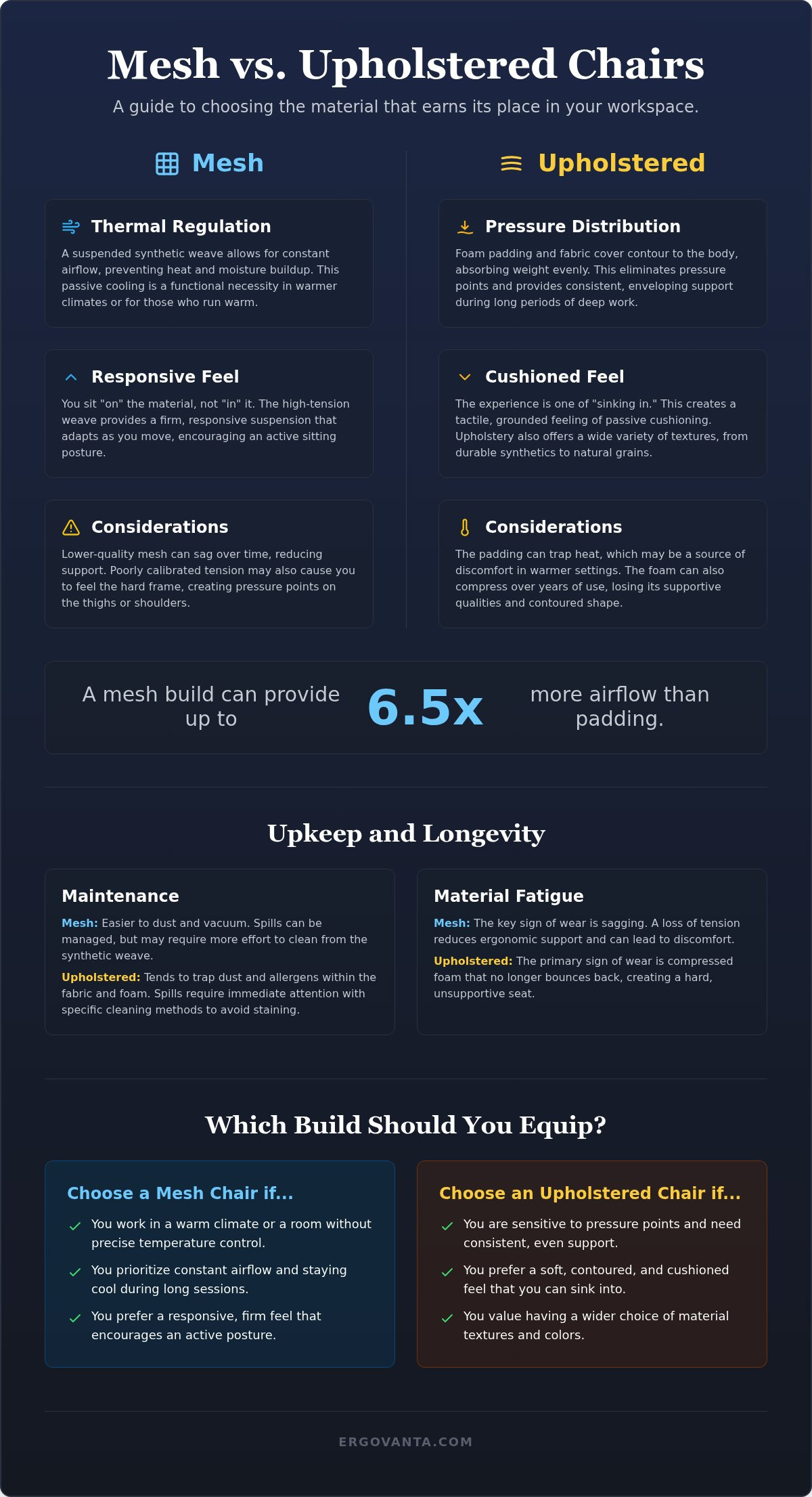
Mesh serves as a suspension system. It removes the need for heavy padding by using a high-tension weave to support your frame. The primary advantage here is thermal regulation. Because the material is porous, it facilitates constant airflow, preventing the discomfort of sweating during the summer. It's a minimalist solution for rooms that get used frequently. Mesh is about transparency and breathability. It keeps the workspace feeling open and light. If you value a seat that stays cool and adapts dynamically to your movements, a mesh build is a considered choice for your ergonomics and comfort needs.
The Role of Upholstery
Upholstery is built for pressure distribution. It uses various foam densities to contour to the body, absorbing weight rather than suspending it. This creates a tactile, grounded feeling often described as "sinking in." Upholstered chairs offer significant material variety, allowing you to choose textures that feel personal and made for the work. Whether it's a durable synthetic fabric or a natural grain, the choice is yours. While mesh is about active cooling, upholstery is about passive cushioning. It eliminates the potential for pressure points caused by the rigid frames sometimes found in mesh designs. When comparing a mesh office chair vs upholstered office chair, the latter remains a reliable, time-tested approach to building a workspace that feels like yours.
Thermal Regulation and Tension: The Mechanics of Mesh
When weighing a mesh office chair vs upholstered office chair, the first physical difference you'll notice is temperature. Heat is a distraction. If you've ever spent a summer afternoon peeled away from a traditional seat, you understand the value of passive cooling. Mesh chairs operate as a suspension system that allows your body to breathe. They don't just hold you; they facilitate a constant exchange of air that prevents the buildup of moisture and heat.
The sensory experience of mesh is distinct. You sit "on" the material rather than "in" it. This creates a feeling of weightlessness and mobility that many find essential for staying alert during long sessions. However, this experience depends entirely on the quality of the weave. High-quality synthetic weaves provide a firm, responsive tension that supports your frame without sagging over time. If the tension is poorly calibrated, you may find yourself feeling the hard edges of the chair's frame, which creates unnecessary pressure points at the thighs or shoulders.
Airflow and Performance
In warmer climates or spaces without precise climate control, the airflow provided by mesh is a functional necessity. Research indicates that mesh can offer up to 6.5 times more airflow than traditional padding, which significantly impacts your comfort during deep work. Breathability is the ability to maintain a neutral body temperature. By preventing heat from being trapped against your skin, a mesh build ensures your environment remains a place of focus rather than a source of physical irritation. If you're unsure which build fits your specific environment, reach out to our team for a more personal recommendation.
The Feel of Suspension
Weight distribution is the core strength of a mesh build. Because the material is stretched across a frame, it contours to your body's shape through dynamic tension. This creates a "bouncy" response that adapts as you move. It's a performance-oriented feel that encourages an active sitting posture. You should also consider your wardrobe when choosing this material. While high-quality weaves are smooth, some lower-grade meshes can have a "cheese grater" effect on delicate fabrics like wool or silk. A well-built mesh chair earns its place by being intentional about both your comfort and the longevity of your clothing.
- Passive Cooling: Constant airflow keeps you focused in any climate.
- Weightless Support: Suspension reduces the feeling of being "stuck" in a chair.
- Material Tension: Look for firm, high-quality weaves to avoid sagging.
- Frame Awareness: Ensure the seat depth prevents your legs from hitting the rigid frame.
Pressure Distribution and Material Longevity: The Case for Upholstery
While mesh focuses on suspension, upholstery is defined by its core. It uses layers of padding to manage how your weight interacts with the ground. Choosing a mesh office chair vs upholstered office chair often comes down to how much you value a solid foundation. Upholstery provides a different kind of intentionality. It is for the person who wants their seat to feel like a permanent fixture rather than a temporary suspension. It offers a sense of psychological grounding and stability that mesh can lack, making your space feel more like a room that gets used for serious work.
Contouring and Support
High-density foam is the silent partner in an upholstered build. It contours to your frame, distributing pressure across the entire surface of the seat. This is particularly beneficial for those with lower body sensitivity or a thinner frame who might find mesh tension too unforgiving. Unlike mesh, which relies on a rigid perimeter to maintain its shape, upholstery allows you to shift and change your posture without hitting a hard edge. It accommodates the way people actually sit: crossing legs, leaning, and shifting weight throughout the day. The tactile experience of a fabric weave also adds a layer of personal comfort to your space, ensuring the objects around you feel intentional and considered.
Long-term Durability
Longevity in an upholstered chair is a function of foam quality. Research suggests that a high-quality fabric chair can last between 7 and 10 years; this often exceeds the 5 to 8 year lifespan expected from many mesh alternatives. While mesh faces the risk of losing its tension over time (sagging), upholstery faces the risk of flattening. Choosing a chair with high-density foam ensures the seat earns its place in your workspace for years. The fabric you select is just as intentional. Whether you prioritize a soft texture for a personal room or a heavy-duty weave for a high-traffic area, the material must be made for the work you do. A well-chosen fabric resists wear and maintains the visual order of your workspace.
- Foam Contouring: Padding eliminates specific pressure points by distributing weight evenly.
- Posture Flexibility: Upholstered seats support a wider variety of sitting positions, including crossing your legs.
- Extended Lifespan: High-density foam and durable fabrics can provide up to a decade of reliable use.
- Personal Intentionality: A wide range of textures and weaves allows you to equip a space that feels uniquely yours.
Upkeep and Maintenance: Objects That Earn Their Place
A workspace that gets used is a workspace that gets dirty. Maintenance is not a chore; it's a form of respecting the tools that help you do the work. When you're deciding between a mesh office chair vs upholstered office chair, the long-term upkeep is a functional reality you must consider. A chair that earns its place is one that remains easy to manage through years of use. Each material handles spills, dust, and daily wear in fundamentally different ways. Equip your space with the maintenance profile that fits your habits.
Spill management is where these materials diverge most sharply. Mesh is "straight through" in nature. If you drop a liquid, it passes through the weave and onto the floor or the chair's base. This prevents the seat from becoming a soggy mess, but it requires you to clean the surfaces below. Upholstery, by contrast, is a sponge. It holds onto moisture, which can lead to staining or internal foam degradation if not handled immediately. Understanding the cleaning differences between a mesh office chair vs upholstered office chair helps you choose a material that matches the way you actually live and work in your space.
The Reality of Cleaning Mesh
Some claim that mesh is maintenance-free. This is a myth. While mesh doesn't absorb spills in the same way fabric does, the open weave acts as a filter for your environment. It traps lint, skin cells, and dust within the fibers. If neglected, this buildup becomes visible and difficult to remove. A vacuum with a soft brush attachment is the most effective way to clear the weave. You must also pay attention to the "under-seat" dust trap. Because mesh is porous, debris falls through the seat and settles on the adjustment levers and the base. Wiping these components down once a month maintains the mechanical integrity of your seat. Most synthetic meshes are durable against mild cleaning chemicals, making them resilient to deeper sanitization when necessary.
Maintaining Fabric and Foam
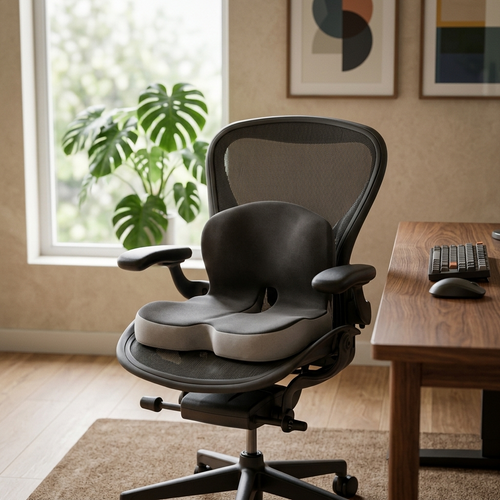
Upholstery requires a more protective mindset. Because fabric and foam are absorbent, spills don't just sit on the surface; they move into the core. This makes immediate spot cleaning vital. For long-term maintenance, deep cleaning with a dedicated fabric extractor or steam cleaner is the only way to remove accumulated odors and oils. You should also watch for pilling on the seat's surface, which occurs when fibers break and tangle from friction. One intentional way to protect your investment is to equip your chair with a seat cushion. This simple addition absorbs the brunt of the daily friction and can be replaced or cleaned more easily than the chair's built-in upholstery. It's a considered choice that extends the life of the foam and keeps the fabric looking fresh for the work ahead.
- Vacuuming: Use a brush attachment for mesh weave and fabric surfaces weekly.
- Spot Cleaning: Treat upholstered spills immediately to prevent core absorption.
- Dusting: Wipe down the mechanical base of mesh chairs monthly to clear debris.
Decision Framework: Which Build Should You Equip?
The workspace shapes the work. Equip it deliberately. Choosing between a mesh office chair vs upholstered office chair is not about finding a universal "best" option; it's about identifying the specific physical friction in your day and removing it. Your chair is one of the small objects that must earn its place through daily function. It shouldn't feel like a replica of a sterile corporate office. Instead, it should be a considered choice that reflects the way you actually sit, move, and think.
Navigating the trade-offs of a mesh office chair vs upholstered office chair requires a focus on your specific environment and habits. Building a space that feels personal requires intentionality. When every tool in your room is made for the work, the environment disappears, leaving only your focus. This is about personal ownership of your surroundings. Use the following framework to decide which material deserves a permanent spot in your workspace.
Choose Mesh If...
- Your space runs warm: If you value high airflow or work in a climate without precise temperature control, mesh provides the passive cooling you need to stay focused.
- You prefer a firm, suspended feel: Mesh is for those who enjoy a responsive sensation that keeps them alert and mobile throughout the day.
- You want a visual profile that feels light and minimalist: The transparent nature of a synthetic weave keeps a room feeling open; it's ideal for smaller rooms that get used frequently.
Choose Upholstery If...
- You struggle with pressure points: High-density foam padding provides a fit that absorbs weight, making it a reliable choice for those who find mesh tension too unforgiving.
- You sit in various positions: If you find yourself crossing your legs or leaning during deep work sessions, the solid foundation of upholstery supports these shifts without the rigid frame interference common in mesh designs.
- You prefer a warmer tactile feel: In cooler climates, the physical warmth and texture of fabric weaves provide a sense of grounded stability and tactile comfort.
Equipping the Rest of the Space
A chair is only one component of a functional environment. To build a setup that truly supports your output, consider how other tools interact with your seating choice. For instance, proper lighting reduces eye strain and sets the tone for your concentration, while other Ergovanta workspace essentials ensure that every object on your desk has a purposeful function. When your environment is intentional, it becomes a place of focus rather than just a place to sit.
Finalize your selection by looking at your room as a whole. It’s about creating a place that feels like yours, not anyone else’s. Build the workspace you choose to come back to.
Build Your Workspace with Intent
The workspace shapes the work. Equip it deliberately. Whether you prioritize the passive cooling of a mesh build or the contoured stability of high-density foam, your choice should be rooted in the physical reality of your day. A chair is a tool that either supports your output or creates unnecessary friction. It must earn its place through purposeful function and intentional design.
Navigating the trade-offs of a mesh office chair vs upholstered office chair requires a focus on your specific environment and habits. Consider your climate and your preferred sitting postures to ensure you select a seat that disappears into the background of your productivity. We provide intentional ergonomics for home and studio, offering no-nonsense tools designed for the people who do the work.
Your space should be a personal sanctuary of focus. By choosing objects made for the work, you build an environment you'll choose to come back to every day. Start building your workstation with confidence and personal ownership.
Frequently Asked Questions
Is mesh more ergonomic than upholstered fabric?
Neither material is inherently more ergonomic; the choice depends on your specific sensory needs. When deciding between a mesh office chair vs upholstered office chair, ergonomics is about personal fit. Mesh provides dynamic suspension and weightless support, which is ideal if you value airflow. Upholstery uses foam to contour to your body, which is better for eliminating specific pressure points. Select the material that allows you to focus on the work without physical distraction.
Do mesh chairs sag over time?
Mesh chairs can sag if the weave is of lower quality or loses tension over time. High-quality synthetic weaves are designed to maintain their responsive bounce for several years. Research indicates that a typical mesh chair has a functional lifespan of 5 to 8 years. Once the tension fades, you may begin to feel the rigid edges of the frame. This makes material quality a vital consideration when you equip your workspace.
Which chair material is better for back pain?
Material choice for back pain is a matter of personal preference and support style. When weighing a mesh office chair vs upholstered office chair, mesh offers firm, breathable suspension that encourages an active posture. Upholstery provides passive cushioning through high-density foam, which is often better for those who need pressure relief at the hips and thighs. Ensure your choice includes adjustable lumbar support to maintain the natural curve of your spine during deep work.
Are upholstered chairs harder to clean than mesh?
Upholstered chairs are generally more difficult to maintain because fabric and foam absorb spills and odors. This requires immediate spot treatment or deep steam cleaning to maintain the material's integrity. Mesh allows liquids to pass straight through, but the weave acts as a filter that traps dust, lint, and skin cells. You must vacuum mesh regularly to prevent buildup. Both materials require intentional maintenance to ensure they earn their place in your workspace.
Can mesh chairs damage your clothes?
Low-grade mesh weaves can act as a mild abrasive on certain fabrics. The friction between a rough weave and delicate materials like wool or silk can cause pilling or visible wear over time. High-quality mesh is engineered to be smoother to prevent this effect. If you frequently wear delicate clothing, an upholstered seat or a high-tension, smooth mesh is a more considered choice to protect the longevity of your daily wardrobe.
Which material is better for heavy people?
Upholstered chairs with high-density foam are often better for providing consistent support over time. Foam padding distributes weight across a wider surface area and eliminates the risk of bottoming out against a rigid frame. While high-quality mesh is durable, the tension can fatigue more quickly under higher weight loads. A well-built upholstered seat offers a solid, grounded foundation that maintains its shape and support during years of heavy use in a workspace.
How long should a high-quality office chair last?
A high-quality upholstered chair typically lasts between 7 and 10 years, while a mesh chair often lasts 5 to 8 years. Longevity is a function of material quality and how well you respect your tools. Upholstery lifespan depends on foam density and fabric wear resistance. Mesh longevity is tied to the retention of weave tension. Choosing a chair made for the work ensures it remains a functional part of your environment for as long as possible.
Disclaimer
Ergovanta publishes these guides to help people set up better workspaces. Product recommendations reflect what we sell. Specifications, prices and availability are accurate at the time of writing and may change. Nothing here is medical, ergonomic or professional advice; if you have a specific health concern about your workstation, speak to a qualified professional.
From the catalog