July 17, 2026
Minimal Desk Setup: How to Build a Workspace That Earns Its Place

Your desk is either a tool for focus or a collection of distractions you've decided to tolerate. If you spend serious hours at a desk, the space around it matters more than you think. Most of us want a clean, minimalist desk setup but end up with a surface that feels cluttered and physically uncomfortable. You know the feeling: the mental fog of a messy desk, the nagging neck pain from a monitor at the wrong height, and the constant pull of objects that have no business being there.
It's time to build a workspace that actually earns its place. You don't need a sterile environment; you need an intentional one. This article will show you how to equip a workspace that supports your focus and finally feels like yours. We'll cover how to choose tools that facilitate deep work, the best ways to integrate tech so it stays out of sight, and how to create a zone you actually want to come back to every morning. The workspace shapes the work. Equip it deliberately.
Key Takeaways
- Understand that a minimalist desk setup is a deliberate choice to remove friction rather than just following an aesthetic trend.
- Build your workspace by selecting only the small objects that earn their place and help you do the work.
- Align your screen to your natural line of sight with a monitor arm or laptop stand to keep your surface clear and your posture grounded.
- Use intentional desk lighting to highlight your work area and create an atmosphere you actually choose to come back to.
Defining the Minimalist Desk Setup: Intentionality Over Aesthetics
The workspace shapes the work. Equip it deliberately. A minimalist desk setup isn't a visual competition or a quest to own as little as possible. It's a deliberate choice to remove distractions and keep only what matters. If you spend serious hours at a desk, the objects on your surface either help you focus or fight for your attention. Building a minimalist desk setup requires you to be ruthless with what stays and honest about what's just taking up space.
The philosophy of Minimalism in your workspace is about utility. Every item should serve a purpose or provide genuine value to your process. When you strip away the unnecessary, you leave room for deep work. This isn't just about aesthetics; it's about building an environment that supports the person doing the work. It's the difference between a desk that looks good in a photo and a desk that helps you get through a difficult project.
To better understand this concept, watch this helpful video:
Avoid the trap of "empty desk syndrome." A space that's completely bare can feel sterile and uninspiring. Your desk should still feel like yours. Intentionality means choosing the right workspace essentials that earn their place. Think about the "why" behind every object. If your monitor height causes you to slouch, that's a functional failure of your setup. A truly considered space addresses these small frictions before they become big distractions. It's not about having nothing; it's about having the right things.
The Difference Between Empty and Intentional
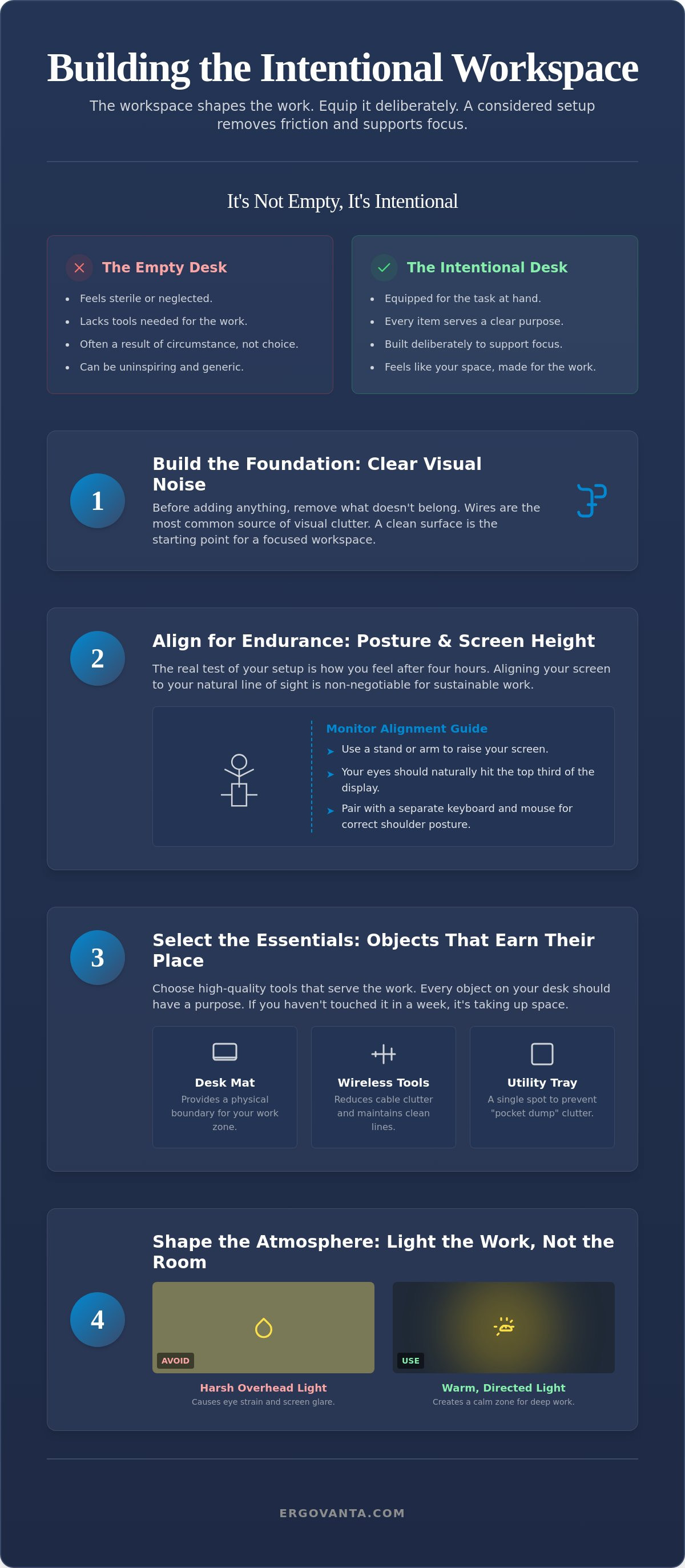
Empty desks are often just neglected. Intentional desks are equipped for the task at hand. To build a setup that works, you need to identify the tools you touch every day. These items deserve a permanent home on your surface. If you haven't touched an object in the last week, it's likely just taking up mental space. Remove it. By clearing the clutter, you reduce the visual noise that leads to procrastination. Your workspace should be a reflection of what you're doing, not a storage unit for things you might need eventually.
Selecting Your Tools: Minimalist Desk Setup Essentials That Earn Their Place
Equipping a minimalist desk setup starts by stripping the surface to its foundation. Before you buy new tools, clear the cables. Wires are visual noise that fight for your attention. Use trays or clips to hide them from view. Once the clutter is gone, select tools based on how they serve the work. It's better to own one high-quality tool than a drawer full of plastic alternatives that you'll eventually throw away. Every object should be considered and intentional.
Elevation and Alignment for Long Hours
How you feel after four hours at the desk is the real test of your setup. Your screen height determines your posture. If you're looking down, you're inviting neck strain and back fatigue. Following basic ergonomic principles keeps you in the game longer. Use a monitor or laptop stand to bring your display to eye level. If you work from a laptop, this is non-negotiable. Pair the stand with a separate keyboard and mouse to keep your shoulders relaxed. This isn't about looking "correct"; it's about making the work sustainable for your body.
The Small Objects That Matter
Every item on your desk must earn its place. A quality desk mat does more than protect the surface. It provides a physical boundary for your work zone. Within this zone, keep tech accessories wireless to maintain clean lines and reduce friction. Outside of it, prevent "pocket dump" clutter by using a single tray for your keys and minimalist wallet. These small choices turn a generic table into your space. If you're unsure where to start with your own build, you can always reach out for advice on equipping your specific room. We build for the people who do the work.
Lighting and Atmosphere: Creating a Room You Choose to Be In
The room around your desk dictates the mood of your work. If you spend serious hours at a desk, the environment should be a choice, not an accident. Lighting is a tool for focus. A considered minimalist desk setup uses light to highlight the work area while keeping the rest of the room in the periphery. Avoid harsh overhead lights that wash out your screen and cause eye fatigue. Instead, use warm, directed desk lighting to create a calm environment for deep work. This isn't just about seeing your keyboard; it's about defining a zone where work happens.
Your workspace is for the intensity of work, but it should also allow for a refined ritual when you finish. When the day is done, the transition matters. A desk that feels like a factory floor is a place you'll eventually start to avoid. By controlling the atmosphere, you build a space that feels intentional. It becomes a room you choose to be in rather than a place you're forced to occupy.
Intentional Decor and Environment
Adding life to your surface shouldn't mean adding clutter. Faux plants provide the visual benefit of greenery without the maintenance requirements or the risk of soil on your equipment. They earn their place by softening the hard lines of tech and cables. Choose one or two pieces of intentional decor that reflect your personality. One well-placed figurine or a single vase is enough. If an object doesn't provide a sense of calm or utility, it's just noise.
Consider the ritual of winding down. A clean desk at the end of the day is a gift to your future self. Clearing your surface before you leave ensures that when you return, you aren't greeted by yesterday's problems. It's about personal ownership of your environment. Build the workspace you'd choose to come back to. Equip it for the person doing the work.
Build the Workspace You Choose to Come Back To
The workspace shapes the work. Equip it deliberately. A minimalist desk setup is not a static goal but a continuous practice of keeping only what helps you focus. By choosing intentionality over simple aesthetics, you ensure that every object on your surface earns its place. Remember that proper screen alignment protects your body during long hours, and warm, directed lighting defines the boundary between your life and your work. These aren't just design choices; they are functional requirements for anyone who spends serious time at a desk.
Your environment should be a source of clarity. When you remove the visual noise of loose cables and unnecessary objects, you leave room for deep work. This is purposeful function in action. We believe in providing considered tools for your space that support your daily rituals without getting in the way. It is about personal ownership and building a room that actually works for you. If you are ready to equip a workspace that feels like yours, build a workspace you choose to come back to. We are for the people who do the work.
Frequently Asked Questions
What is the most important part of a minimalist desk setup?
Intentionality is the foundation of any functional workspace. It isn't about achieving a sterile look; it's about ensuring every object on your surface earns its place. Start by clearing your desk and only returning the tools you touch daily. This approach creates a minimalist desk setup that supports deep work instead of distracting you with unnecessary clutter. The goal is a clean surface that serves the work you do.
How do I hide cables in a minimal setup?
Cable management is essential for reducing the visual noise that leads to mental clutter. Use a dedicated tray under your desk to house power strips and excess cord length. For the few wires that remain on the surface, use weighted clips to keep them organized. Choosing wireless peripherals like mice and keyboards also helps maintain the clean lines of your workspace. It's about removing friction so you can focus on the task at hand.
Can a minimalist desk setup feel cozy?
Minimalism doesn't have to feel cold or like a laboratory. You can build a warmer environment by using directed, warm lighting and natural materials. A single faux plant or a textured desk mat adds personality without creating clutter. The objective is to build a room you actually choose to be in every morning. A workspace should feel like yours while remaining intentional and made for the work.
Do I need a large budget for a minimal desk?
You don't need a massive budget to equip a considered space. Minimalism is often about owning fewer, better things, which can save you money in the long run. Focus on the essentials first: a clear surface, proper monitor height, and good lighting. You can build your minimalist desk setup over time by investing in quality tools that solve specific problems. Start with what you have and remove the distractions first.
From the catalog