July 10, 2026
Modern Chandeliers for Office: Equipping Your Space for Better Work

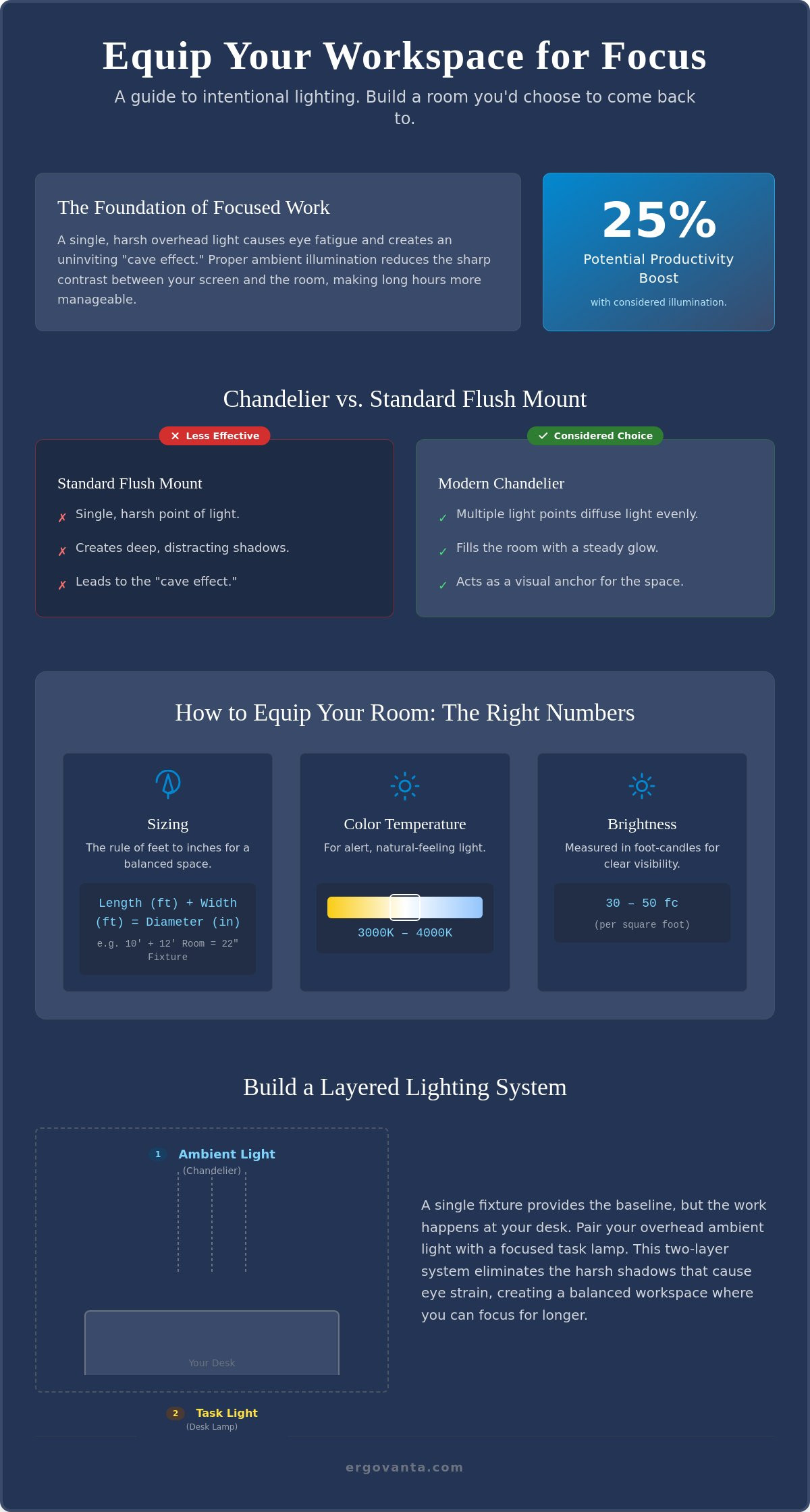
If you spend serious hours at a desk, the room around it matters more than you think. Most office lighting is an afterthought. It is often a harsh overhead glare that causes eye fatigue or a dim bulb that casts shadows across your keyboard by late afternoon. You deserve a space that feels intentional. Integrating modern chandeliers for office use isn't about showing off. It is about building an environment where you actually want to be. Proper illumination can boost productivity by up to 25 percent. This makes a considered light fixture one of the most practical tools you can install.
You probably already know that a single desk lamp isn't enough to carry the weight of a long workday. This guide will help you select and position a chandelier to create a functional foundation for your room. You will discover how to balance ambient coverage with task lighting to reduce eye strain. We will show you how to eliminate the shadows that disrupt your focus. We cover everything from meeting illumination standards to choosing minimalist designs that earn their place. It is time to equip your workspace for focus. Build the room you'd choose to come back to every day.
Key Takeaways
- Learn why ambient light is the foundation of a workspace that feels intentional and reduces the contrast between your screen and the rest of the room.
- Understand how to select modern chandeliers for office use by calculating the specific brightness and color temperature required to keep you alert.
- Discover how a considered ceiling fixture prevents the uninviting "cave effect" where dark corners make a room feel smaller and less productive.
- Build a layered lighting system by pairing your overhead fixture with task lamps to eliminate the harsh shadows that cause eye strain during late sessions.
Why a Modern Chandelier is the Foundation of Your Workspace
The workspace shapes the work. Equip it deliberately. If you spend serious hours at a desk, the room around it matters more than you think. A chandelier isn't just for a dining room or a hospitality lobby. In a workspace, it provides the baseline ambient illumination that reduces the sharp contrast between your bright monitor and the rest of the room. This prevents that uninviting "cave effect" where corners remain dark and the room feels cramped. When the environment is balanced, the work feels more manageable.
Choosing modern chandeliers for office use is an act of intentionality. It signals that the space is built for a specific purpose rather than being a temporary corner of the house. When you equip your room with considered lighting, you're making it a place you actually choose to come back to. It's about the small objects that earn their place and the rooms that actually get used.
To better understand this concept, watch this helpful video:
The Science of Eye Strain and Ambient Light
When your room is dark and your screen is bright, your eyes work too hard. Your pupils dilate and contract repeatedly every time you look away from the monitor to check a notebook or reach for a coffee. This biological repetition leads to fatigue by mid-afternoon. Proper placement of a fixture ensures you avoid veiling reflection: the annoying glare on your screen that obscures your work. Good ambient light makes the work easier on your body.
Chandelier vs. Standard Flush Mount
A standard flush mount often provides a single, harsh point of light that creates deep shadows. Modern chandeliers for office spaces typically offer multiple light points. This diffuses light across the ceiling and walls more effectively, filling the room with a steady glow rather than a spotlight. Beyond pure function, it acts as a visual anchor. It defines the center of the room and helps you settle into your focus. You can find options that fit your specific layout in our lighting collection.
How to Equip Your Room with the Right Modern Chandelier
Equipping a room for work requires more than just picking a fixture that looks good. You need to calculate how that light actually hits your desk. When selecting modern chandeliers for office use, start with the primary function of the space. Materials matter here too. Metal fixtures often provide directed, downward light; glass diffuses a softer glow across the entire room. Choose the material that supports your specific workflow. It is about finding the equipment that earns its place by making the work easier.
Lumens and Color Temperature for Doing the Work
Aim for a color temperature between 3000K and 4000K. This range, often called cool white, mimics natural daylight to keep you alert without making the space feel clinical. For brightness, a standard office needs approximately 30 to 50 foot-candles per square foot. This alignment ensures you meet OSHA office lighting standards for managing glare and maintaining visibility. Dimmable fixtures are essential. They allow you to transition from high-focus deep work to a softer environment when you are finally winding down for the day.
Measuring Scale for a Considered Space
A fixture that is too small gets lost. One that is too large feels like it is crowding your thoughts. Use the rule of feet to inches: add the room length and width in feet to find the ideal fixture diameter in inches. For a 10 by 12 foot room, look for a 22 inch diameter. Position the light carefully relative to your desk. You don't want to cast your own shadow over your keyboard while you work.
The goal is a workspace that feels intentional and balanced. You can browse considered ceiling lights to find a scale that works for your specific dimensions. If you need help deciding which objects earn their place in your layout, feel free to send us a note. We build these tools for the people who do the work.
Building a Layered Lighting System
The room around your desk is a system. A single source of light, even one as effective as modern chandeliers for office use, is just the first layer. It provides the ambient baseline, but to truly equip a space for focus, you must layer your light sources to handle different times of day and different types of work. Intentionality means every object in the room has a job to do. If an object doesn't support the work, it doesn't belong.
Integrating Task and Accent Layers
A chandelier handles the room; a task light handles the desk. Position desk lamps to eliminate the specific shadows that overhead fixtures naturally leave behind. This prevents the eye strain that occurs when you are working on physical documents or fine details. Adding wall lights creates depth and reduces the flat look of a single overhead source. Use these layers to separate work zones from rest zones. In a multi-purpose room, lighting is the easiest way to signal to your brain that the workday has ended.
The Room That Gets Used
We focus on the small objects that earn their place through daily utility. Your workspace should not be a showroom. It should be a personal environment made for the work you do. Equip your space deliberately to support the long hours you spend at your desk. When you build a room that feels intentional, you are building a space you actually choose to come back to. If you need help building your system or selecting the right tools, contact us to discuss your workspace needs. We build these tools for the people who do the work.
Equip Your Workspace for Intentional Focus
The workspace shapes the work. Equip it deliberately. By now, you understand that modern chandeliers for office use provide the essential ambient foundation your room requires. They reduce the contrast that causes eye fatigue and define the center of your focus. When you combine this baseline with task and wall lights, you build a layered system where every object has a job to do. It isn't about status; it's about building a room that actually supports the hours you spend there.
We provide a thoughtfully curated selection of minimalist designs that earn their place through utility and function. Our tools are made for the people who do the work. With fast shipping across the United States, you can start building a more intentional environment today. If you're ready to stop settling for harsh glares and dark corners, equip your workspace with considered ceiling lights. Your space is yours to build. Make it count.
Common Questions About Workspace Lighting
How high should a chandelier be in a home office?
A chandelier should typically hang 30 to 36 inches above your desk surface if it is positioned directly over your workspace. If you are mounting the fixture in the center of the room for general ambient light, ensure the bottom sits at least seven feet above the floor. This provides enough clearance for you to move freely without the fixture becoming a distraction. Proper positioning is about utility. You want the light to fill the room without creating a glare on your monitor or blocking your view.
Is LED better than incandescent for a workspace chandelier?
LED bulbs are the superior choice for modern chandeliers for office environments because they run significantly cooler than incandescent options. In a small room where you spend eight to ten hours a day, an incandescent bulb can noticeably raise the temperature of your space. LEDs also last much longer and consume less energy. They provide the steady, flicker-free light required for deep focus. It is a piece of equipment that earns its place by staying out of the way and doing its job reliably.
What is the best color temperature for a room where I work?
The best color temperature for a workspace falls between 3000K and 4000K. This range provides a neutral white light that mimics natural daylight, which helps keep your brain alert and focused during long sessions. Avoid temperatures below 2700K, as these are too warm and can make you feel sleepy. Conversely, anything above 5000K can feel harsh and clinical. Finding the middle ground ensures your space feels intentional and ready for the work you do.
Can I use a linear chandelier over a desk?
Yes, a linear chandelier is an excellent choice if you use a long desk or a shared workstation. Unlike a round fixture that concentrates light in a single spot, a linear design spreads illumination evenly across the entire length of your desk. This reduces the need for multiple desk lamps and helps eliminate dark corners where shadows usually fall. It is a considered way to equip a larger workspace for maximum visibility and consistent coverage across your entire task area.
From the catalog