September 2, 2026
Top Ergonomic Office Chairs for Home Comfort & Health

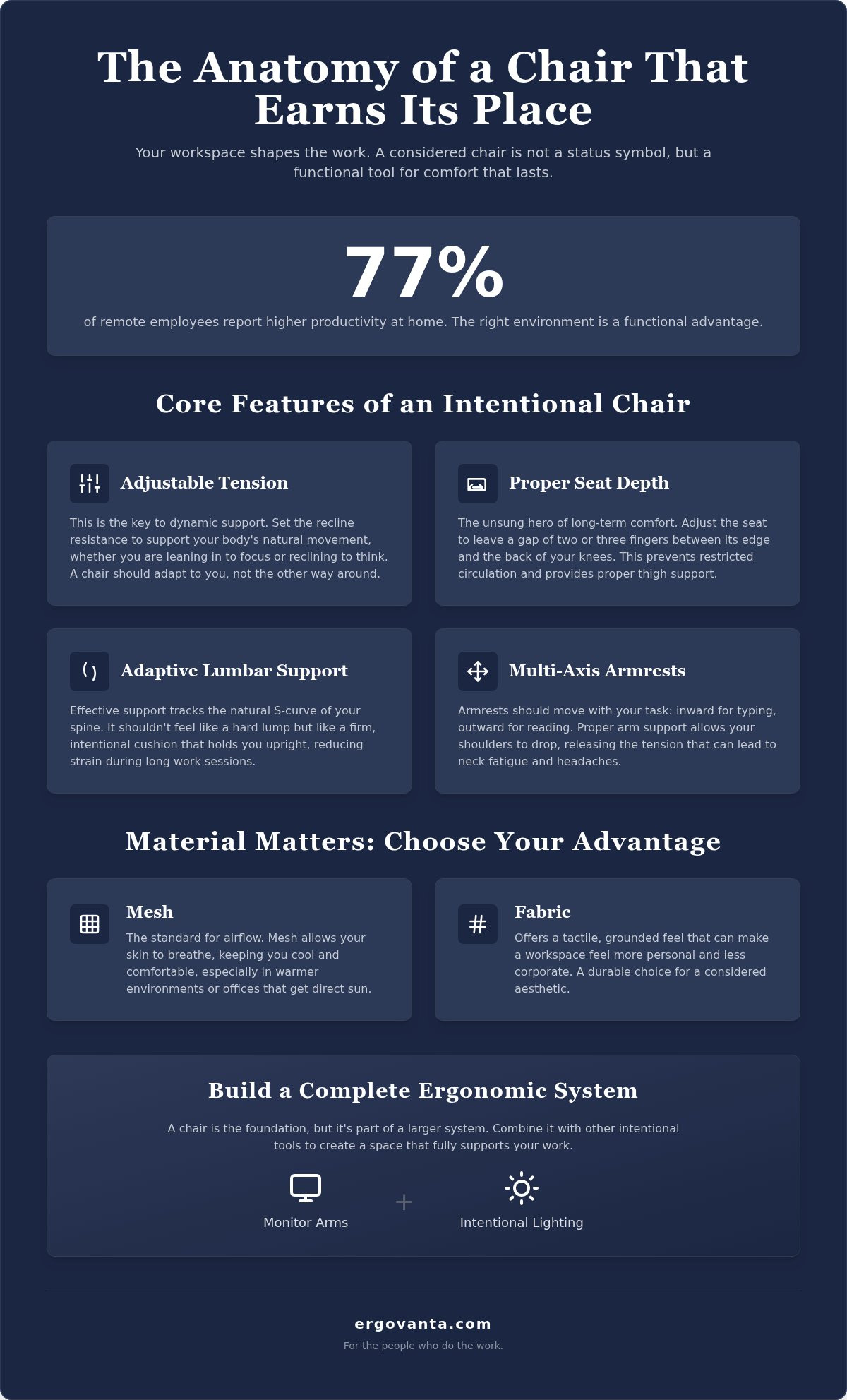
The workspace shapes the work. Equip it deliberately. Since 77 percent of remote employees report higher productivity at home according to FMC Group data, the environment you build matters. Yet, finding the best ergonomic office chair for home office use often feels like a choice between generic corporate relics and poorly made plastic. You don't need a status symbol. You need a tool that earns its place.
It is difficult to remain disciplined when neck fatigue sets in by noon. You want a workspace that feels personal and considered, not like a medical clinic. Discover how to select a chair that supports natural movement and helps you build the room you actually want to return to. We will review essential adjustment standards and preview the objects that provide a functional advantage for the people who do the work.
Key Takeaways
- Learn why the workspace shapes the work and how to equip it deliberately for comfort that lasts until the eighth hour.
- Identify the core features of the best ergonomic office chair for home office use, focusing on adjustable tension and proper seat depth.
- Compare task chairs and mesh options to determine which tool provides the right airflow and support for your specific workload.
- View the chair as one part of a holistic system, using monitor arms and intentional lighting to finish your setup.
- Shift from generic furniture to a considered workspace that earns its place and supports your daily productivity.
Why the Right Chair is the Foundation of a Productive Space
The workspace shapes the work. Equip it deliberately. If you spend serious hours at a desk, your chair is the primary tool in your arsenal. It is time to stop viewing the chair as a corporate status symbol. You don't need a leather throne to signal authority; you need a considered piece of equipment that supports your posture while you focus.
Ergonomics is often discussed in clinical terms, but the real definition is how you feel during the eighth hour of work. If you're shifting, stretching, or fighting neck fatigue by mid-afternoon, your setup hasn't earned its place. Selecting the best ergonomic office chair for home office use is about finding a tool that supports your body's natural movement. The Office chair you choose should be the most intentional object in your room.
Intentionality in Your Home Office
A considered space helps you focus on the task at hand. When every object in your room has a purpose, there is less mental friction. Many people fall into the trap of buying for aesthetics over purposeful function. They choose chairs that look good in a photo but offer zero support for a long work week. An intentional chair isn't about how it looks to others. It's about how it serves you. It's the difference between a generic seat and one that earns its place in your daily ritual.
The Ergon and Vanta of Seating
We look at workspace design through a specific lens. Our name draws from the Ancient Greek "ergon," meaning purposeful function. We pair this with "vanta," a word for advantage. The best ergonomic office chair for home office environments should provide both. It must function perfectly for your body and give you a personal advantage by removing physical distractions.
When you equip your space with tools made for the work, you build a room you choose to come back to every morning. It stops being a place where you're forced to sit. It becomes a personal sanctuary for productivity. This isn't about "hustle" or "grind." It's about personal ownership and building a workspace that feels like yours.
The Anatomy of a Chair That Earns Its Place
The anatomy of a chair that earns its place isn't found in a brochure of features. It's found in how the chair responds when you move. Most people focus on height, but the best ergonomic office chair for home office use prioritizes adjustable tension. This isn't about locking yourself into a rigid angle. It's about setting the resistance so the backrest supports you whether you're leaning in to solve a problem or reclining to think. A chair that only offers fixed positions is a chair that forces you to adapt to it, rather than the other way around.
Seat depth is the unsung hero of long-term comfort. If the seat is too deep, it presses against the back of your knees and restricts circulation. If it's too shallow, your thighs lack support. You want a gap of about two or three fingers between the seat edge and your legs. This aligns with OSHA guidelines for maintaining a healthy posture. Similarly, lumbar support should track the natural S-curve of your spine. It shouldn't feel like a hard lump; it should feel like a firm, intentional hand holding you upright.
Armrests are another critical component often overlooked. They shouldn't just sit there. They need to move inward for typing sessions and outward or down when you're reading or using a tablet. When your arms are supported, your shoulders can finally drop, removing the tension that leads to those mid-afternoon headaches.
Support That Moves With You
Static chairs lead to fatigue. When you sit in one position for hours, your muscles tire and your focus slips. Dynamic support is the solution. A considered backrest design follows your shoulders as you twist or reach for a coffee. You don't need clinical metrics to test this. Sit in the chair and move. If it feels like it's anticipating your next shift, it's doing its job. It's a tool made for the work, not just a place to park your body.
Material Matters: Mesh vs Fabric
The material you choose should suit your specific room and how you use it. Mesh office chairs are the standard for airflow. If your home office gets the afternoon sun or you simply run warm, mesh keeps you cool by letting your skin breathe. High-quality fabric offers a different kind of advantage. It provides a tactile, grounded feel and can help a workspace feel more personal and less like a generic cubicle. Both materials are durable, but your choice should be based on your environment. If you're unsure which material fits your setup, you can reach out to our team for a direct recommendation on building your space.
Comparing Chair Types: Finding Your Specific Fit
Equip your space based on the hours you actually spend at the desk. The search for the best ergonomic office chair for home office use often feels like a choice between status symbols and budget compromises. You don't need to spend four figures to find a tool that works. You simply need to identify which category of chair supports your specific workflow. Whether you are a full-time freelancer or a hybrid worker, the goal is to find a tool that earns its place by supporting your body through every focused session.
If your day consists of high-intensity work, a task chair might be the right fit. These are built for people who need a functional setup without unnecessary bulk. If you work in a shared room or a smaller apartment, a task chair provides a smaller footprint while maintaining the essential support your body requires. They are minimalist by design because they are made for the work, not for filling up a room with plastic. Choosing between these options requires an honest look at your habits. As noted in The New York Times Wirecutter review, the right choice often balances adjustability with personal preference.
For those who prioritize airflow, mesh office chairs are the standard. Mesh distributes weight evenly across the seat and backrest, preventing the pressure points that often lead to discomfort. Unlike some foam cushions that lose their shape over time, high-quality mesh remains resilient for years. You can see this streamlined look in the Ergovanta mesh office chairs, which are designed to be intentional additions to a modern home. This category is the best ergonomic office chair for home office environments that tend to run warm or for users who prefer a firm, responsive feel.
Task Chairs for Focused Work
Task chairs are about removing the friction between you and the task at hand. They are ideal for hybrid workers who transition between different environments and need a reliable setup at home. By prioritizing a smaller footprint, these chairs allow you to build a workspace that doesn't dominate your living area. They prove that being intentional with your equipment doesn't require a massive investment of space. These chairs are stripped of non-essential features, focusing instead on the core adjustments that keep you productive.
High-Performance Mesh Solutions
Mesh seating provides a distinct functional advantage in warmer environments. The breathability keeps you focused when the room temperature rises, preventing the distracting heat buildup common with thick padding. Beyond cooling, the primary benefit is how the material contours to your frame. It offers a level of dynamic support that foam often struggles to replicate. When you equip your room with a mesh solution, you're choosing a tool that maintains its integrity through thousands of hours of use, providing a consistent experience every time you sit down.
Equipping Your Setup: Building a Complete Ergonomic System
A chair is only one part of an intentional workspace. Even the best ergonomic office chair for home office use cannot solve a setup that ignores your eye level or leg angle. When you build a workspace, you are building a system where every object must work together. If your chair is perfectly adjusted but your monitor sits too low, you will still end up with neck fatigue by noon. The goal is to create a rhythmic flow between your seat, your desk surface, and your screens.
Equip your desk with tools that earn their place by solving specific physical friction. Even when you have found the best ergonomic office chair for home office use, you must still consider the tools around it. For example, if you find yourself leaning forward to read small text, your chair's lumbar support becomes useless. You've broken the system. By considering how each piece of equipment interacts, you move away from the idea of a generic office and toward a space that is made for the work you actually do.
The Eye-Level Advantage
Aligning your screen to your natural posture is the only way to avoid the 'tech neck' hunch. This is where monitor and laptop stands become essential companions to your seating. When your eyes meet the screen naturally, your head stays balanced over your spine. This allows the backrest of your chair to do the job it was designed for. Without this alignment, you are fighting a losing battle against gravity regardless of how much you spent on your seat.
Creating this alignment doesn't require a clinical overhaul; it requires intentionality. Use monitor arms to clear desk space and bring your display to a height that keeps your chin level. If you work from a laptop, a stand is mandatory to prevent the downward gaze that strains your upper back. These small adjustments ensure that your body remains in a neutral position throughout the day.
Considered Accessories for Comfort
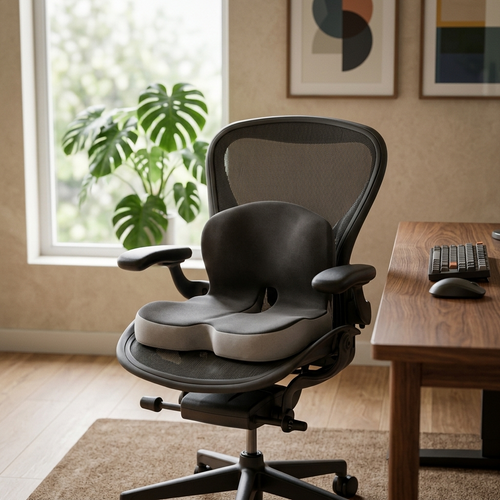
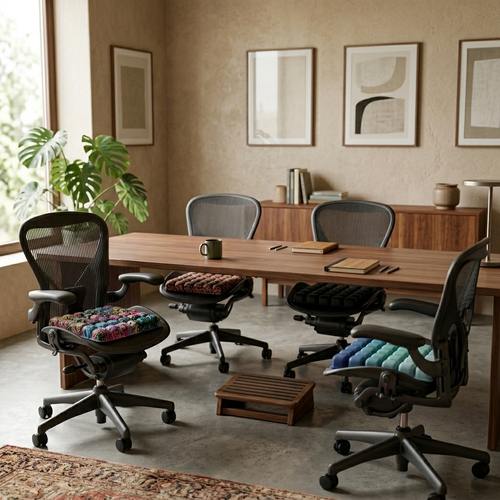
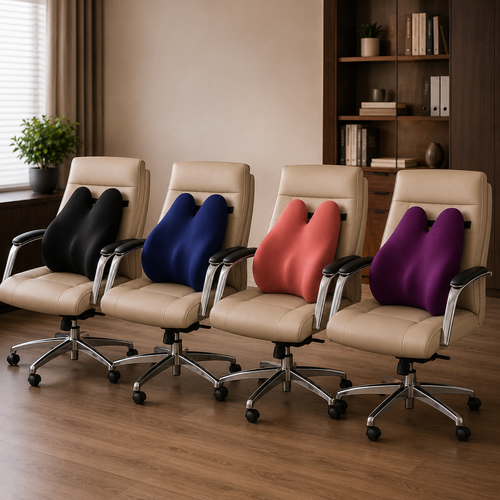
Your workspace should feel personal to your body. Standard chairs are designed for averages, but your setup should be built for you. Small objects like footrests or lumbar pillows can help bridge the gap between a factory setting and a personal fit. A footrest is particularly useful for maintaining proper leg angles if your desk is slightly too high for your frame. It ensures your feet are grounded, which stabilizes your lower back.
Seat cushions can also help you customize a standard chair to your specific comfort needs. These are functional tools that earn their place by improving circulation during long sessions. By equipping your room with these considered accessories, you finish the work that the chair started. You aren't just sitting; you are operating within a system that supports your focus.
Choosing Your Ergovanta: Made for the Work
The workspace shapes the work. Equip it deliberately. At Ergovanta, we believe your environment is a set of tools that should earn their place. We don't design for boardrooms or corner offices. We design for the person who spends eight hours a day solving problems from a desk. Finding the best ergonomic office chair for home office use is about more than just padding; it is about selecting an intentional object that supports your specific rhythm.
Our approach is functional and ownership-anchored. We focus on clean lines and materials that last, ensuring your setup remains reliable year after year. A chair should not be a distraction. It should be a quiet, effective partner in your productivity. When you choose equipment made for the work, you stop fighting your environment and start using it to your advantage. This is the core of our philosophy: providing a purposeful function that serves the person doing the work.
The Ergovanta Collection
Our range of workspace essentials is designed for daily use. These pieces fit naturally into a minimalist or modernist aesthetic without feeling like cold, clinical equipment. We prioritize purposeful function in every curve and adjustment point. Whether you are equipping a dedicated room or a corner of your living space, our chairs are built to be part of a considered system. They are designed to be used, not just looked at.
Equipping your space with objects that serve a purpose reduces mental clutter. You don't need a dozen features you will never touch. You need the core adjustments that allow the best ergonomic office chair for home office use to disappear beneath you while you focus. We build for the reality of the work, focusing on the small details that make a difference during a long deadline. Every material is chosen for its durability and tactile feel, ensuring your chair remains a staple of your room for years.
Commitment to the User
We focus on the rooms that actually get used. Whether you are a WFH professional, a creator, or a freelancer, your workspace is a personal sanctuary. It should feel like yours, not a generic corporate outpost. We provide the tools that help you take ownership of your environment. This isn't about status or social standing. It's about building a space that supports your physical health and your mental clarity. We believe that when you are comfortable, you are free to do your best work.
Take ownership of your environment today. By choosing tools that are intentional and functional, you build the workspace you would choose to come back to every morning. Your work is worth the investment in a setup that respects your time and your body. Equip your space deliberately, and let the results speak for themselves. The right chair is not the end of the journey; it is the foundation of a space made for the work.
Equip Your Space for the Work Ahead
The workspace shapes the work. Equip it deliberately. Choosing the best ergonomic office chair for home office use is more than a purchase; it's a commitment to building a space that earns its place in your daily life. Since 2021, Ergovanta has provided boutique ergonomic designs centered on purposeful function and personal advantage. We build tools for the people who do the work.
A considered chair serves as the foundation of a complete system. Pair your seating with accessories like monitor arms and intentional lighting to remove the physical friction that leads to fatigue. When your environment is built for your specific needs, you stop fighting your furniture and start focusing on the task at hand. Take ownership of your setup and create a room that you actually want to return to every morning.
Your work is worth the investment in a setup that respects your body and your focus. Start building the room you'd choose to come back to today.
Frequently Asked Questions
Is a mesh chair better than a fabric chair for a home office?
Mesh provides a functional advantage in warmer rooms by allowing air to circulate around your body. It is the ideal choice if you run warm or want a firm, responsive feel. Fabric chairs offer a more grounded, tactile experience that helps a workspace feel personal and less clinical. Your decision should depend on your specific environment and how the material feels against your skin during a long session. Both options must earn their place through durability.
How much should I spend on a good ergonomic chair?
Focus on finding a tool that earns its place rather than chasing a specific price point. The best ergonomic office chair for home office use is one that provides a personal advantage through purposeful function. Avoid the trap of paying for a status symbol or a generic corporate name. Instead, look for a considered design that offers essential adjustments like seat depth and tension control. Your investment should be based on the hours you actually spend at the desk.
Can a better office chair really fix my back pain?
A chair is a tool that supports your body, but it is only one part of a complete system. While a considered seat helps maintain a natural spine curve, it doesn't replace the need for regular movement. You should feel supported rather than restricted. When your chair aligns with your posture, you remove the physical friction that leads to discomfort. Combine your seating with intentional tools like monitor arms to build a workspace that actually supports your health.
How do I know if a chair is the right size for my desk?
Measure your desk height and ensure the chair's adjustment range allows your elbows to rest at a 90-degree angle. Most ergonomic chairs follow the BIFMA standard with a seat height range of 15 to 22 inches. This range is designed to accommodate a wide variety of users and standard desk heights. You should also check that the armrests can slide under your desk surface. This ensures you can sit close enough to your work without straining your shoulders or neck.
What is the most important adjustment feature to look for?
Adjustable tension is the most critical feature to look for in any chair. This allows the backrest to respond to your weight, providing dynamic support as you move throughout the day. Fixed positions force you to adapt to the chair, which leads to fatigue. By fine-tuning the resistance, you ensure the chair supports you whether you are leaning in to type or reclining to think. It is the primary way a chair becomes made for the work.
Do I need a headrest for my home office chair?
Headrests are optional and depend on how you use your space. If your work involves a lot of reclining, such as reading or long video calls, a headrest provides a clear advantage. However, for high-intensity typing and focused tasks, you may find that your head stays naturally balanced over your spine without one. Consider your daily ritual and whether you need that extra point of support during your thinking sessions or the refined ritual of winding down.
How often should I replace my office chair?
Replace your chair when the materials no longer provide the support you need to stay focused. High-quality mesh and fabric are designed to remain resilient for years, but mechanical parts can eventually wear down. If you notice the seat cushion has lost its shape or the tension adjustment no longer holds, it's time to equip your space with a new tool. A chair that has lost its structural integrity is no longer earning its place in your room.
What is the difference between a task chair and an office chair?
Task chairs are built for high-intensity, focused work sessions and typically feature a smaller footprint. They are designed to be minimalist and functional, removing unnecessary bulk for people in shared or smaller rooms. Office chair is a broader term that includes various styles, including those built for shorter meetings or generic use. When selecting the best ergonomic office chair for home office use, focus on tools that are intentional and made for the work you do every day.
Disclaimer
Ergovanta publishes these guides to help people set up better workspaces. Product recommendations reflect what we sell. Specifications, prices and availability are accurate at the time of writing and may change. Nothing here is medical, ergonomic or professional advice; if you have a specific health concern about your workstation, speak to a qualified professional.
From the catalog