October 20, 2026
Whiskey Decanter Options for Home Bar Serving and Storage
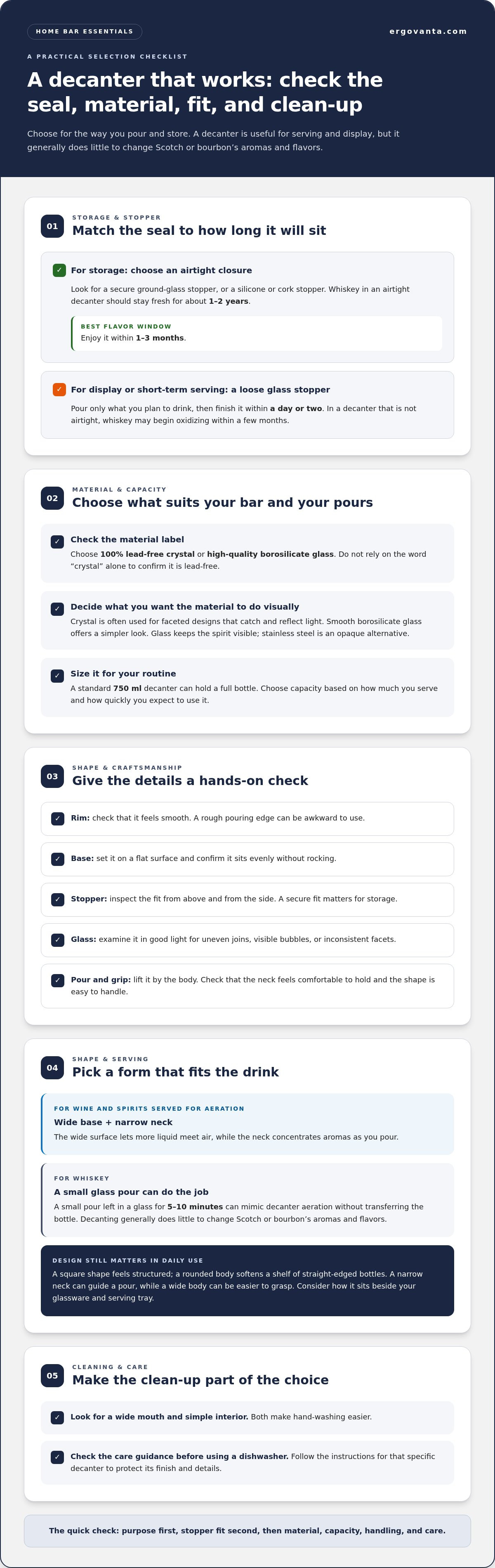
A decanter is a serving vessel, not a flavor upgrade. The best decanters for a home bar have an airtight seal, are made from 100% lead-free crystal or high-quality borosilicate glass, and hold an amount that suits your serving habits. For the best flavor, enjoy whiskey from a well-sealed decanter within 1–3 months.
A good-looking bottle has its place on a home bar, but the stopper, material, and capacity matter in everyday use. Decanting generally does little to change Scotch or bourbon’s aromas and flavors, so choose a decanter for practical storage and serving rather than expecting a different tasting experience.
This guide explains how craftsmanship and shape affect everyday use, what to consider when comparing crystal and glass, and how to match capacity to your pours. It also covers cleaning, including why a wide mouth and simple interior are easier to wash. Use these points to choose a decanter that earns its place on your bar, whether you pour occasionally or serve guests.
Key Takeaways
- Match the decanter’s shape and stopper to how you’ll use it: display, storage, or regular pours.
- For a loose glass stopper, pour only what you plan to drink and finish it within a day or two.
- Choose a capacity that fits your serving routine; a standard 750 ml decanter can hold a full bottle.
- A wide mouth and simple interior make cleaning easier, especially when you’re washing by hand.
- Before using a dishwasher, check the care guidance for the specific decanter to protect its finish and details.
1. What Are Whiskey Decanters & Why Do They Matter?
A whiskey decanter transfers whiskey from its original bottle into a vessel for serving or display. Its main benefit is practical: it can make pouring easier and give your bar a considered look, but it generally does little to change Scotch or bourbon’s aromas and flavors. Decanting isn’t a shortcut to a different tasting experience.
For wine and spirits that benefit from aeration, choose a decanter with a wide base and narrow neck. The wide surface lets more liquid meet air, while the neck concentrates aromas as you pour. For whiskey, a small pour left in a glass for 5–10 minutes can mimic decanter aeration without transferring the bottle.
The stopper matters more for preservation than the decanter’s pattern. For whiskey you plan to store, choose an airtight closure, such as a ground-glass stopper or a silicone or cork stopper. Whiskey in an airtight decanter should stay fresh for about 1–2 years, but for the best flavor, enjoy it within 1–3 months.
A loose glass stopper is better suited to display than long-term storage. Pour only the amount you intend to drink, then finish it within a day or two. In a decanter that isn’t airtight, whiskey may begin oxidizing within a few months. Consider the seal and how quickly you’ll drink the contents; a striking vessel is less useful if its closure lets air in.
Choose for the way you’ll use it, not just its pattern. An airtight decanter suits regular storage; a loose-stopper design works for short-term serving or display; and a wide-base, narrow-neck shape suits wine or spirits served for aeration. These distinctions help narrow the best decanters for a home bar without assuming every bottle needs the same treatment.
Decanters also have a long history as vessels for storing and displaying liquor, and they remain a popular gift choice. In 2021, 35% of U.S. whiskey drinkers bought decanters as presents. For a gift, consider whether the recipient is more likely to display the vessel, serve from it, or store whiskey between pours.
Start with three checks: decide the decanter’s main purpose, inspect the stopper’s fit, and consider how quickly you’ll use its contents. Someone who pours whiskey occasionally, for example, may value an airtight seal more than an elaborate pattern. When serving guests, easy pouring and a shape suited to the drink may matter more.
The whiskey decanter sets market was valued at $1.15 billion in 2024 and is projected to reach $2.03 billion by 2033; North America holds 38% of the whiskey decanter market share.
2. Decanter craftsmanship and design
Craftsmanship shows in the details you handle, not just the silhouette on a shelf. Check that the rim is smooth, the base sits level, and the stopper fits securely. A decanter that rocks on a flat surface or has a rough pouring edge can be awkward to use. Examine the glass in good light: uneven joins, visible bubbles, or inconsistent facets can affect its appearance from different angles.
Shape sets the visual tone. A classic square decanter gives a bar a structured feel, while a rounded body softens a shelf of straight-edged bottles. Faceted sides catch light differently from clear, uncut glass, so consider how the vessel will look beside your existing glassware. A carved pattern can become a focal point; a simple shape keeps the whiskey visually prominent.
Test the design before choosing. Set the decanter on a stable surface and check that it sits evenly. Lift it by the body and see whether the neck feels comfortable to hold while pouring. Inspect the stopper from above and from the side, since an uneven fit may be noticeable when the vessel is on display. These checks help distinguish attractive details from ones that interfere with use.
Consider the whole serving experience, not just the decanter’s appearance. A narrow neck may help guide a pour, while a wide body can be easier to grasp. A heavily faceted design, for instance, may look striking under bar lighting but feel less direct to handle than a smooth-sided shape. Choose a form that suits how you pour, where you’ll display it, and the other spirits nearby.
Finish and proportion should work with the room rather than compete with it. Clear glass pairs easily with varied barware; a deeply cut pattern makes a stronger visual statement. Compare the decanter with the glasses and serving tray it will sit beside, then choose a design that feels intentional as a group. If glass details are part of your selection, browse the glass material collection for ideas that suit your space.
3. Decanter material and lead-free crystal
For whiskey serving and storage, choose a decanter made from 100% lead-free crystal or high-quality borosilicate glass. Stainless steel offers an opaque alternative, while glass keeps the spirit visible. The right material depends on whether you value clarity, a cut-glass look, or a different appearance on your bar.
Crystal and ordinary glass can both show whiskey clearly, but they look different. Crystal is often used for faceted designs that catch and reflect light. A diamond-cut pattern, for example, adds more visual detail than a smooth-sided glass vessel. High-quality borosilicate glass is another option if you prefer a clean, simple look. Compare the finish, weight in your hand, and transparency before deciding.
Lead-free matters when selecting crystal for a decanter. Look for wording that identifies the material as 100% lead-free crystal, rather than relying on the word “crystal” alone. The distinction is useful when comparing two vessels with similar shapes or patterns. If you prefer a less decorative option, high-quality borosilicate glass is also recommended for decanter use.
Material affects how a decanter feels to handle and how it looks on display. A crystal decanter with deep cuts may feel substantial and create a strong focal point. Smooth glass can pair more easily with mixed barware because it doesn’t compete with different shapes or colors. Stainless steel conceals the whiskey, so it may not suit a display where seeing the spirit matters.
An heirloom crystal decanter can hold personal meaning as well as serve a practical purpose. Before storing whiskey in a vintage piece, inspect the inside and stopper for chips, cracks, or residue. A worn stopper may not seal well, and a damaged rim can make pouring uncomfortable. If the vessel is sentimental, keep it on display until you’ve assessed its condition.
Finish your comparison with three checks. First, identify the material: lead-free crystal, borosilicate glass, or stainless steel. Next, inspect the inside and rim for flaws that could affect cleaning or pouring. Finally, decide whether a diamond pattern, smooth surface, or opaque finish suits your bar and routine. Material is more than a label: it affects what you see, how you handle the decanter, and how it works in your space.
Among surveyed users, 26.9% praised crystal decanters specifically for enhancing aromas. That preference can be part of the material comparison, alongside clarity, finish, and handling, without treating a visual choice as proof of a sensory effect. If aroma is a priority for your serving routine, note that this response reflects what users praised; it does not establish that every crystal vessel will produce the same experience. Keep the decanter’s condition and fit with your bar in view as well.
4. Decanter storage capacity for serving
Capacity decides how much whiskey a decanter can hold and how often you refill it. Whiskey decanters commonly fall in the 501–1000 ml range, which covers different bottle sizes and serving routines. For a larger gathering, a capacity around 60 ounces is recommended. That larger format can keep a shared serving vessel ready without making a smaller home bar feel crowded.
Use the bottle you usually buy as your starting point. A decanter volume test used a standard 25-ounce whiskey bottle as its benchmark, giving shoppers a practical comparison point. Check the stated capacity against your bottle size before choosing. A vessel that holds less than the bottle leaves a remainder to store elsewhere; one with extra room offers flexibility for serving.
Capacity and appearance need to work together. A square decanter can make an elegant display, but its outer shape doesn’t reveal how much it holds. A tall, straight-sided design may look compact while holding more than expected. Compare the stated volume, then check whether the piece fits your shelf and leaves room for nearby glassware.
Material and capacity are separate considerations. Crystal and glass decanters can have different finishes, but the material label doesn’t tell you the usable volume. Check both details: identify what the vessel is made from, then compare its stated capacity with your bottle and serving needs. That way, a striking finish won’t distract from the decanter’s practical purpose.
For regular bottle transfers, Knight recommends a decanter with at least 750 ml capacity. The standard 750 ml bottle is a useful reference when you want to transfer a full bottle at once. If you usually pour a smaller amount for a few guests, choose based on the quantity you plan to serve rather than selecting the largest piece available.
Make the choice in three steps. First, note the size of the bottle you usually serve. Next, decide whether the decanter is for one bottle or larger gatherings. Then compare that need with the stated capacity, including the around-60-ounce recommendation for bigger groups. The best decanters for a home bar balance usable volume with the space they occupy, so a well-chosen vessel can elevate serving without taking over the bar.
5. Dishwasher-safe decanters
Dishwasher care comes down to one detail: whether the decanter is labeled dishwasher-safe. Don’t assume it is because the glass is clear, the base is thick, or the shape is simple. Read the care instructions for the specific vessel before loading it. A dishwasher-safe decanter suits a machine-washing routine; a hand-wash-only piece needs a different approach.
Shape affects cleanup even when you wash by hand. A wide mouth and simple interior make a decanter easier to clean because you can reach inside more directly. A narrow neck or deep internal curves can make it harder to remove leftover Scotch and water. If you often hand-wash glassware, compare the opening and interior before choosing.
Decorative details can also affect cleaning. A cut-glass pattern may have grooves that catch residue, while a smooth-sided vessel has fewer contours to inspect. Check inside the base and around the neck, where a quick rinse may leave traces behind. After washing, inspect these areas in good light before replacing the stopper.
Follow a straightforward care routine. First, empty the decanter and rinse it so whiskey doesn’t dry inside. Then follow the vessel’s care instructions, whether they recommend dishwasher or hand washing. Finally, let the interior dry fully before storing the stopper. This helps prevent moisture from being trapped inside a closed vessel.
For a dishwasher-safe model, consider its shape and placement alongside other glassware. A broad decanter can take up more rack space than a smaller glass, and a narrow opening may affect how water reaches the inside. Place it securely according to the dishwasher’s instructions, leaving room around it rather than wedging it between other pieces. If it won’t sit steadily, hand washing is more practical.
Dishwasher convenience and easy cleaning aren’t the same thing. A decanter with a wide mouth and uncomplicated interior may be easier to hand-wash, even if its care instructions don’t recommend machine washing. Conversely, a dishwasher-safe vessel still needs to fit securely in your rack. Choose according to its care instructions and the shape you can clean thoroughly.
Before buying, use this quick check: read the care label, inspect the mouth and interior, and picture where the decanter will sit in your dishwasher or sink. A smooth, wide-mouth design, for example, may be simpler to rinse after a Scotch pour than a narrow, deeply patterned piece. The easiest decanter to care for is one whose instructions and shape fit your routine.
Ergovanta: desk lamps
Ergovanta helps you equip a workspace with lighting suited to how you use it. If your home bar shares space with a desk or reading corner, a desk lamp can make that area more useful without affecting your decanter choices. For broader room lighting, explore floor lamps, wall lights, and ceiling lights to suit your layout and lighting needs.
Choose lighting to suit the task and available space. A desk lamp works well for a focused work area; wall or ceiling lights can illuminate a wider part of the room. Aim for a setup that feels considered and practical, rather than making every object compete for attention.
Visit Ergovanta’s website to explore lighting for your space.
Build a room that feels like yours
A home bar is just one part of a room you use every day. Choose details that connect naturally with the surrounding space instead of treating the bar as a display that needs constant attention. Selecting the best decanters for your home bar is a practical decision; the room’s lighting and layout can make the whole setup feel more intentional.
Ergovanta offers desk lamps, floor lamps, and wall lights for spaces used for both work and relaxation. If your bar shares a room with a desk, consider how lighting can give each area its own feel while keeping the room cohesive. Choose lighting that suits your space and how you use it.
Explore glass pieces for your space
Build around the objects you reach for. A room that works for you is a good place to start.
Frequently Asked Questions
What Are Whiskey Decanters & Why Do They Matter?
A whiskey decanter gives you a separate vessel for serving or displaying whiskey. Its main value is practical and visual, so consider how you’ll use it between pours. If you rotate among bottles, use a discreet label or reserve each decanter for one spirit. This simple habit helps prevent mix-ups when several bottles are open.
Engraved glass or sand-carved crystal: which is better?
Neither is automatically better; choose the finish and use you prefer. Engraving creates a design cut or marked into the glass, while sand-carving produces a frosted, textured look. For a gift, engraving can make a name or date central to the design. For a more understated display, sand-carving adds detail without lettering. Compare the decoration in the light where you’ll display the decanter.
What decanter shapes and capacities work best for a home bar?
Choose a shape that fits your shelf and feels comfortable to pour from, then compare its stated capacity with the bottle you plan to transfer. A square design uses shelf space differently from a rounded vessel, so consider width as well as height. If you have bottles in different sizes, a decanter suited to your usual bottle is more practical than one chosen by appearance alone.
Can lead crystal leach lead into whiskey or other spirits, and how should it be used safely?
To avoid potential lead exposure, don’t use lead crystal to store spirits. Choose 100% lead-free crystal or high-quality borosilicate glass for whiskey you plan to drink. Keep a lead-crystal heirloom for display rather than routine storage, and use a lead-free decanter for serving. This gives the piece a place in your bar without making it the vessel for spirits you’ll consume later.
What are the best decanters for a home bar in 2026?
Choose a decanter with an airtight stopper and a capacity that suits your routine, made from 100% lead-free crystal or high-quality borosilicate glass. A wide mouth and simple interior ease cleaning; for display or brief serving, a loose-stopper design is suitable if you finish the whiskey within a day or two.
How much do highly rated decanters cost in the United States?
What are the best decanters for home bars by budget, style, and intended use?
Choose a square or faceted design for a stronger visual statement, or smooth glass for a simpler look. For storage, prioritize an airtight stopper; for display or short-term serving, a loose stopper can work, while a wide base and narrow neck suit aeration.
Disclaimer
Ergovanta publishes these guides to help people set up better workspaces. Product recommendations reflect what we sell. Specifications, prices and availability are accurate at the time of writing and may change. Nothing here is medical, ergonomic or professional advice; if you have a specific health concern about your workstation, speak to a qualified professional.