September 30, 2026
White Desk Lamps for a Brighter, More Productive Workspace
The brightest-looking white desk lamp isn’t always the one that makes your desk easiest to use. White desk lamps for a bright home office can keep a space feeling open and considered, but the finish alone won’t prevent screen glare, awkward shadows, or light that feels too harsh.
If you’re choosing a lamp to suit your furniture and room lighting, look beyond its silhouette. The right fit depends on the work you do, where the lamp sits, and how its light falls across your desk. A clean design matters, too, especially when every object has to earn its place.
This guide explains how to compare details that shape everyday task lighting, including brightness, light color, and placement. You’ll also see how a white lamp can work alongside ambient room light without adding visual clutter. The goal is a setup that feels like yours and gives focused work the light it needs.
Key Takeaways
- Choose a lamp for the work you do, whether that means reading, writing, drawing, or spending hours at a screen.
- When comparing white desk lamps for a bright home office, look beyond the finish and verify the listed lighting and control features.
- Compare fixed-position and adjustable designs, then consider how each might fit your desk and direct light where you need it.
- Check how the lamp works with your room lighting, desk space, and screen before settling on a spot.
- A white finish can feel visually quiet or stand out against your setup. Choose the look that feels right in your space.
Why choose a white desk lamp for a bright home office?
A desk lamp should earn its place twice: by providing useful light and fitting the room’s design. A white desk lamp can sit comfortably in many desk setups, but color is only one part of the decision. The lamp also needs to support your work and suit the space you use.
Task lighting directs light toward a particular activity, such as reading or writing. At a desk, it can make the work area easier to see while ambient lighting illuminates the wider room. Think of the two as a team, not a lighting custody battle.
For a visual example of a white desk lamp, watch this review:
Does a white desk lamp make a home office brighter?
The finish doesn’t tell you how much light a lamp produces or how comfortable that light will feel. Those depend on the lamp’s specifications and how you use it. Placement matters, too: light aimed at your work can help, while light reflected off a screen may distract. Existing room light also affects how bright the desk feels.
A white finish is an appearance choice, not a brightness specification. Compare the listed lighting details separately, then consider how the lamp will work with the room’s ambient light. Choose white desk lamps for a bright home office based on the light they provide and how they fit your setup, not on color alone.
When does a white finish suit a desk?
A white lamp may blend into a light-colored desk or stand, keeping the arrangement visually quiet. Against darker furniture, it can create contrast and become a more noticeable object. Neither effect is automatically better. Consider your wall color, desk objects, and wider room palette, then choose a finish you’ll be glad to see each day.
For category-level browsing, explore Ergovanta’s desk lamps, and check individual listings for current finishes and specifications. Confirm that a white option is available before choosing. Start with the product details, then make room for personal preference.
How to judge desk-lamp light for focused, comfortable work
Task lighting puts light where a particular activity happens, such as on a page, sketch, or work surface. General room lighting fills the wider space. A desk lamp can add focused light alongside that ambient illumination, but it needs to suit both the task and the way your desk is arranged.
Brightness tells you how much light a lamp produces; comfort and usefulness depend on where that light goes and how it looks while you work. A bright beam aimed at a monitor can be more distracting than helpful. Judge the light in your actual setup, not by one specification or a product photo.
What light specifications should you compare?
Check the product listing for these details, when provided:
- Lumens: A measure of light output. Compare listed values to understand how much light the lamp produces, while remembering that placement and the area being lit affect how it feels at your desk.
- Colour temperature: Usually shown in Kelvin, this describes the light’s appearance, such as warmer or cooler white. It doesn’t tell you how bright the lamp is.
- Colour rendering: The colour rendering index, or CRI, describes how colours appear under a light source compared with a reference. If your work involves choosing or judging colours, this detail may matter more than it would for routine screen-based tasks.
Listings don’t always give every specification. Treat missing details as unknown rather than guessing. For white desk lamps for a bright home office, compare the lighting information separately from the finish and design.
How can a desk lamp reduce glare and distracting shadows?
Try the lamp in the position you’d use for everyday work. Move it to the side of your screen or writing area, then check the view from your usual seat. If you write by hand, test the light on both sides of the page. Placing a lamp opposite your dominant hand may help limit the shadow your hand casts, though your desk layout can change the best position.
Look for reflections on your monitor and glossy desk objects as you shift the lamp. A small angle change can move a reflection out of your line of sight or put it directly back where you don’t want it. A lamp with adjustable direction may make positioning easier, but verify that feature in the product details before relying on it.
If a listing leaves you unsure about its lighting details, you can ask Ergovanta about product specifications before choosing.
White desk lamp styles and features: what should you compare?
Start with the shape, then check what the lamp can actually do. A compact silhouette may help a crowded desk feel more ordered, while a distinctive form can give the lamp a more noticeable role in the room. Neither is automatically more useful. Match the footprint and look to your work surface, then verify the features in the product listing.
For a practical starting point, browse Ergovanta’s desk lamps and other lighting. Confirm current color options and listed specifications before choosing. Don’t assume a white finish or a particular feature is available.
Which lamp shape and finish fit your desk?
Think about the lamp’s footprint and the space around it. A compact form may leave more room for papers or devices, while a visually prominent shape can become part of the room’s overall arrangement. Consider how a white finish would look beside your desk material, hardware, wall color, and nearby objects. Choose what feels at home in your space, not what a trend says it should.
Which features matter in everyday use?
Separate what your routine needs from extras that sound impressive but may not help. If you move light between a notebook and a work surface, check whether the listing confirms adjustable direction or reach. If you prefer simple operation, look for clear information about the controls and power setup. Treat unlisted details as unknown.
| Design type | May suit | Verify in the listing |
|---|---|---|
| Fixed-position | A consistent desk layout where the light can stay aimed at one work area. | Dimensions, light direction, control type, and power details. |
| Adjustable | Tasks or desk arrangements that call for changing the light’s direction. | Confirmed range of movement, reach, controls, dimensions, and power details. |
Use the table as a comparison prompt, not a promise about any specific lamp. Product descriptions vary, and “adjustable” can mean different things. Check the stated details against your desk: where the lamp will sit, how much room it takes, and whether its listed setup suits the way you work.
For white desk lamps for a bright home office, the useful choice is one that fits both your practical needs and your room. Keep the essentials in view, set aside features you won’t use, and let the finish make the space feel more like yours.
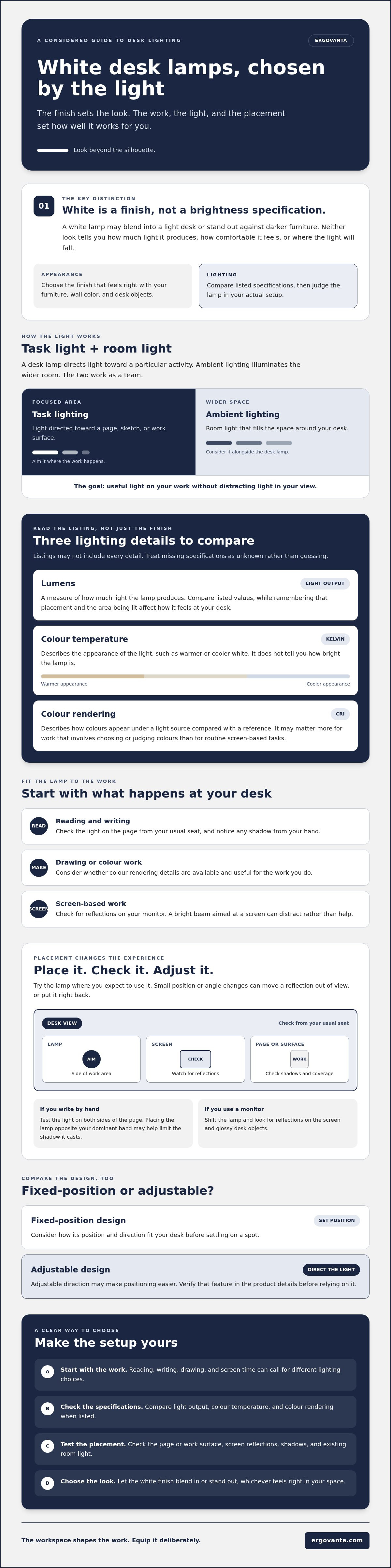
How to choose and place a white desk lamp for your setup
Make the choice in order: start with your work, then the room, then the lamp. Reading, handwriting, drawing, and screen-based work place different demands on your desk. A reader may want light on a page; someone sketching may need to see a wider work area; screen work calls for extra attention to reflections. Choose for the tasks you actually do, not an imaginary all-purpose desk.
- Identify your tasks. Note what you need to see clearly and where you work.
- Assess existing light. Check how daylight and room lighting reach the desk at different times.
- Check your space. Look at available surface, nearby outlets, and the distance between your task area, monitor, and likely lamp position.
- Compare listings. Verify dimensions, controls, power details, and any claimed adjustment or reach.
- Test placement. Try the lamp during normal work and adjust its position to reduce shadows and reflections.
If you’re building out more than the lighting, explore Ergovanta’s other workspace essentials. Check each listing for current product details rather than assuming a particular setup or feature.
What should you measure before choosing a desk lamp?
Clear a spot where the lamp could sit, and note nearby outlets so the power setup won’t get in the way. Estimate the distance from that spot to your screen and the area where you read, write, or draw. Then compare your available space with the lamp’s listed dimensions and setup requirements. A product photo can suggest scale, but it isn’t a measuring tool.
Where should a white desk lamp go?
Position the light to reach your task area without shining directly into your screen or creating a reflection you notice while working. If you write by hand, try placing the lamp on the opposite side from your writing hand. This may help keep your hand from casting a shadow across the page. For other tasks, shift the lamp until the work area is clearly lit and the light feels comfortable.
Check the setup at different times of day. Daylight changes, and a position that works in the morning may create a monitor reflection later. Move the lamp, then check your screen, papers, and glossy desk objects from your usual seat. For white desk lamps for a bright home office, the best position supports your work without adding a new distraction.
Ask Ergovanta about desk-lamp product details
Build a brighter home office with a desk lamp that fits
A good choice comes down to four things: useful light, a workable position, verified features, and a finish you want in your space. White desk lamps for a bright home office can suit a range of room palettes, but white is a visual choice, not a performance feature. It may blend with a light desk or stand out against darker furniture. Depending on the room, that contrast can feel intentional or simply add another object to look at.
Use this final checklist before choosing:
- Light: Check the listed light specifications against the work you do, and confirm any controls you expect to use.
- Fit: Compare the lamp’s listed dimensions with your available desk space and likely placement.
- Everyday use: Verify details such as adjustment, direction, and power setup instead of assuming them from a product photo.
- Finish and form: Make sure the lamp suits your desk and room without taking up space you need for work.
A white finish can keep a desk arrangement feeling visually calm or create a clear point of contrast against darker surfaces. It may also stand out more against some surroundings than others. Neither effect changes how much light the lamp produces. Let your room palette guide the finish, and the product details guide the lighting decision.
What should your final desk-lamp checklist include?
Before deciding, picture the lamp in its intended spot with your usual work in front of you. Will its base take space you need? Can you position it to suit your task? Are the controls and other listed features clear? A lamp earns its place when the answers fit your routine, not just the product description.
How can you find a desk lamp that feels like yours?
Your workspace doesn’t need to look like a showroom. It needs to work for the tasks and routines that make the room yours. Ergovanta sells desk lamps, but current listings are the place to check whether white options are available. Explore the Lamps collection with your checklist in mind, and confirm finishes and specifications in the listings.
Build with intention. Choose the lamp that fits your work, your room, and the way you want the desk to feel.
Choose a desk lamp that earns its place
The right desk lamp supports the work in front of you and fits the room around it. Compare listed light specifications and controls with your everyday tasks, check dimensions before giving up desk space, and test placement to catch unwanted shadows or screen reflections. A white finish can blend with a light palette or contrast with darker furniture, but it doesn’t determine brightness or light quality.
Use those checks as your guide to white desk lamps for a bright home office. Ergovanta’s catalog includes desk lamps, and the Lamps collection is a relevant place to explore the category. Check current listings for specific white options and product features rather than guessing from a photo.
Choose what feels useful in your actual space, not what looks right in someone else’s setup. A considered lamp can be a small object that makes the desk more your own.
Build a workspace you’ll be glad to return to, one thoughtful choice at a time.
Frequently Asked Questions
Do white desk lamps make a room brighter?
A white finish doesn’t make a lamp brighter; it describes how the lamp looks, not how much light it produces. Brightness depends on the lamp’s output and where its light falls. A desk lamp can add focused light to a work surface, while room lighting illuminates the wider space. When comparing white desk lamps for a bright home office, check listed lighting specifications and consider how the lamp will work with your existing lighting.
What should I look for in a desk lamp for a home office?
Look for light specifications, controls, dimensions, and setup details that match your tasks and desk. Lumens indicate light output, while Kelvin describes the light’s appearance; neither tells you on its own whether the lamp will suit your layout. If you switch between paper and screen work, consider where the lamp can sit and whether its listed features meet your needs. Verify product details rather than relying on appearance alone.
Can a white desk lamp reduce glare on a computer screen?
No, the white finish itself won’t reduce screen glare. Placement and light direction matter more. Position the lamp so it illuminates your work without shining into or reflecting off the screen. Check the monitor from your usual sitting position, then shift the lamp and see what changes. If a listing describes adjustable direction, verify that feature before counting on it to help you position the light.
How bright should a desk lamp be for working?
For reading or detailed desk work, the lighting guidance in this article suggests looking for a lamp producing 500 to 1,000 lumens. Treat this as a useful comparison range, not a guarantee of comfortable light: distance, placement, room lighting, and the task all affect how bright the work area feels. Check the lumen value in the product listing, and assess the light in your own setup if possible.
Is a white desk lamp a good choice for a small desk?
It can be, if its listed dimensions fit the space you have. White may blend with a light desk and keep the arrangement visually quiet, but the finish won’t reduce the lamp’s physical footprint. Check how much surface the base uses and whether its placement leaves room for your everyday work. If the listing doesn’t provide dimensions or setup details, don’t assume the lamp will fit from a photo.
Where should I place a desk lamp next to my computer?
Place it where it lights your work without creating a direct reflection on your screen. Try positioning it beside the monitor, then check for glare from your normal viewing position. For handwriting, putting the lamp opposite your writing hand may help prevent your hand from casting a shadow over the page. Move it as needed, and check the setup during your usual work rather than judging it from across the room.
Are white desk lamps available at Ergovanta?
Ergovanta’s catalog includes desk lamps, but current listings are the place to check whether white options are available. Review the Lamps collection and individual product listings for current finishes and specifications. Don’t assume a lamp is white based on a photo or description alone. For help checking a product, contact Ergovanta with your question before choosing.
Disclaimer
Ergovanta publishes these guides to help people set up better workspaces. Product recommendations reflect what we sell. Specifications, prices and availability are accurate at the time of writing and may change. Nothing here is medical, ergonomic or professional advice; if you have a specific health concern about your workstation, speak to a qualified professional.
From the catalog