Collection
Modernist
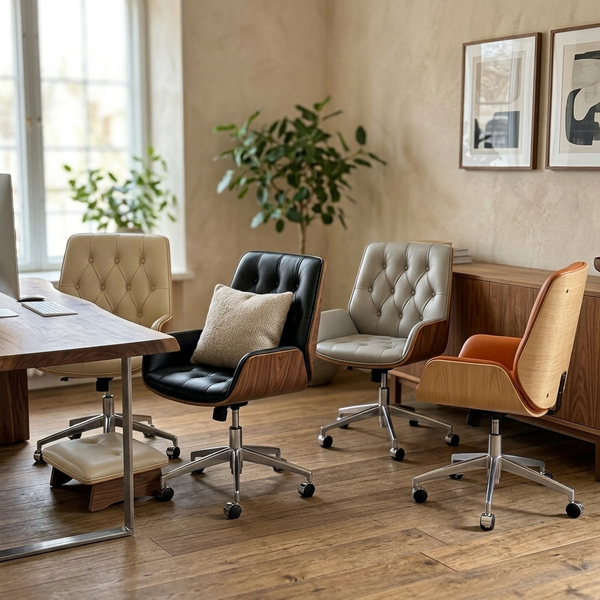
Mid-century lines, still working. Arcs, tapers and cantilevers from the era that got the desk right the first time.
 Pick a color
Lighting
Bauhaus
 Pick a leather
Chairs
Bentwood
 Pick a color
Lighting
Sentinel
 Pick a color
Lighting
Vitrine
 Pick a color
Lighting
Alloy
 Pick a color
Decor
Balloon
 Add to cart
Lighting
Globe
 Pick a style
Chair
Arco
 Add to cart
Lighting
Cuprum
 Pick a color
Lighting
Heron
 Add to cart
Lighting
Funkis
 Pick a color
Lighting
Strata
 Add to cart
Lighting
Orbis
 Pick a color
Lighting
Tactus
 Pick a color
Lighting
Stelo
 Add to cart
Lighting
Marmo
 Pick a light color
Lighting
Trave
 Pick a color
Lighting
Triad
 Pick a color
Lighting
Arc
 Pick a color
Decor
Pomum
 Add to cart
Decor
Regatta
 Add to cart
Lighting
Oxblood
 Pick a color
Lighting
Memphis
 Add to cart
Decor
Facet
Showing 24 of 31
About this collection
Mid-century lines, still doing the job
Modernist covers the mid-century vocabulary and what came out of it: arcs, tapers, cantilevers, circles set against straight edges, and materials left legible rather than disguised. It is the period that settled most of what a working desk still looks like. The forms held up because they were solved rather than styled. An arc floor lamp puts light over a surface without a table under it; a tapered stem gets a shade where it is needed without visual weight. Those are working answers, which is why they read as current rather than nostalgic.
Common questions
What is the difference between modernist and mid-century modern?
Mid-century modern is the postwar period, roughly the 1940s to the 1960s. Modernist is the broader movement it belongs to, running earlier and later and including Bauhaus and postmodern work. This collection groups them because they share a vocabulary of geometry, honest materials and solved forms.
Are these reproductions of famous designs?
No. These are Ergovanta pieces working in that vocabulary, not licensed reissues or copies of specific named designs. Where a form is a recognizable archetype, like an arc floor lamp, it is because the archetype solves a real problem.
Will mid-century pieces look dated in a modern office?
The strong forms have stayed in production for seventy years, which is the best evidence available. They read as deliberate rather than nostalgic when kept to one or two pieces per sight line and paired with plain surroundings.
What is the easiest modernist piece to start with?
Lighting. A single arc or tapered-stem fixture changes how a room reads without touching the furniture, and it is reversible in a way a chair or desk is not.